

Out on the northwestern edge of Qinghai, where the Qaidam Basin flattens into a rust-colored emptiness, there is a place that feels borrowed from another planet. Lenghu, once a boomtown built on oil, is now famous for something quieter and far older: some of the darkest, clearest night skies in all of China. Travelers who make the journey describe a strange double sensation — standing among eroded ridges that look like the surface of Mars, then tilting their heads back to a sky so dense with stars it seems to press down on the earth. This is the Lenghu stargazing camp, and it is quickly becoming one of the most surreal stops on any Qinghai adventure.
[CTA]Plan your trip with our custom China itineraries and let us handle the logistics.[/CTA]
The story of Lenghu is part of what makes it special. The name means “cold lake,” though the water has long since evaporated, leaving behind a cracked, mineral-stained basin. When the oil wells slowed, the town shrank. What remained was an extraordinary combination of conditions: high altitude, bone-dry air, almost no light pollution, and more than 300 clear nights a year. Astronomers noticed first. In recent years, professional observatories have been proposed for the surrounding mountains, and the area has been recognized as one of the finest dark-sky sites on the planet. For visitors, that scientific prestige translates into a genuinely world-class place to look up.
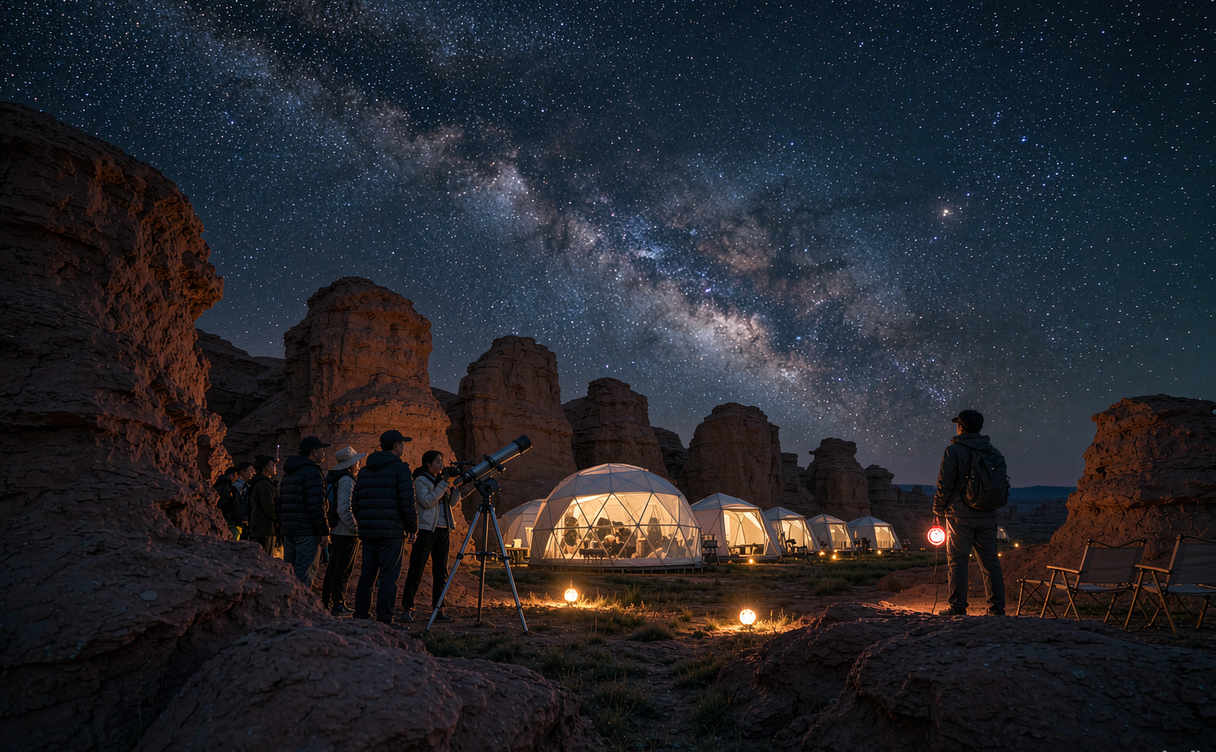
A good Lenghu stargazing camp guide should begin with the simple truth that this is not a resort. The appeal is raw. You sleep in a tent or a simple cabin, the temperature drops sharply after sunset, and the only show in town is overhead. On a moonless night the Milky Way is not a faint smear but a bright, knotted river of light, and meteors arrive often enough that you stop counting. The ridges around the camp, scoured by wind into waves of iron-red rock, glow faintly under starlight and complete the illusion that you have left Earth entirely.
Reaching the camp is half the adventure. The most common approach is to fly into Xining, the provincial capital, then travel west. Many visitors first explore the capital using our Xining travel guide, which covers where to stay and how to acclimatize before heading into the high basin. From Xining you can drive or take a train and bus combination toward Delingha, the nearest sizable city to the north. Our Delingha travel guide explains the town’s own quirks and serves as a useful base before the final leg south.
This is where timing and routes matter. The question of how to get to Lenghu from Delingha is one many travelers ask, and the honest answer is that it takes planning. There is no major airport at Lenghu itself. Most people hire a car or join a small tour that continues past Delingha and into the basin, often looping through Dachaidan. If you want a sense of that stretch of desert highway and the lakes nearby, our Dachaidan travel guide lays out the route in detail. The drive is long, the road is empty, and the last stretch is rough — but that isolation is precisely why the sky is so dark when you arrive.
[CTA]Tell us your dates and interests, and we will build a private Qinghai itinerary around the dark-sky season.[/CTA]
Once you are there, the rhythm of a stay is easy to learn. Arrive in the afternoon and walk the ridges while the light is still soft; the rock formations photograph beautifully in the low sun. As dusk settles, the camp sets out warm drinks and the telescopes come out. Many guests are surprised by how much a modest telescope reveals — Saturn’s rings, the craters of the moon, distant galaxies that appear as faint smudges to the naked eye. Some camps offer Lenghu dark sky telescope stays where you can sleep in a dome beside the instrument and be woken if something worth seeing crosses the sky. Even without a telescope, simply lying back and watching is enough.
The best time to visit Lenghu is a real planning question, because the basin has two very different moods. Autumn, from September through early November, is widely considered ideal: the air is at its driest, skies are clearest, and the cold keeps mosquitoes away, though you will need serious layers. Winter brings the most transparent atmosphere of all and uncrowded camps, but temperatures plunge brutally after dark. Spring can be windy and dusty. Summer is mild and popular but brings occasional thunderstorms that spoil a night or two. If your priority is the sky, aim for a new-moon window in October — you will thank yourself when the stars come out.
A comparison travelers often make is Lenghu versus Chaka salt lake night sky. Chaka, the famous mirror lake, is gorgeous and closer to the standard tourist loop, and on still nights its reflections double the stars. But Chaka sits nearer populated areas and draws big daytime crowds, so its darkness is compromised and the experience is more staged. Lenghu, by contrast, trades convenience for purity. There are no mirror reflections, but there is also no ambient glow, no noise, and no one else in your frame. If you want a postcard, go to Chaka; if you want to feel the universe, go to Lenghu.
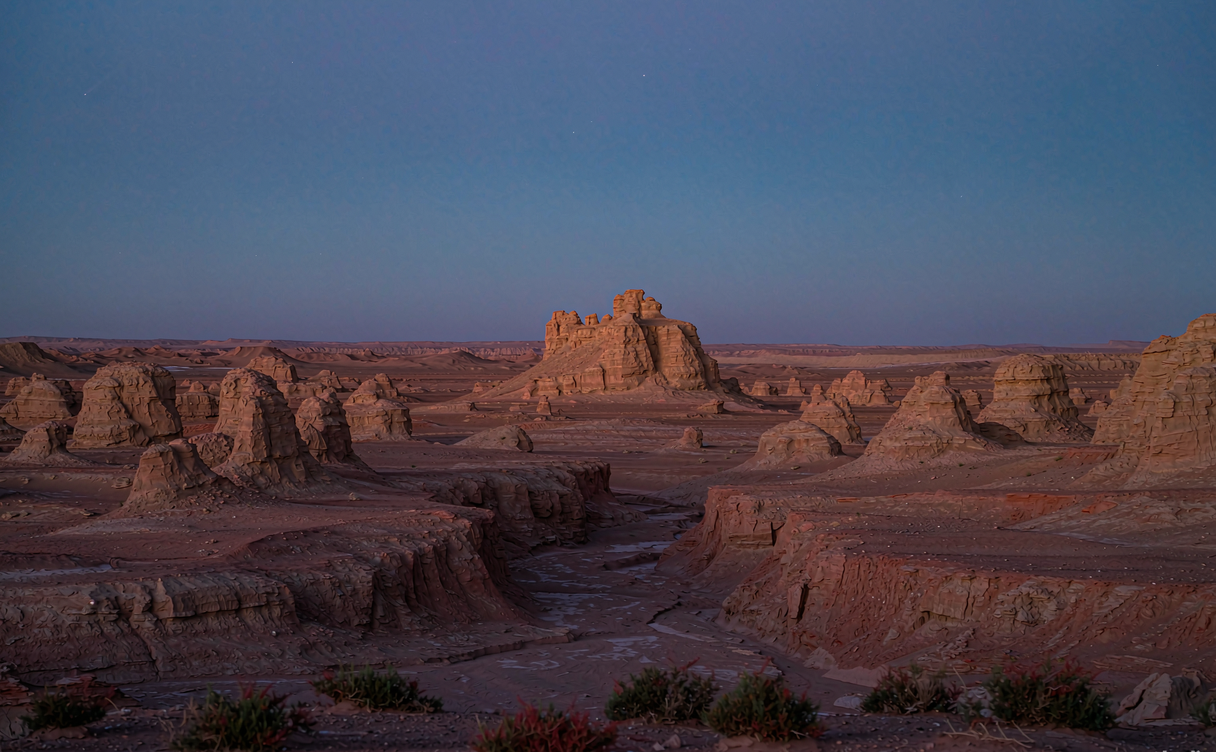
For photographers, the region is a dream, and searches for Lenghu Mars camp Qinghai photos rarely disappoint. The trick is preparation: bring a sturdy tripod, a wide fast lens, and spare batteries, because the cold drains them fast. Shoot your ridge foreground during blue hour, then keep the shutter open for the sky after true darkness falls. The red rock makes a perfect anchor for a star-stacked composite. Just remember that the same remoteness that gives you the shot also means no second chances if you forget a cable release at home.
Lenghu fits naturally into a larger journey. It sits on the southern arc of the classic desert circuit, and many travelers combine it with the salt lakes, the yardang formations, and the Gobi towns to the west. Our Qinghai Gansu loop itinerary shows how to string these wonders into a coherent route without backtracking. And because dark skies are a theme across the country, our broader China stargazing dark sky guide compares Lenghu with other remote observing spots from the grasslands of the north to the plateaus of the southwest. For those still deciding where to point a first trip, our best things to do in China list includes Lenghu as a standout for travelers who want something beyond the usual highlights.
It is worth noting the conservation angle, because it is part of why Lenghu works. Local authorities have moved to limit light pollution and protect the dark environment, recognizing that a pristine night sky is itself a fragile resource worth more than the electricity to flood it. The International Dark-Sky Association, an authority on protecting night environments worldwide, documents why such places matter and how communities can keep them dark (International Dark-Sky Association). Lenghu’s fledgling protections suggest it could remain a sanctuary for decades if visitors tread lightly.
[CTA]Ready to chase the stars? Contact our team and we will arrange transport, camp booking, and a guide for your Lenghu night.[/CTA]
A few practical notes before you go. Altitude here is well over 2,700 meters, so take a day or two to adjust and drink plenty of water. Pack far warmer clothing than the daytime temperature suggests; nights at a Lenghu stargazing camp routinely drop below freezing even in autumn. There is essentially no mobile signal at the camp, which is either the best or worst part depending on your outlook. Bring cash, snacks, and any medication you might need, since the nearest town is small and the nearest city is hours away. Respect the dark: use red-light flashlights only, and never shine a beam upward where others are trying to see.
What stays with people is not any single photograph but the scale of the silence. In a city you forget how loud the world is; at Lenghu the quiet is so complete you can hear your own heartbeat between meteors. The ridges, the cold, the impossibly bright sky — they combine into an experience that is hard to describe and impossible to forget. If you are building a China trip and want one night that feels truly otherworldly, put this camp on the map. It may well be the moment your whole journey is measured against.