

Huailai sits underneath the Great Wall, and that is the whole appeal. This county of Zhangjiakou City in northern Hebei lies roughly 130 km northwest of Beijing and about 60 km west of Badaling — close enough for a two-day escape, far enough that the city noise drops away the moment the train pulls out of Qinghe. On my last visit I reached Shacheng just before nine in the morning, walked into Jimingyi as the low sun turned the brick warm, and had one of China’s best-preserved ancient post stations almost to myself for a solid hour. Nothing about the place is polished, and that is why I keep going back.
Most people planning a first trip to Beijing book three days downtown and never leave the second ring road. That is a shame, because the escapes available from the capital are unusually good — if you know how to reach them. Huailai is the clearest example. It is a real destination with a real history, yet a Huailai weekend trip from Beijing costs you a morning of travel and nothing else. If this is your first time in the country, I would treat the capital as a base and take day trips outward: the Beijing first-time travel guide covers how to get your feet under the table administratively, and then you can spend your evenings reading about places like this one.
Start with the morning train from Qinghe or Beijing North, plan on two full days, and leave Sunday evening for the return. Everything below fits inside that shape — you can copy it, or use it as a skeleton and follow whatever catches your eye once you are standing in the courtyard.
Getting to Huailai: the train is the easy part
High-speed rail did most of the work here. Since the Beijing–Zhangjiakou line opened, trains from Beijing North and Qinghe reach Huailai and Shacheng in roughly 40 to 50 minutes, which makes the China weekend getaways guide look conservative about how far you can comfortably travel in forty-eight hours. Buy a second-class ticket, sit on the side away from the sun, and you will be looking at the Badaling range before the aisle coffee is finished.
Shacheng station is the one most visitors use: it sits in the wine country south of the reservoir and puts you close to the vineyards and to Jimingyi by road. Trains also stop at the Huailai station closer to the county seat. From either, a taxi into town is short and cheap, but for Jimingyi specifically you want a pre-arranged car or a shared ride from Shacheng — the post station is about 20 km northwest of the reservoir shore, and public transport out that way is thin on weekday mornings.
Driving is possible and popular, but be honest about the downside: the G6 Beijing–Tibet Expressway (Jingzang) turns into a parking lot on Saturday and Sunday afternoons, especially at the Badaling exit. If your heart is set on a rental car, leave Beijing before eight. The old Beijing–Zhangjiakou Railway’s S2 line also still serves Badaling, which is a lovely slow option if your first stop is the Great Wall of China guide rather than Huailai itself.
Jimingyi: a Ming post station that time skipped
Jimingyi is the reason most guides exist at all. Founded alongside the Ming dynasty beacon towers that marched across this corner of Hebei, it functioned as a relay station where imperial messages changed horses and officials changed carts on the road between the capital and the frontier. It is counted among the best-preserved postal relay stations in China, and in 2001 it was listed in the fifth batch of National Key Cultural Relic Protection Units — a phrase that sounds bureaucratic until you stand in the courtyard and see the original gate drums, the horse stables, the office rooms with their worn brick thresholds.
What struck me was not the size but the layering. The outer walls and the two-gate layout are Ming; the rooflines have been repaired repeatedly; a 19th-century inscription sits beside a shrine that locals still tend. Tour groups arrive around ten and leave by eleven, so the trick is simple: be there at opening, or wait them out. Walk past the second gate, find the small temple on the west side, and climb the low mound behind the compound where you can see the pine ridges running north toward Jiming Mountain.
A note on patience: restoration is constant at sites like this, and the smaller courtyards are sometimes fenced. Go anyway. The best things to do in China list will tell you to see the big names in Beijing and Xi’an; this is a quieter, cheaper version of the same experience with a third as many people in it.
Combine Jimingyi with the reservoir in one day: first the post station while the groups are still on the bus, then a late lunch in the county town, then the dam road before the light goes. Book a car from Shacheng the night before — the drivers there know exactly how long the drive takes and will not overcharge you.
Jiming Mountain, pine ridges, and the cable car
Jiming Mountain rises directly behind the post station and gives the village its name — the fable is of a rooster crowing at dawn, which sounds silly until you watch the sunrise from its northern face. The slopes are covered in pines that hold their dark green through the worst of the winter, and from the ridge you get the first real view of the Guanting basin: vineyard rows, reservoir water, and the grey wall of the Badaling hills behind. A cable car climbs the north side and saves you the walk up if the wind is up, which in this region it often is.
I walked the lower trail instead and regretted neither. The path is stony, the air is noticeably cleaner than anything inside the Fifth Ring, and in May the slopes smell like wild lilac. Locals climb on weekend mornings in pairs and trios, carrying thermoses; if you want company for the ascent, that is where to find it.
Guanting Lake: the reservoir that feeds Beijing
Locals call it Guanting Lake, the maps call it Guanting Reservoir, and both are right. It is a large reservoir on the upper Yongding River in the upper reach of the Haihe system, built to tame a river that used to arrive in the capital as a flood and leave it as dust. That engineering history matters because the reservoir also sits upstream of one of Beijing’s water sources — which is why the shore is closed, guarded, and honestly a little strange at first if you arrive expecting a public lakeside promenade.
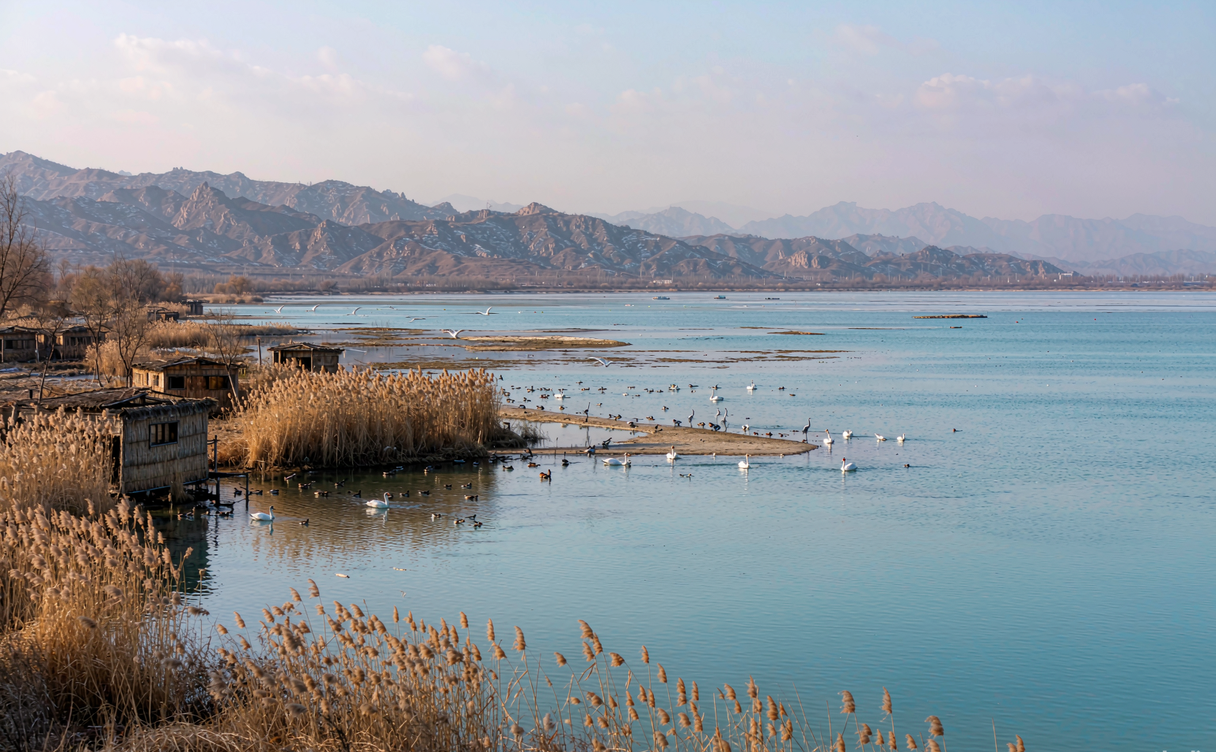
Guanting reservoir lake Huailai rewards visitors anyway, from the dam and the visitor viewpoint along the road. The water is a deep blue-green that photographs badly in the afternoon glare and beautifully in the hour before sunset. In winter it partially freezes, and that is when the birding gets serious: flocks of migratory waterfowl work the open channels, and you will see far more with cheap binoculars than with a camera. Bring layers; the wind off the water on a December afternoon cuts straight through a jacket.
For official background on the reservoir and the county’s conservation work, the Hebei provincial government publishes its own material at hebei.gov.cn. Worth five minutes of reading before you go, mostly so the guard at the checkpoint does not have to explain the geography to you twice.
Three days, two days, or a long afternoon
Huailai rewards a slow approach. My own two-day plan:
- Day one. Early train from Qinghe to Shacheng, car to Jimingyi for the opening hours, Jiming Mountain in the early afternoon, back through the vineyards for a tasting, sleep in the county town.
- Day two. Morning market in Huailai town, then the reservoir viewpoint and the dam road at midday, lunch on the shore road, afternoon train home from Huailai or Shacheng.
If you have three days, add the Huangdi City archaeological site in Zhuolu to the north — a low earthen wall on the plain that marks the traditional founding ground of the Yellow Emperor, quiet to the point of eerie, and about an hour from the reservoir. If you have one day, do Jimingyi and the mountain and skip the rest; even so, the Zhangjiakou travel guide will give you the surrounding towns worth a second trip.
Wine, sun, and where to sleep
This is a wine region, and not a token one. The Shacheng–Huailai area north of Beijing has a dry, sunny, large day-night temperature swing that suits cold-hardy varieties, and it produces under the Great Wall Wine label under COFCO. Most wineries sit in a loose cluster south of Shacheng; two or three welcome walk-in visitors in the late morning, and the tastings are unfussy rather than theatrical. Buy a bottle, drink it that evening at the reservoir viewpoint.
Accommodation is realistically centred on the county seat rather than the sites. Small hotels and family-run guesthouses in Huailai town are modest, clean, and a short taxi ride from the train station; there is very little at Jimingyi itself, and the reservoir shore is closed to builders. Book midweek if you can, since weekend rates in the wine villages climb fast.
Best time to visit Huailai
The best time to visit Huailai is May through October, with a late-September bias: the hills are still green, the harvest is happening in the vineyards, and the reservoir water level is usually high. Spring brings reliable wind — mornings that feel like a hairdryer set to cold. Summer is the classic escape from the capital, because Huailai runs a few degrees cooler than Beijing on the same afternoon, and the pines along the mountain do the rest.
Winter is for a narrower audience. It is dry and cold, the air over Hebei is sharp, and the reward is birdwatching on the ice-free channels of Guanting rather than scenery. If that is your interest, go for the winter months and bring proper boots.
A last practical note: check the train timetable the evening before, because the Beijing–Zhangjiakou service thins out on Wednesday evenings, and the last train back is earlier than you would like after a sunset at the dam. Two days is the honest minimum, one is survivable, and the pines will be there whenever you decide.