

My first morning in Hunchun began as a mistake. I had booked a single night, planning to use it as a sleep stop on the way to Changbai Mountain, and instead I stayed four. What changed the plan was a dawn walk down to the Tumen River, where a band of mist lay over the water and the far bank held two countries’ worth of rooftops a few hundred metres away. Nothing about Hunchun looks dramatic on a map. It is a tidy, unhurried county-level city at the extreme eastern tip of the Yanbian Korean Autonomous Prefecture in Jilin province, the last stop before the land runs out toward the sea. Yet the Korean ethnic villages, the river border, the port and one of China’s great frontier lookouts all crowd into a small grid of streets here, and that density is the reason to come.
This Hunchun travel guide is written the way I actually move through the place: in by train, out by bus to the border villages, and mostly on foot between the dinosaur museum, the riverside and a Korean barbecue joint that opens late. It covers how to reach Fangchuan and what to know before you go, the port traffic, the food, and the realistic hop north to Changbai Mountain.
Getting to Hunchun by train and by road
Hunchun railway station sits close to town on the Jilin–Hunchun intercity line, and the Yanji to Hunchun run takes about 40 minutes with second-class fares in the low tens of RMB. Trains from Changchun add roughly two and a half hours. Coming down from Yanji is the easy move — you can leave the prefectural capital after an early breakfast and be drinking traded coffee in Hunchun before the midday rush.
Taxis cover the six-odd kilometres from the station to the centre for around 15–20 RMB. The bus terminal on the eastern edge of town is where the interesting departures live: coaches to Fangchuan in Jingxin township, and long-distance buses toward Changbai Mountain. If you are driving, take the G11 Hunchun–Wulanhaote expressway west and the side roads east toward the river. Winter ice is normal and roadside signs are sparse, so keep the hotel name in Chinese characters on your phone.
Base yourself in Hunchun for two nights rather than one. That gives you a sunrise at Fangchuan and a slow evening of Korean barbecue without turning the trip into a rush. If Yanji is your arrival point, read our Yanji travel guide first and chain the two towns into one loop.
Fangchuan, Longhu Pavilion and the three-country ridge
Every trip here eventually ends at the same place: Fangchuan village in Jingxin township, and the wooden Lookout Pavilion (Longhu Ge) on the bluff above it. From that platform the Tumen River bends through the valley below, and the slopes on both sides belong to neighbours rather than to you. North Korea’s fields and village roofs sit on one bank, the Russian ridgeline runs low on the other, and the river itself drops away downstream toward the open sea. Locals call the spot the place where one foot stands in three countries, and the phrase is not an exaggeration of anything you can see with your own eyes.
Fangchuan is also a managed border area, and that is the part people get wrong. Entry is controlled, staff check identity documents at the gate, and it is worth confirming the day’s status or any permit requirements before you set off from town — carry your ID at all times. You can photograph the boundary markers and the view; you cannot step across them, and the distance between you and the far bank is not negotiable. Drones are prohibited, and enforcement is visible rather than theoretical. My first visit was overcast, visibility poor, and I still remember it more clearly than three sunnier days elsewhere: three border lines folded into one valley, and a fog bank moving north over the water.
The port and Hunchun’s double border
Hunchun calls itself a border city because it genuinely is one: it is the county-level city in Yanbian that touches both Russia and North Korea, near the point where the three territories meet. The Hunchun port station on the eastern edge of town is a working crossing, not a showpiece. Freight and passengers move through it, and the road and rail corridors beyond it run in two directions — north across the river toward North Korea’s Rajin area in North Hamgyong province, and east toward the Russian port of Zarubino in Primorye Krai, historically the rail and road link out toward Vladivostok.
None of that is set up as casual sightseeing, and I would not promise anyone a walk across the border. What you can do is watch it from the right distance: the container yard, the road signs, the queue of trucks at the gate, and the small port-side market where Russian chocolate and Korean snacks are priced far below what you would pay inland. If you are the kind of traveller who likes understanding how a frontier actually functions, our China land border crossings guide explains the paperwork, the zones and the usual restrictions before you commit a day to it.
Korean villages, tabletops and a drumline
Hundreds of thousands of ethnic Koreans live in Yanbian, and Hunchun is where that shows up in daily use rather than in a display. The Korean ethnic folk village on the city’s edge puts tiled farmhouse roofs, a brewing shed and a pounding area in one compound, and on festival afternoons the nongak drum and farm-band music starts without much prompting. Watching the tteok pounding — heavy mallets, short synchronized strokes, a dozen hits to a song — is worth ten minutes on its own.
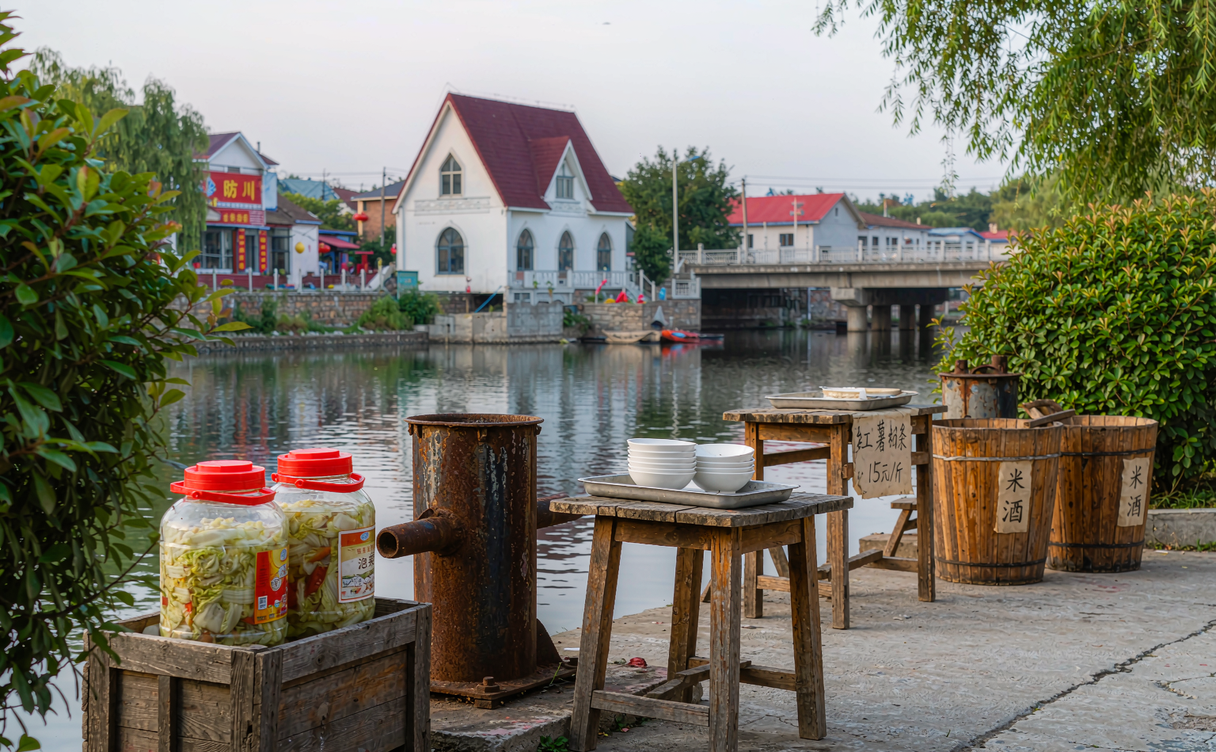
Then you eat. Cold buckwheat noodles arrive in a dented metal bowl with pear slices and a boiled egg, kimchi comes out in courses, and the grilled skewers that Yanbian is famous for come off a charcoal pan smeared with sesame oil, close to sweet, heavy on cumin and garlic. A Korean barbecue dinner for two runs well under 150 RMB here, and the night markets stay warm and crowded long after the buses have stopped running. I have sat at one such table until the pounding next door had stopped and the streetlights came on over the Chinese and Korean characters on the shopfronts — that evening told me more about the town than any sightseeing bus did. For the wider cultural frame, our China ethnic minorities travel guide fills in the story behind the costumes, the clans and the food.
Dinosaurs and the hill over the rail yard
Hunchun is not only a border town. The dinosaur museum on the northern side of the city holds a large collection of fossils pulled from the local strata, and the star is the Mantsuoaurus, the Manchurian dragon dinosaur whose remains were named through joint Sino-Mongolian work on the Cretaceous beds of this region. It is a quiet museum: few visitors, good displays, and a gift shop of postcards. Budget an hour.
Back in the centre, Xianren Mountain (the immortal’s hill) is the small peak that rises behind the rail yard. The climb is short, the stairs are steep in places, and the payoff is a flat view over the city, the trucks on the highway and the low mountains carrying the horizon. Go in the late afternoon when the light rakes across the river.
Hunchun to Changbai Mountain
The obvious reason many people route through Hunchun is Changbai Mountain, and the drive is far more practical than visitors expect. Cars and shared taxis run from Hunchun to the Changbai Mountain west slope in roughly two to three hours along good road, with the north slope reachable in a similar window from the northern approach. Buses leave the Hunchun terminal early and sell out on summer weekends, so book the seat the day you arrive. From the slope, the climb continues to Tianchi, the crater lake at the top, and a clear morning is worth rescheduling an entire day for.
I have done this stretch in both directions, twice in ice. Pairing Hunchun with the mountain keeps you out of the crowded Antu base camp, and the contrast is useful: a working border town in the evening, an alpine caldera in the morning. Our Changbai Mountain guide covers the slopes, the shuttle buses and the weather windows in more detail.
Best time to visit, and the border rules that matter
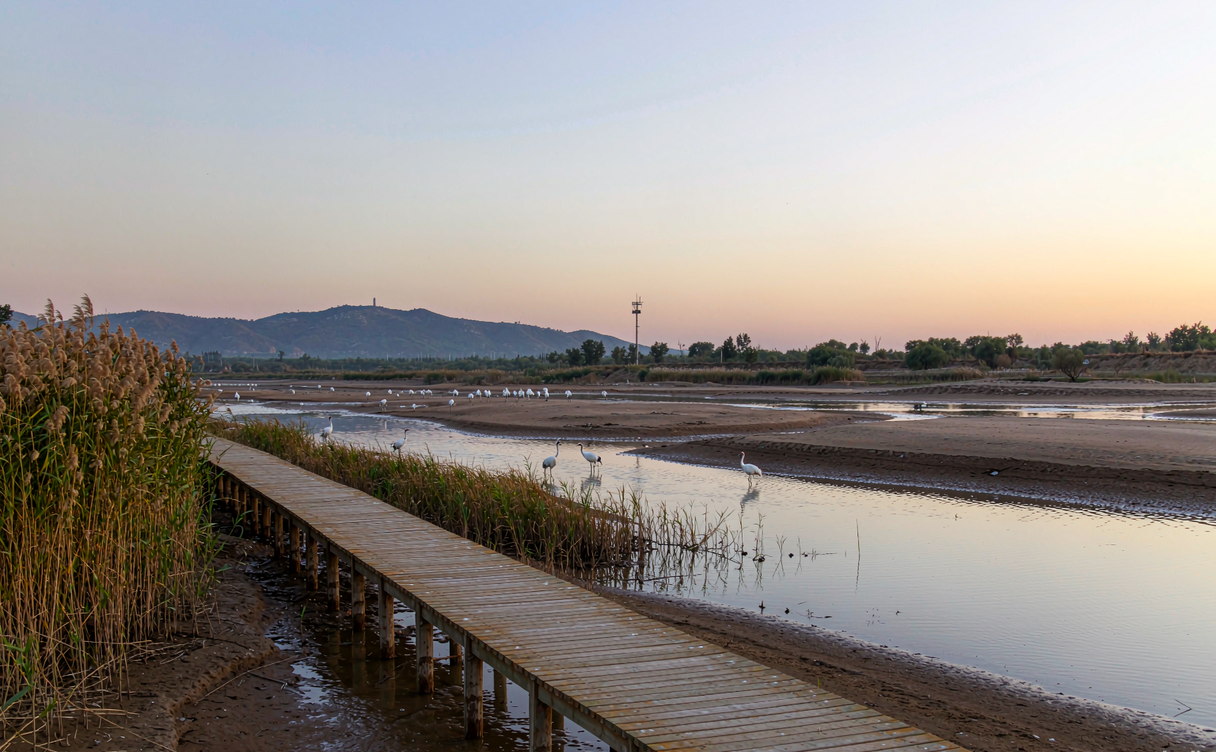
June to September is the sweet spot. Daytime highs sit around 24–28°C, the reed beds and wet grass along the Tumen below Fangchuan fill with migrating birds, and the whole area works as a summer escape from the heat further south. Around mid-September the larch and maple turn and the river valley empties of tour buses. August is the month to be at Longhu Pavilion for sunrise, if you can stand a 5am alarm; I have, twice, and the second time the sky came out in bands of orange over three ridgelines at once. Winter brings deep cold, hard frost and almost nobody — the villages are quiet, the snow is reliable, and the border roads close early in the evening.
A few practical rules. Always carry your identity document. Ask at your hotel or the bus terminal about current access to Fangchuan before driving out, since border-zone opening can vary. Do not photograph military installations, do not step past boundary markers, and leave the drone at home.
Sources: for prefecture-level notices on transport and border-zone arrangements, the Yanbian Korean Autonomous Prefecture government publishes updated information at the Yanbian prefecture government site — check there before a Fangchuan morning run. Start from our Yanbian travel guide for the region’s full itinerary.
For a quick index of the things to do in Hunchun — the lookout, the folk village, the museum and the river bank — the best things to do in China collection is a useful cross-check when you are comparing this corner of Jilin with the rest of the country.
Give Hunchun two nights and treat Fangchuan as a sunrise run, not a stopover. We can book the bus seat, the permit check and a Korean homestay in one message — tell us your dates and we will build the Changbai connection around them.
Travelling the whole Northeast: pair this town with the prefectural capital and then push west to Changbai Mountain. Browse the Yanbian travel guide for the food map and the four-day loop, then message us to lock the transport.