

The first time a plate of yu xiang rou si landed in front of me, it was at a cramped, fluorescent-lit Chengdu food guide hole-in-the-wall near Tianfu Square. I had ordered it by pointing at the menu because the characters looked friendly enough. Before I could lift my chopsticks, the aroma reached me: garlic, ginger, vinegar, and something faintly caramelized, all rising from a glossy heap of shredded pork and vegetables. One bite in, I understood why this dish has survived every trend Sichuan’s dining scene has thrown at it. It is not the blowtorch heat of mapo tofu. It is quieter, more layered, and somehow tastes like it took far longer to make than it actually did.
What Yu Xiang Rou Si Is — and Why “Fish-Fragrant” Means No Fish
Yu xiang rou si (鱼香肉丝) translates literally as “fish-fragrant shredded pork.” There is no seafood in the classic version. The name comes from a seasoning combination originally developed for cooking fish in Sichuan, then borrowed by clever cooks for pork because the sauce worked even better on land. The result is a stir-fry of fine pork shreds coated in a reddish-brown sauce that balances four notes at once: sour from Zhenjiang or black vinegar, sweet from sugar, salty from doubanjiang and soy, and fragrant-numbing from ginger, garlic, scallion, and often a whisper of pickled chili.
Texturally, the dish lives in contrasts. The pork should be silky-tender, almost velvety, while the vegetables stay crisp enough that you can hear the bite. Traditional accompaniments are wood ear mushrooms, bamboo shoots, and carrots, all cut into thin strips that tangle with the meat. A good version does not swim in sauce; the sauce clings to each strand, so the plate looks almost dry until you lift a forkful and see the sheen.
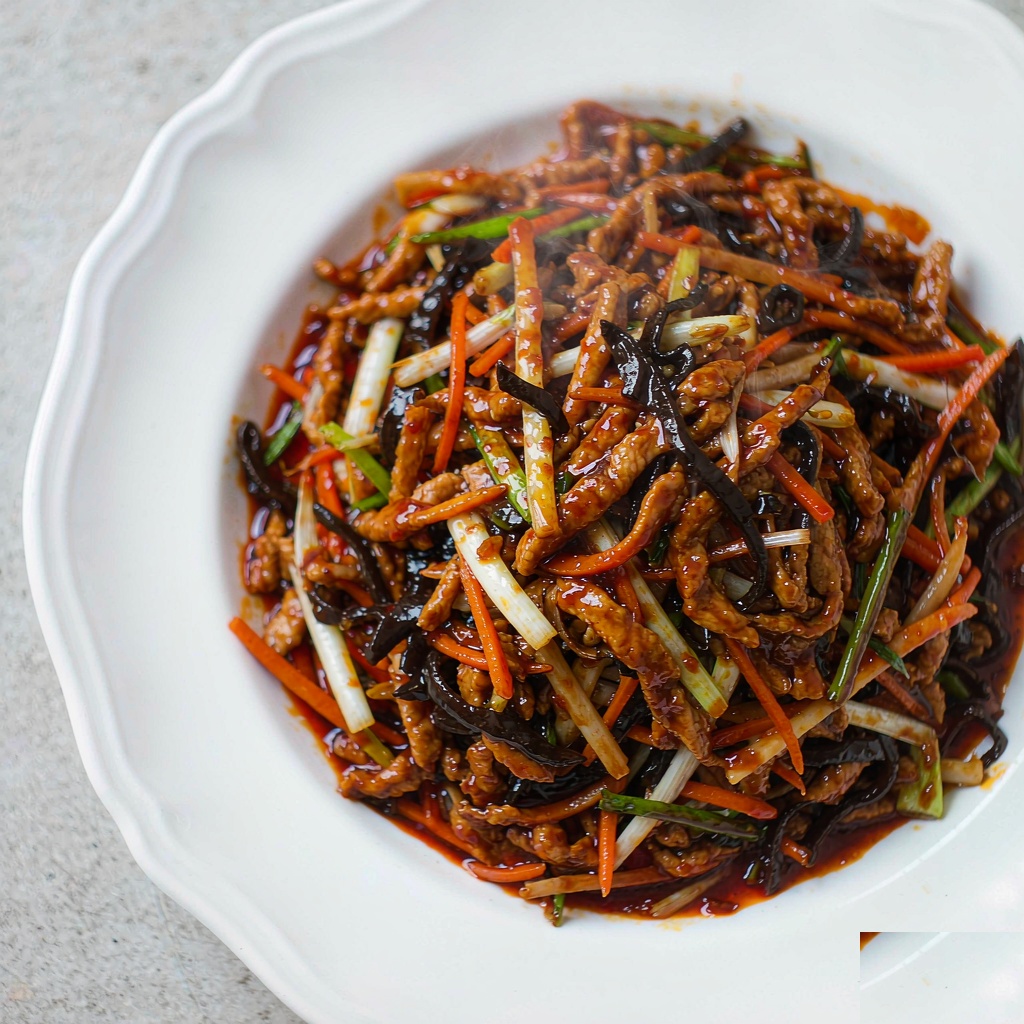
Within the broader Sichuan cuisine guide, yu xiang rou si sits in the “yu xiang” family — a category defined by that exact sweet-sour-salty-aromatic balance rather than by an ingredient. Other members include yu xiang eggplant and yu xiang qie zi, but pork is the benchmark. It is the dish Sichuanese mothers use to teach children that “spicy” is only one color in the province’s flavor palette.
The Taste and Texture That Keep You Going Back
Done well, yu xiang rou si tastes like someone distilled a really good sweet-and-sour sauce through a Sichuan lens and then added a slow-building warmth rather than a frontal chili attack. The first note is usually the vinegar: bright, slightly smoky if the wok is hot enough. Then sugar rounds the edges. Then ginger and garlic announce themselves. Finally, the doubanjiang contributes its fermented, earthy salt, and the scallions add a clean, grassy finish.
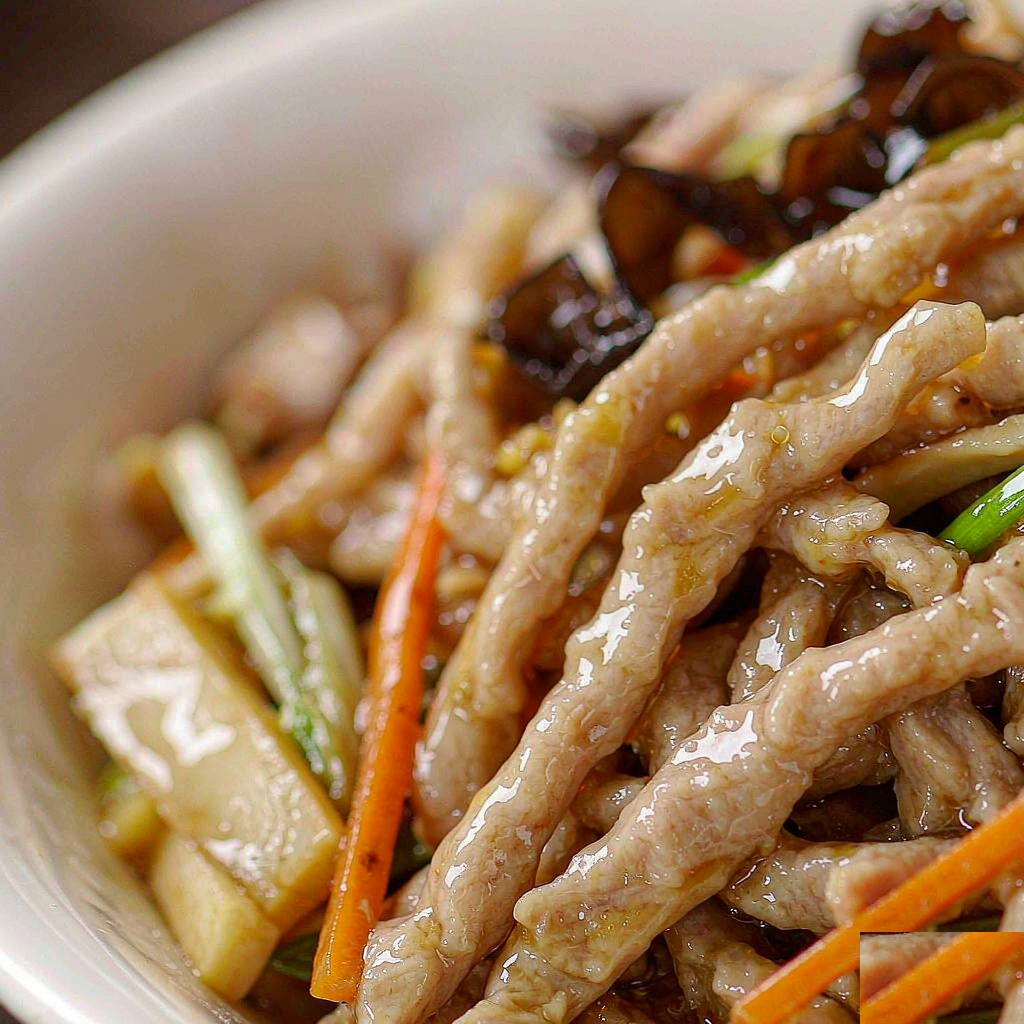
The pork is the quiet star. It should shred apart with chopsticks and have a faint bounce, not a rubbery chew. Velveting — the Chinese technique of marinating meat with a little cornstarch, Shaoxing wine, and sometimes egg white — is what gives it that silky coating. The vegetables are not decoration. The bamboo shoot adds a mild crunch and a faint nuttiness, the carrot brings sweetness and color, and the wood ear delivers a snappy, almost cartilage-like texture that keeps the mouthful from feeling too soft.
I have had versions in Sichuan that lean sour, almost tingly, and versions in Shanghai-adjacent restaurants that lean sweet, closer to American Chinese takeout. Both can be delicious, but the Sichuan original treats sweetness as a supporting actor, not the lead. That is the version worth learning.
Core Ingredients and Why Proportions Matter
The ingredient list is short, and that is the point. Every component has a job, so substitutions show. For a dish serving two hungry people or three as part of a larger meal, this is what I use:
- Pork tenderloin or leg: 250 grams, cut into thin shreds about 5 centimeters long and 3 millimeters thick. Tenderloin is leaner; leg has a little more bite.
- Wood ear mushrooms (dried): 10 grams, soaked until tender and shredded. They look like small black-brown petals and add a subtle crunch.
- Fresh bamboo shoots: 80 grams, julienned. If using canned, rinse well and blanch briefly.
- Carrot: 1 small, about 80 grams, julienned.
- Scallions (green garlic if available): 3 to 4 stalks, cut into 4-centimeter batons, white and green parts separated.
- Fresh ginger: 15 grams, minced.
- Garlic: 3 cloves, minced.
- Pickled chili (duo jiao): 1 to 2 tablespoons, chopped. Not strictly mandatory, but it gives the authentic base note.
- Sichuan Pixian doubanjiang: 1 tablespoon. This fermented broad-bean paste supplies salt, color, and umami depth.
- Sauce mix: 2 tablespoons Zhenjiang black vinegar, 1 tablespoon light soy sauce, 1 tablespoon Shaoxing wine, 1 tablespoon sugar, 1 teaspoon cornstarch, and 2 tablespoons water or stock.
- For velveting the pork: 1 teaspoon light soy sauce, 1 teaspoon Shaoxing wine, 1 egg white or 1 teaspoon cornstarch, and 1 teaspoon oil to seal.
The ratio of vinegar to sugar is the heart of the dish. Some cooks go two-to-one vinegar, others one-to-one. I prefer roughly two parts vinegar to one part sugar for a Sichuan-style tang, but you should taste your own doubanjiang first — some brands are much saltier than others.
Step-by-Step: Cooking It Like a Sichuan Home Kitchen
The cooking itself takes about three minutes. Everything else is prep. Do not start the wok until every bowl is lined up beside the stove.
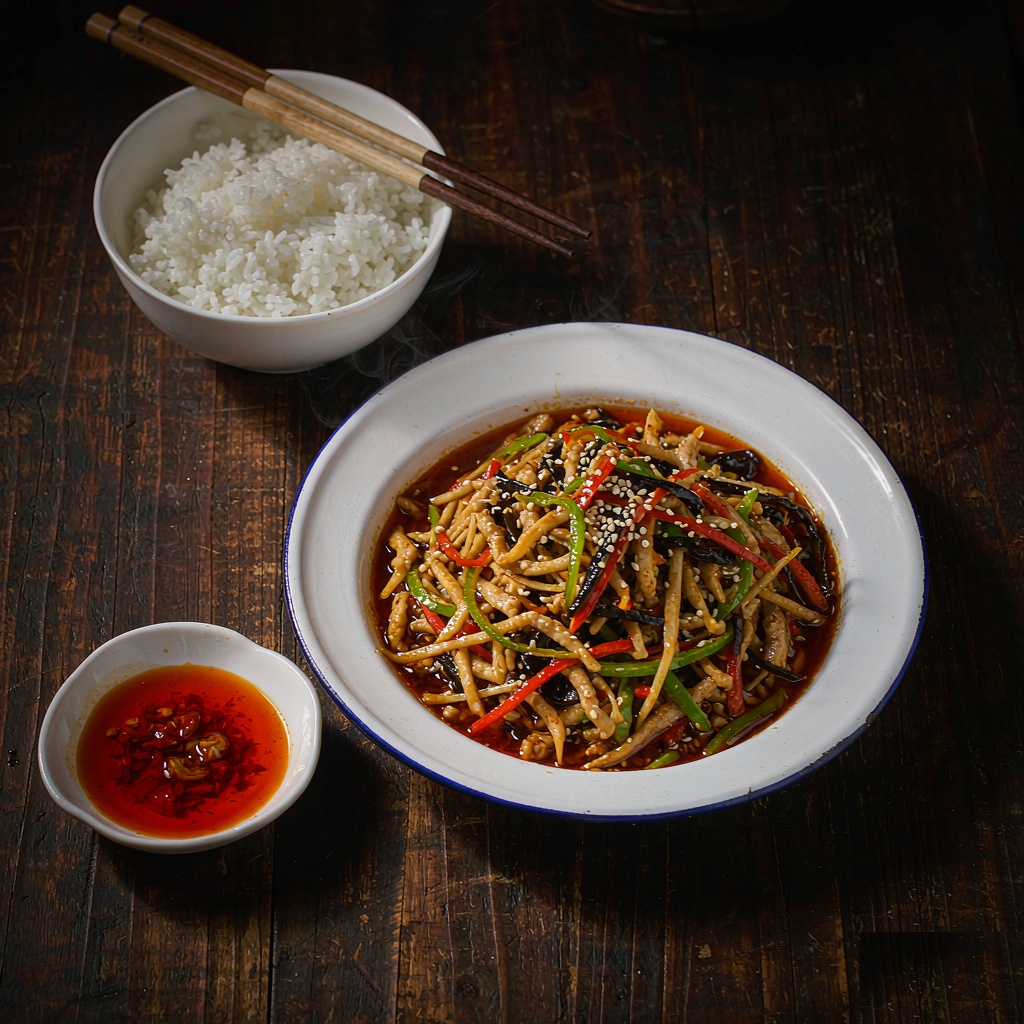
1. Velvet the pork. Mix the pork shreds with soy sauce, Shaoxing wine, and either egg white or cornstarch. Massage gently until the liquid disappears and the meat feels slightly tacky. Add a teaspoon of oil, toss again, and let it sit for 15 minutes at room temperature. This coating protects the meat from the searing wok and keeps it tender.
2. Prep the vegetables. Soak the wood ear until fully softened, then slice into thin strips matching the pork. Julienne the bamboo shoot and carrot. Cut the scallion into batons and keep the white parts separate from the green, since they go in at different times.
3. Make the sauce. In a small bowl, stir together the vinegar, soy sauce, Shaoxing wine, sugar, cornstarch, and water until the sugar and starch dissolve completely. Taste it. It should be sharply sour, lightly sweet, and salty enough that you notice it. Adjust now; you will not have time later.
4. Blanch if needed. If your bamboo shoots are canned or your carrots are especially fibrous, drop them in boiling water for 30 seconds, then drain and shock in cold water. Fresh bamboo shoots can skip this step.
5. Sear the pork. Heat your wok or a large carbon-steel skillet until it barely starts to smoke. Add 2 to 3 tablespoons of oil, swirl to coat, then slide in the pork. Spread it out and let it sear for 10 to 15 seconds before stirring. Once it is mostly opaque and slightly browned in spots, remove it from the wok and set aside. Do not overcook; it will finish later.
6. Build the aromatics. Lower the heat slightly. Add the doubanjiang and fry it for 20 to 30 seconds until the oil turns red and smells toasty. Add the minced ginger, garlic, pickled chili, and the white parts of the scallion. Fry for another 20 seconds until fragrant but not burnt.
7. Combine and sauce. Return the pork to the wok. Add the carrot, bamboo shoot, and wood ear. Toss on high heat for 30 to 45 seconds. Give the sauce a final stir — cornstarch settles quickly — then pour it into the center of the wok. It will bubble and thicken almost immediately. Toss everything together so the sauce coats every strand evenly.
8. Finish with scallion greens. Turn off the heat, scatter the green scallion parts over the top, and toss once more. The residual heat should wilt them just enough that they still taste fresh. Serve hot, ideally with plain steamed rice.
Who This Dish Is For — and Who Should Pass
Yu xiang rou si is one of the most democratic dishes in Chinese cooking. It is fast enough for a weeknight, impressive enough for guests, and comforting enough that I have seen grown adults fight over the last spoonful of sauce. It suits anyone who enjoys sweet-and-sour flavors but wants more complexity than takeout. It is also a gateway dish for people who think they cannot handle Sichuan spice, because the heat is a background hum rather than a headline.
That said, it is not for everyone. The sauce is moderately high in sodium between the doubanjiang, soy sauce, and pickled chili. People watching salt intake should either skip it or make a lighter version with reduced doubanjiang. It is pork-based, so it obviously does not work for pork-free diets, though some cooks substitute chicken breast or firm tofu with decent results. The wood ear mushroom is a potential allergen for some. And because the dish is sour, spicy, and oily, anyone with active GERD or a sensitive stomach may want to eat a small portion alongside rice rather than a large plate on its own.
Regional Twists and Practical Home Tips
The version above is the Chengdu street-stall classic, but the yu xiang family travels. In Chongqing, the sauce often runs hotter and redder. In some northern Chinese interpretations, the dish is sweeter and thicker, closer to a sweet-and-sour pork stir-fry. Families in Hunan sometimes add a pinch of dried chili flakes on top at the end. Each version is valid, but if you are chasing the taste you remember from a Chengdu food guide meal, keep the vinegar forward and the sugar modest.
Here are a few practical fixes I have learned the hard way:
- Batch panic: If your wok is small, cook the pork in two batches. Crowding drops the temperature and the meat will stew instead of sear.
- Soggy vegetables: Cut everything to the same thickness so nothing overcooks while something else is still raw. A sharp knife matters more than an expensive wok.
- Too sweet, too sour, too salty: If the final sauce is harsh, add a tiny pinch of sugar. If it is flat, add a few drops of vinegar. If it is salty, add a splash of stock and a touch more sugar.
- No doubanjiang? A mixture of fermented black beans and a little chili oil is the closest substitute, though the flavor will be darker and less fruity.
Yu xiang rou si also belongs to a wider family worth exploring. If you want context for where it sits among the eight great regional cuisines of China, this dish is a perfect example of Sichuan’s ability to layer flavor without relying entirely on chili oil. It is sharp, deep, and quietly addictive — the kind of recipe that becomes a weekly default once you nail the sauce.
I still remember the end of that first meal in Chengdu. The plate was scraped clean, the rice bowl empty, and the owner laughed when I asked for the recipe. She just waved her hand and said, “Ginger, garlic, vinegar, sugar — then feel it.” That is still the best advice I have heard for this dish.