

Yangzhou fried rice is one of the most recognizable dishes to travel out of China, yet the version most travelers meet abroad is a pale shadow of the original. Born in Yangzhou, a historic city in Jiangsu province, this rice dish belongs to Huaiyang cuisine, the gentle, knife-work-driven branch of Chinese cooking that prizes balance and clarity of flavor. If you have only had a pile of rice speckled with scrambled egg and a few peas from a neighborhood takeout, you have not yet tasted the real thing. This article explains where the dish came from, what the official Chinese standard actually requires, how it differs from the Western “egg fried rice” most people know, and how you can make or order it on your next trip.
The Origin of Yangzhou Fried Rice
Yangzhou sits at the crossroads of the Grand Canal and the Yangtze River, a place that has fed travelers and traders for more than a thousand years. Local culinary historians trace the dish to the Qing dynasty, when Yangzhou was a wealthy trading hub and a center of refined banquet cooking. Cooks in the region developed a style that used leftover cold rice, turned it into something luxurious with a handful of small, evenly cut ingredients, and served it as part of a larger meal.
The dish became widely known outside Jiangsu through Yangzhou cooks who traveled and opened restaurants across China and, later, around the world. Because so many overseas Chinese restaurants were run by cooks from this region, the name “Yangzhou fried rice” spread far beyond the city itself. The link between the dish and yangzhou fried rice and the broader Huaiyang culinary tradition is the reason it is held to a higher standard than a simple home stir-fry.
What Makes It Authentic: The 1990 National Standard
In 1990, Chinese food authorities published a national standard for Yangzhou fried rice. The point was to protect the name and define what a properly made version should contain. According to that standard, the dish is built around cooked rice that has been cooled, then stir-fried with egg, and a specific set of accompaniments.
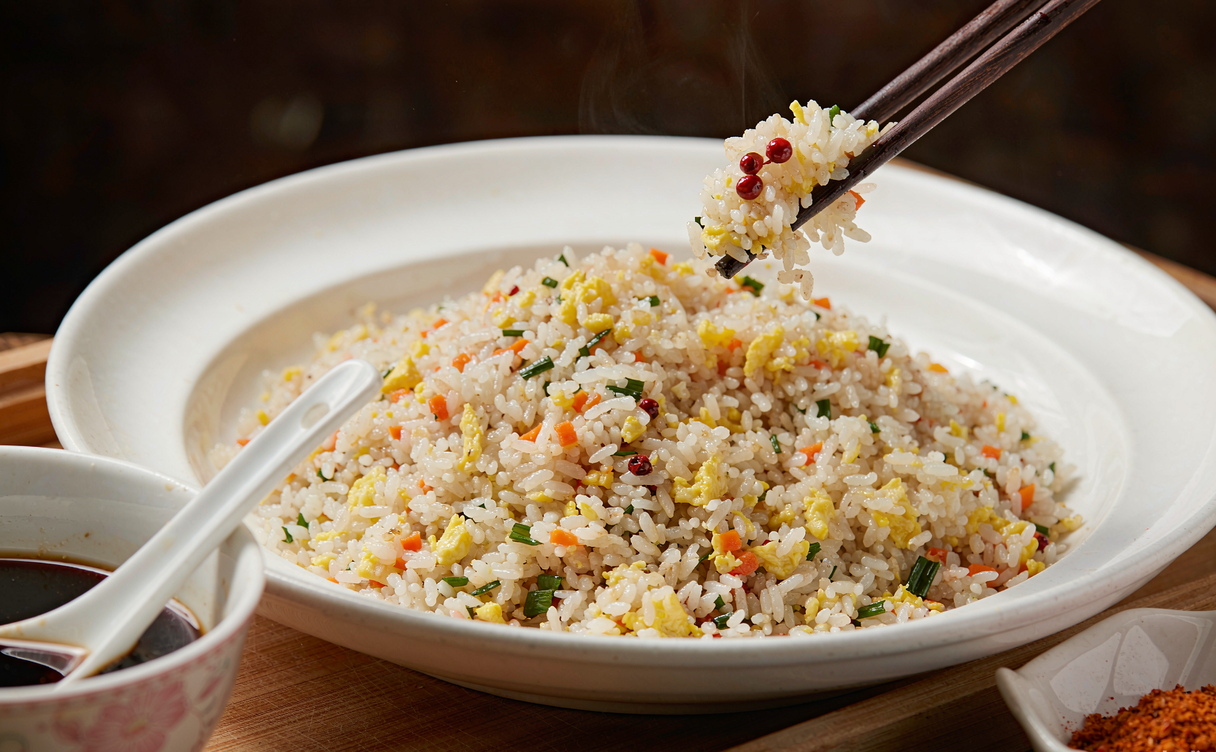
The official ingredient list is precise. It calls for rice, egg, and a combination of proteins and vegetables cut into small, uniform pieces. The classic components include shrimp, diced ham or cured meat, diced chicken, bamboo shoots, mushrooms, peas, and scallions. The eggs are beaten and cooked so that they wrap the grains rather than clump into a separate mass. The standard also specifies that the rice grains should stay separate, loose, and not greasy, with a clean pale-gold color rather than a heavy brown stir-fry sauce.
This matters for travelers because the name is now regulated. A restaurant in China that prints “Yangzhou fried rice” on the menu is expected to follow the traditional recipe, not just toss rice with whatever is in the fridge. That gives you a reliable way to judge a kitchen: if the plate arrives with a rainbow of neat, tiny ingredients and dry, distinct grains, you are eating the genuine article.
How It Differs from Western Egg Fried Rice
Most people outside China know a simpler dish: rice fried with egg, often with soy sauce, onions, and maybe some carrot or bean sprouts. That “egg fried rice” is a legitimate home dish, but it is not Yangzhou fried rice.
The differences are clear. Western-style egg fried rice usually relies on soy sauce for color and salt, which turns the grains brown and gives a single dominant flavor. Yangzhou fried rice uses no dark sauce; its seasoning is light, often just salt and a little cooking wine, so the individual ingredients keep their own taste and color. The cut of the add-ins is another giveaway. In the authentic version, every piece of shrimp, ham, vegetable, and egg is diced to roughly the same small size, a hallmark of Huaiyang knife work. The result looks almost like confetti folded through rice, where the Western version tends to be chunkier and saucier.
Texture is the final distinction. A good Yangzhou fried rice should never be sticky or oily. Each grain should separate on the fork. If your spoon scoops up a clump, the cook either used fresh hot rice or too much oil, and the dish has missed the standard.
How to Make Yangzhou Fried Rice at Home
You do not need a professional wok to get close to the real thing, but you do need cold, cooked rice and a hot pan. Start with rice cooked earlier in the day or the day before and refrigerated; fresh rice steams instead of fries.
Begin by dicing all your fillings small and uniform: a handful of peeled shrimp, a little cooked ham, a few mushrooms, bamboo shoots, peas, and two or three eggs. Beat the eggs and pour them over the cold rice, tossing so the liquid coats the grains before they hit the heat. This is the trick that gives the dish its golden, egg-kissed look without scrambling the egg separately.
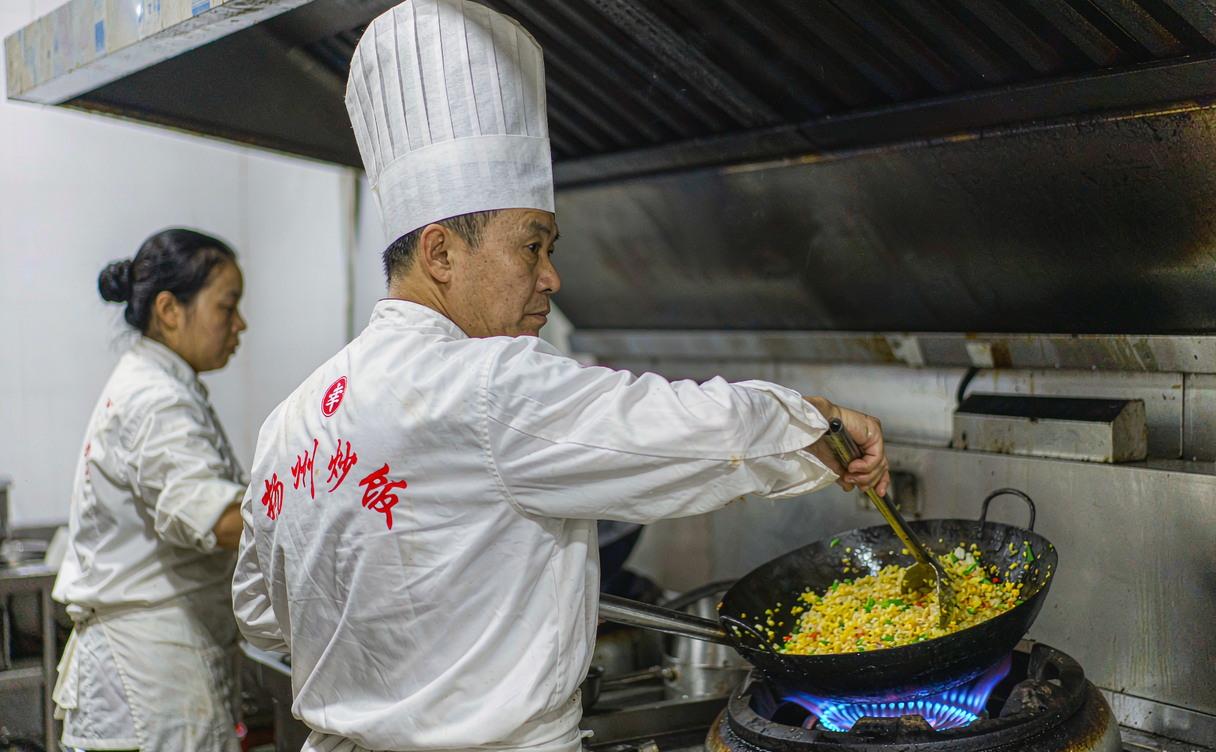
Heat a wok until it smokes slightly, add a measured amount of neutral oil, and stir-fry the rice-egg mixture over high heat, breaking up any clumps with the spatula. Push it to the side, quickly cook the shrimp and ham, then fold in the vegetables for a short thirty seconds so they stay crisp. Season with salt and a splash of rice wine, finish with scallions, and serve immediately. The whole stir-fry should take only a few minutes; the goal is heat and speed, not slow cooking.
A Yangzhou Fried Rice Guide: Where to Try the Real Dish
If you want the dish done properly, the obvious move is to visit Yangzhou itself, where local breakfast shops and banquet restaurants serve it daily. The city sits a short high-speed train ride from Shanghai, Nanjing, and Suzhou, which makes it an easy add-on to a Yangtze delta itinerary. Order it as part of a larger Huaiyang meal rather than as a standalone snack, and you will see how it fits the cuisine’s emphasis on subtlety.
Outside Yangzhou, the best versions tend to appear in restaurants that specialize in Jiangsu or Huaiyang cooking, often found in larger cities. Be wary of generic tourist buffets that label a soy-heavy rice “Yangzhou style”; ask whether the kitchen uses the traditional diced ingredients. Travelers building a broader food plan should pair this dish with a read of our guide to the eight great cuisines of China, which explains where Huaiyang sits among the country’s regional kitchens.
For context on the dish’s official definition, see the overview at Yangzhou fried rice on Wikipedia, which traces the recipe and its naming history.
Tips for Travelers
A few practical notes will help you enjoy Yangzhou fried rice on the road. First, timing matters: it is commonly eaten at breakfast or lunch in its home region, so do not be surprised to see it on a morning menu. Second, watch the price. An authentic version with shrimp and ham costs more than a plain egg rice because of the ingredients, so a suspiciously cheap plate is probably the simplified Western style. Third, learn the romanized name and point to it on the menu if language is a barrier; the dish is written the same way in Latin script across most tourist areas.
If you are planning a first trip, our China travel guide for first-timers covers how to navigate menus, pay with mobile apps, and reach cities like Yangzhou by train. And once you are mapping out a route, our list of the best things to do in China will help you fit a food-focused stop into a wider journey.
Frequently Asked Questions
What is the difference between Yangzhou fried rice and regular egg fried rice?
The main differences are ingredients, color, and texture. Yangzhou fried rice follows the 1990 national standard and uses a precise mix of small-diced shrimp, ham, chicken, mushrooms, bamboo shoots, peas, and egg, with light seasoning and no dark soy sauce. Regular egg fried rice is usually just rice and egg with soy sauce, giving it a browner color and a heavier, saucier taste. A proper Yangzhou Fried Rice Guide always points out that the grains should be loose, dry, and distinct, never sticky.
Is Yangzhou fried rice very spicy?
No. Because it belongs to Huaiyang cuisine, the dish is mild and savory rather than hot. It gets its flavor from the natural sweetness of shrimp and vegetables and the saltiness of ham, not from chili or strong spice. Travelers who prefer heat can add chili sauce at the table, but the traditional recipe stays gentle.
[CTA]Explore China’s regional cuisines with our food tours and city guides.[/CTA]
[CTA]Plan a Yangtze delta food trip and taste authentic Huaiyang dishes with our local itineraries.[/CTA]
[CTA]Book a guided culinary tour to learn wok techniques from a professional Chinese chef.[/CTA]