

Ask any traveler what they remember most about the smell of a Chinese morning street, and the answer is often the same: the sizzle of oil and the nutty aroma of fried green onion pancake. This humble flatbread, sold from pushcarts and hole-in-the-wall shops from Shanghai to Beijing, is one of the most accessible and rewarding foods a first-time visitor can try. It is cheap, filling, and endlessly adaptable. Best of all, it is a perfect entry point into the wider world of Chinese breakfast foods, which reward curiosity far more than any hotel buffet.
What Is a Green Onion Pancake?
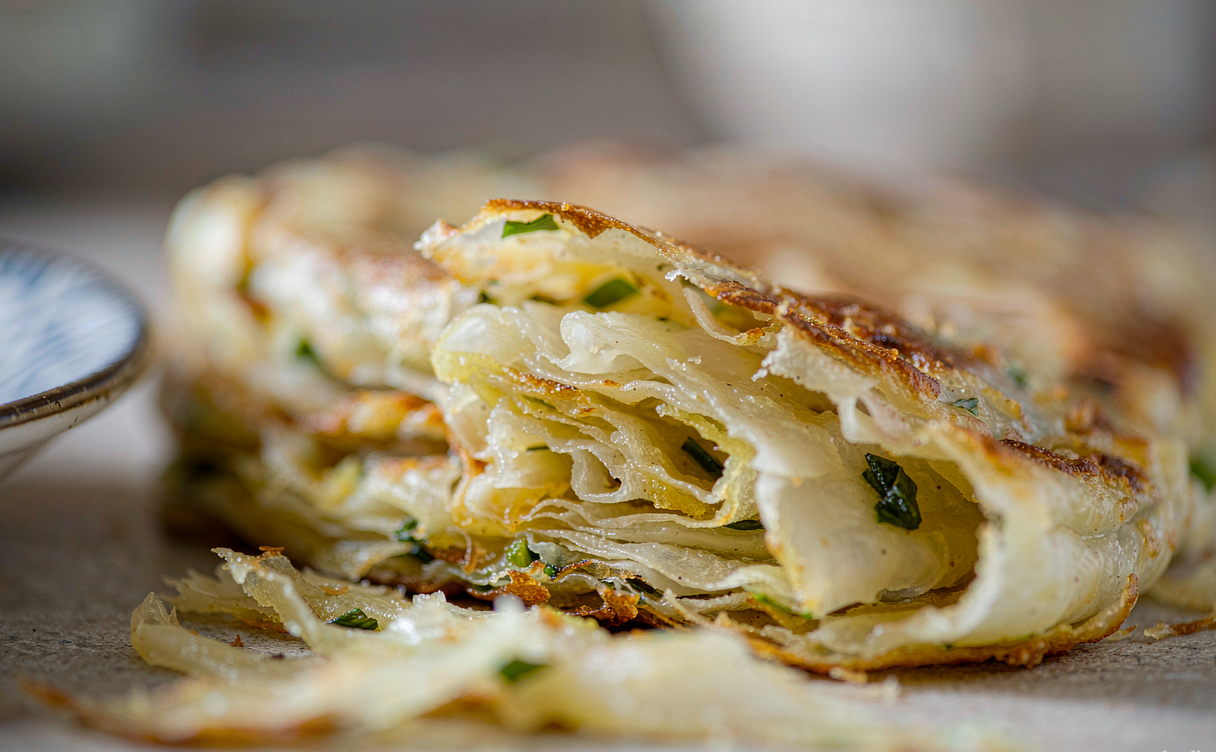
A green onion pancake is not a pancake in the Western sense. There is no batter, no sugar, and no fruit. Instead, it is a layered flatbread made from wheat flour, water, salt, and a generous amount of chopped scallions (green onions). The dough is rolled thin, brushed with oil, scattered with scallions, folded, and rolled again to create dozens of flaky layers. It is then pan-fried until the outside is blistered and crisp while the inside stays chewy.
The result is something between a cracker and a savory crepe: salty, aromatic, and impossible to stop eating. In Chinese cities you will see locals folding newspapers around a hot piece and eating it on the walk to the subway. A good green onion pancake guide should always start here, with the texture, because texture is the whole point.
A Short History of the Dish
The pancake tradition in northern China is ancient. Flatbreads cooked on griddles have been staple fuel for laborers for more than a thousand years, long before rice-dominated southern cooking became famous abroad. Scallions grew easily in northern gardens and were cheap, so folding them into dough was a natural way to add flavor without adding cost.
The dish most travelers meet today is called Cong You Bing in romanized form, a name that simply means “scallion oil pancake.” Over centuries it spread from home kitchens into street stalls and then into dim sum parlors and frozen-food aisles. The version you buy from a cart in a Chinese city is essentially the same food a farmer’s family might have made at home, proof that some recipes need no improvement.
How a Green Onion Pancake Is Made
The magic is in the layering, and the layering comes from a simple technique. A cook mixes flour with hot and cold water to form a soft dough, then rests it so the gluten relaxes. A ball of dough is rolled into a thin sheet, brushed with a mixture of oil and sometimes a little flour to keep the layers separate, and covered with chopped scallions and salt.
The sheet is then rolled into a rope and coiled into a spiral, almost like a cinnamon roll. When pressed flat and fried, each coil becomes a ring of crispness. This is why a proper green onion pancake shatters when you bite it yet stays tender within. Some vendors add sesame seeds; others brush the top with egg; a few tuck in a little five-spice powder. The base method, though, never changes.
Regional Variations Across China
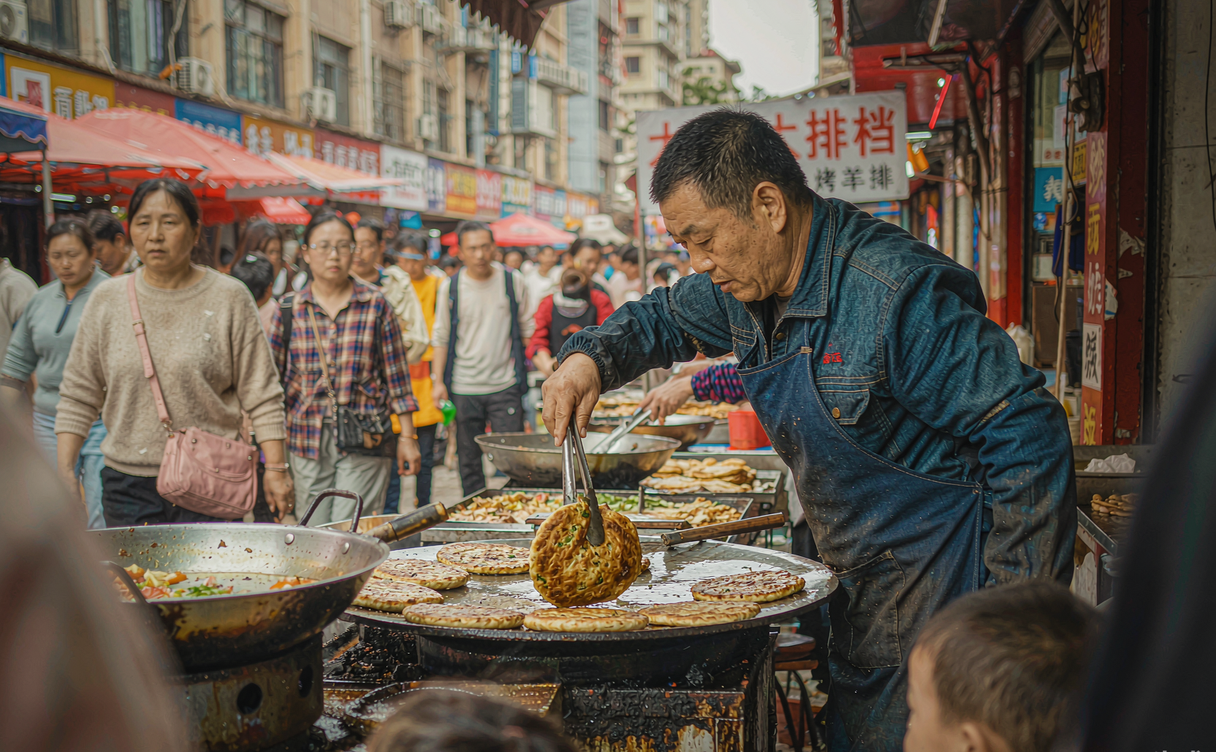
Although the basic idea travels well, the details shift by region. In Shanghai and the wider Jiangnan area, the pancake tends to be thinner and crisper, often served with a soy-vinegar dipping sauce. Street vendors there frequently fold the dough extra tight to maximize the flaky layers that locals prize.
In northern cities such as Beijing, the pancake is usually a bit thicker and breadier, closer to a flatbread than a cracker. You might find it paired with congee or eaten alongside other savory breakfast items. Walk through a Beijing hutong in the early morning and you will hear the same rhythmic slapping of dough against a board that has echoed for generations. For travelers using a Beijing travel guide, hunting down a neighborhood stall is a more memorable experience than many paid attractions.
Further south in Guangdong, the Cantonese version is lighter and sometimes steamed before a quick pan-fry, borrowing techniques from dim sum culture. Wherever you are, the principle holds: a green onion pancake is defined less by a single recipe than by a method of building flavor through layers.
Where to Eat It: Street Food in Shanghai and Beijing
The best green onion pancake is almost always the one nearest you when you are hungry. That said, a few practical tips help. In Shanghai, look for tiny shops near metro exits and wet markets, especially in older districts. A stall with a short queue of office workers is usually a safe bet, because locals are unforgiving about soggy pancakes.
In Beijing, morning markets and the lanes around residential compounds are reliable hunting grounds. Prices rarely exceed a couple of dollars, and portions are generous. If you are building a broader China travel guide for first-timers, note that street food like this is also one of the safest ways to eat local: it is cooked at high heat in front of you and consumed immediately.
Beyond the two headline cities, you will find excellent versions in Nanjing, Suzhou, and Hangzhou, each with its own preferred thickness and oil ratio. The point is not to chase a single famous shop but to try a few and notice the differences. That habit of comparison is exactly what turns a meal into a memory.
Ordering and Eating Tips for Travelers
Ordering is refreshingly simple. Point at the griddle, hold up one or two fingers, and say “one” or “two.” Most vendors speak enough to understand. Pay with a scan of a payment app or cash; either works at a street cart.
Eat it hot. A green onion pancake cools into a leathery disc within minutes, so the sidewalk is the right dining room. Tear off a corner rather than biting the whole disc, which can shed scalding flakes. If a dipping sauce is offered, a light dip enhances the flavor without drowning it. And if you want to explore further, a green onion pancake guide worth its salt always points you toward the rest of the breakfast table: soy milk, fried dough sticks, and steamed buns all belong in the same morning ritual.
Green Onion Pancake Guide: Common Questions
Is a green onion pancake the same as a scallion pancake?
Yes. “Scallion” and “green onion” are simply different English names for the same vegetable, so the two terms describe the same food. Menus in Chinese communities abroad use both spellings, and travelers should treat them as interchangeable.
Can I make a green onion pancake at home?
Absolutely. The ingredient list is short and the technique is forgiving. The only real skill is patience with the rolling and resting steps, which is what builds the signature layers. Many home cooks freeze shaped, uncooked discs and fry them straight from frozen on busy mornings.
Is the pancake vegetarian?
Plain versions are vegan by default, made only from flour, water, oil, salt, and scallions. Some street vendors brush the surface with egg or serve it with meat-stuffed variations, so ask if dietary rules matter to you.
Why This Humble Snack Matters
Food is the fastest language a traveler can learn, and few dishes teach as much as this one. A green onion pancake tells you about northern wheat agriculture, about the value of thrift, and about the Chinese genius for turning three ingredients into something crave-worthy. It also bridges cultures: everyone understands a hot, fried bread handed over with a smile.
If your trip is built around the best things to do in China, do not let the headline sights crowd out the small ones. Some of the strongest memories come from a five-minute stop at a cart, watching a cook’s hands work the dough the way their grandmother did. That continuity is the real attraction.
For travelers who want a deeper dive, our green onion pancake street-food suggestions for Shanghai pair well with the rest of your planning. The encyclopedia entry on this style of flatbread offers useful context on its place in regional cooking; see the overview on Chinese scallion pancake at Wikipedia for a clear summary of its origins and variations.
Bringing It Home
You do not need a recipe blog to recreate the experience. Buy flour, scallions, salt, and oil, and spend one relaxed weekend morning practicing the fold. The first few attempts may look rough, but even a lopsided green onion pancake tastes good, because the formula is forgiving and the reward is immediate.
More importantly, carry the lesson forward on your next trip. Every region of China has a equivalent “simple thing done perfectly,” from hand-pulled noodles to clay-pot rice. Start with the pancake, and let it train your eye to notice the cooks who have spent decades mastering something small. That is the difference between seeing China and tasting it.
[CTA]Taste China’s street food with our curated food tours and city guides.[/CTA]
[CTA]Plan your morning eats with our Chinese breakfast foods guide covering congee, buns, and fried dough.[/CTA]
[CTA]Explore more flavors on your trip with our best things to do in China food and market itineraries.[/CTA]