

Perched on the Yan River where the Loess Plateau folds into deep yellow gullies, Yan’an is one of Shaanxi’s most layered destinations. For many Chinese travelers it is a pilgrimage to the sites of 20th-century revolutionary history; for everyone else it’s a chance to see authentic cave dwellings (窑洞), dramatic yellow-earth landscapes, and the nearby Yellow River at its most theatrical. In our experience, the town works best as a two- or three-day stop between Xi’an and the north, mixing museum visits with real plateau scenery. This Yan’an travel guide keeps the focus on what you can actually see, eat, and do.
Where Yan’an is
Yan’an sits in northern Shaanxi, roughly 300 km north of Xi’an, on a bend of the Yan River that has carved the soft loess into a natural basin. The city is flanked by bare, rounded hills the color of ochre, and much of its older architecture is built into those hills as cave dwellings. It’s a transit point as much as a destination: the high-speed line and a small airport both serve it, and the road east reaches the Yellow River and Hukou Waterfall within a couple of hours.
How to get to Yan’an
The easiest answer to how to get to Yan’an is the high-speed train. Xi’an North to Yan’an takes about 2 to 2.5 hours (second class ¥95–¥150), with frequent departures, making it an easy day-trip base or an overnight stop. From Beijing, a direct high-speed train runs around 5.5–6.5 hours (¥350–¥520), so you can reach the plateau without flying. Yan’an Nanniwan Airport has flights from Xi’an, Beijing, and a few other hubs if you prefer. Inside the city, buses and cheap taxis (¥8–¥20) cover the sights, but the out-of-town sites — Hukou, Huangling, Qiankun Bay — need a chartered car (¥400–¥700/day).
Best time to visit Yan’an
For a best time to visit Yan’an recommendation, aim for April–May or September–October. Spring brings mild, sunny days (15–24°C) and blossom on the fruit trees; autumn is our favorite, with crisp air and golden loess under blue sky. Summer (June–August) is hot but not oppressive, and it’s the season for the highest Yellow River flows at Hukou. Winter is cold, grey, and occasionally dusty with plateau wind, though hotel prices drop. We’d avoid the peak of spring dust-storm weeks if you have flexibility.
Yan’an revolutionary sites
The phrase Yan’an revolutionary sites refers to a cluster of preserved headquarters, cave-dwelling compounds, and museums from the 1930s–1940s. The best place to start is the Yan’an Revolutionary Memorial Hall (延安革命纪念馆), a large, well-labeled museum that lays out the period’s history with photographs, uniforms, and documents — allow two hours. From there, the cave-dwelling sites are the real draw:
- Zaoyuan (枣园): a former leadership compound of stone caves set among lawns and old trees, with furnished rooms you can peer into.
- Yangjialing (杨家岭): the site of the central committee’s cave homes and the auditorium where party congresses were held; the cave rooms are remarkably intact.
- Wangjiaping (王家坪): the former military headquarters, smaller and quieter, good for a calm walk.
Baota Mountain (宝塔山) is the city’s symbol — a Ming-era pagoda on a hill above the river, reachable by a short climb or cable car, with the best panorama of the basin. Most sites charge a modest entry (¥30–¥65) or are free with ID; hiring a local guide (¥100–¥200/half day) turns the caves from empty rooms into a story.
Beyond the history: landscape and river
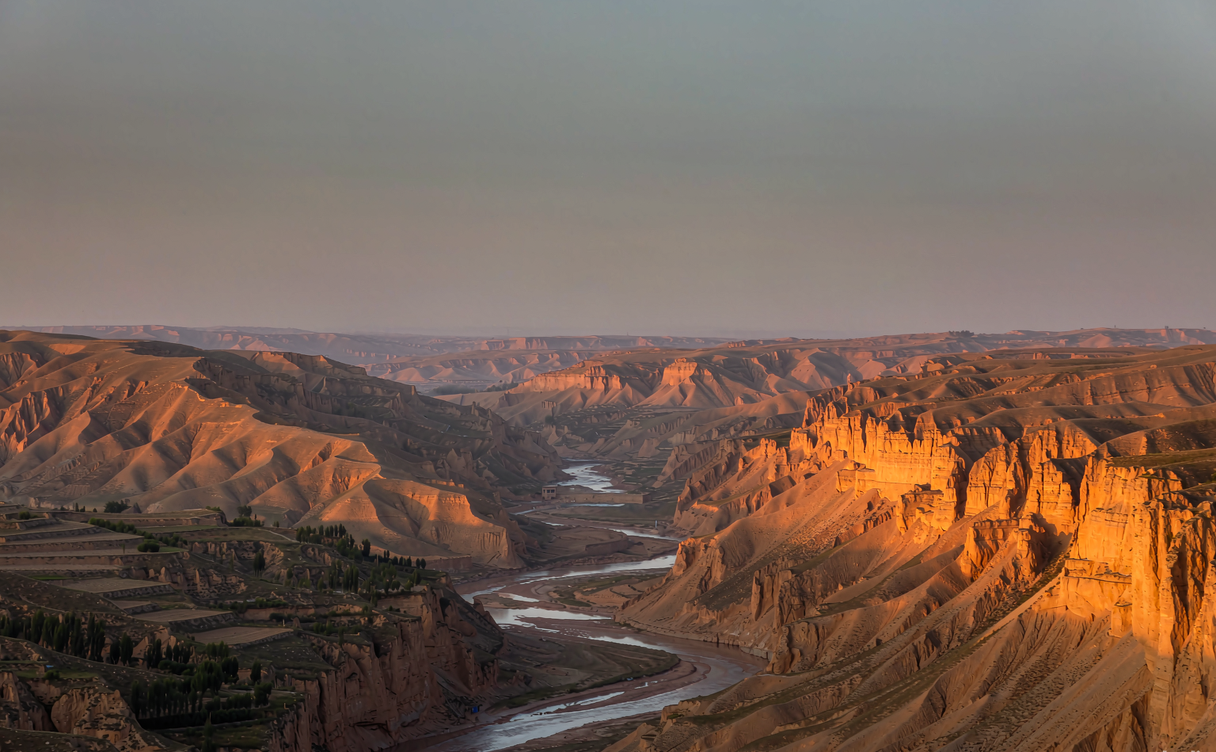
The plateau around Yan’an is the real unexpected pleasure. To the east, Hukou Waterfall (壶口瀑布) is the Yellow River’s largest fall, where the entire river squeezes through a narrow gorge and drops in a roar of yellow spray. It’s about 2 hours from Yan’an by car; visit in summer or autumn for the fullest flow, and wear a rain cover — the mist soaks you. South of Yan’an, Huangling (黄帝陵) preserves the reputed tomb of the Yellow Emperor, a calm, wooded cultural site that draws ancestral pilgrims, especially around the Qingming festival. Closer in, Qiankun Bay (乾坤湾) is a sweeping, almost closed loop the Yellow River makes through the loess near Qingjian — a favorite for drone shots and quiet walks.
Cave dwellings and loess culture
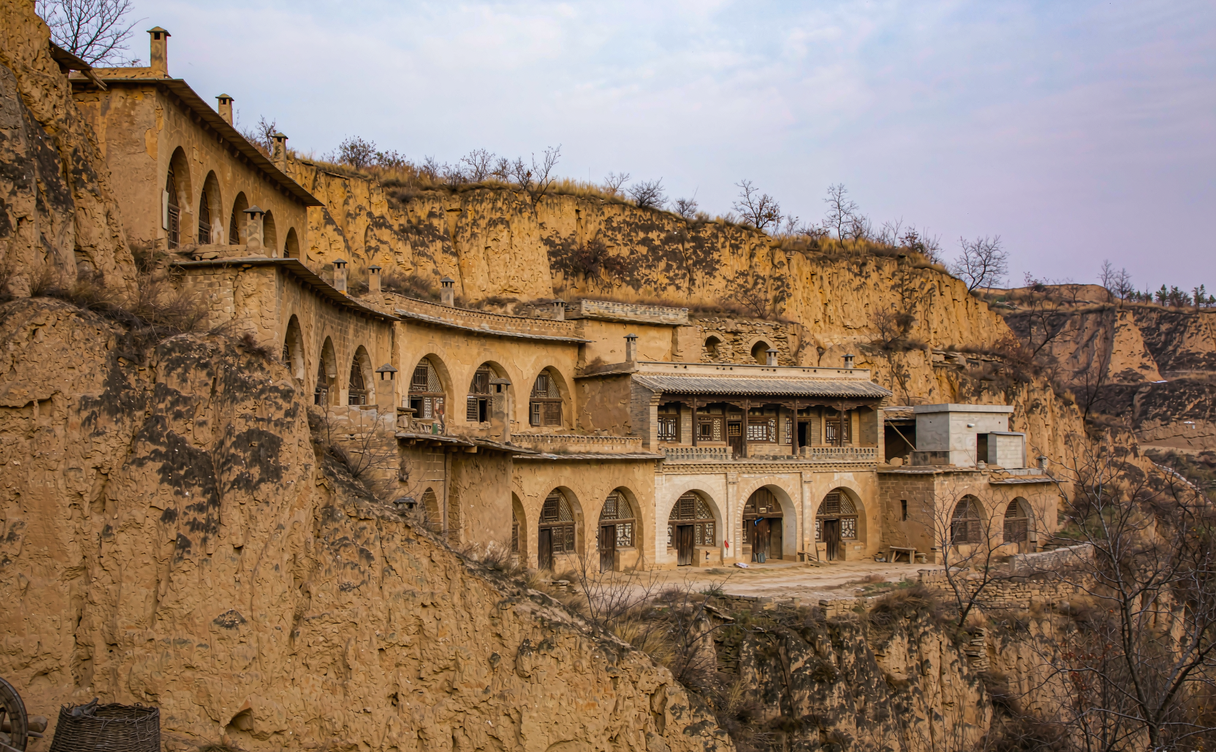
Beyond the named sites, Yan’an’s everyday architecture is the story. The yaodong — arched rooms dug into the loess hillside — have housed northern Shaanxi families for centuries, cool in summer and warm in winter, and a stay in a renovated one is the most memorable night you’ll spend here. Whole villages are built this way, their courtyards scooped from the yellow earth. The loess itself is the region’s defining feature: wind-formed, easily carved, and endlessly eroded into the dramatic gullies you’ll see from any hilltop. A short drive out of the city puts you among farmers tending terraces of millet and sorghum, a working landscape that hasn’t changed much in generations.
Locally, the red dates of northern Shaanxi are the signature gift — sweet, chewy, and sold by the kilogram in every market — alongside jars of hawthorn jam and bags of roasted millet. None of it is precious, which is exactly the charm.
A practical Yan’an itinerary
A solid Yan’an itinerary runs three days. Day 1: arrive from Xi’an, visit the Revolutionary Memorial Hall and Baota Mountain at sunset. Day 2: Zaoyuan and Yangjialing cave sites in the morning, Wangjiaping afternoon, evening cave-dweller dinner. Day 3: charter a car east to Hukou Waterfall (or south to Huangling) and return to Xi’an the same evening. If you have a fourth day, add Qiankun Bay. Yan’an fits naturally into a longer route — our Beijing–Xi’an–Shanghai itinerary shows how to thread it between the capital and the ancient capital.
Food, stay, and local life
Northern Shaanxi eats are hearty and carb-forward. Try mianjie (抿节, hand-pressed noodles in broth), yangyu ca ca (洋芋擦擦, steamed potato strips tossed with seasoning), yougao (油糕, fried sweet cakes), and liangpi (凉皮, cold noodles). The local red dates (红枣) are excellent and cheap. A street meal is ¥10–¥18; a sit-down dinner for two runs ¥70–¥120. For a broader picture of the province’s flavors, the Chengdu food guide covers a very different — and spicier — Chinese region you might pair with this trip.
Staying in a cave dwelling is part of the fun: several renovated yaodong inns in and around the city let you sleep in a cool, arched room for ¥150–¥300 a night. Standard hotels run similar prices. For a total change of scenery after the loess, the Guilin travel guide shows the green karst south. Travelers coming from the capital can also read our separate Beijing hotel and Great Wall guides to round out the trip.
Tips for a smooth visit
A few things we tell every Yan’an traveler: the revolutionary sites are spread out and best seen with a guide, so book one through your hotel; carry your passport for ticket discounts and the occasional ID check; and respect that these are remembered places — keep voices low inside the caves. The plateau sun is strong and the air dry, so water and sunscreen matter. If you’re driving to Hukou, leave early to beat the midday crowds and the coach tours.
For background on the city’s history and geography, Wikipedia’s Yan’an page is a solid pre-trip read.