

If China’s south is about mist and rice terraces, the north is about space — and nowhere is that space more overwhelming than the Hulunbuir grassland. Named for Hulun Lake and Buir Lake at its edges, Hulunbuir is a prefecture-level city in the northeast of Inner Mongolia, bordering Russia to the north and Mongolia to the west. In our experience, first-time visitors from denser parts of China are genuinely staggered by how far the eye travels before meeting anything. This Hulunbuir travel guide is for travelers who want open sky, horseback, and a night in a herder’s yurt.
Where Hulunbuir is
Hulunbuir occupies the northeastern corner of Inner Mongolia, a region roughly the size of a small country, much of it rolling grassland giving way to forest and wetland toward the north. The administrative center is Hailar (海拉尔), now the main district of Hulunbuir city, which is where trains and flights arrive. From Hailar the famous grassland begins almost immediately, but the region’s headline sights — the border city of Manzhouli, the Erguna wetlands, the Russian-ethnic villages of Shiwei — are spread across several hundred kilometers, so a car is essential.
How to get to Hulunbuir
The simplest answer to how to get to Hulunbuir is to fly. Hailar Dongshan Airport has direct flights from Beijing (about 2.5 hours, ¥800–¥1,500 depending on season), Harbin, Hohhot, and a handful of other cities. If you’re already touring the northeast, an overnight train from Harbin to Hailar is possible but slow (around 12–14 hours); from Beijing the train is best avoided at 30-plus hours. In summer, flights fill fast, so book six to eight weeks ahead. Once on the ground, charter a car with a driver (¥500–¥800/day) or rent a vehicle — distances are large and public buses to the remote villages are infrequent and slow.
Best time to visit Hulunbuir
For a best time to visit Hulunbuir verdict, July and August are the classic window: the grass is at its greenest, days are a mild 20–26°C, and the big Nadam fairs bring wrestling, horse racing, and archery to the plains. Early September is a close second, with golden light and fewer crowds. We’d avoid the shoulder months of May and October, when strong winds and near-freezing nights make camping unpleasant, and winter (November–March) is for hardened travelers only — temperatures of -25 to -35°C, though the snowy silence and ice festivals have their own appeal. Mosquitoes can be fierce on the grassland in July, so pack repellent.
Things to do in Hulunbuir
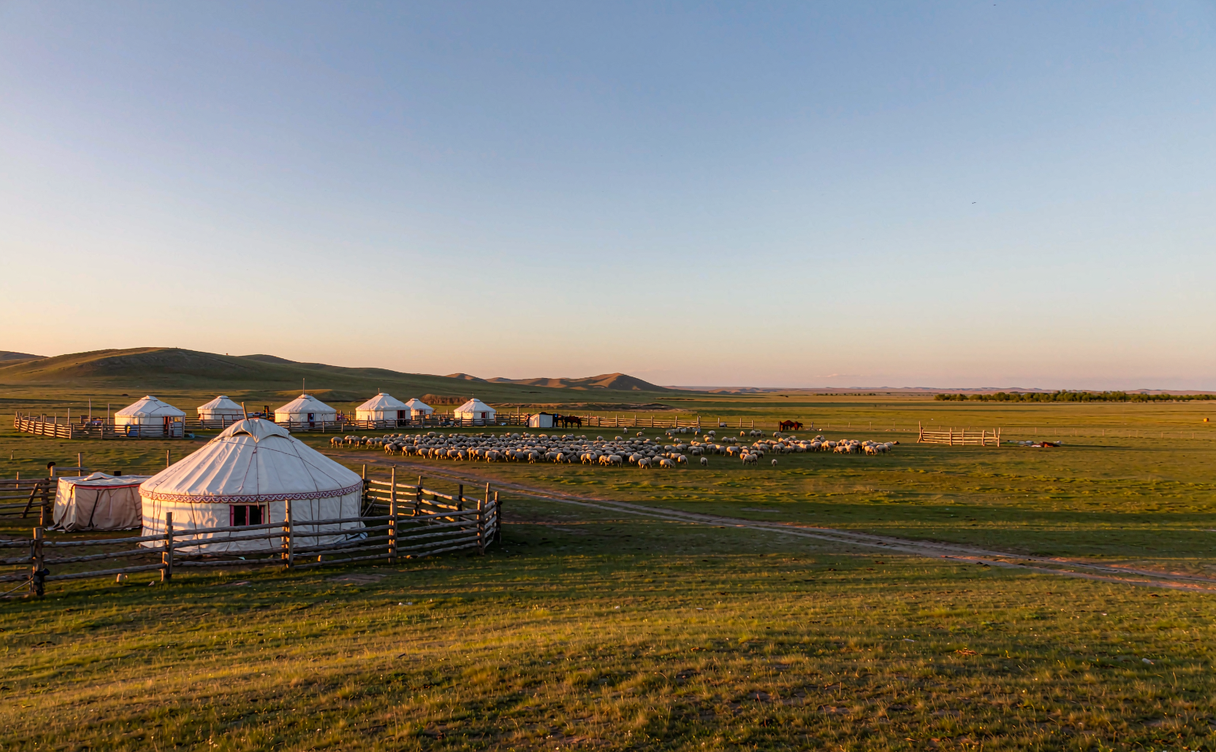
The core of things to do in Hulunbuir is the grassland itself. A few hours west of Hailar the road opens into uninterrupted steppe, and most travelers arrange a night in a herder camp (蒙古包营地): you’ll eat hand-grabbed lamb (手把肉), drink salty milk tea, and watch the stars with zero light pollution. Horse riding is available at almost every camp (¥80–¥150/hour); negotiate clearly before mounting.
Hulun Lake (呼伦湖), the largest lake in Inner Mongolia, sits in the southwest of the region and is worth half a day for its birdlife and the simple pleasure of a lakeside walk. The nearby Buir Lake marks the border feel of the area.
Manzhouli (满洲里) is the region’s surprise: a border city with a strongly Russian flavor, from the onion-domed buildings to the giant Matryoshka Square (套娃广场) and the illuminated “Gate of the Nation” (国门) looking toward Russia. It’s touristy but fun, and the Russian-style pastries and ice cream are genuinely good.
To the north, Erguna (额尔古纳) protects what’s billed as Asia’s largest wetland, where the Genhe river braids through reed beds — a magnet for cranes and geese. Push further to the forest town of Moerdaoga (莫尔道嘎) for taiga and, in autumn, spectacular color. The riverside villages of Shiwei and Linjiang, home to ethnic Russians (the “Russians of China”), offer wooden houses, river views across to Russia, and the most peaceful nights in the region. Near Genhe you can also visit Ewenki herders and their semi-domesticated reindeer.
A practical Hulunbuir itinerary
A good Hulunbuir itinerary needs at least five days. Day 1: fly to Hailar, rent a car, short grassland drive. Day 2: full grassland day with a herder camp stay. Day 3: drive to Hulun Lake, then on to Manzhouli for the night. Day 4: Manzhouli sights, then north toward Erguna. Day 5: Erguna wetlands and Shiwei, returning to Hailar. Stretch to seven days and you can add Moerdaoga forest and the reindeer camps. Because fuel and food stops are sparse on the steppe, start each day with a full tank and water.
Distances, drivers, and the border
The single mistake visitors make in Hulunbuir is underestimating the distances. Sights that look close on a map can be three or four hours apart on quiet roads, so plan two or three stops per day rather than five. A good local driver is worth more than a GPS here — they know which yurt camps welcome guests, where the road washes out after rain, and the best unmarked lookout over the steppe. The region touches both Russia and Mongolia, and while you won’t cross without the right paperwork, the border towns like Manzhouli are perfectly safe to wander. Keep your passport handy for the occasional hotel registration check.
For a keepsake, herder camps sell woven belts, horsehair ropes, and bricks of milk tea at fair prices, and Manzhouli’s markets stock Russian chocolate and amber trinkets — fun but variable in quality, so buy from fixed shops rather than sidewalk stalls.
Food, stay, and packing
Mongolian and northern Chinese food dominates. Must-tries: hand-grabbed lamb, Mongolian hotpot, milk tea (奶茶), dried milk curd (奶豆腐), and grilled lamb skewers. A hearty lamb meal for two runs ¥120–¥180; a bowl of noodles in a town is ¥12–¥20. In Manzhouli, lean into the Russian side — smoked fish, blini, and excellent ice cream.
Lodging ranges from yurt camps (¥200–¥400/night, often including meals) to standard Hailar and Manzhouli hotels (¥250–¥450 for a decent double). Book camps ahead in July and August. Packing: even in summer, nights on the grassland drop to 10–15°C, so bring a warm layer; a windproof jacket is essential. Sunglasses and lip balm matter in the dry, bright air. If you’re building a broader northern China trip, our separate best-time guide helps you line up Hulunbuir’s short summer with other regions.
If you want coastal contrast after the plains, the Qingdao seafood guide and the Dalian travel guide both cover very different corners of the country, while the Guilin travel guide shows the karst south. Travelers flying in from the capital can read our separate Beijing hotel and Great Wall guides to round out the trip.
Respect and responsibility on the steppe
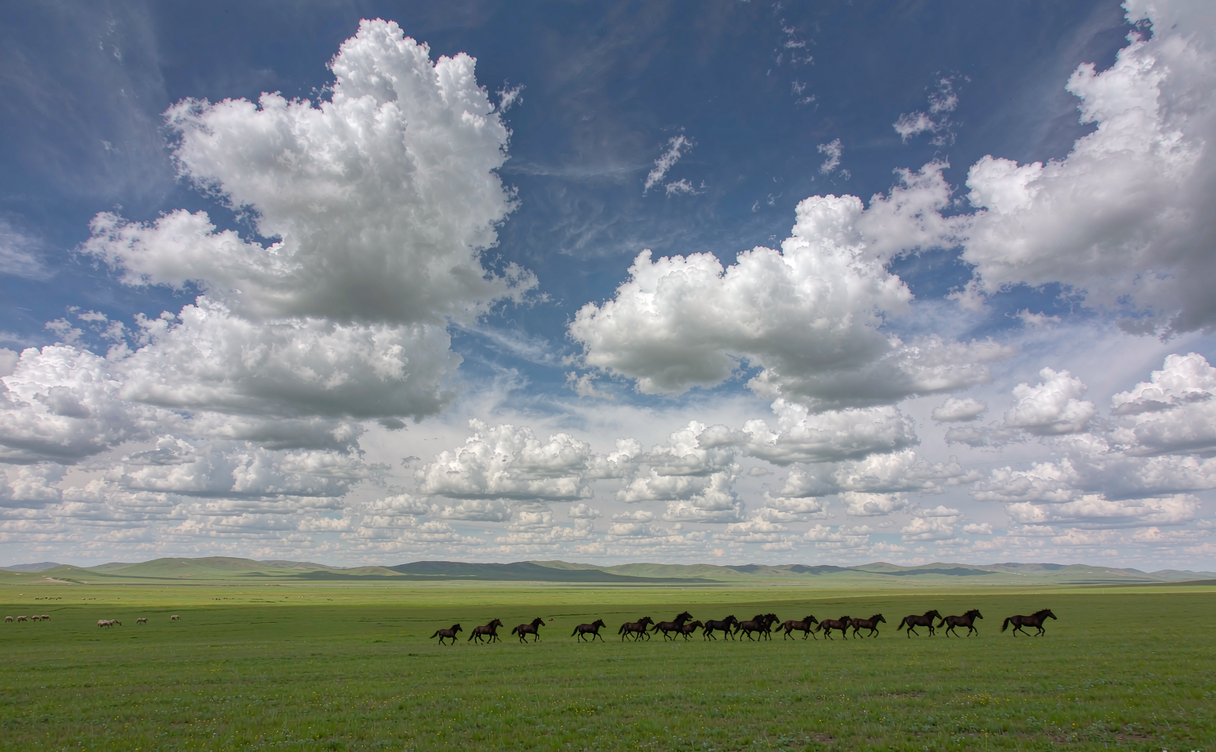
A few notes we give every traveler: grassland camps are someone’s home and livelihood, so ask before entering a private ger, never drive off the tracks (the grass recovers slowly), and take all trash with you. The herders we work with are warm but private; a little Mandarin or a translation app goes a long way. Tipping isn’t expected, but buying directly from a camp’s small shop supports the family.
Background on the region’s geography and history is available from Wikipedia’s Hulunbuir page, a useful primer before you commit to the long drives.