

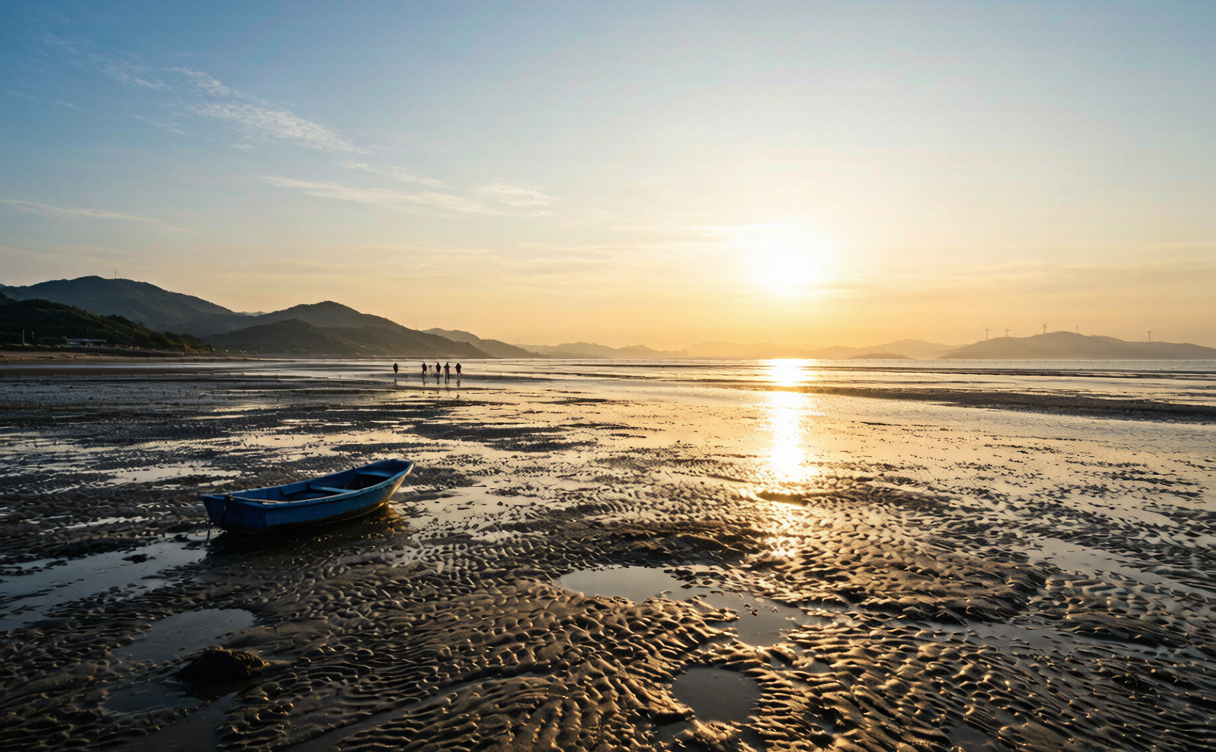
This Xiapu tide flats guide is for travelers who love a good sunrise and a camera in hand. Xiapu (霞浦) is a coastal county in Ningde, Fujian, China, where the tide draws back across vast mudflats dotted with wooden stakes, fishing nets, and narrow boats. For two decades it has been the country’s quiet capital of seascape photography: the light at dawn turns the wet sand into a mirror, and the working fishermen become silhouettes against gold and rose. Even without a camera, the scale and calm of the coast are worth the trip.
Content Preview
- Xiapu Tide Flats Guide: Best Time to Visit
- Xiapu Tide Flats Guide: How to Get There
- Top Things to Do in Xiapu
- Where to Stay in Xiapu
- Sample Xiapu Itinerary
- FAQ
Xiapu Tide Flats Guide: Best Time to Visit
The best time to visit Xiapu is April through June and September through November, when the light is soft and the tides expose the broadest flats. Spring brings misty mornings that flatter the nets; autumn gives clear, warm dawns and the harvest of seaweed and kelp on the racks. Summer is hot and humid with frequent storms, though sunrise shoots still happen; winter is cold but dramatic, with low sun angles that photographers prize.
Tides, not weather alone, drive the schedule — each spot has a window of about an hour around low tide when the patterns show best, so check a tide table for your dates. Xiapu is a county of Ningde; more on the area is on Wikipedia’s Xiapu County article.
Local festivals add color if your dates line up: the kelp and laver harvest in spring turns the racks into working stages, and temple fairs in the county town bring small parades and food stalls. These are not tourist shows but real local rhythm, and they make a rest day between shoots more interesting. Rain is not the enemy here either — overcast skies often produce the softest, most even light on the water, so a grey forecast should not send you back to the hotel.
Xiapu Tide Flats Guide: How to Get There
Most visitors fly into Fuzhou or Wenzhou, then drive or bus to Xiapu, which sits about two hours up the coast from Fuzhou. The county town of Songcheng is the base, with the famous flats — Beidou, Xiaohao, Dongbi, and Yantian — scattered within 30 to 60 minutes by road. Hiring a car with a local driver is the usual approach, since the viewpoints are spread out and buses are sparse at dawn.
| Mode | Route | Time | Approx. Cost |
|——|——-|——|————–|
| Flight + car | Fuzhou → Xiapu (Songcheng) | 2h drive | ¥300–600 car |
| Flight + bus | Wenzhou → Xiapu | ~2.5h | ¥60–90 |
| Train + car | Fuzhou → Xiapu (nearest station) | ~1.5h + drive | ¥80–200 |
| Local taxi | Songcheng → Beidou flats | ~40 min | ¥80–120 |
| E-bike | Songcheng → near spots | ~30 min | rental ¥30/day |
Book a dawn driver the day before; most hotels can arrange one who knows the tide windows.
Top Things to Do in Xiapu
Beidou Mudflats at Dawn
Beidou is the classic shot: a sweep of wet sand checkered with seaweed racks and lined with fishing boats. Arrive 40 minutes before sunrise to set up; the moment the light hits the water, the whole flat glows.
Dongbi and the Fishing Village
Dongbi is a hillside village above the sea, perfect for wide compositions of rooftops, nets, and the tide below. Stay for the blue hour after sunset, when the village lights twinkle against the water.
Yantian Laver Racks
In spring, the laver (seaweed) racks at Yantian form endless rows that reflect the sky like a grid. It is one of the most graphic scenes in Xiapu and easy to reach.
Xiaohao and the Reefs
Xiaohao combines rocky shoreline with flat sand, giving variety in one location. The afternoon light here is good, the opposite of the dawn spots, so it fills a later slot in your day.
Eat the Catch
Xiapu’s seafood is the real thing — squid, crab, kelp, and small fried fish straight off the boats. A waterfront dinner in Songcheng costs little and tastes like the sea.

Where to Stay in Xiapu
Stay in Songcheng town for the widest choice and easy dinner options; basic hotels run ¥150–300, and a few smarter stays near the coast reach ¥500. Photographers often pick a guesthouse close to Dongbi or Beidou to cut the pre-dawn drive. Book ahead for the May kelp season and the October holidays, when rooms near the good viewpoints sell out first.
Xiapu Tide Flats Guide: Practical Tips
A few notes to make your Xiapu tide flats guide plan pay off. The single most important tool is a tide table app — shoot within an hour of low tide, and confirm the exact time for each spot, since they differ. A local driver who knows the windows is worth the cost; ask your hotel to book one. Bring a tripod, a long lens if you have one, and waterproof shoes, because you will stand on wet, slippery sand before dawn.
Weather matters as much as tide: misty spring mornings often beat a clear sky for mood. Mobile payment is standard — set up Alipay or WeChat Pay before you arrive — and keep cash for small village stalls. For timing your wider China trip, our best time to visit China guide explains the seasonal patterns beyond Fujian.
Most flats have no facilities, so carry water, a snack, and a fully charged phone, and tell someone your plan if you hike a remote beach before dawn. A dry bag protects camera gear from spray, and a small towel is handy after standing in the shallows. Local drivers usually know which spot suits the day’s tide, so lean on their judgment rather than a fixed plan — flexibility is the real skill at Xiapu, and the best frames often come from following the water.
Sample Xiapu Itinerary
Day 1: Arrive in Songcheng, scout Beidou and Dongbi in the afternoon, early night before the dawn shoot.
Day 2: Sunrise at Beidou, late breakfast, Yantian laver racks at mid-tide, sunset at Dongbi village.
Day 3: Xiaohao reefs for afternoon light, seafood dinner, and the drive back toward Fuzhou.
FAQ
Do I need a professional camera? No. A phone captures the light well; a tripod and a zoom lens just add options.
Why is Xiapu famous? Its vast tide flats and fishing stakes create mirror-like seascapes that photographers travel for.
How many days? Two full days covers the main flats at good tides; three lets you relax.
Is it crowded? The flats are large, so it rarely feels packed, though holiday weekends draw more shooters.
What should I wear? Waterproof shoes and a windproof layer; dawns on the mud are cold and damp.
By Karl — Last updated July 27, 2026