

If you wander the lantern-lit alleys of Xi’an after dark, you will smell it before you see it: the rich, peppery aroma of slow-braised pork pressed into a crisp, chewy flatbread. Locals call it roujiamo, and travel writers have nicknamed it the Chinese street burger. For first-time visitors, few foods capture the spirit of this ancient capital as instantly as a warm roujiamo cradled in a paper wrapper. This guide explains what makes the snack special, how it differs from a Western hamburger, and exactly where to find the best roujiamo in Xi’an without getting lost in tourist traps.
What Exactly Is Roujiamo?
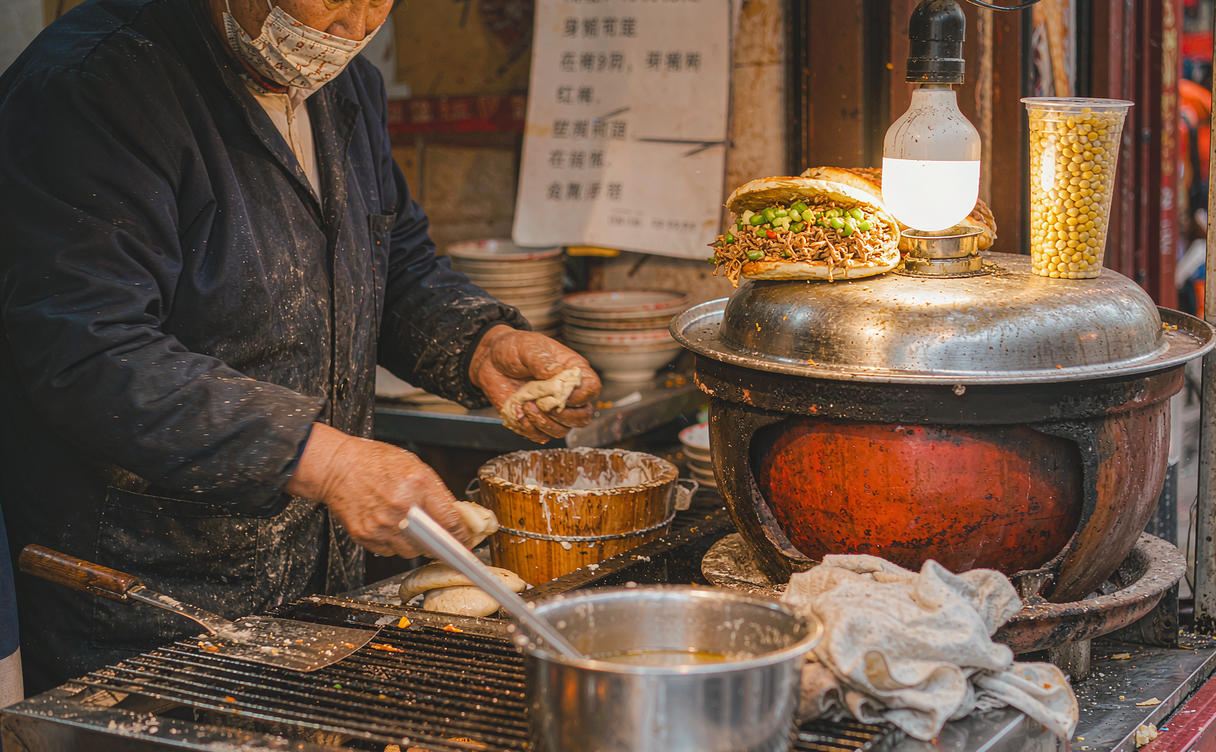
Roujiamo is a street food from Shaanxi province built from two simple parts. The “rou” means meat, usually pork braised for hours with soy sauce, star anise, cinnamon, and a dozen other spices until it is fork-tender. The “jiamo” is the bread: a round, flat baked bun called baijimo, with a blistered, slightly charred crust and a tender crumb inside. Vendors chop the meat finely, sometimes with a little of the savory braising broth and pickled chili, then tuck it into the split bun. The result is salty, aromatic, and deeply satisfying.
The dish has roots that stretch back more than two thousand years to the Qin and Han eras, which makes it one of the oldest filled breads still eaten today. In modern Xi’an, you will find both pork versions and halal lamb or beef versions around the Muslim Quarter, where the local Hui community has perfected its own spiced renditions.
Roujiamo vs Hamburger Difference
Travelers often ask about the roujiamo vs hamburger difference, and the comparison is fun but a little misleading. Both are meat in bread, yet they part ways quickly. A hamburger stacks a grilled beef patty with cold lettuce, tomato, and sauce inside a soft bun. Roujiamo uses meat that has been stewed low and slow, then minced and moistened with broth, stuffed into a crisp griddle-baked bun. The texture contrast is the key: crunchy outside, soft meaty inside, with no cold vegetables to mute the spice.
Another difference is the bread itself. A hamburger bun is fluffy and sweet; a baijimo is baked on a griddle until the exterior shatters, closer to a savory biscuit than sandwich bread. Finally, the flavor profile leans heavily on warm Chinese spices rather than the smoky char of a grill. If a hamburger is a backyard cookout, roujiamo is a spice market in your hands.
Best Roujiamo in Xi’an
Hunting for the best roujiamo in Xi’an can feel overwhelming because nearly every corner sells one. Quality varies wildly, so a few rules help. Look for stalls with a constant local queue, a visible braising pot, and buns griddled to order rather than pre-split and waiting. The meat should glisten with broth, not sit dry under a heat lamp.
Two names come up repeatedly among residents. The first is a humble shop near the Bell Tower known for pork roujiamo with a generous fat-to-lean ratio that keeps the filling juicy. The second is a tiny halal spot in the Muslim Quarter where the lamb version is braised with cumin and coriander until it melts. Neither has fancy decor, and both reward patience. For a broader evening plan, our Xi’an travel guide pairs well with a roujiamo crawl through the old city.
Where to Eat Roujiamo Near Muslim Quarter
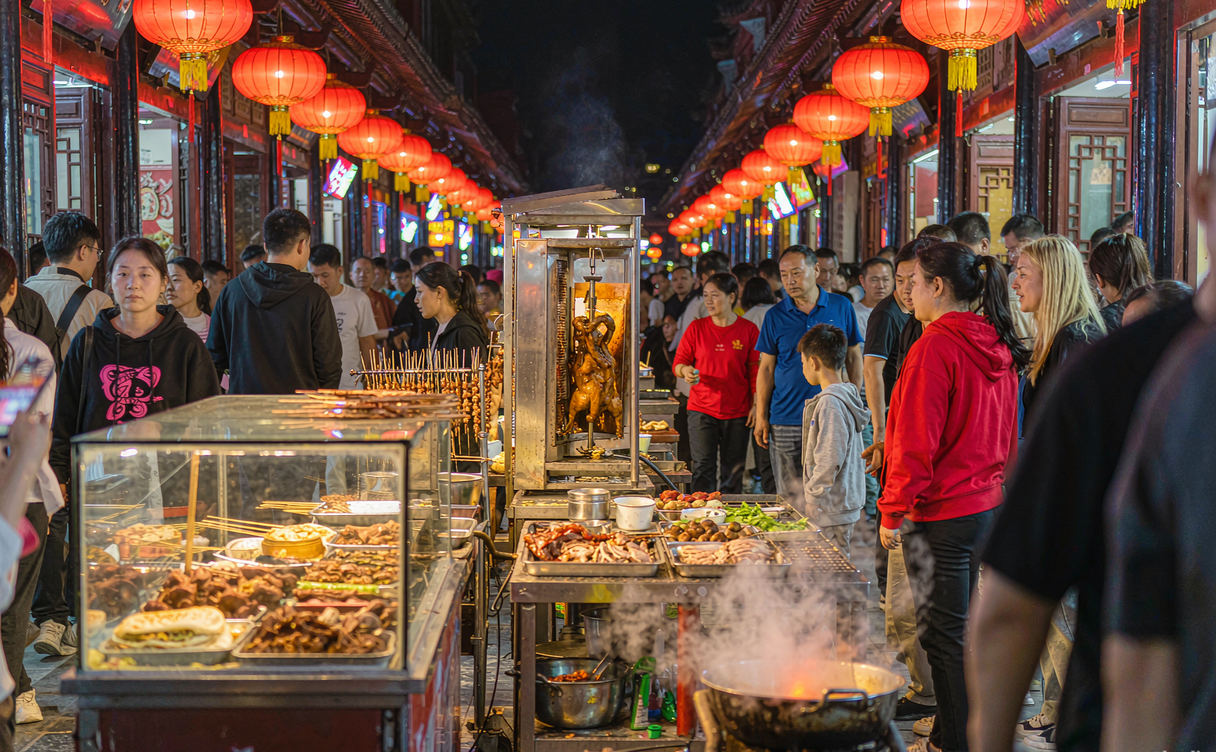
The obvious question for newcomers is where to eat roujiamo near Muslim Quarter, since that is where most tourists base their evenings. The Muslim Quarter itself is a maze of food streets running north from the Drum Tower, and roujiamo vendors line both the main drag and the quieter side lanes. The side lanes are usually better: prices are lower and the cooks are cooking for neighbors, not just photo-seeking visitors.
Start on Xiyangshi Street, then drift into the narrower alleys where you hear the rhythmic chop of cleavers. A good strategy is to buy one roujiamo, eat it standing, and if it disappoints, walk fifty meters to the next stall. Locals do exactly this. If your trip extends beyond Xi’an, our Shexian travel guide and Mianxian travel guide cover other Shaanxi and Hubei towns where street food culture runs just as deep.
Xi’an Street Food Roujiamo Price
Budget travelers love the Xi’an street food roujiamo price, which stays refreshingly low. A standard pork roujiamo typically costs between 8 and 15 yuan, while premium halal lamb versions run 12 to 20 yuan depending on the cut and the fame of the shop. Compared with a restaurant meal in the city, that is pocket change, and the snack is filling enough to count as a light lunch.
Prices creep up inside the most photographed stalls on the main Muslim Quarter strip, where a single bun might be marked 18 to 25 yuan for tourists. Walk two blocks inward and the same quality drops back to local rates. Either way, even the priciest roujiamo is cheaper than a fast-food combo back home, which is why it tops so many budget foodie itineraries.
Visiting Xi’an? Plan your food tour with our Xi’an travel guide.
Authentic Roujiamo Recipe Spots Xi’an
If you want more than a quick bite, seek out the authentic roujiamo recipe spots Xi’an locals actually trust. These are shops that braise meat in-house for six to eight hours rather than reheating pre-cooked fillings. The difference is obvious the moment you bite in: real braising produces meat that is silky and infused with spice, never stringy or bland.
One beloved approach is the “old brine” method, where a shop keeps the same master braising liquid for years, topping it up daily like a sourdough starter. Ask around for places that advertise “lao zhi” style even if you cannot read the characters, and watch whether they ladle dark broth over the meat before closing the bun. That broth is the soul of a great roujiamo. For a different regional dumpling experience after your burger fix, our Shanghai soup dumpling guide is a worthy next read.
Late Night Snacks Xi’an
Xi’an is a city that eats late, and roujiamo anchors the culture of late night snacks Xi’an residents rely on. Many of the best stalls open at dusk and keep griddles hot until two or three in the morning, perfect after a show at the city walls or a stroll through the lit-up squares. A roujiamo at midnight, washed down with a sour hawthorn drink or a warm soy milk, is a local ritual rather than a tourist gimmick.
The late-night scene also pairs roujiamo with biangbiang noodles, cold skin noodles, and grilled skewers, so you can build a full midnight feast for the price of a single Western appetizer. If you venture farther afield, our Jiuxiang caves guide and Xiantao travel guide show other corners of China where evening street food is worth the detour.
A Few Practical Tips
Order with confidence even if you do not speak the language: point at the meat you want and hold up fingers for the number of buns. Most stalls accept mobile payment, but carry some cash for the smallest vendors. Spice level is usually fixed, so if you are sensitive to heat, ask them to go light on the pickled chili. And eat it immediately; a roujiamo left to steam in its wrapper for ten minutes loses the crisp crust that makes it special.
For the historical background of the dish and its place in Shaanxi cuisine, the Wikipedia entry on Roujiamo offers a solid overview of its origins and regional variations.
Love street food? Discover more eats in our Shanghai soup dumpling guide.
Final Bite
Roujiamo is more than a snack; it is a bite of Xi’an’s two-thousand-year-old street culture, served hot from a roadside griddle. Whether you chase the best roujiamo in Xi’an through the Muslim Quarter side lanes, compare it head-to-head with a hamburger, or grab one as part of your late night snacks Xi’an adventure, the experience sticks with you long after the bun is gone. Use this guide to eat like a local, skip the markup, and savor the Chinese street burger at its finest.
Ready to explore more of China? Start with our Xi’an travel guide.