

Xiamen sits off China’s southeast coast, and its kitchen is one of the most approachable gateways into Fujian (Min) cuisine for foreign visitors. We have sent travelers here who came for the sea breeze and the car-free charm of Gulangyu Island and stayed for the oyster omelettes, the peanut soup breakfasts, and the pick-your-own seafood markets that feel more like a local ritual than a tourist trap. This Xiamen food guide collects the dishes worth seeking out, the neighborhoods that do them best, and the practical details — prices, seasons, and payment — that make a food trip here smooth. For the broader context, our Xiamen travel guide maps the city’s districts and ferry logistics.
Oyster omelette and the night-market classics
The dish every visitor tries first is the oyster omelette (hao zai bing): fresh local oysters folded into a sweet-potato-starch batter with egg, then crisped on a hot plate and lifted with a spoon of tangy chili sauce. A plate runs about ¥15 to ¥25 at a street stall. Nearby you will find fried noodles (chao mian) for ¥12 to ¥20, grilled squid, and cups of grass jelly to cool the heat. The Zhongshan Road pedestrian zone and the lanes around it are the classic hunting ground, though the stalls get crowded after 7 p.m., so we suggest arriving hungry and early, before the tour groups claim the best benches.
Peanut soup, congee, and a Fujian breakfast
Mornings in Xiamen are gentle. A bowl of peanut soup (hua sheng tang) — peanuts slow-cooked until they collapse into a sweet, silky broth — costs just ¥6 to ¥10 and is the city’s default comfort breakfast. Pair it with a youtiao or a steamed rice cake (fa gao), and you have eaten well for under ¥20. Congee shops and small bun stalls open before 6 a.m., which is ideal if you are catching an early ferry to Gulangyu. We have found the best versions in the side streets off Zhongshan Road rather than on the main drag, where the same bowl can cost double and taste no better.
Sha cha noodles and the satay flavor profile
Fujian’s signature seasoning is sha cha jiang, a savory, slightly funky satay-style paste built from shrimp, garlic, and spices. In Xiamen it shows up most famously in sha cha mian: noodles in a rich brown broth topped with seafood, pork, and vegetables for about ¥15 to ¥25 a bowl. Order it “gan” (dry, tossed in the paste) if you want the flavor concentrated. This is the dish that best explains why Xiamen cuisine tastes different from the Cantonese and Sichuan food most visitors know, and it pairs beautifully with a side of braised tofu or a tea egg picked up from a corner shop.
The seafood markets: pick, weigh, cook
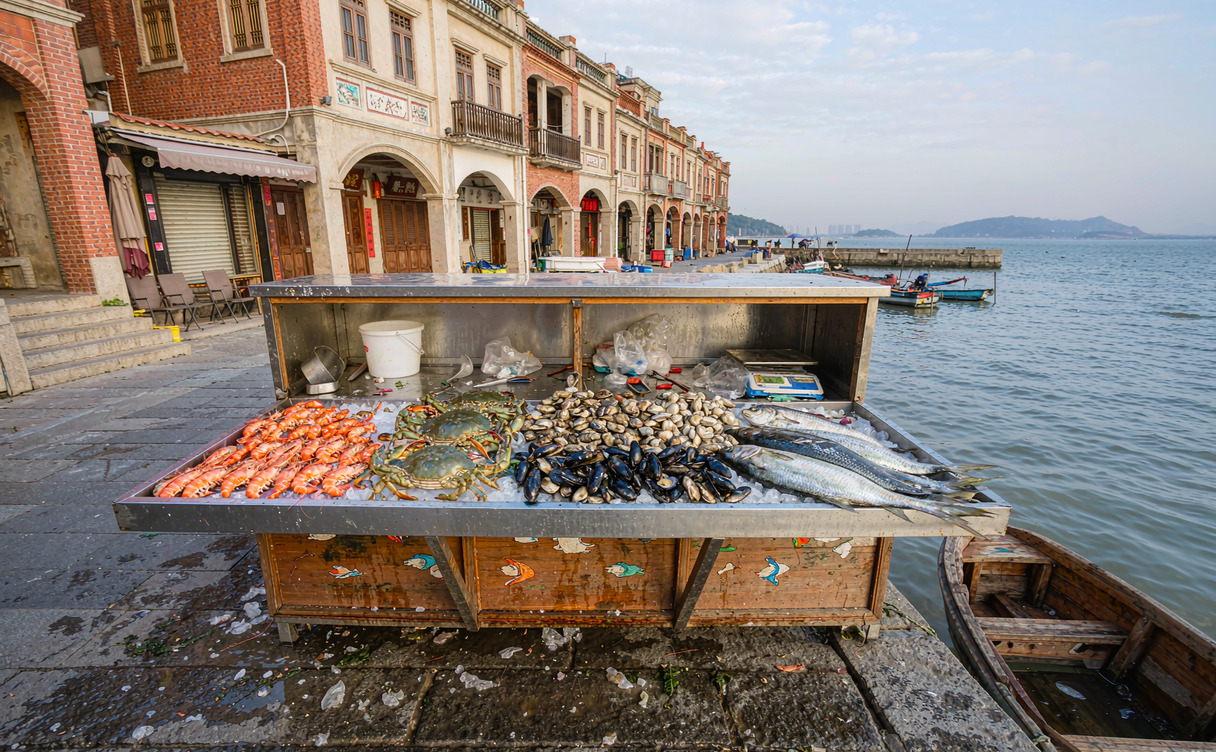
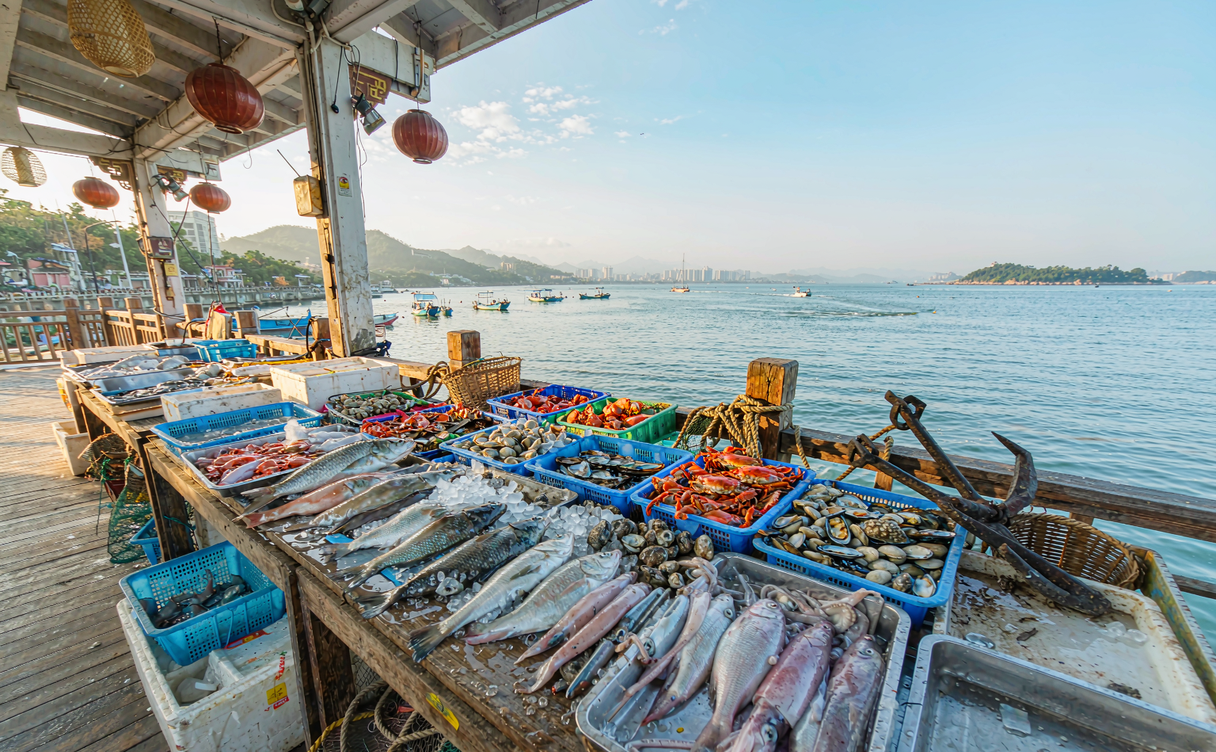
The experience we recommend most is the Eighth Seafood Market (di ba hai xian shi chang) and the smaller dockside stalls near Zengcuoan. You choose live shrimp, crab, clams, or fish, weigh them on the spot, and hand them to a neighboring restaurant that cooks your haul for a modest ¥10 to ¥30 per dish. A feast for two with beer rarely exceeds ¥150 to ¥250, and you control exactly what lands on the table. Bring a translation app and confirm the price per jin (500 grams) before pointing — most vendors now also accept scan-to-pay, which our guide to Alipay and WeChat Pay for foreigners in China explains step by step so you are never stuck at a register.
Ginger duck and the slower braises
Beyond the snacks, Xiamen does warming braises well. Ginger duck (jiang mu ya) simmers duck with old ginger and rice wine until the meat slips off the bone, a single portion running ¥45 to ¥70 with rice. During cooler months you will also see Buddha Jumps Over the Wall (fo tiao qiang) on banquet menus — a lavish Fujian soup of seafood, chicken, and herbs that can run ¥200 to ¥800 depending on the cellar of ingredients. It is a splurge best shared, and a fun way to taste the province’s reputation for elaborate soups that take hours to build.
Tea culture: Anxi oolong by the pot
Fujian is the homeland of oolong, and the nearby Anxi hills produce Tieguanyin, one of China’s most famous teas. In Xiamen, tea houses range from quick ¥15 gaiwan pours to formal tastings where a host rinses the leaves and brews them through a dozen infusions. We suggest ending at least one evening with a pot and a plate of sweet pastries — it is the local equivalent of a nightcap and a calm counterpoint to the fried street food. Ask for “tie guan yin” by name and you will get the floral, roasted profile the region is proud of.
Sweet snacks and the curious bites
Xiamen also does playful snacks worth a detour. Tiao sun (sea worm) is a local delicacy — a chewy, ocean-sweet strip often braised or stir-fried, sold for ¥20 to ¥40 a plate, and loved by locals despite its off-putting English name. Peanut rolls, maltose candies, and the flaky “tui jian” biscuits make easy souvenirs from the old biscuit shops near Zhongshan Road. We suggest trying one unfamiliar thing per market visit; the sea worm is the rite of passage, and the peanut sweets are the safe fallback that everyone enjoys.
Practical: ordering and paying at the markets
Most Xiamen food stalls now take scan-to-pay through Alipay or WeChat (set up before you travel), but small vendors still prefer cash for sub-¥10 purchases, so keep a handful of coins and small notes. At the seafood markets, confirm the price per jin before pointing, photograph the live weight on the scale, and agree on the cooking style (steamed, braised, or chili) up front to avoid surprises. English menus are rare outside the hotel district, so a phone translator and a smile carry you surprisingly far, and vendors are generally patient with pointing and gesturing.
Where to eat: neighborhoods and islands
Gulangyu Island itself has cafés and small eateries aimed at day-trippers, but the better-value, more authentic food is on the mainland in Siming District and around Zengcuoan, a former fishing village now lined with snack stalls. Jimei, across the bridge, is quieter and loved by students for cheap noodles. We suggest spending one evening on the mainland markets and saving Gulangyu for coffee and a sunset, not for your most serious eating, since island prices rise with the ferry ticket. One practical note: the best meals in Xiamen, China are rarely the ones with the longest English menus. Follow local queues, watch what the table next to you ordered, and do not be afraid of a shop with plastic stools and a single handwritten board — that is usually where the peanut soup has been simmering longest and the sha cha broth tastes most like home.
When to go and how to get there
The most pleasant seasons are spring (March to May) and autumn (October to November), when the humidity drops and the outdoor stalls are comfortable. Our best time to visit China guide has the full regional breakdown. Xiamen has a major airport with direct flights from many Asian hubs and a high-speed rail link to Fuzhou, Shenzhen, and Shanghai; the BRT rapid bus and cheap DiDi rides make getting between districts easy, and the ferry to Gulangyu runs on a timed ticket system that you should book in advance during holidays.
The historic center of Gulangyu Island is a UNESCO World Heritage site, which is part of why the ferry runs on a timed, foreigner-friendly ticket system rather than a free-for-all.