

Most travellers rush through Wuxi on the high-speed line between Shanghai and Nanjing, treating it as a stop for the Grand Canal and Taihu Lake, and that is a genuine mistake. This Wuxi food guide comes from repeated trips to the city’s old streets and its lakeside kitchens, and it exists to make one argument: Wuxi, China cooks the sweetest, most comfort-driven version of Jiangnan food in the Yangtze delta, and it deserves a dedicated eating day. If you already love Hangzhou’s refinement or Suzhou’s delicacy, Wuxi will surprise you with how unafraid it is to add a spoonful of sugar to a savoury braise.
Why Wuxi Food Tastes the Way It Does
Wuxi sits on the northern shore of Taihu, China’s third-largest freshwater lake, and its kitchen is shaped by that water. The Huaiyang cuisine guide explains the wider Jiangsu tradition of precise knife work and light simmering, but Wuxi pushes the sweet end of the dial. Locals call it 甜出头,咸收口 — sweetness leads, saltiness closes the bite. That sugar is not dessert-sweet; it is the round, caramel note that makes a braise glossy and a pork rib addictive.
Huaiyang cooking itself is catalogued in detail on Wikipedia’s Huaiyang cuisine page, which places Wuxi squarely inside one of China’s recognised regional kitchens — useful context before you start ordering.
The Dishes That Define a Wuxi Table
Wuxi sweet spare ribs (无锡酱排骨). The dish the city is famous for, and the one to order first. Pork ribs are braised for hours in a dark soy, rice wine and rock-sugar master stock until the meat slides off the bone and the sauce turns to lacquer. The old standard-bearer is Sanfengqiao (三凤桥), a century-old brand with a shop near Chong’an Temple; a takeaway box of two or three ribs runs ¥30–50, and the vacuum-packed version makes a brilliant souvenir. This is the centrepiece of any honest Wuxi food tour, and the sweetness is the point, not a flaw.
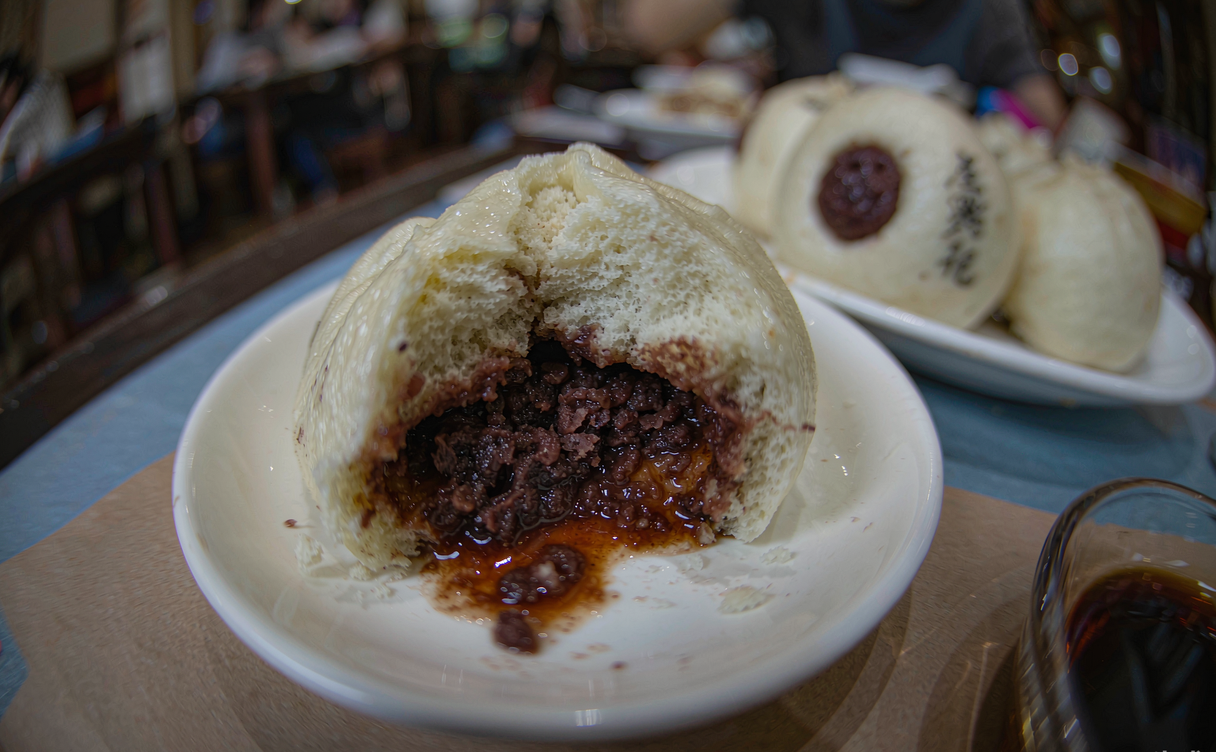
Wuxi xiaolongbao (无锡小笼). Soup dumplings exist across the delta, but Wuxi’s are noticeably sweeter and a touch larger than Shanghai’s, with a pork-and-gelatine filling that bursts hot. A steaming basket of six is ¥15–25 at any morning teahouse around Nanchan Temple or the canalside lanes. Eat them tip-up to sip the broth first.
Yinsi noodles (银丝面). “Silver-thread” noodles — impossibly thin, hand-pulled wheat strands served in a clear, sweet pork-and-scallion broth. Wuxi noodles of this style are a breakfast staple; a bowl with a braised egg and greens is ¥12–20 and the perfect cure for a travel-weary morning. Look for the old Zhongshi and Gongxing noodle houses near the city centre.
You mianjin (油面筋) and stuffed gluten. Wuxi is the birthplace of the fried gluten puff, and the local move is to stuff it with seasoned pork (肉酿面筋) and braise it with bamboo shoots. Springy, savoury and distinctively local — rarely seen done this well outside the city. ¥30–45 a plate.
Taihu three whites (太湖三白). The lake’s signature trio: white fish (白鱼), white shrimp (白虾) and silverfish (银鱼). The silverfish are often scrambled with eggs (银鱼炒蛋), the shrimp flash-boiled and dipped in vinegar, and the white fish steamed whole with ham. Prices swing with the catch — ¥60–120 a dish at a lakeside restaurant — but the freshness is the whole reason to come.
Yulan cake (玉兰饼) and plum-blossom cake (梅花糕). Two street sweets named for the city flower and the blossom mould respectively. The yulan is a glutinous shell fried crisp and filled with sesame-pork paste; the meihua is a tiny cast-iron-mould cake of rice flour, red bean and jujube. Both are ¥5–10 from night-market stalls and are the snack you eat walking.
Where to Eat: Neighbourhoods and Venues
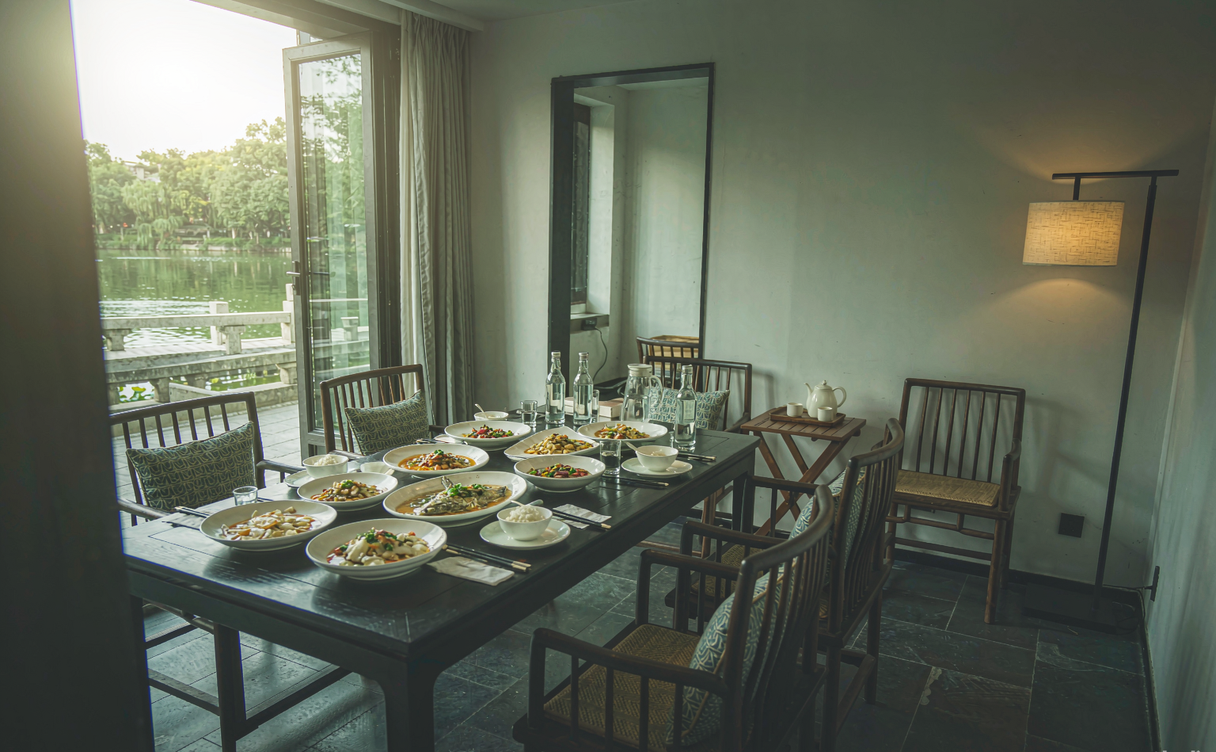
Chong’an Temple pedestrian area (崇安寺). The downtown core and the easiest place to eat well on foot: Sanfengqiao for ribs, long-established xiaolongbao houses, and a warren of small restaurants behind the temple. Budget HK-adjacent ¥80–150 per person for a full spread.
Nanchan Temple and the canal night market (南禅寺). South of the old city, this is where Wuxi’s street food concentrates after dark — yulan cakes, grilled skewers, sugar-painted figurines and the best people-watching. Our Wuxi travel guide maps the temple and the boats you can take afterwards.
Huishan Ancient Town (惠山古镇). A restored canal town on the city’s western edge where the snack streets specialise in Huishan sesame cakes (惠山油酥) and老旧 braised items. It pairs beautifully with the nearby Second Spring and the clay-figure museum, and it is one of the best ancient towns in China for a half-day of slow eating.
Taihu lakeside restaurants. Out at the 鼋头渚 (Turtle Head Isle) end of the lake, the seafood houses serve the three whites at source. Expect to pay more and to book ahead on weekends.
Seasonal Eating in Wuxi
Spring (March–May). The lake fish are at their leanest and sweetest, bamboo shoots appear, and the canal markets fill with green vegetables. The best all-round window.
Summer (June–August). Hot and wet, but this is Yangshan honey-peach (阳山水蜜桃) season — Wuxi’s most famous fruit, a perfumed, dripping white peach peaking in late July and early August. Buy them from roadside orchards on the way to Taihu, not the supermarket, and eat within a day.
Autumn (September–November). Hairy crab (大闸蟹) from the Taihu and Yangcheng systems arrives, steamed and dipped in ginger-vinegar; silverfish and white shrimp stay strong. The most indulgent time to visit.
Winter (December–February). Braises rule: spare ribs, stuffed gluten, and hot pots of lake fish. The sweetness of the kitchen feels most welcome when it is cold.
A useful extension is the short hop to Suzhou, whose quieter, less sweet cooking makes a natural contrast on the same trip, or onward to Hangzhou for West Lake vinegar fish and Longjing shrimp.
How to Order and Eat Well
Order family-style, shared across the table: one rib dish, one noodle or dumpling, one lake-fish plate, one vegetable (the local 水芹菜 water celery is excellent), and rice. Wuxi portions are moderate, so two or three people can sample broadly for ¥200–300 total.
A few practical notes. The sugar in Wuxi braises surprises first-timers from Sichuan or the north — if you genuinely dislike sweet savoury food, say 少放糖 (less sugar) when ordering, though purists will tell you that misses the point. Xiaolongbao are scalding; nip the skin, spoon the broth, then eat. Lakeside crab and fish are priced by weight and sometimes by the live tank, so confirm the price before sitting down.
Vegetarians do reasonably: the gluten puffs, yulan cakes, river vegetables and tofu dishes are all plant-based by default, though the master stocks often contain pork, so ask 有没有素汤 (do you have vegetarian broth). For drinking, Wuxi’s own Huiquan tea and the nearby Suzhou Biluochun make a clean table companion; a pot of green tea runs ¥10–20 and cuts the richness of the ribs better than any soft drink. Alipay and WeChat Pay cover virtually every stall and restaurant, and the night markets are safe, busy and tourist-friendly.