

If you only have one free morning in Guiyang, skip the mall and head straight to Qianling Park. We have sent dozens of clients here over the years, and it remains the single best half-day introduction to the city: a forested mountain rising right out of the urban core, wild macaques wandering the paths, a serene Buddhist temple near the summit, and a panorama over the whole of Guizhou’s capital. This Qianling Park guide will walk you through exactly how to get there, what it costs, when to go, and how to avoid the two or three rookie mistakes that frustrate first-time visitors.
What and where Qianling Park actually is
Qianling Park (黔灵公园) sits in the northwestern corner of Guiyang, about 2 km from the city center. The park wraps around Qianling Mountain (黔灵山), which locals also call “the green heart of Guiyang.” Covering roughly 4.26 square kilometers, it is one of the largest urban forest parks in southwest China. The park’s name comes from Qianling Mountain, and the whole area is a protected green belt, so even on a hazy summer day the air feels noticeably cleaner than the streets below.
When we last visited in early spring, we entered through the main south gate near Zaofeng Road and were in the forest within five minutes. That is the appeal: you do not need a car or a long drive to feel deep in the mountains.
The macaques: Guiyang’s famous monkeys
The headline attraction for most visitors is the free-roaming population of Tibetan macaques (actually rhesus macaques, but locals just call them “黔灵山的猴子”). There are said to be over 1,000 of them, and they are bold. They line the stone steps, sit on railings, and will absolutely snatch a plastic bag if they think it holds food.
Hard-won advice from our guides: keep snacks in a closed daypack, never make eye contact while eating, and do not try to feed them for a photo. Bites happen a few times a month, and the park now posts rangers near the busiest troop. If a monkey blocks the path, just wait or step aside; they move on quickly.
Climbing to Qianling Mountain Temple
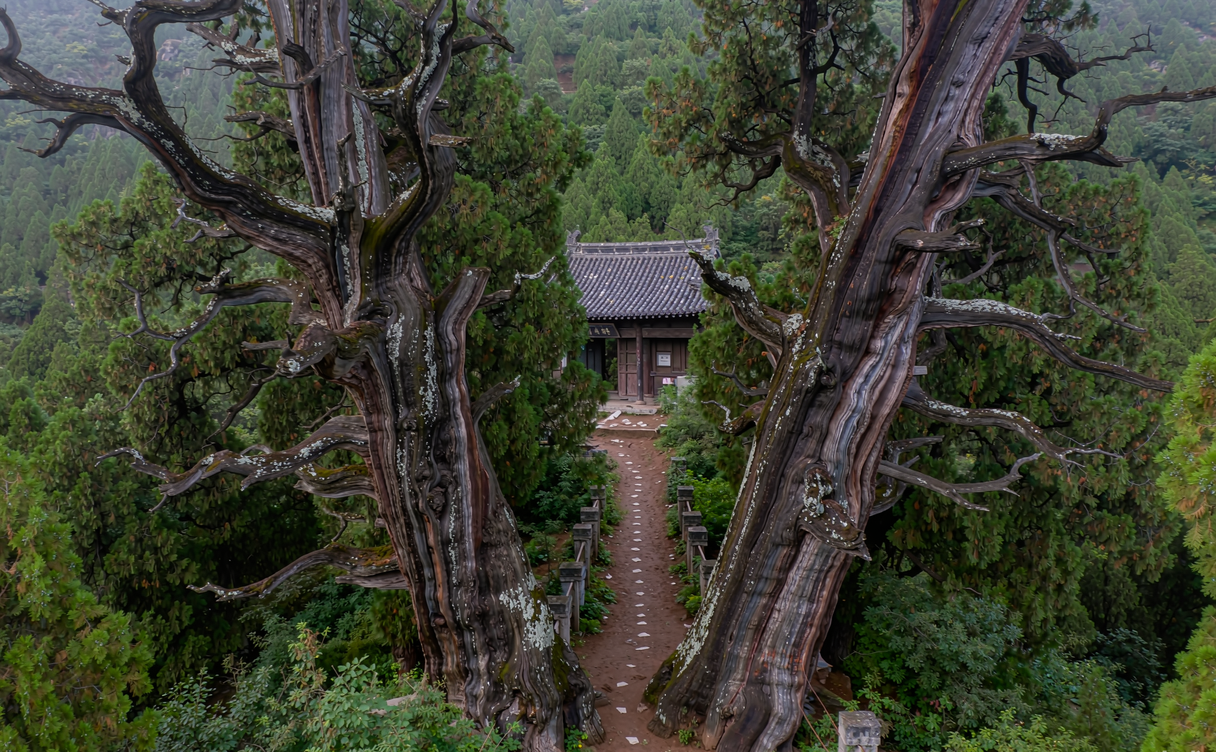
The walk to Qianling Mountain temple is the spiritual heart of any visit. The temple’s full name is Hongfu Temple (弘福寺), founded in 1672 during the early Qing dynasty, and it remains an active Chan (Zen) Buddhist monastery. The path is paved and paved most of the way, with switchbacks that get your heart rate up but are manageable for most fitness levels. Budget 40–60 minutes to walk up from the south gate if you stop for photos.
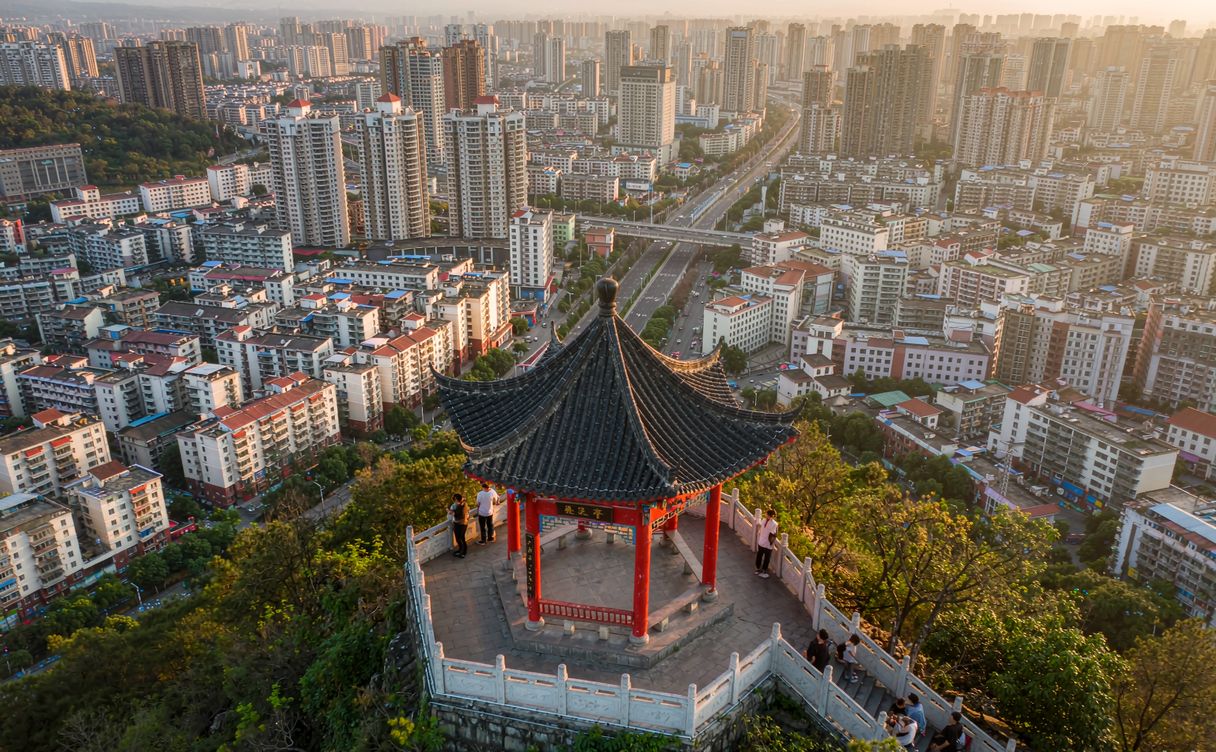
The temple complex sits at about 1,300 meters above sea level and offers the best view in the park: red-tiled roofs against a backdrop of limestone hills, with the gray sprawl of Guiyang filling the valley below. Incense burns at the entrance, and the vegetarian restaurant inside sometimes sells simple noodle lunches for around RMB 15–25.
Getting there and how much it costs
Qianling Park is easy to reach on public transport. Several Guiyang buses stop at the south gate, including routes 1, 2, 10, and 12, and the ride from the train station area costs just RMB 2. A taxi or Didi from the city center runs RMB 15–25 and takes 10–20 minutes depending on traffic. There is no metro station at the gate yet, so plan on bus or car.
Ticket prices are refreshingly low. The standard park entrance fee is RMB 5 per person (yes, five yuan — about USD 0.70). That covers the forest, the lake, and the lower paths. The cable car (a funicular-style chairlift that saves you the climb) costs about RMB 20 one-way or RMB 30 round-trip. The temple itself asks for a small separate donation of RMB 2, though this is optional. Children under 1.2 meters and seniors over 70 with ID usually enter free.
Bookability note: there is no online ticketing you need in advance. You just show up, pay at the gate, and walk in. During the May Day and National Day holidays the gates can get crowded by 10 a.m., so arrive before 9 a.m. if you want the monkeys and temple to yourself.
Best seasons and timing
Guiyang has a mild, humid climate, so Qianling Park is pleasant most of the year. Spring (March–May) brings azaleas and comfortable 18–25°C days — our favorite window. Summer (June–August) is lush and green but can be muggy, with afternoon thunderstorms; go early. Autumn (September–November) is crisp and clear, the best for long views from the temple. Winter is cold but quiet, and you may catch frost on the cypress branches.
Avoid the week-long holidays if you can. On a normal weekend morning you might share the upper path with a few hundred locals doing tai chi; on National Day you could be among tens of thousands.
What else is inside the park
Beyond the monkeys and the temple, the park holds Qianling Lake (黔灵湖), a calm reservoir where you can rent pedal boats for about RMB 40 per half hour. There is also a small zoo near the east gate (separate RMB 5 fee) that houses some local species, though we usually steer animal-loving clients toward the free-ranging macaques instead. Teahouses dot the lower trails, and a pot of local green tea runs RMB 20–40 — a perfect rest stop after the climb.
For a deeper dive into the region’s culture, pair your visit with our broader Guizhou park guide coverage, which links Qianling into wider Guizhou travel.
Where to eat and stay nearby
The streets around the south gate are packed with cheap noodle joints and Guizhou sour-soup rice-noodle stalls (酸汤粉) for RMB 12–20 a bowl. For something heartier, try the huaxi beef rice noodles (花溪牛肉粉) at any shop within a 10-minute walk. If you want a sit-down meal, the area around the park has several hotpot places popular with locals.
Most visitors base themselves in central Guiyang and day-trip to the park. Our Guiyang travel guide lists neighborhoods that put you within a short taxi ride of both Qianling and the train station.
Planning a wider Guizhou loop? Read our Guizhou 7-day itinerary to see how Qianling fits into a full province route.
A note on the food scene
Guizhou cuisine is one of China’s most underrated, built on sour, spicy, and fermented flavors. After you’ve worked up an appetite on the mountain, our Guizhou food guide points you to the dishes worth chasing across the province — Qianling is just the warm-up.
Practical tips we give every client
- Wear real shoes. The temple steps are steep and can be slick after rain.
- Carry small bills and some cash; the RMB 5 gate and temple donation sometimes snub foreign cards.
- Bring water. There are vendors, but markup is real near the top.
- Respect the monkeys. The single biggest source of bad reviews we see is people who got too close to the macaques.
- Combine with the [China ethnic minorities travel guide](https://www.chinatravelplaces.com/china-ethnic-minorities-travel-guide/) if you want to understand the Miao and Bouyei culture that defines this part of Guizhou.
Why Qianling matters for your trip
Qianling Park is not a world heritage site, and it does not need to be. It is the everyday lung of a city that most foreign travelers only pass through. But in our experience, the travelers who remember Guizhou fondly are the ones who slowed down here — watched old men practice calligraphy by the lake, huffed up to a 350-year-old temple, and laughed at a monkey stealing someone’s banana. That is the real Guiyang.
For the historical background of the park’s setting, the broader Qianling Mountain area and its temple history are documented on Wikipedia’s Qianling Park entry, which confirms the founding date and scale we cite above.
Final thoughts
A solid visit runs two to three hours if you walk up, see the temple, and relax by the lake. Add the cable car and a teahouse stop and you’ve got a perfect half-day. Keep your expectations loose, your bag zipped, and your camera ready — Qianling Park rewards exactly the kind of traveler who shows up without a strict plan.
Want a hotel that puts Qianling at your doorstep? Our Guiyang travel guide breaks down the best neighborhoods to stay.
Heading deeper into Guizhou afterward? Our Guizhou 7-day itinerary connects Qianling with the province’s water towns and minority villages.