

Puyang is a county-level city in the northeast corner of Henan Province, wedged against the borders of Shandong and Hebei. Most foreign travellers have never heard of it, and that is exactly why we keep sending people who want a real look at China’s early Neolithic past without the tour-bus crowds of Xi’an or Luoyang. This Puyang travel guide covers what is genuinely worth your time, how to get in from Zhengzhou, where to sleep, and what it costs.
Why Puyang Earns a Stop
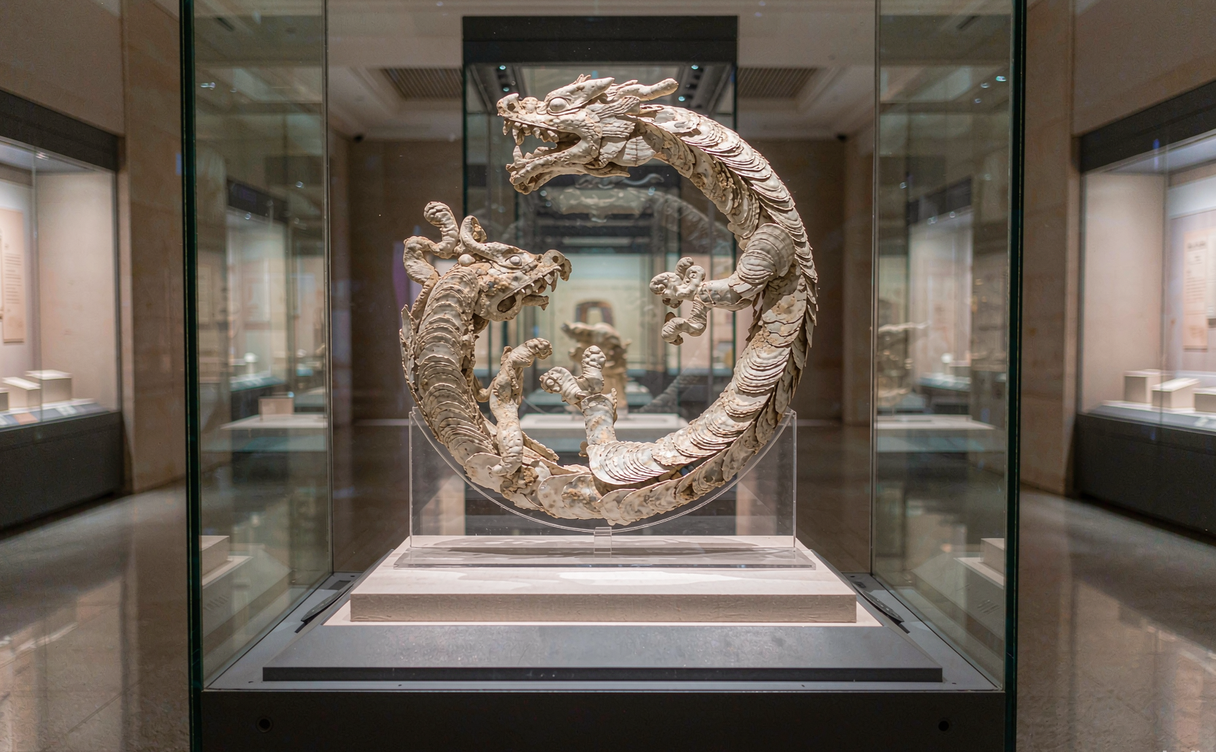
The city brands itself the “Dragon City” (Longdu) for a concrete reason. In 1987 archaeologists digging at the Qicheng site uncovered a 6,400-year-old arrangement of clam shells shaped into a dragon and a tiger, now held in the Puyang Museum. It is the earliest dragon image found in China and the basis for the town’s claim as the birthplace of the Chinese dragon totem. We tell clients that if they are already looping Henan, this is a half-day that beats another replica pedestrian street. Any useful Puyang travel guide puts the relic first, and so do we.
Things to Do in Puyang
The Puyang Dragon City relics are the headline. The shell dragon, a matching tiger, and a human skeleton laid out in an astronomical pattern sit in a climate-controlled hall. Admission to the museum is free with a passport, though you should reserve ahead on national holidays. Next door, the Qicheng Ruins Park (Qi Cheng Wenwu Jingqu) preserves rammed-earth city walls from the Spring and Autumn period; the ticket runs about CNY 30 in peak season and the grounds are quiet even on weekends.
For a slower afternoon, the Puyang Yellow River levee walk is the move. The river shifted north centuries ago, leaving a green embankment planted with willows and poplars where locals cycle and fly kites. We recommend renting a bike at the east gate; the flat path runs roughly 8 km and takes about two hours at an easy pace. Sunset here is the best free view in town, and in October the light turns the old course gold.
Other stops worth a few hours: Zhongyuan Green Manor (Zhongyuan Lüse Zhuangyuan), a family park with boating and a small zoo, and Pushang Park wetland if you like birding. Acrobatics deserve a mention too — Puyang is recognised as a cradle of Chinese acrobatics, and troupes still train in the surrounding counties. Evening shows are informal; ask at your hotel desk and we can point you to a rehearsal.
Puyang to Zhengzhou Transport
Most visitors arrive from Zhengzhou, the provincial capital and a major high-speed hub. The Puyang to Zhengzhou transport options we book most often:
- High-speed train: Zhengzhou East to Puyang East takes 1 hour 10 minutes to 1 hour 40 minutes, costing CNY 70–CNY 100 in second class. Trains leave roughly every 30–40 minutes through the day.
- Long-distance bus: from Zhengzhou Long-Distance Bus Station, about 3 hours, CNY 55–CNY 70. Slower and less comfortable; we only suggest it if trains are sold out during Spring Festival.
- Private car: a driver from Zhengzhou runs CNY 900–CNY 1,300 one way, handy if you want to stop at Kaifeng en route. Our drivers usually quote CNY 1,100 for the full Zhengzhou–Kaifeng–Puyang loop, which saves a transfer.
Puyang also has a small airport with limited domestic flights, but rail is the reliable choice. According to Wikipedia’s overview of Puyang, the settlement’s documented history stretches back to the Neolithic, which is why the shell relics sit alongside later walled-town layers in the same grounds.

Best Time to Visit Puyang
Spring (April–May) and autumn (September–October) are the comfortable windows. The levee is green, the skies are clear, and the museum is uncrowded. Summer brings 35°C heat and sticky humidity; winter is dry but grey, with occasional smog. If you want the acrobatics-fair atmosphere, ask us about county shows in early October — we send travellers there in early October because the light and the local energy are best then, and the harvest haze has usually cleared.
Where to Stay and a Sample Itinerary
Stay in the city centre near Puyang East Railway Station. Mid-range hotels like All Seasons and local brands run CNY 180–CNY 320 per night; a clean budget room starts around CNY 120. Eat near the station: hulatang (pepper soup) for breakfast and braised carp are local staples, both under CNY 30 a bowl.
A practical two-day plan:
- Day 1: Arrive by train mid-morning, drop bags, visit Puyang Museum for the Dragon City relics (2 hours), lunch, then Qicheng Ruins Park (1.5 hours). Evening levee walk and dinner.
- Day 2: Morning bike the Yellow River levee, late lunch, then train back to Zhengzhou or onward to Kaifeng.
Markets, Food, and Getting Around Puyang
The centre is compact and walkable once you are near the station. City buses are cheap at CNY 1–CNY 2 but signage is Chinese-only, so for short hops we tell clients to use a ride-hail app with the destination written in characters — your hotel desk will type it for you. Taxis start at CNY 6 and most cross-town trips stay under CNY 20. A bike is the best way onto the levee itself; rentals at the east gate run CNY 10–CNY 20 for half a day.
For food, go past the station noodles. Puyang’s morning market near the old city sells youcha (fried flour tea), sesame flatbreads, and steamed vegetable buns, all under CNY 10. At lunch, the local braised carp cooked with fermented broad bean is the dish to order; a whole fish for two runs CNY 60–CNY 90. In autumn the levee vendors roast chestnuts and sweet potatoes that make a good post-walk snack. We usually point first-timers to the covered market behind the main square, where you can eat standing for less than CNY 30 total and watch the clam-dragon keychains get hammered out by a street tinsmith.
Money is easy but plan for cash. ATMs sit inside every bank branch on the commercial street, and the larger hotels take international cards, but small noodle shops and market stalls are cash or local-app only. Carry a few hundred yuan in small notes. If you are building a wider Henan plan, pair Puyang with a Luoyang stop and you get Neolithic relics plus Tang-dynasty grottoes in one sweep — a contrast our clients remember more than either stop alone.
FAQ
Is Puyang worth it for a first China trip? If your time is tight and it is your first visit, prioritise Beijing and Xi’an. But if you are on a Henan loop, the shell dragon is unique and the town is calm. Our China travel guide for first-timers sets the baseline.
Do I need a guide at the museum? Not strictly. English signage is limited, so we arrange a local guide for CNY 200–CNY 300 if you want the full Neolithic story rather than photos alone.
Can I combine Puyang with other Henan cities? Yes. Both Luoyang and Kaifeng sit within easy rail reach, and we route them as a single sweep.
Are the trains foreigner-friendly? Largely yes with the right app and your passport. Our China high-speed train guide for foreigners walks through booking and seat selection.
What month gives the best photos? October, after the haze clears and before the cold sets in.
For timing across regions, our best time to visit China piece helps you sync Puyang with the rest of your route.
Getting the Most from the Dragon City
The thing travellers remember is not the artifact behind glass but standing on a 2,600-year-old wall with no one else around. Puyang rewards slow travel: one good museum, one good walk, one good meal. We have had clients sketch the dragon from memory weeks later, which is more than most packaged stops achieve — and that is why this Puyang travel guide keeps the things to do in Puyang so simple.