

Munigou sits in Songpan County, in the Aba Tibetan and Qiang Autonomous Prefecture of northwestern Sichuan, about 15 km from the famous Huanglong scenic area. At 2,800–3,500 m it shares Huanglong’s travertine water but without the coach queues, which is exactly why we steer travellers here when Huanglong’s tickets are sold out or the slopes are packed. This Munigou Sichuan guide — a practical Munigou travel guide in our own field notes — covers the two valleys, the transfers, the altitude, and how to pair it with Huanglong.
Why Munigou Over the Bigger Name
Both Munigou and Huanglong are built on the same limestone-spring chemistry — water deposits calcite that rings the pools in cream and turquoise. The difference is crowd and cost. Munigou is quieter, cheaper, and spread across two distinct zones: Zhaga Waterfall in the west and Erdaohai (the “twin lakes”) in the east. We send clients who want the colour without the ropeway lines.
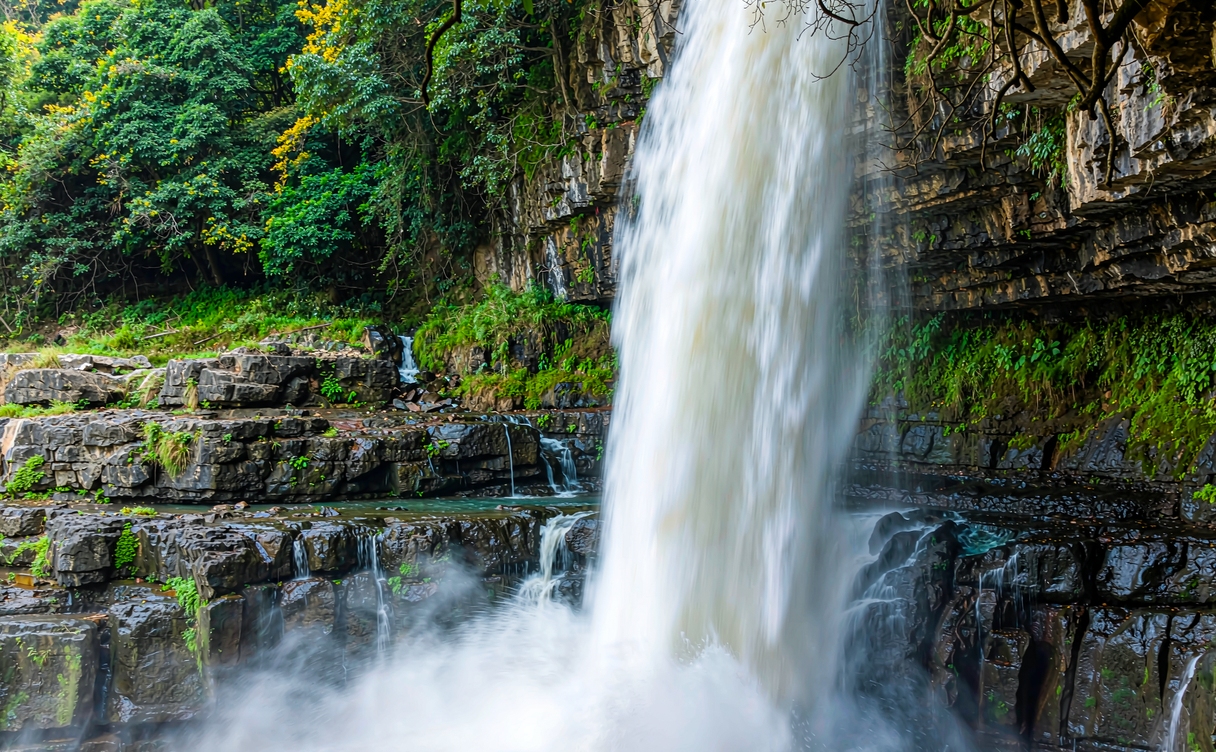
Munigou Travertine Pools and the Two Valleys
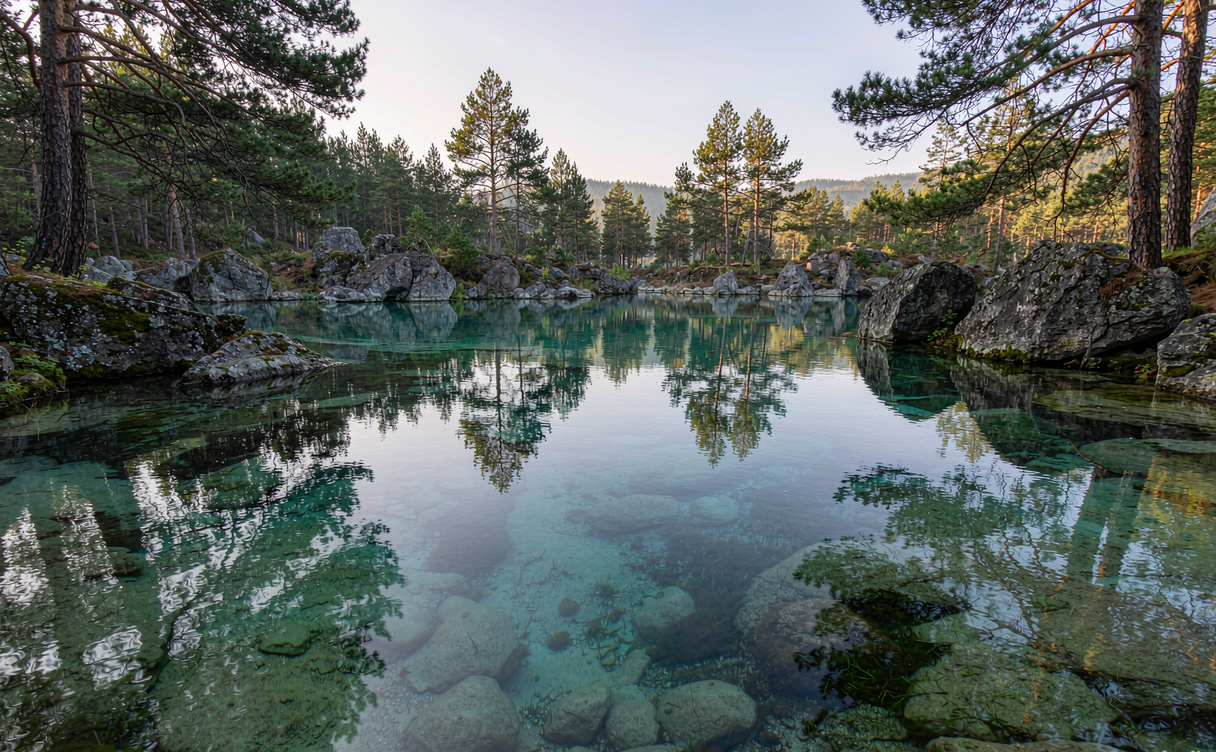
The Munigou travertine pools come in two flavours. Zhaga is a single tiered waterfall — at about 104 m it is billed as the highest travertine waterfall in China — with calcified steps you walk beside on boardwalks. Erdaohai is a string of mirror-clear lakes linked by wooden paths through pine forest; the water shifts from jade to cobalt as the light moves. Allow 3–4 hours total if you do both valleys, or 2 hours for one.
Tickets run CNY 70–CNY 100 depending on season, with a shuttle bus inside the park for about CNY 20–CNY 30. The park opens around 8:00 and last entry is about 17:00; we tell clients to enter before 10:00 so the morning sun lights the pools before the afternoon clouds build.
Munigou to Huanglong
The Munigou to Huanglong drive is short — roughly 15–20 km and 30 minutes by road. Many travellers stay in Songpan and do both in a day, or split them across two mornings. A private car between the two runs about CNY 120–CNY 180 one way; the public bus is slower and runs a few times daily. We usually book Huanglong for dawn and Munigou after lunch, when the bigger park’s light is harsher anyway.
Munigou Songpan and How to Arrive
Munigou Songpan is the transit hub. Songpan town is about 30 km from the gates, a 40-minute drive (CNY 15 local bus, CNY 120 private car). From Chengdu, Songpan is reached by bus or a hired car in 6–7 hours; many clients fly into Jiuzhai Huanglong Airport, 1 hour away, then drive in. Songpan itself is a walled Tibetan town worth a night for its lantern-lit lanes and yak-butter-tea houses.
Best Time Munigou
The best time Munigou offers is September–October, when the pools are clearest, the larches turn gold, and the early frost keeps crowds thin. May–June brings rhododendrons and full flow at Zhaga. July–August is green but wet, with afternoon storms that muddy the paths. Winter closes parts of the upper boardwalk under snow. We send people in early October most years — the colour and the calm line up.
Where to Stay and a Sample Itinerary
Sleep in Songpan town (CNY 150–CNY 350 for a decent room) or near Huanglong’s entrance if you want dawn light. In Songpan, try the Tibetan-influenced dishes in our Sichuan snacks guide — butter tea, barley cakes, and smoked pork are the local stamina food at altitude.
A practical two-day plan:
- Day 1: Arrive Songpan, afternoon walk the town walls, early night.
- Day 2: Dawn at Huanglong, late-morning transfer to Munigou, full afternoon on Zhaga and Erdaohai, return to Songpan.
Photography and What to Pack
Munigou rewards patience more than gear. The pools photograph best in flat morning light, so we send clients in for the 8:30–11:00 window and save the afternoon for the forest shade. A polariser cuts the surface glare and brings out the turquoise; a wide lens captures the Zhaga tiers, while a short zoom is enough for Erdaohai. Tripods are fine on the boardwalks but not on the damp calcite edges — they slip, and the rangers will flag you.
Pack for the altitude even though it feels mild. At 3,000 m the sun is strong and the air dry; bring lip balm, a hat, and 1–2 litres of water per person. Layers matter: a sunny October morning can be 12°C and a cloudy afternoon 3°C with wind off the slope. Wear grippy shoes — the boardwalks are solid but the approach paths to Erdaohai get slick after rain. We lend clients a daypack and poles from Songpan if they arrive light.
Pairing Munigou with Jiuzhaigou
Travellers often ask whether to add Jiuzhaigou, two hours north. The short answer: if you have three or more days in the region, yes. Jiuzhaigou is larger and more famous, with dozens of multi-coloured lakes; Munigou is the calm, close-up half of the same travertine story. We usually run Songpan as the base for three nights — Huanglong at dawn, Munigou the next afternoon, Jiuzhaigou on day three — so you see the spectrum without repeating the same walk. A private car for the three-park loop runs about CNY 1,200–CNY 1,600 total, and we book the hotels so the drives stay short.
One practical note: the parks sit at different heights, so climb gradually. Sleep in Songpan (around 2,800 m) before the higher Huanglong ridge, and you will enjoy Munigou’s 3,000 m without a headache. Our drivers usually finish the loop by early afternoon on the last day so clients catch the Songpan–Chengdu bus or a flight from Jiuzhai Huanglong Airport relaxed rather than rushed.
FAQ
Is Munigou worth it if I am already doing Huanglong? Yes, if you have the time — it is the quieter half of the same travertine system and costs far less. We pair them for clients who hate crowds.
How high is it, and will I feel altitude? The valleys sit around 3,000 m. Most people are fine walking slowly, but skip the sprint and drink water. If you loved high alpine water elsewhere, our Erhai Lake in Dali guide and Qiandao Lake near Hangzhou guide show the range of China’s mountain lakes.
Can I swim in the pools? No — they are protected and the calcite is fragile. Photos only.
Do I need a permit? No special permit for the park; just your passport for the ticket and hotel.
How does the ridge scenery compare with famous peaks? The pools are the star, but the boardwalk ridges recall the open vistas in our Huangshan Yellow Mountain guide if you want a second mountain stop.
The travertine geology of the wider region is described in Wikipedia’s Huanglong entry), which notes the same sheltered karst basins that make Munigou’s water glow.
A Guide’s Timing Note
Our drivers usually reach the Zhaga gate by 13:00, after the Huanglong morning rush, so clients get the falls to themselves and the Erdaohai light stays soft till close. That single scheduling call is the reason Munigou feels like a secret even though it sits next to one of China’s busiest parks. Munigou to Huanglong is the obvious pairing, and the Munigou travertine pools are the quiet star of the whole Songpan loop.