

The first time I stood at the viewing platform in Bomê County, I had to check I was still in Tibet. Below me a wall of blue ice tumbled out of a high valley straight into a belt of green spruce and pine — a glacier that reaches the forest, something almost no other icefield in China does. This Midui Glacier guide covers how to see it legally and comfortably, and why it’s worth the long ride out from Lhasa. Midui Glacier, Tibet, China, sits in Nyingchi Prefecture along the Sichuan–Tibet Highway (G318), and it’s one of the most surreal landscapes in the whole plateau.
What Makes Midui Glacier Different
Most glaciers in the Himalaya retreat to bare rock. Midui is unusual because its terminus drops into a forested valley at around 2,400 meters, surrounded by spruce, pine, and rhododendron. The result is a single frame holding ice, water, and living forest — and because the ice is fed by two separate icefalls (a rare “twin” arrangement), the color shifts from milky white at the edges to deep glacial blue in the crevasses.
The site is protected and relatively small; you don’t climb the ice itself (it’s unstable and roped off), but a well-built boardwalk and viewing terraces let you get close to the moraine and the frozen lake at the foot. I’ve brought groups here in late April when the forest was still dusted with snow and the ice glowed the cleanest blue I’ve seen anywhere on the plateau.
Things to See at Midui Glacier
Plan 1.5 to 3 hours at the site on top of travel. The route from the car park:
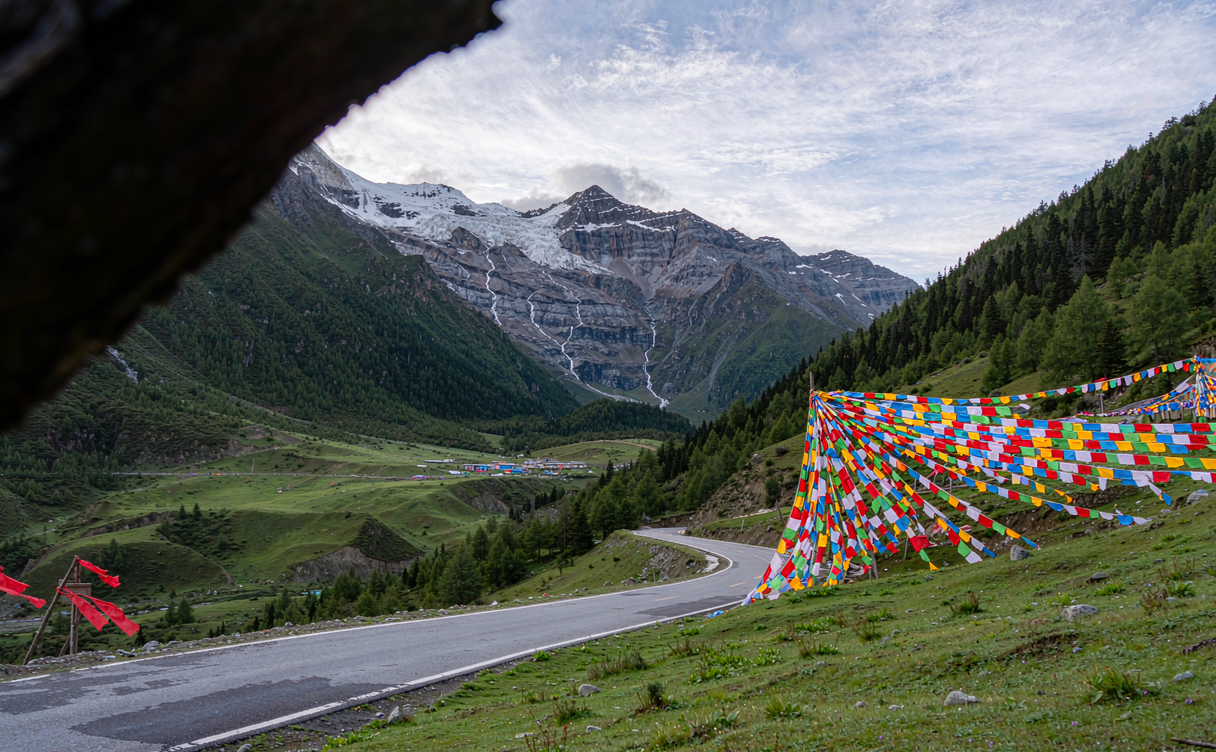
- The viewing terrace: The main platform looks straight up the valley at the twin icefalls. This is the money shot — ice, forest, and prayer-flagged ridge in one frame.
- The boardwalk to the moraine: A wooden path (about 1–2 km, gently climbing) brings you to the glacier’s rocky debris field and the meltwater channel.
- The frozen lake (Cuo’gao / the glacier lake): A still pool at the ice foot where, in cooler months, you can see ice shelves hanging over the water.
- The spruce forest walk: The loop back runs through old-growth conifers — fragrant, quiet, and a total contrast to the open plateau.
- Village life at Midui: The nearby Tibetan farming village (also called Midui) has stone houses and yak herds; a short stroll shows everyday Nyingchi life.
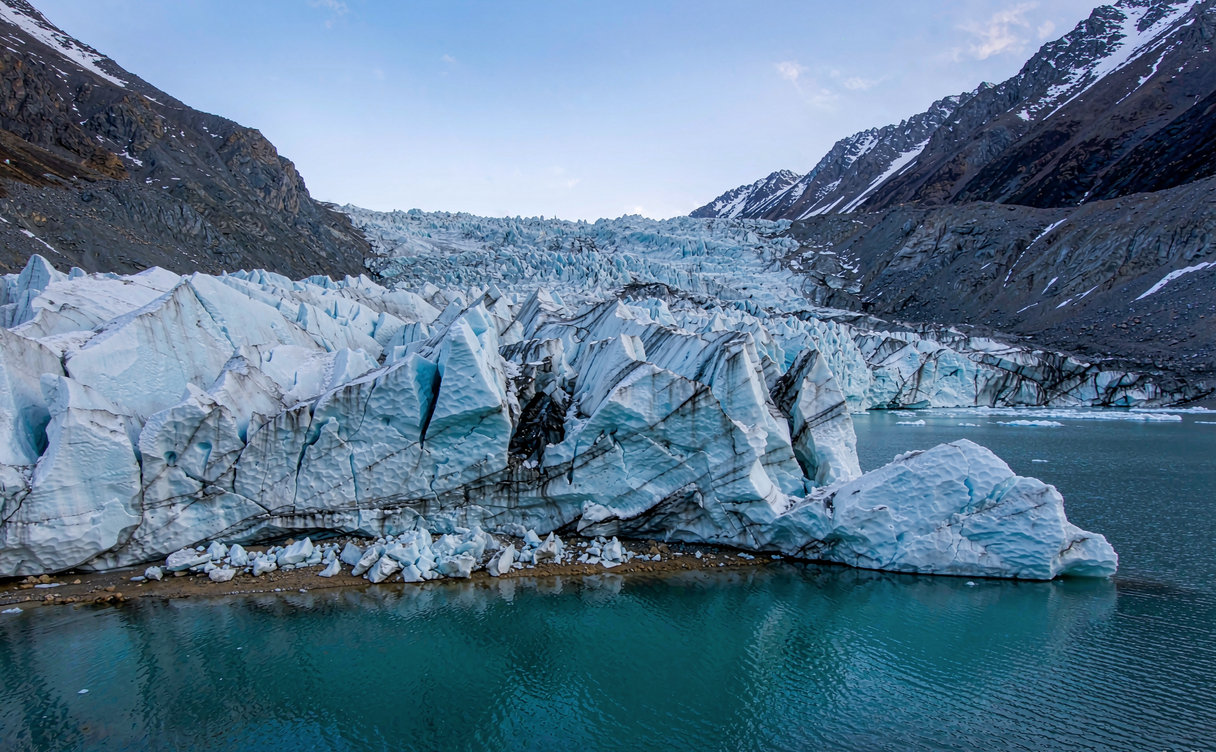
I’ve found the terrace is best in the first hour after you arrive, before the midday coach crowds and the flat light. Go early.
How to Get to Midui Glacier
This is the part that needs planning, especially for foreign travelers. First, the permit: foreign visitors to Tibet, China must hold a Tibet Travel Permit (issued to tourists traveling with a licensed Tibetan travel agency as part of a guided group) and cannot travel independently in the region. The permit is arranged through your tour operator before you fly or train in; budget 10–15 days lead time. With that sorted, the approaches:
Fly to Nyingchi, then drive. Nyingchi Mainling Airport (LZY) has flights from Chengdu, Lhasa, and a few other cities. From the airport it’s roughly 4–5 hours by road to Bomê and the glacier via the G318 and the new expressway sections. This is the fastest comfortable option and the one I recommend for most foreign groups.
Overland from Lhasa. The classic route runs Lhasa → Basum Tso → Bomê → Midui, about 8–10 hours of driving with stops, often done as an overnight in Bomê or Nyingchi. It pairs beautifully with the Basum Tso lake stop on the way.
From Chengdu via the G318. The epic overland crossing of western Sichuan into Nyingchi is spectacular but multi-day and permit-sensitive; only for serious road-trippers with a guide.
Within Bomê, a taxi or your tour vehicle covers the final 40 minutes to the scenic gate; the entry ticket is about RMB 50, with an optional shuttle (RMB 20–40) covering the last few kilometers to the trailhead.
For the train option into the region, our China–Tibet train guide explains the Lhasa routes and the permit handshake at the stations.
Best Time to Visit Midui Glacier
Because this is a lower, forested glacier, the window is wider than for high-altitude ice. April to October is best. Late April–May gives the bluest ice and snow-dusted forest; September–October brings clear, dry air and golden larches. Summer (July–August) is green and lush but the ice melts back and afternoons bring rain. Winter is cold and the access road can ice over, so I don’t generally send groups then. Note that Nyingchi sits lower and warmer than Lhasa, so altitude here is kinder — a good first taste of the plateau. Our best time to visit China guide has the month-by-month Tibet picture if you’re extending.
How Long to Spend, and What to Pair It With
The glacier itself is a half-day visit; with transfers from Nyingchi or Lhasa, count a full day or, better, an overnight in Bomê or Nyingchi. I usually build Midui into a Nyingchi loop with Basum Tso and the Everest region only for travelers with two weeks; for shorter trips, Nyingchi + Midui + Basum Tso is a satisfying, lower-altitude Tibet taste. If you’re coming from Yunnan instead, the Shangri-La Yunnan guide shows the northern Yunnan approach toward the plateau.
A Bit of Background
Midui is a valley glacier fed by the snows of the Nyenchen Tanglha range, and it’s formally listed among China’s most beautiful glaciers in domestic surveys. The “forest glacier” character is why it’s protected — the meeting of ice and living tree line is ecologically fragile, so boardwalks keep visitors off the sensitive ground. The Midui Glacier entry on Wikipedia has the basic geography if you want coordinates and the drainage before you go.
Foreign visitor to Tibet? We arrange the Tibet Travel Permit and a licensed guide so Midui fits into a legal, stress-free Nyingchi loop — send us your passport details and dates at least two weeks out.
Practical Tips From the Platform
Even in warm months the ice foot is cold and damp — bring a wind layer and proper shoes for the boardwalk, which can be slick. The altitude at the trailhead (~2,400 m) is usually fine, but if you’ve just flown from low elevation, take the walk slowly. There’s a small café and toilet block at the gate; none on the loop. The shuttle saves energy but the walk in is pretty — I’d ride up and stroll down. And respect the roped-off ice: people have been injured ignoring it, and the local community asks visitors to leave the prayer flags and stupas undisturbed.
Who Midui Glacier Is For
This is for travelers who want a “I can’t believe this is real” plateau moment without the extreme altitude of the far west. Photographers, gentle-walk fans, and anyone combining Tibet with Yunnan or Sichuan will love it. It’s also a gentler introduction to the region than the Everest Base Camp drive.
My Honest Take
I’ll be honest: Midui isn’t the biggest glacier you’ll ever see, and the shuttle-plus-boardwalk setup is modest. But that frame — blue ice, green forest, prayer flags — is something I’ve shown to jaded travelers who went quiet for a full minute. Go early, go slow on the walk, and let the forest do its work.
Want Midui built into a permitted Tibet itinerary with Basum Tso and Nyingchi? Tell us your entry city and dates and we’ll sequence the whole plateau route for you.
Midui Glacier, Tibet, China rewards the long drive with a view that arguing can’t improve — ice meeting forest, on the roof of the world, exactly where the maps say it should be.
Planning a Tibet trip and unsure where the permit fits? Reach out and we’ll handle the paperwork and route so you’re standing at the Midui terrace instead of stuck at a checkpoint.
Nyingchi’s forested icefall is the plateau at its most gentle and most strange — and the easiest glacier in Tibet, China to actually reach and enjoy.