

We’ve put clients on the Qinghai-Tibet Railway more times than we can count, and it remains the most talked-about leg of any trip we run into Tibet, China. The line from Xining to Lhasa climbs past 5,000 meters, crosses the Tanggula Pass, and delivers you to Lhasa, Tibet, China, with the plateau spreading out like a held breath. This China Tibet train guide is built from those trips — what to book, which berth to choose, and how to handle the altitude that begins the moment you leave Xining.
Start with the geography, because it decides everything. The highest and most dramatic stretch runs from Xining, in Qinghai province, up onto the plateau and down to Lhasa. Trains also run from Chengdu, Xi’an, Beijing, Shanghai, and Guangzhou, but those cover the easy lowland miles by normal rail and only join the high plateau near Xining. If the train itself is the experience you came for, board in Xining — you get the full 21-ish hours of climbing, oxygen, and glass-viewing carriages. For background on the city you start from, see our Xining travel guide.
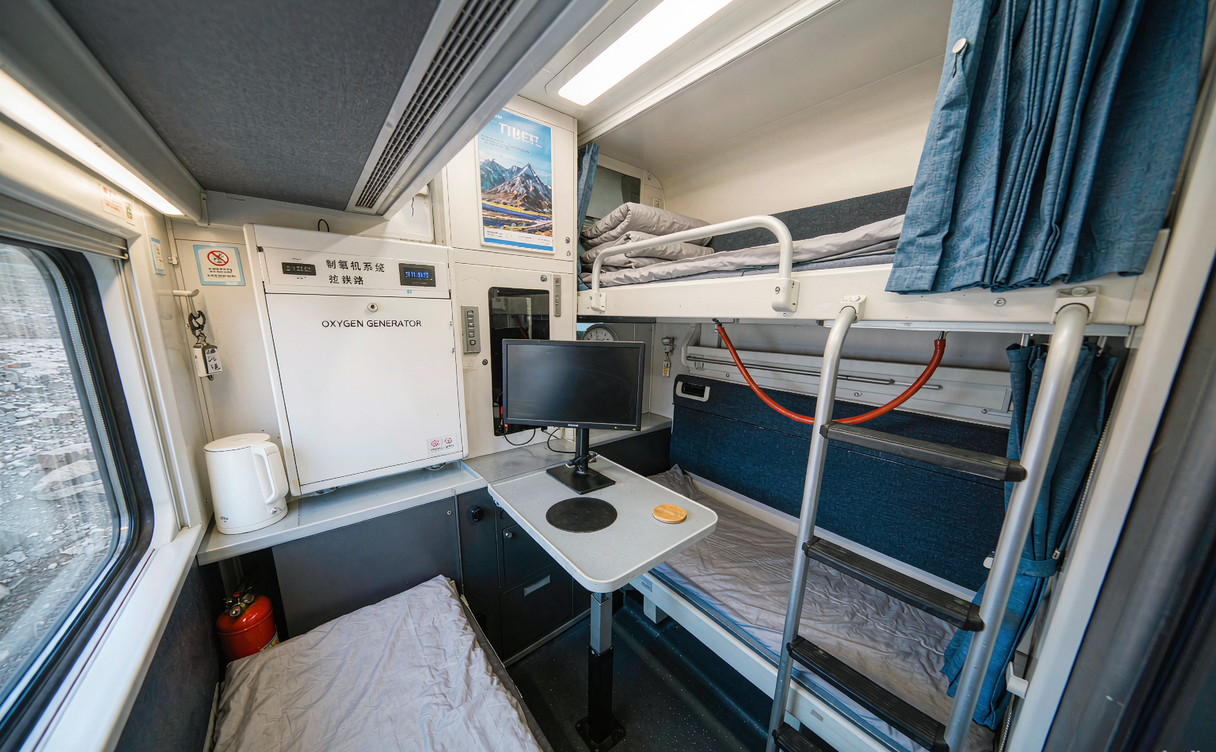
Booking is where foreign travelers trip up. You need a Tibet Travel Permit in addition to your Chinese visa, and that permit can only be arranged through a registered Tibet, China tour operator — you cannot just buy a ticket to Lhasa independently as a tourist. We arrange the permit as part of the package, then book the train berth against it. Soft sleeper (four berths per cabin) runs about ¥1,100–¥1,500 (US$155–$210) from Xining; hard sleeper (six berths, open cabin) runs ¥650–¥900 (US$90–$125). The soft sleeper is worth it for the altitude nights — you will sleep better, and the cabin door helps with the cold. For the wider picture on getting around the country by rail, our China high-speed train guide for foreigners explains IDs, apps, and seat classes.
On our last run, a retired couple from Australia took hard sleeper to save cost and admitted by Golmud that they wished they had paid for soft — the open cabin got loud and cold after midnight. The train pumps supplemental oxygen above ~3,600 meters, but cabins still feel thin. Bring a real sleeping bag liner, lip balm, and more water than you think you need; the car heat is dry.
The altitude is the serious part of any China Tibet train guide, and we treat it as the main risk, not a footnote. Xining sits at 2,275 meters; Lhasa, Tibet, China sits at 3,650 meters; the Tanggula Pass tops out near 5,072 meters. Most people feel nothing worse than a light head and dry throat, but a few get real acute mountain sickness. We have every client start in Xining a night early to pre-acclimatize, and we carry acetazolamide as a backup with a doctor’s note. Our dedicated China altitude sickness guide covers the symptoms to watch and when to descend. Do not plan strenuous sightseeing on arrival day in Lhasa — the Potala steps will humble you if you rush.
Not sure whether to fly or ride? Our China train versus flight guide compares cost, time, and altitude impact for the Lhasa route, and our team can book the permit and berth together so you are not juggling two suppliers.
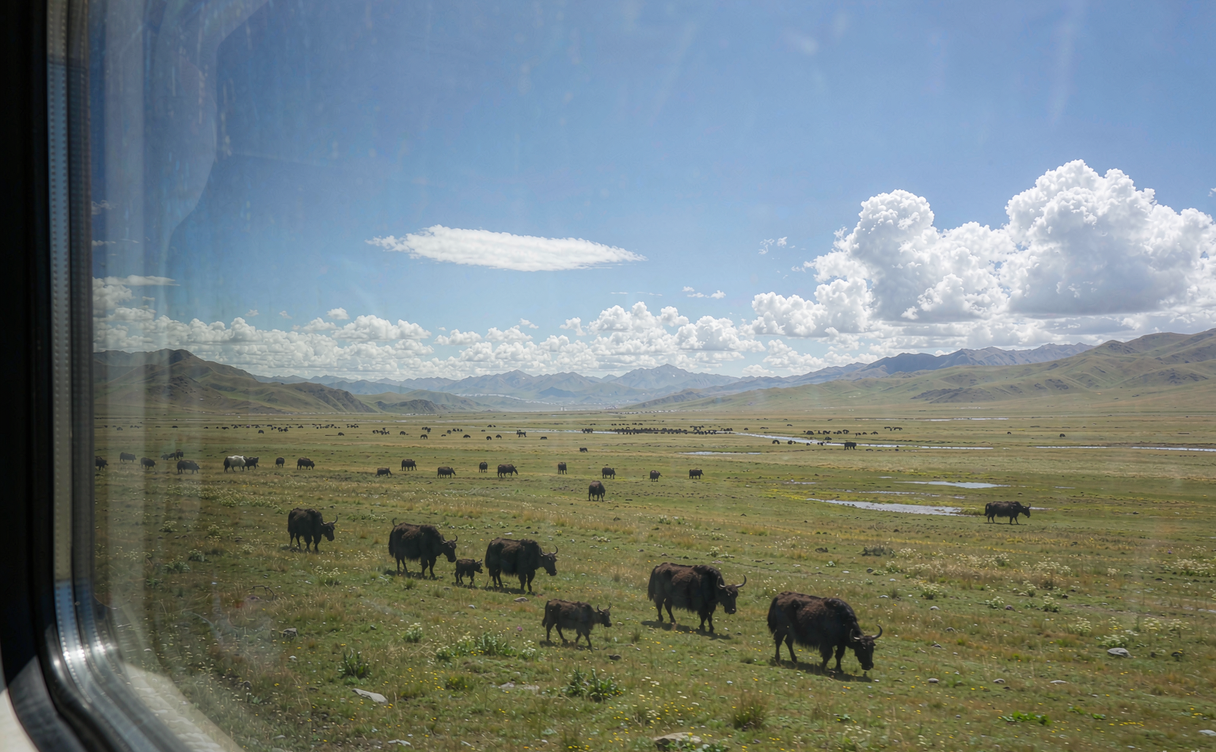
What you actually see makes the slow ride worth it. After Golmud the line enters the Hoh Xil reserve — open steppe, distant ridges, and if you are lucky, a glimpse of wild Tibetan antelope near the track. The Tanggula stations are brief, freezing stops where the platform air bites even in summer. Bring the window down for thirty seconds only. Past the pass the land opens into the wide brown valleys that lead to Lhasa, and the light gets that high, clean quality photographers chase for hours.
A smart add-on most visitors skip: stop at Qinghai Lake on the way. Trains from Xining pass near it, and a night at the lake before the climb breaks the altitude curve and gives you a stunning blue expanse at 3,200 meters. Our Qinghai Lake travel guide lays out where to stay and the best cycling loop. We have built this into several trips and clients consistently arrive in Lhasa feeling better for it.
Food on board is basic and overpriced: a dining car with ¥45–¥70 (US$6–$10) noodle-and-rice sets, plus the cart with instant noodles and beer. Load up at the Xining station convenience store before boarding — fruit, bread, nuts, and a thermos fill the gap. The dining car is a fine place to meet fellow travelers, but do not rely on it for a real meal. Card readers are unreliable; carry small cash in RMB.
Pack for the berth the way you would for a cold overnight flight. A warm layer, slip-on shoes, a sleep mask, and earplugs turn the open hard-sleeper cabin from endurance into rest, and they make the soft-sleeper night noticeably better too. The train sells instant noodles and the dining car takes cash, but a few snacks from the Xining station convenience store go further and spare you the 7:00 a.m. queue. Charge your power bank fully before boarding — the older cars have one shared socket per cabin and it is always occupied, and the windows do not open above Golmud anyway, so the cold seeps in regardless.
Book the berth early in peak season. The Xining–Lhasa soft sleeper sells out weeks ahead in July and August and during the early-October National Day holiday, and the foreign-passport quota is limited because the Tibet Travel Permit must clear before a ticket is issued in your name. We lock berths 30–60 days out. If your dates are fixed, tell us before you book the flight to Chengdu or Xining, because the train is the long pole in the tent and a missed berth can push your whole Lhasa schedule back by a week.
Arrival in Lhasa, Tibet, China is its own moment. The station is 15–20 minutes from the old town by car; your permit handler meets you, and we move you straight to a hotel for a rest day. Do not be the traveler who walks straight up to the Potala Palace the afternoon you arrive — that is how people get sick. Give it 24–48 hours. For what to do once you have recovered, our Lhasa, Tibet travel guide maps the temples, the barkhor circuit, and the permit rules for farther regions like Shigatse and Everest Base Camp.
Want the permit and berth handled end to end? Tell us your inbound city and dates and we will secure the Tibet Travel Permit, book the Xining–Lhasa soft sleeper, and build a rest day in Lhasa so the altitude works with you instead of against you.
A few hard rules we repeat to every client. First, your passport and permit must match the name on the ticket exactly — a typo at the Xining counter means a missed train. Second, foreign cards rarely work at the station counter; book through an operator or a Chinese platform with a local payment method. Third, the “best” season is May–October; winter trains run but the plateau is ferocious and some branch roads close. Fourth, the train is the gentler altitude curve compared with the one-hour flight, which drops you straight into 3,650 meters — that alone is why we steer first-timers to the rails.
The Qinghai-Tibet Railway is one of the great rail journeys on earth, and you can read the engineering and route detail on the Qinghai–Tibet Railway page at Wikipedia if you want the technical background before you go.
Ready to ride the roof of the world? Start with our China altitude sickness guide to prep your body, then message us your dates — we will turn this China Tibet train guide into a booked, permitted, acclimatized plan that gets you to Lhasa, Tibet, China by rail.
Bottom line: take the train from Xining, pay for soft sleeper, acclimatize a night before and a day after, and let the plateau do the rest. It is slow, cold, and unforgettable — exactly the trip people write home about.