

The first time we drove the Golmud-to-Tibet road with a client, we stopped at the Kunlun Mountain Pass just long enough for photographs before the wind drove everyone back into the warm car — at 4,767 meters, even a five-minute walk to the monument leaves you breathing hard. This is the gateway where the Qinghai, China highway begins its long climb onto the Tibetan plateau, and a proper Kunlun Mountain Pass guide has to be as much about altitude and timing as about scenery. We’ve sent travelers this way as the start of a Qinghai–Tibet overland journey, and the pass is the moment the trip changes gear.
Where the Pass Actually Is
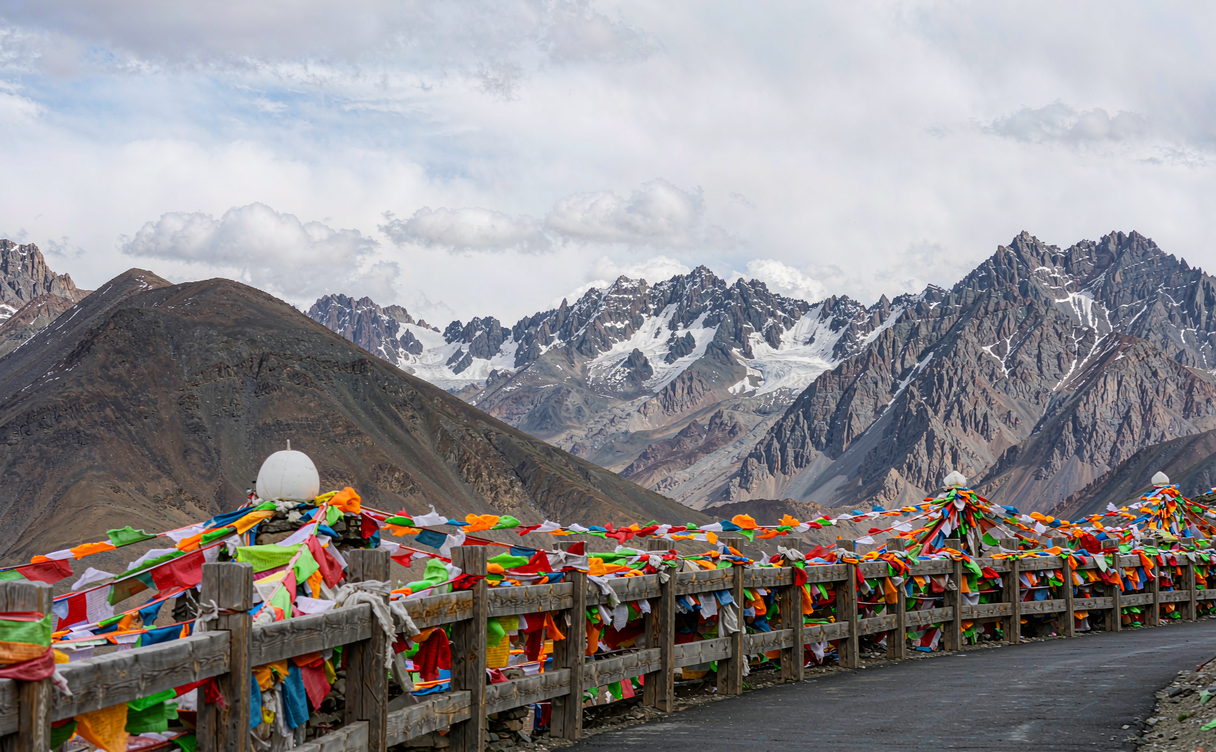
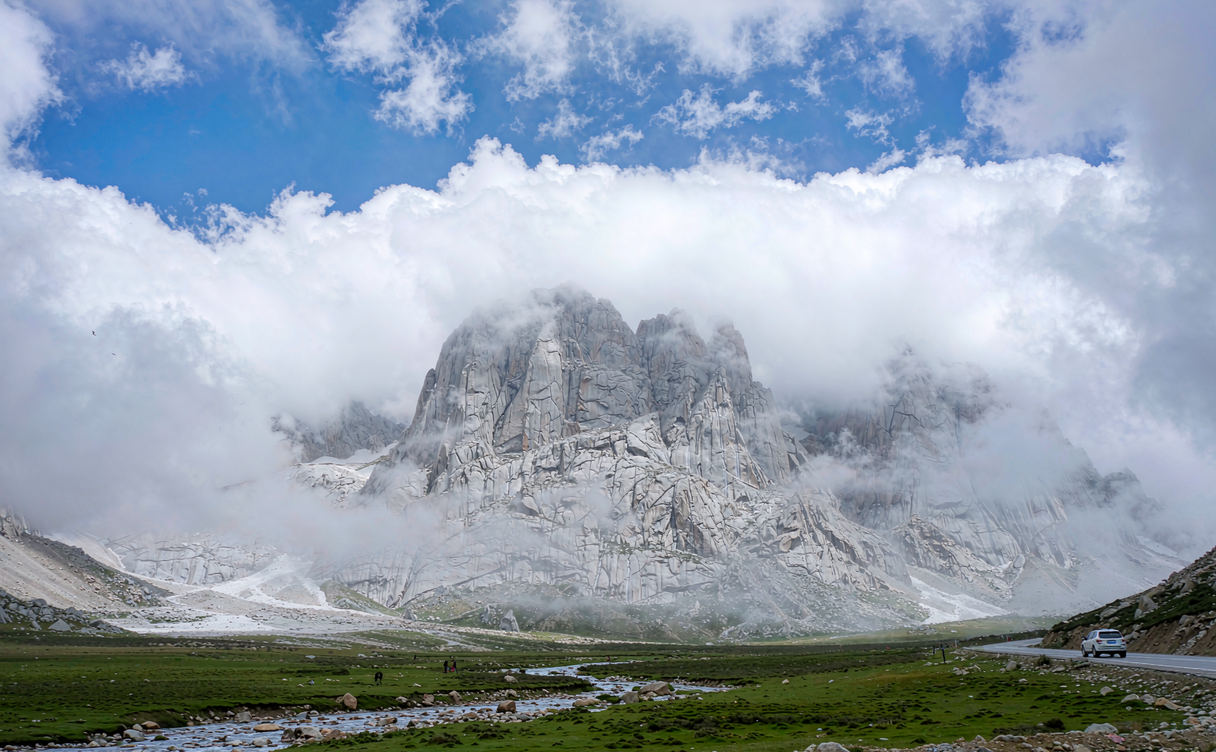
The Kunlun Mountain Pass (昆仑山口) sits on the G109 Qinghai–Tibet Highway about 160 km south of Golmud, in Qinghai, China. It marks the northern wall of the Tibetan plateau, where the road breaches the Kunlun range and the brown foothills give way to a vast, treeless alpine world. A large stone monument at the roadside reads the pass elevation — 4,767 m (15,640 ft) — and there’s a windswept overlook deck hung with prayer flags. Just to the east, weather permitting, you can see Yuzhu Peak (玉珠峰), a 6,178 m glacier-clad summit that’s a popular introductory climb for Chinese mountaineers.
This is a working transit corridor, not a fenced scenic park. The pass is free to visit and has no ticket gate. What you’re buying into is the experience of standing at the literal threshold of the “roof of the world” — a Tibetan plateau gateway that generations of traders, pilgrims, and now tourists have crossed.
Getting There from Golmud
Golmud (格尔木) is the launch point, and it’s easier to reach than most people expect. The Qinghai–Tibet railway connects Golmud to Xining in about 6–8 hours (hard sleeper 145–260 RMB / 20–36 USD, soft sleeper 230–400 RMB / 32–56 USD), and there are daily flights from Xining (around 350–600 RMB / 49–84 USD, 1 hour) plus connections via Xi’an and Chengdu. Our Golmud travel guide covers arrival and acclimatization in detail.
From Golmud, the only sensible way to the pass is by road. A private 4WD with a driver runs about 900–1,400 RMB (125–195 USD) for the round trip to the pass and back, taking roughly 3–4 hours each way on good pavement. Shared tourist vans sometimes leave Golmud in summer for around 200–300 RMB (28–42 USD) per seat, but they’re infrequent and fill fast, so we usually arrange a private car. Note that the pass itself is only the first of many stops if you continue toward Tibet, China; the full Golmud-to-Tibet road continues hundreds of kilometers south to Lhasa.
Altitude: Read This Before You Go
The single most important part of any Kunlun Mountain Pass guide is the altitude warning. At 4,767 m the Kunlun Pass altitude is high enough to cause real acute mountain sickness in people who arrive the same day from sea level. Golmud itself sits near 2,800 m, which is already enough to merit a night of acclimatization. We tell clients to spend at least one full day in Golmud, hydrate heavily, skip alcohol, and only then drive up. Symptoms at the pass — headache, breathlessness, dizziness — are common and usually mild if you’ve acclimatized, but anyone feeling seriously unwell should descend immediately; the road drops back toward Golmud quickly.
Oxygen canisters are sold in Golmud shops for 20–40 RMB (3–6 USD) and are worth carrying. A solid altitude briefing lays out the symptoms, medication (such as acetazolamide, with a doctor’s advice), and the “climb high, sleep low” rule that makes this pass manageable. Do not attempt the Kunlun Pass as a same-day side trip from Xining without prior nights at altitude — the Qinghai mountain pass deserves respect.
What You’ll See and Do
The overlook at the pass is the main event. Walk the short, flagged path to the monument, read the bilingual elevation stone, and look south across the open plateau. On clear mornings the light is extraordinary: hard blue sky, pale glacier walls, and the rust-colored moraine running off the peaks. Photography is best before midday, because afternoon clouds and wind pick up fast. There are often a few nomad vendors selling dried yak meat, juniper incense, and prayer scarves — bring small RMB notes, as cards aren’t accepted.
Beyond the pass, the Golmud-to-Tibet road threads past high lakes and permafrost sections, and in summer the roadside alpine meadows bloom with gentians and edelweiss-like cushion plants. If you continue, the next major landmark is the Hoh Xil (Kekexili) reserve area further south — a protected wild landscape — though that requires permits and a longer expedition. For most visitors, the pass plus a stretch of plateau road and a picnic lunch is a complete, satisfying day.
Wildlife is a quiet bonus: blue sheep on the scree slopes and, with luck, gazelle on the open steppe. Bring binoculars. There are no restaurants at the pass, so pack water, snacks, and a thermos; the wind chill at 4,767 m is severe even in July, and a windproof jacket is non-negotiable.
Best Seasons and Bookability
Timing is everything on a Qinghai mountain pass. The reliable window is June through September, when the road is clear of snow, daytime temperatures at the pass hover around 5–12°C, and the meadows are green. July–August is peak season and also the warmest, but it’s also when afternoon thunderstorms build. May and October can be stunning and empty but bring sudden cold snaps and the first snows. From November to April the pass is often closed or hazardous, with ice on the road and whiteout conditions — we don’t schedule client trips then.
There is no ticket or reservation system for the pass itself, but if you’re continuing into Tibet, China you’ll need the Tibet Travel Permit arranged through a registered agency well in advance; that’s a separate process from this Qinghai, China day trip. In Golmud, hotels range from basic 150 RMB (21 USD) guesthouses to 400–700 RMB (56–98 USD) business hotels; book a room with heating and good insulation, since nights are cold year-round. Our Delingha travel guide is useful if you’re looping west, and the Qinghai–Gansu loop itinerary shows how to build this pass into a wider route.
Where to Eat and Acclimatize
Golmud’s food scene is hearty and northern: hand-pulled noodles (拉面) for 12–20 RMB (2–3 USD) a bowl, mutton skewers, and Tibetan-style butter tea if you want to pre-adapt your palate. The city has several pharmacies where you can buy altitude meds and oxygen. Spend your acclimatization day visiting the nearby Golmud river park or simply resting — don’t over-exert. Many travelers use Golmud as a staging post before flying or training onward to Lhasa in Tibet, China; pairing the two makes the high road feel like a continuous story rather than a disconnected stop.
The Kunlun range’s cultural weight is hard to overstate in Chinese tradition — it’s the mythical “ancestor of mountains.” The Wikipedia entry on the Kunlun Mountains explains both the geology and the place the range holds in literature and myth, which adds depth to what you’re seeing from the overlook.
Worried about the 4,767 m elevation? Read our China altitude sickness guide before you book, and we’ll build in a Golmud acclimatization night.
Want a driver and oxygen ready for the Golmud-to-Tibet road? Tell us your dates and we’ll arrange a private 4WD from Golmud with a plateau-experienced guide.
If you’re starting from the provincial capital, our Xining travel guide and Qinghai Lake travel guide show the scenic lead-up to this high pass.
A Kunlun Pass altitude stop is not a leisurely stroll — it’s a bracing, brief, unforgettable moment at the roof of China where the road bends south toward the plateau. Plan for the thin air, dress for winter even in summer, and you’ll come away with one of the most dramatic roadside views in Qinghai, China.