

I have watched a lot of deserts, but nowhere else have I stood where the sand dunes literally press against the back fences of a green town. The Kumtag Desert near Turpan, Xinjiang, China is famous precisely for this: a living oasis city, Shanshan (Piqan), whose orchards and canals border shifting dunes you can climb on foot in twenty minutes. For travelers who want desert drama without a multi-day expedition, Kumtag is the most accessible dune sea in northwest China, and it works beautifully as a relaxed counterpoint to the heavy history of the Turpan ruins.
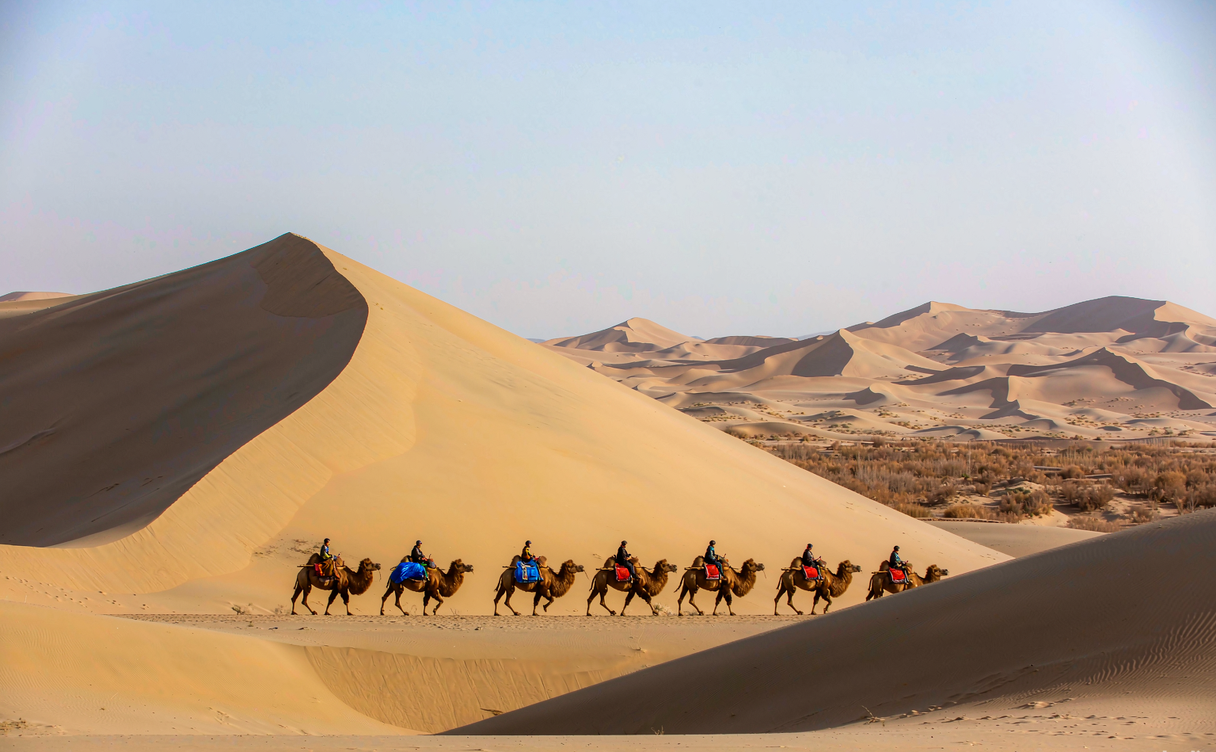
The Desert That Reaches the City
Kumtag (库木塔格) means “sand mountain” in Uyghur, and the name describes the scene perfectly. This is one of the few deserts on Earth that abuts a populated town, with the dune field stretching roughly 2,500 square kilometers along the southern edge of the Turpan Basin. Geologists link its formation to the Taklimakan’s wind systems carrying sand over the Flaming Mountains, where it piles against the oasis’s windward side and is continually reshaped by the same gusts that make the basin famous.
What makes Kumtag special for visitors is proximity. Unlike remote dune belts that require days of driving, here you can have breakfast in a leafy courtyard, walk ten minutes, and be barefoot on warm sand watching the skyline of poplar trees behind you. I spent a morning simply watching how the wind reshaped a single crest hour by hour — the desert feels alive in a way that photographs never capture, and children in particular love the novelty of a playground that is also a wilderness.
The dunes are a protected scenic area with marked trails, a visitor gateway on the town’s southern side, and a camel and ATV operation just inside the gate. Because the sand meets the farmland directly, conservation staff manage access to prevent the town from being buried, which also keeps the experience orderly for tourists and means the most photogenic crests are a short, signed walk from the entrance rather than a demanding trek.
Things to Do on the Dunes
The classic Kumtag activities are gentle and family friendly. A camel trek along the lower dunes costs about 80–120 RMB for a short loop and 200–300 RMB for a longer ride toward the higher ridges, with handlers who will pause for photos at the scenic shoulders. Sand sliding, where you ride a small board down a steep face, is around 30–50 RMB per turn and is a favorite with kids, while dune buggies and ATVs run 150–300 RMB for a guided spin through the marked off-piste area. On calm spring days there is even a designated spot for paragliding when wind conditions allow, though that depends on the operator being on site.
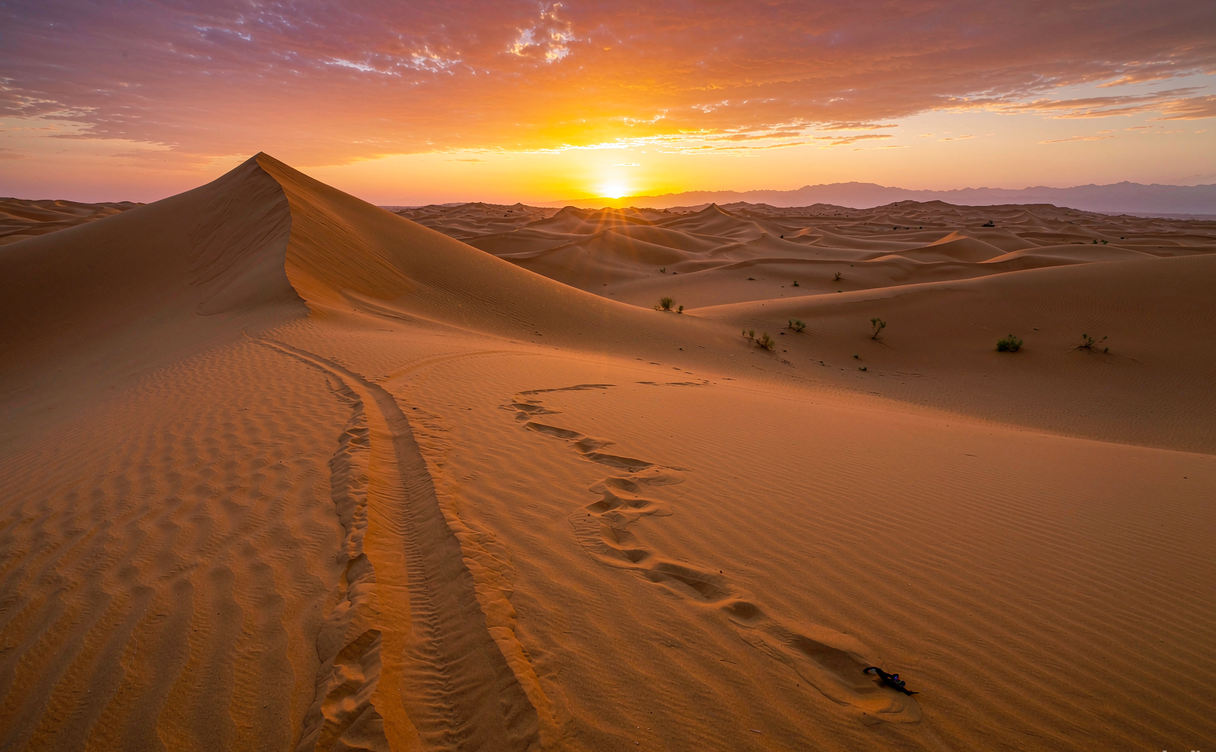
I recommend climbing the main viewing dune about an hour before sunset. The light turns the sand from yellow to copper, and you get a sweeping view back over Shanshan’s green grid of fields — the contrast is the postcard shot everyone comes for, and the climb back down the soft face is quicker than you expect. Bring a scarf for your face; the wind kicks up fine grit even on calm days, and a phone in a pocket survives better than one in your hand. Pair this with the wider our Turpan travel guide stops like Gaochang and the Flaming Mountains for a full basin experience that balances culture with open sky.
Plan a flawless dune day — get our timing tips, activity price ranges, and the best sunset dune to climb for that oasis-meets-desert photo without fighting the midday heat.
Tickets, Hours, and How to Get There
The Kumtag Desert scenic area charges roughly 30–60 RMB for gate admission, with the camel, buggy, and slide activities priced separately as above. Hours are typically 08:30 to 20:00 in summer and 09:30 to 18:30 in winter, with the last entry about an hour before closing so staff can sweep the dunes before dark. The gateway sits on the southern edge of Shanshan town, about 90 kilometers (56 miles) southeast of Turpan city and roughly 280 kilometers from Urumqi, making it an easy add-on whether you approach from the basin or the regional capital.
Reaching Kumtag is easiest by car. A taxi or private driver from Turpan runs about 200–300 RMB one way (around 1.5 hours), while many travelers include it as a stop on a a 7-day Xinjiang, China itinerary that also covers Turpan and Urumqi. There is no convenient public bus to the gate, so self-driving or hiring a driver is the norm. If you want to sleep under the stars nearby, our China desert camp stays guide lists tented camps and yurt options across the region, and the the China Silk Road itinerary shows how oasis towns like Shanshan kept the trade routes alive against exactly this wall of sand. The gate has a small visitor center with maps and a hydration station, and vendors near the entrance rent scarves and shoe covers for a few RMB if the wind picks up.
Not sure which dune activity is worth it? Our cost-versus-fun ranking breaks down camel, buggy, and sand-slide so you spend on the ride you will remember, not the one you will regret once the sand is out of your shoes.
Best Time and Where to Stay
April to May and September to October are the sweet spots, with daytime temperatures of 18–30°C (64–86°F) that are perfect for dune walking and long enough light for a relaxed sunset. Summer in the Turpan Basin is extreme — often above 40°C (104°F) — so if you visit then, go at dawn or dusk and hydrate constantly, because shade on the dunes is essentially zero. Winter is cold but crisp and nearly empty, with frost on the crest tops some mornings.
You can day-trip from Turpan city (mid-range hotels 250–500 RMB per night) or stay in Shanshan town itself, where basic guesthouses start around 150 RMB and put you within walking distance of both the gate and the evening food stalls. For the broader regional picture, our this Xinjiang, China travel guide explains how Kumtag fits between the basin’s oasis culture and the great southern deserts, and why the meeting line of farm and sand is itself a small wonder.
For an authoritative overview of the desert’s geography and the oasis system beside it, the Wikipedia entry on the Kumtag Desert covers its extent, wind patterns, and the town it borders.
Best time, costs & what to bring at Kumtag
The practical side of the Kumtag Desert near Turpan, Xinjiang, China is refreshingly simple once you know the numbers. Gate admission runs about 30–60 RMB, with the camel, buggy, and sand-slide activities priced separately: a short camel loop is 80–120 RMB, a longer ride toward the higher ridges 200–300 RMB, sand-sliding 30–50 RMB a turn, and dune buggies or ATVs 150–300 RMB for a guided spin. Hours are 08:30–20:00 in summer and 09:30–18:30 in winter, with last entry about an hour before closing so staff can sweep the dunes before dark. The gateway sits on the southern edge of Shanshan town, about 90 kilometers southeast of Turpan city; a taxi or private driver from Turpan runs 200–300 RMB one way (around 1.5 hours), and there is no convenient public bus, so self-driving or hiring a driver is the norm.
Timing is everything. April to May and September to October are the sweet spots, with 18–30°C days perfect for dune walking and long enough light for a relaxed sunset on the main viewing dune — climb it about an hour before dusk, when the sand turns from yellow to copper and the green grid of Shanshan fields sits behind you. Summer in the basin often tops 40°C, so go at dawn or dusk and hydrate constantly, because shade on the dunes is essentially zero. Pack a brimmed hat, closed shoes or sandals you do not mind filling with grit, and a face scarf for the ever-present wind; vendors near the gate rent scarves and shoe covers for a few RMB if the wind picks up. We tell every traveler to carry at least 1.5 liters of water per person and a fully charged phone, because signal thins once you are out on the higher crests. A half day is plenty: two hours on the dunes, a late lunch of raisin bread and kebabs in Shanshan, and the drive back before dark.
Make Kumtag part of your Turpan plan — download our activity comparison and lodging picks so you can balance dune fun with the basin’s cooler oasis sights and still catch the best light.
Kumtag proves you do not need a weeks-long expedition to meet the desert. Here the sand and the orchard share a fence line, and that single contrast is worth the trip from anywhere in Xinjiang, China, especially at the hour when the dunes turn to copper.