

Jingzhou, in central Hubei Province on the banks of the Yangtze, is a city where more than two thousand years of history sit inside one of the best-preserved ancient city walls in China. In the popular imagination it is inseparable from the Three Kingdoms period, the turbulent era of rival warlords dramatized in China’s most famous historical novel, and several of its gates and temples recall that story. For foreign travelers, Jingzhou offers a rare chance to walk a complete Ming-dynasty wall, visit a museum famous for lacquerware, and explore a lived-in old city without the crowds of Wuhan or the ticket prices of the big scenic towns. This Jingzhou travel guide is written for visitors who like their history tangible and their cities walkable.
Jingzhou is an easy stop on a Hubei route. It sits between Wuhan travel guide, the provincial capital, and Yichang travel guide, the gateway to the Three Gorges. Many travelers also connect it with a Yangtze River cruise guide that begins or ends at Yichang.
How to Get to Jingzhou by High-Speed Train
The simplest route is by high-speed rail. Trains from Wuhan reach Jingzhou in roughly one and a half to two hours, and services from Yichang take about one hour. Jingzhou Railway Station connects to the old city by bus or taxi in around twenty to thirty minutes.
Because the city lies on the main Wuhan–Yichang corridor, it is simple to add as a half-day or full-day break between the capital and the gorges. Our China high-speed train guide for foreigners covers buying tickets and reading seat numbers so the short hop stays easy. Once inside the walled city, almost everything is reachable on foot, which is the best way to appreciate the layout.
Jingzhou’s airport serves a handful of domestic cities but is not useful for most international arrivals, so flying into Wuhan Tianhe International Airport and taking the train west is the usual approach. Within the old city, the moat-side paths and the rampart walk are flat and well maintained, and a small sightseeing cart shuttles between the main gates for those who prefer not to walk the full circuit. Taxis are cheap for the trip between the railway station and the wall, and ride-hailing apps work reliably in the center.
Best Time to Visit Jingzhou
Spring (March to May) and autumn (September to November) are the most comfortable seasons, with mild temperatures ideal for walking the wall. Summers are hot and humid, and the open ramparts offer little shade, so an early start is wise. Winters are cold but clear, and the wall is quiet and atmospheric.
Avoid the major national holidays if you can, though even then Jingzhou stays calmer than Wuhan or the cruise ports, which is part of its lasting charm.
Top Things to Do in Jingzhou
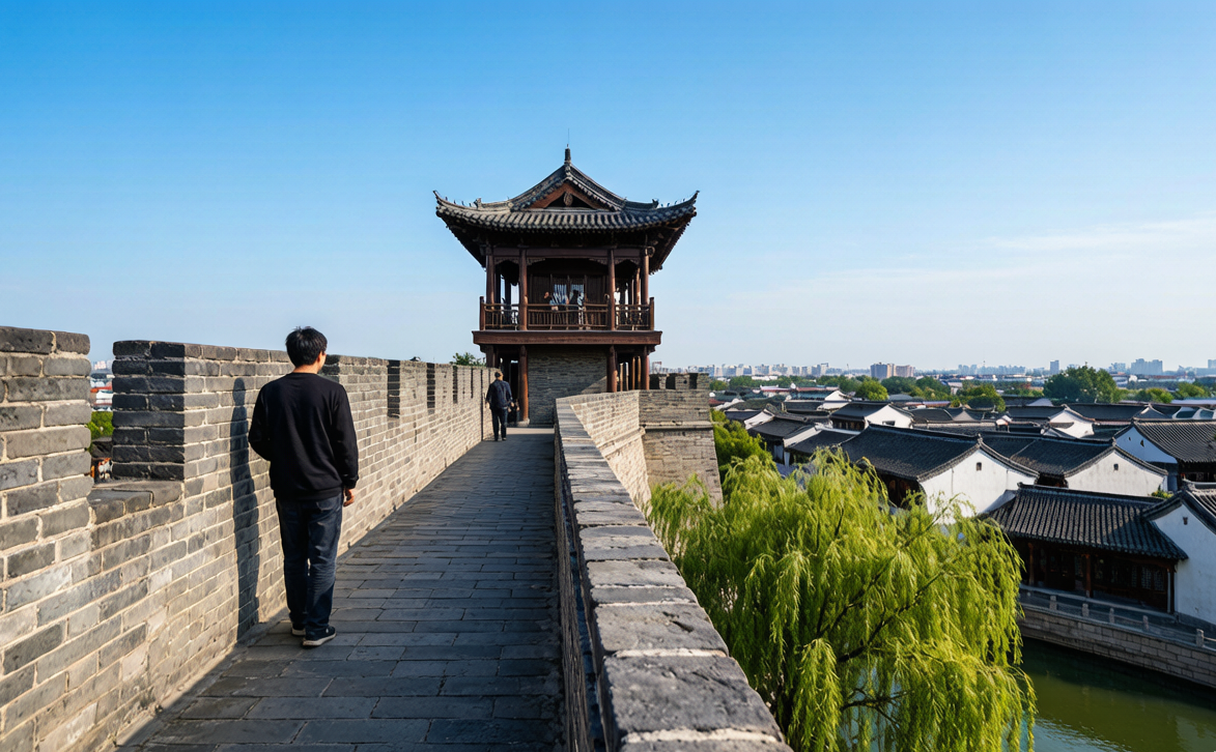
The defining experience is walking the Jingzhou ancient city wall, a roughly circular Ming-era fortification with watchtowers, gates, and a broad moat. You can climb sections of the rampart and circle much of the old city on foot or by the small sightseeing cart, pausing at the Chaoyang and Binyang gates. Few Chinese cities let you walk a wall this complete, and the views over tiled roofs to the Yangtze plain are a highlight.
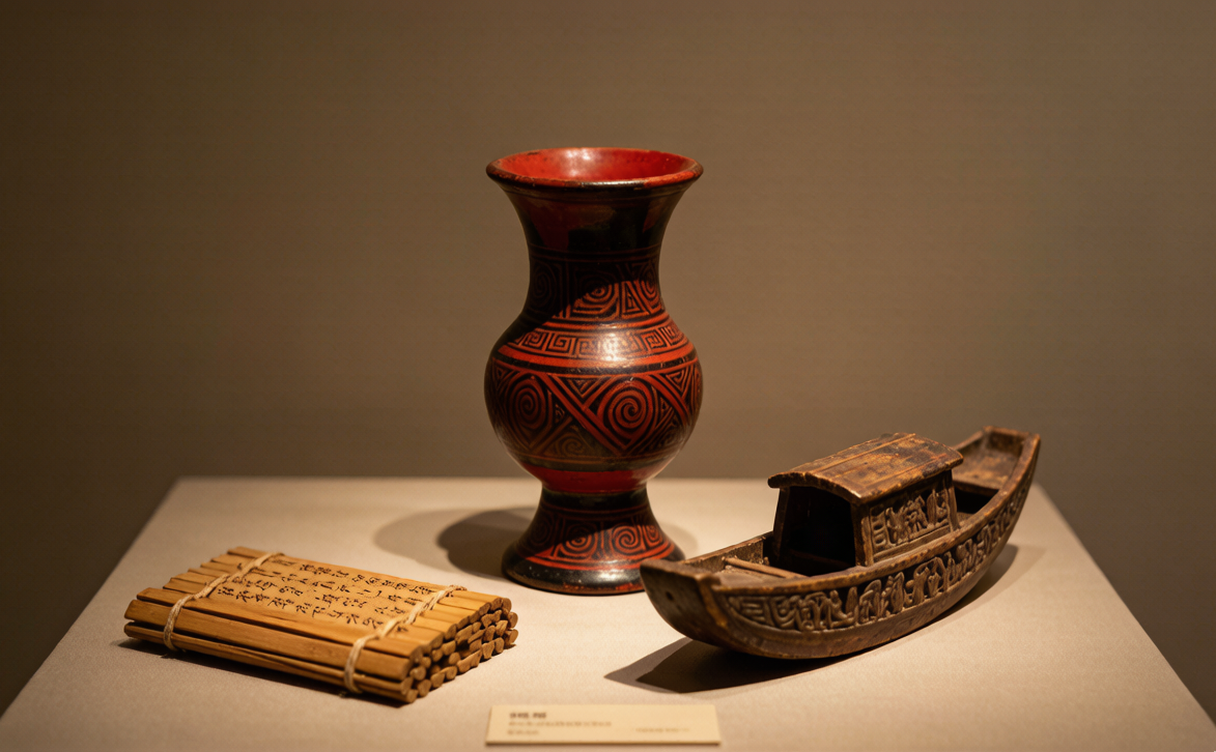
Inside the wall, the Jingzhou Museum is a genuine surprise, free to enter and celebrated for its Jingzhou Museum lacquerware, including vividly painted Han-dynasty boxes and a remarkably preserved soft-bodied wooden figure. The museum also holds bronzes and a famous jade burial suit. For Three Kingdoms history, the Guan Yu Temple and the related shrines recall the general who governed the city in legend, and the nearby Zhang Juzheng former residence adds Ming-dynasty statecraft to the mix.
Things to do in Jingzhou therefore span three layers: the physical wall, the museum’s craft, and the storytelling of the Three Kingdoms. Allow a full day to enjoy them without rushing.
The Three Kingdoms theme runs deeper than a single temple. The novel portrays Jingzhou as a strategic prize contested by the states of Wei, Shu, and Wu, and the city leans into that identity with statues, inscribed steles, and seasonal performances near the gates. You do not need to know the book to enjoy it, but a little background turns a pleasant wall walk into a vivid historical scene. The nearby Ming and Qing street inside the wall, rebuilt in traditional style, is touristy yet pleasant for an evening stroll, with teahouses and small shops lit by lanterns.
Where to Stay in Jingzhou
Stay inside or just outside the walled city so you can walk the ramparts at dawn and again after dark. Mid-range hotels cluster near the main gates, and a few properties occupy restored buildings within the old town. Riverfront hotels on the newer side of the Yangtze offer bigger rooms and skyline views but require a taxi to the history.
Book a room with wall or rooftop access if possible; the evening light on the tiles is the image most visitors remember.
A Jingzhou Itinerary
A practical Jingzhou itinerary uses one full day, or two if you want to linger.
Day 1: Arrive by high-speed train from Wuhan or Yichang. In the afternoon, walk a section of the ancient wall and watch the sunset from a gate tower, then dine near the old city.
Day 2: Spend the morning in the Jingzhou Museum, allowing at least two hours for the lacquerware and jade. In the afternoon, visit the Guan Yu Temple and the Zhang Juzheng residence, then walk the moat before your onward train.
If you have extra time, pair Jingzhou with Wuhan Yellow Crane Tower, the city’s iconic riverside tower, or continue west toward Yichang travel guide and a Yangtze River cruise guide. For mountain scenery, Wudang Mountain, Hubei lies further northwest and suits travelers combining Taoist sites with their Hubei loop.
Food and Local Specialties
Jingzhou cooking is part of the broad Hubei “Cai” style: freshwater fish, rice, and gentle, savory braises. The local specialty is Jingzhou fish rice, a steamed fish and rice dish with a clean, delicate flavor, and the city is known for its preserved fish and lotus-root preparations. Street snacks include hot dry noodles, shared with Wuhan, and various fried glutinous treats.
The night market just outside the wall is friendly and cheap, and a riverside restaurant is a pleasant place to try whole fish from the Yangtze system. Vegetarians should specify clearly, as many broths contain fish or meat.
Side Trips from Jingzhou
Jingzhou’s central Hubei position makes it a natural waypoint. East is Wuhan travel guide with its lakes and the Wuhan Yellow Crane Tower, while west is Yichang travel guide and the start of a Yangtze River cruise guide. Northwest, Wudang Mountain, Hubei adds Taoist monasteries and mountain hiking for those with more days.
Because all of these share the high-speed network, Jingzhou works well as a calm, inexpensive break between the capital and the gorges, letting you absorb real Three Kingdoms history without the big-city pace.
Conclusion
Jingzhou is one of the few Chinese cities where you can still walk an intact ancient wall and read the Three Kingdoms story in its gates and temples, all anchored by a museum of world-class lacquerware. For official tourism and cultural information about the city and its wall, consult the Jingzhou Municipal Government portal at Jingzhou government.