

Rising just south of Xuancheng in eastern Anhui, Jingting Mountain is one of China’s most quietly celebrated literary landscapes. Unlike the dramatic peaks that draw crowds elsewhere in the province, this low green ridge has earned its fame through words rather than cliffs. For more than a thousand years, scholars, monks, and wandering poets climbed its wooded slopes to write, drink tea, and watch the river mist settle over the fields below. If you are tracing the cultural heart of the Yangtze delta, this gentle hill deserves a place on your itinerary. This Jingting Mountain Anhui guide covers the history, the things to do at Jingting Mountain, the best walking routes, and exactly how to get to Jingting Mountain Xuancheng by train and bus.
Jingting Mountain Poem and History
The story of Jingting Mountain is inseparable from its poetry. The earliest and most famous line comes from the Tang dynasty poet Li Bai, who wrote that after looking at the mountain for a long while, he felt as though the hill and he had become silent companions who needed no words. That single image of a person and a mountain sharing quiet company turned a modest local hill into a symbol of friendship between man and nature. Over the following centuries, more than three hundred poets and painters recorded their visits, and the mountain became known as a place where landscape and literature met.
The name itself carries a peaceful meaning, often rendered as the “Mountain of Silent Contemplation.” During the Southern Dynasties and Tang periods, Xuancheng was already an important cultural and administrative town, and Jingting stood as its backyard garden of the mind. Monks built temples on the slopes, scholars held gatherings beneath the pines, and local officials commissioned stone inscriptions that survive to this day. When you walk here, you are following a literary path that includes some of the most admired names in classical Chinese verse.
Things to Do at Jingting Mountain
Most visitors begin at the foot of the hill and follow the paved road upward, but the real pleasure is in slowing down. The things to do at Jingting Mountain are gentle and reflective rather than adrenaline-fueled.
Start with the historic temple complexes. The main shrine near the middle slope honors the poets who immortalized the mountain, and the courtyards offer shaded benches where you can rest and look out over Xuancheng. Stone steles carved with famous poems line the paths, so bring a moment to read them rather than rushing past.
Tea is another highlight. The surrounding hills produce a respected local green tea, and small family stalls near the entrance serve brews made from leaves grown on the mountain itself. Sitting with a cup while the wind moves through the bamboo is exactly the experience the old poets described.
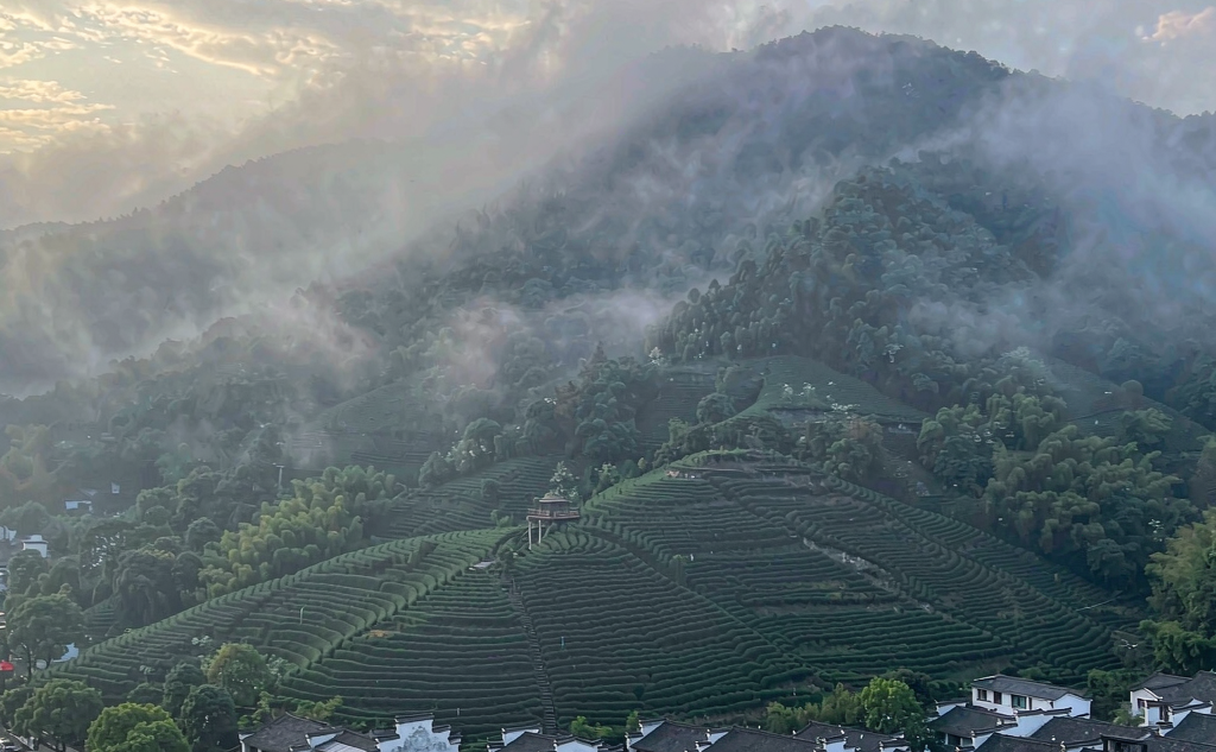
Photography lovers will find endless compositions: layered ridges fading into haze, terraced fields at the base, and the occasional pavilion perched on a rocky outcrop. Because the mountain is never crowded, you can take your time without jostling for a frame.
For a deeper cultural angle, combine your visit with the nearby Xuancheng ink and paper workshops. Xuan paper, the famed material used for classical painting and calligraphy, originated in this region, and several studios welcome visitors. You can learn why this area inspired so much art by watching the craft up close.
Jingting Mountain Hiking Trail
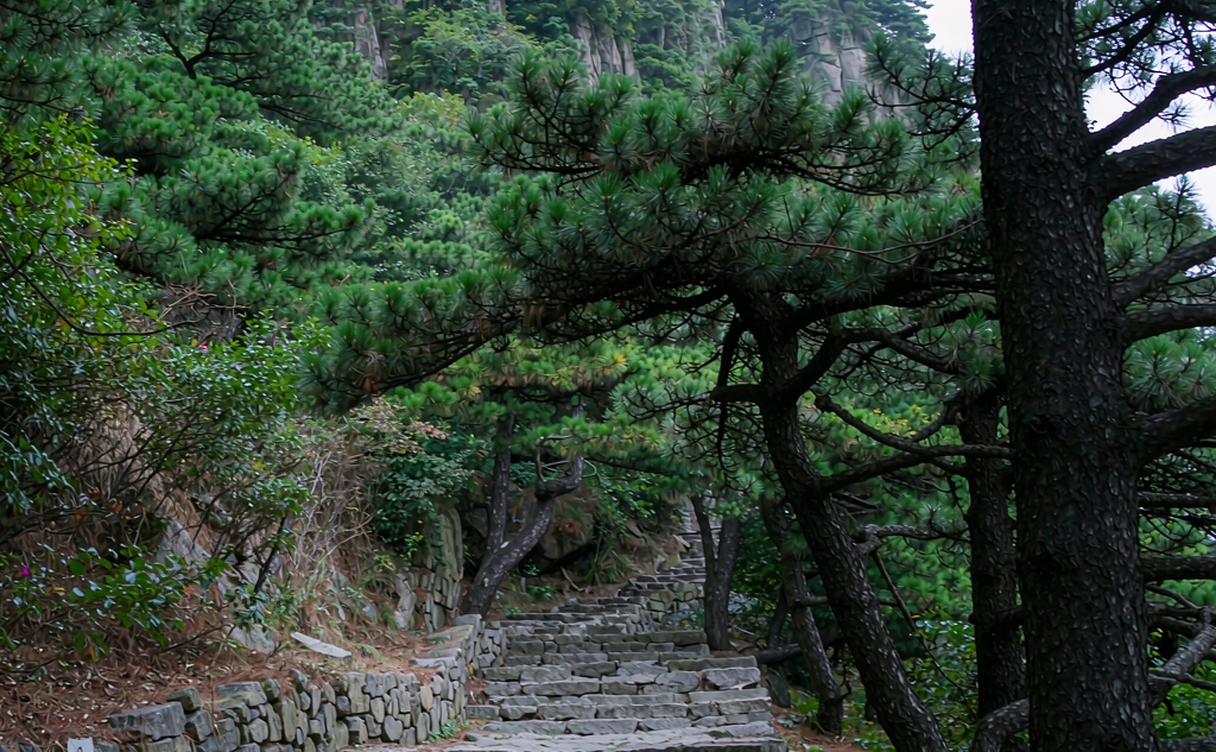
The Jingting Mountain hiking trail is short, well maintained, and suitable for most fitness levels. The full loop from the gate to the main summit ridge and back is roughly five kilometers and takes between two and three hours at a relaxed pace. The path is paved or flattened dirt for most of the way, with occasional stone steps near the steeper sections, so ordinary sneakers are usually fine.
The most rewarding route begins at the east gate and climbs steadily through a pine and bamboo forest to the central pavilion, where a clear viewpoint opens toward the city. From there, a narrower trail continues to the highest lookout, which at just over three hundred meters still commands a surprisingly wide panorama of the Yuan river plain. Early morning hikers often catch a sea of clouds spilling between the foothills, a sight that explains why so many verses were written here at dawn.
If you prefer an easier walk, stay on the lower cultural trail that connects the poet steles and the temple without gaining much elevation. Families with children and older travelers usually choose this option. Whatever route you pick, carry water, wear sun protection in summer, and start before midday in the hotter months.
Best Time to Visit Jingting Mountain
The best time to visit Jingting Mountain is spring and autumn. From March to May, the slopes turn bright with new leaves and wildflowers, and the temperatures are comfortable for walking. From September to November, the air is crisp, the haze thins, and the light is ideal for photography. These two windows also avoid the heavy summer humidity that can make the lower trail sticky.
Winter has its own quiet charm, with frost on the bamboo and almost no other visitors, though some facilities reduce their hours. Summer is the low season for scenery but the high season for cheap guesthouses, so budget travelers may still enjoy it with an early start. Try to avoid Chinese national holiday weeks in early October and early May, when domestic tourists flock to Anhui’s mountains; on ordinary weekdays you may have the trails almost to yourself.
How to Get to Jingting Mountain Xuancheng
Understanding how to get to Jingting Mountain Xuancheng is straightforward once you reach the city. The nearest major hub is Xuancheng railway station, served by high speed trains from Nanjing, Hefei, and Hangzhou. From the station, take a local bus or a ride hailing car toward the Jingting Mountain scenic area, about twenty minutes by road. Buses labeled for the mountain drop you near the east entrance, where ticket offices and tea stalls cluster.
If you are coming from farther afield, fly into Nanjing or Hangzhou international airports and connect by train. Many travelers pair the trip with the ancient towns and villages of southern Anhui, since the region’s cultural sites sit within a few hours of each other by bus or car. A private driver is convenient if you plan to visit multiple scattered attractions in one day, but public transport is perfectly adequate for Jingting alone.
Nearby Attractions in Anhui
Jingting Mountain is best appreciated as one stop on a wider Anhui cultural route. The city of Xuancheng itself rewards a half day of wandering, with its old streets, paper workshops, and riverfront views. For those building a longer trip, our Xuancheng travel guide lays out the surrounding temples, villages, and local food in detail.
If you want to extend into the famous village country of the south, the Shexian travel guide covers one of Anhui’s best preserved historic counties, while the Huizhou travel guide explains the broader regional culture that produced so much of China’s classical art. For higher peaks and Buddhist pilgrimage scenery, the Mount Jiuhua Anhui guide and the Tianzhu Mountain Anhui guide both describe dramatic mountains within a day’s travel of Xuancheng.
For broader context on Anhui’s place in Chinese cultural geography, the Britannica entry on Anhui offers a concise overview of the province’s history and landscape.
Planning Your Visit
A half day is enough to enjoy Jingting Mountain at a calm pace, though poetry enthusiasts may want a full day to read the steles and linger over tea. Entry fees are modest compared with Anhui’s headline mountains, and the infrastructure is simple but adequate, with basic restrooms, a few snack stalls, and clear signage in both Chinese and English near the main viewpoints.
Because the site is more literary than theatrical, manage your expectations: you will not find cable cars, glass bridges, or theme park spectacle. What you will find is a serene, historically layered hill that rewards attention. Bring a notebook, slow your steps, and you may understand why Li Bai chose to sit here in silence with the mountain as his only companion.
Plan your Anhui trip with our Xuancheng travel guide for transport tips, hotels, and suggested day routes around the city.
Want more mountain scenery? Compare Jingting with Anhui’s sacred peaks and dramatic ridges described in our other regional guides.
Discover ancient villages nearby to round out your cultural journey through southern Anhui’s historic towns and paper-making heritage.