

This Huaihua travel guide is for travelers who want the minority cultures of western Hunan without the ticket queues of the famous towns. Huaihua, in the southwest of Hunan province, is the gateway to some of China’s finest Dong and Miao villages — timber drum towers, covered “wind-and-rain” bridges, and terraced valleys where embroidery and lusheng reed-pipe music still shape daily life. If your Huaihua travel reading has pitched the city as obscure, the practical notes below — best season, access, villages, and tips — explain why it is one of Hunan’s most rewarding cultural detours. Most visitors use Huaihua as a base for two or three days among the villages before pushing on to Zhangjiajie or Fenghuang.
Best Time to Visit Huaihua
Spring (April to May) and autumn (September to October) are the best windows: mild, green, and clear, with the terraced fields at their most photogenic — flooded and mirror-like in spring, golden with rice in early autumn. The Miao and Dong festivals cluster around these seasons and around Chinese New Year, when Lusheng festivals and drum-tower performances fill the villages.
Summer is hot and can be rainy, though the valleys stay lush; winter is cold and quiet, with some guesthouses closing in the remotest hamlets. Because Huaihua pairs naturally with the province’s headline sights, many travelers read it alongside our Changsha travel guide as the starting point, then move west. The nearby Fenghuang ancient town is the more famous neighbor, covered in our Fenghuang ancient town guide.
How to Get to Huaihua
Huaihua is a real transport crossroads. High-speed trains reach it from Changsha in about 2–3 hours, and from Zhangjiajie, Guiyang, and Guangzhou with one or two transfers. The city’s Huaihua South Station is modern and well signed, and a bus or DiDi connects it to the central district where most hotels sit.
Flights serve the smaller Huaihua Zhijiang Airport, with links to a few hubs, but most international travelers route through Changsha or Guiyang and train in. From Huaihua, county buses and hired drivers reach the village areas — the Dong heartland around Jingzhou and the Miao valleys near Xinhuang and Mayang. If you’re continuing into Guizhou’s minority regions, our Guiyang travel guide extends the cultural thread westward.
Things to Do in Huaihua
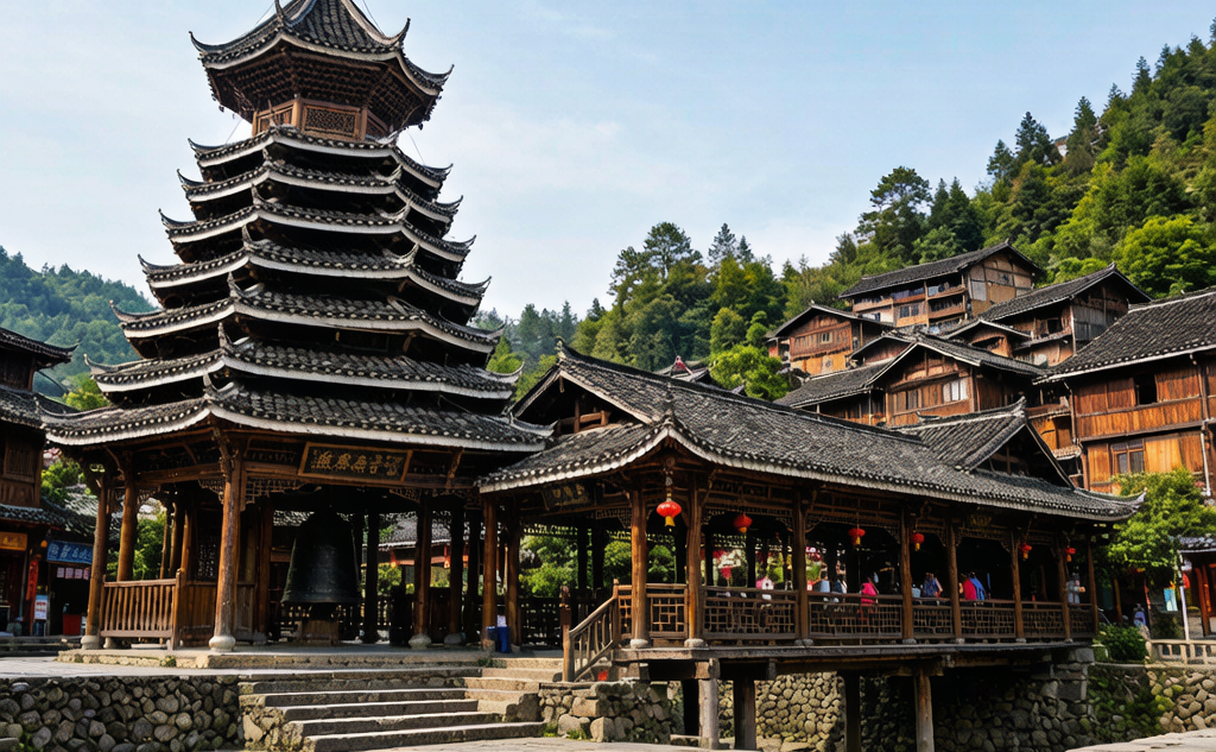
The reason to come is the villages. The Dong areas are famous for their 鼓楼 drum towers — tall tiered timber structures built without nails — and 风雨桥 wind-and-rain bridges, long covered spans where villagers gather. Chengyang Bridge in the broader region and the drum towers of local hamlets are the iconic images; arrive on a market day to see the towers and bridges actually used rather than staged.
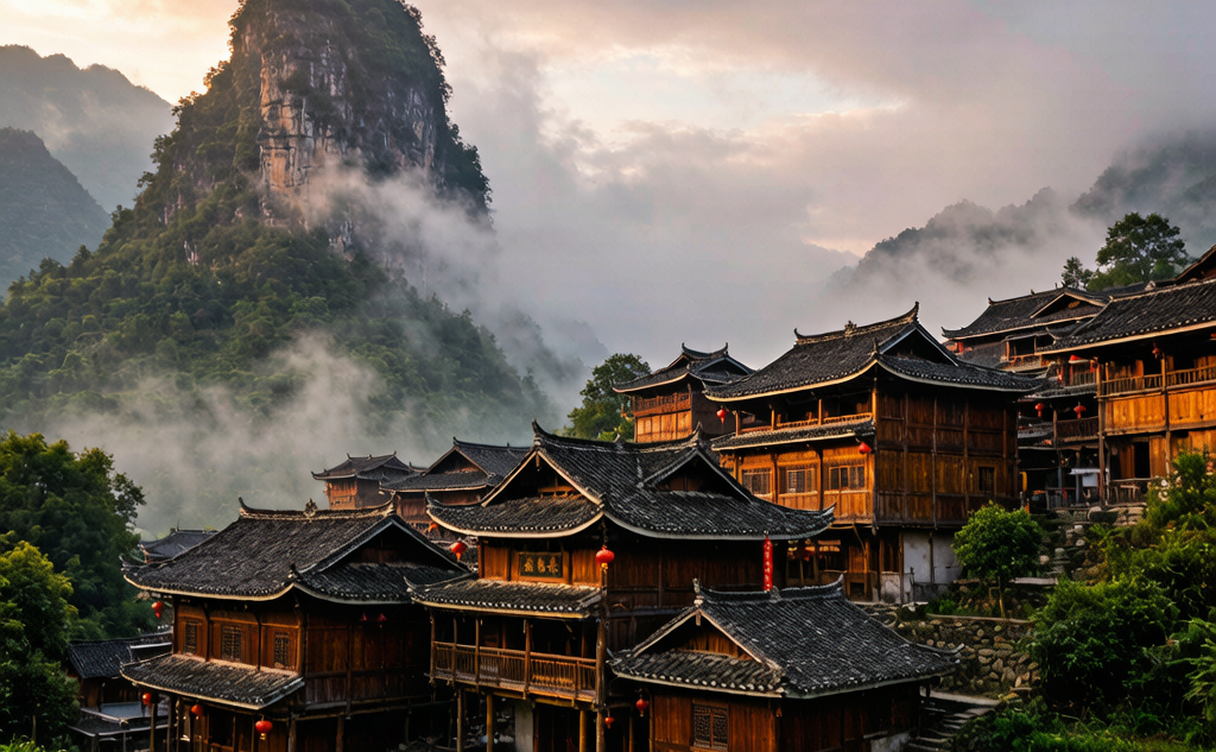
The Miao valleys offer stilted wooden houses climbing the hillsides, silver adornment workshops, and embroidery that takes a lifetime to master. A guided village walk explains the cosmology behind the architecture and the songs behind the festivals. The Miao are also known for their 拦门酒 “block-the-door” wine welcome, where villagers line the path with horns of rice wine to greet guests — refused at your peril, and best taken in small sips. For a longer scenic loop, the Yuan River and the green karst around Zhijiang make easy half-day drives.
Huaihua city itself is a workaday place; the highlight is using it as a launchpad. For the dramatic scenery nearby, our Zhangjiajie travel guide covers the sandstone pillars to the north, and our Guilin Yangshuo guide describes the karst river country that continues south into Guangxi.
A worthwhile half-day from the city is the Zhijiang Peace Conference site and the nearby 芷江受降坊 memorial arch, where the 1945 surrender ceremony that ended the war in China was held. It is a sober, well-kept park rather than a theme sight, and the riverside below it makes a calm walk. Combine it with the Dong bridges and you get both the living culture and the modern history of west Hunan in a single loop.
A Practical Huaihua Itinerary
Two to three days is the sweet spot. Day one: train in, settle in Huaihua, scout the bus station and book a village driver. Day two: Dong drum towers and a wind-and-rain bridge, with a village lunch. Day three: a Miao valley — stilt houses, embroidery, and terraces — then return. Add a fourth day for Zhijiang’s river scenery or a slower market-day visit.
Because villages are spread and buses are infrequent, hiring a local driver for a day or two is the single best investment; it turns a frustrating transit puzzle into a relaxed cultural circuit. If you want a famous-old-town contrast, the well-known Fenghuang ancient town is an easy extension north.
Food and Local Flavors
West Hunan food is sour, smoky, and proudly distinct from Changsha’s heat. Try 芷江鸭 Zhijiang duck, 侗家酸鱼 Dong sour fish cured in rice water, and 腊肉 smoked pork with mountain greens. The Miao add 酸汤 sour soups and sticky rice wrapped in leaves, often eaten at communal village tables.
Markets sell dried chilies, wild mushrooms, and woven textiles — the last a meaningful souvenir that supports local artisans. The Miao also ferment a pink 酸汤 fish soup that divides visitors: fragrant and sour to some, sharp to others, but worth one bowl to decide for yourself. For reliable context on the region’s ethnic geography, Wikipedia’s Huaihua page gives a clear overview of the city’s Dong and Miao districts.
Huaihua Travel Tips
A few notes make the villages welcoming rather than confusing. Hire a driver who knows the hamlets — signage is Chinese-only and buses are sparse. Bring small cash for homestays, handicrafts, and entry to private towers. Dress modestly and ask before photographing people; the Miao and Dong are hospitable but value courtesy.
English is rare outside the city, so a translation app and your hotel’s Chinese address are essential. Nights in the valleys get cool even in summer, so pack a layer, and good walking shoes matter because the village paths are uneven stone and timber. Homestays are basic but clean; manage expectations on heating and hot water in the remotest hamlets. For a balanced Hunan plan that uses Huaihua as the cultural deep-dive, our Changsha travel guide remains the best planning anchor.
Why Huaihua Rewards the Curious
Huaihua asks for a little effort and repays it with authenticity. The drum towers here are not backdrops but meeting houses; the bridges are where children do homework and elders gossip. Travelers who treat the city as a base rather than a destination discover a Hunan that the postcards miss.
Used as the cultural counterweight to Hunan’s famous peaks and towns, Huaihua adds human depth to the scenery. The villages here are not museum pieces but working communities, and the simple act of sharing a meal on a beam floor teaches more about west Hunan than any guidebook page. However you route it, spend at least one night in a village — the morning mist over a timber bridge, with smoke curling from the cooking hearths, is the memory that lasts long after the train carries you back to the city.