

The Bowl That Fogs Your Glasses: A Chongqing Lane Memory
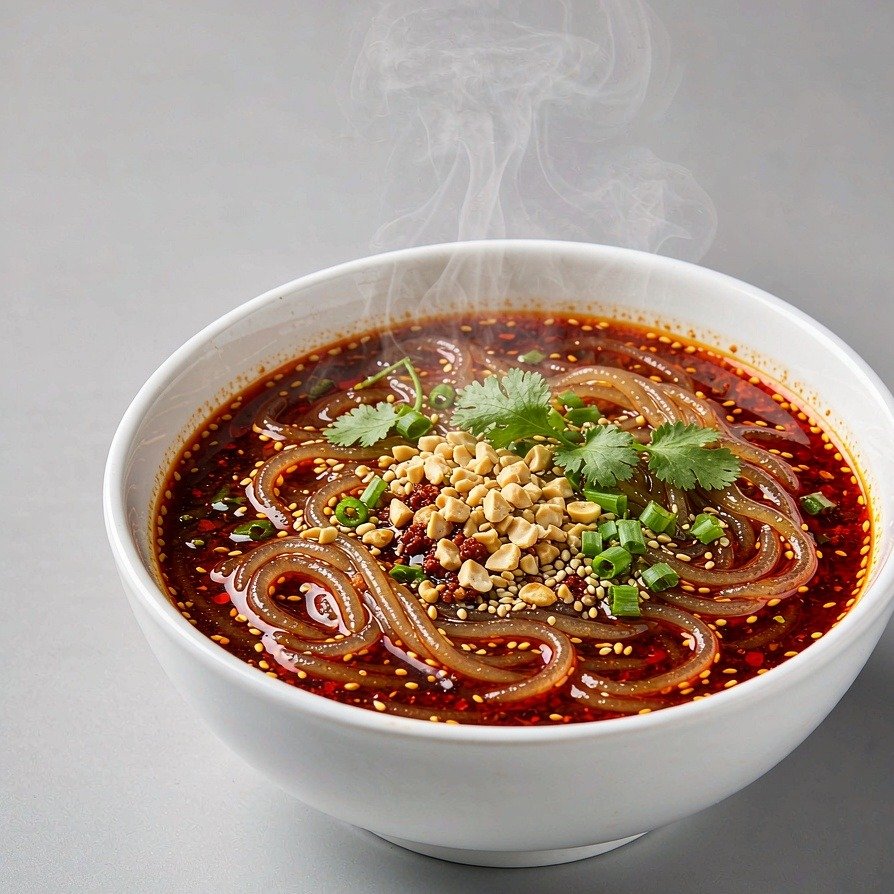
There is a particular kind of winter evening in Chongqing where the air is wet enough to drink, and the only sensible response is to duck into a lane stall, point at the pot, and wait for a bowl that arrives with a sheen of red oil so glossy it looks lacquered. The vendor slides it across the counter without a word. You lift the first spoonful of broth and the hit is not one thing but four at once: a bright sourness that snaps your eyes open, a chili heat that blooms low and slow, a numbing tingle from Sichuan peppercorn that fizzes along your lips, and underneath it all a deep savory pull. The noodles are slippery, glassy, faintly chewy. This is suan la fen — hot and sour glass noodles — and locals have a nickname for it that sounds like bragging but is mostly just accurate: “the world’s number-one vermicelli.”
What Suan La Fen Actually Is
The name is almost a recipe. Suan means sour, la means spicy, and fen means starch noodles or vermicelli. So “hot and sour glass noodles” is a straight translation, not a marketing flourish. What makes the dish distinct from the hundred other Sichuan noodle snacks is the noodle itself: it is made from sweet potato starch (红薯粉, hong shu fen), sometimes blended with mung bean or pea starch, and it cooks up translucent, elastic, and slippery in a way wheat noodles never achieve. The starch is bland on its own; its whole job is to carry the loud, layered broth.
Suan la fen belongs to the street-and-snack cooking of Sichuan and Chongqing, sold fast and eaten standing up or perched on a low stool. Fuchsia Dunlop groups it with the dan dan noodle family in The Food of Sichuan, and you can taste the kinship: both build a complex seasoning in the bowl and let the noodles meet it there.
Two Schools: Soup Versus Dry-Tossed
Before you cook, decide which suan la fen you are chasing. The soup version (汤酸辣粉) floats the noodles in a hot, sour, numbing broth — the one you meet at most street stalls. The dry-tossed version (干拌酸辣粉) builds the seasoning in the bottom of the bowl, adds a spoon of hot noodle-cooking water to loosen it into a thick sauce, then drops the drained noodles on top and mixes. Same flavor universe, different mouthfeel: the dry style coats every strand; the soup style rinses and refreshes between bites. Chongqing lanes lean soupy and a touch more sour; Chengdu versions often push the chili and the numbing harder. Neither is wrong.
What Does Suan La Fen Taste Like?
Think of it as a balancing act with four corners. Sour comes from Chinkiang (Zhenjiang) black vinegar — dark, mellow, almost smoky, never the sharp bite of white vinegar. Spicy comes from chili oil with its sediment, the red flecks of fried chili that carry both heat and a toasted aroma. Numbing comes from Sichuan peppercorn, ideally a few drops of peppercorn oil or a pinch of toasted ground coriander of the pepper. And savory comes from a base — often chicken or bone broth, a spoon of ya cai (Yibin preserved mustard greens), or a dab of sesame paste. The classic line used by vendors is 麻辣鲜香酸,油而不腻 — numbing, spicy, fresh, aromatic, sour, and oily but never greasy. Get the balance right and the oil reads as silk, not slime.
Texture matters as much as taste. Well-made sweet potato sichuan glass noodles should be cooked through yet still springy, with a slight translucency and a bite you can feel. Overcooked, they turn to glue; undercooked, they snap in the middle with a brittle, opaque core.
Suan La Fen Ingredients (With Amounts)
This is the soup version, serving two. Amounts are a starting point — the dish lives or dies on your final vinegar-versus-chili adjustment, not on precision.
- 200 g dried sweet potato glass noodles (thick-cut if you can find them)
- 2 tablespoons chili oil with sediment
- 1½ tablespoons Chinkiang black vinegar
- 1 tablespoon light soy sauce
- 1 teaspoon sesame paste (optional, for roundness)
- ½ teaspoon Sichuan peppercorn oil, or ¼ teaspoon ground roasted Sichuan peppercorn
- 1 teaspoon sugar
- 2 cloves garlic, minced to a paste
- 400 ml light chicken or vegetable broth, hot
- 2 tablespoons hot noodle-cooking water (to thin the sauce)
- 3 tablespoons fried peanuts, crushed
- 2 tablespoons fried soybeans (or extra peanuts)
- 2 tablespoons ya cai or chopped preserved mustard greens (榨菜)
- 2 scallions, sliced thin
- A small handful of cilantro, chopped
- Optional: a soft-boiled egg, blanched greens, or a little crispy minced pork
For a fully plant-based bowl, use vegetable broth and check that your chili oil and soy sauce are free of animal products; the dish is naturally close to vegan already. If you need it gluten-free, swap the soy sauce for tamari and confirm your starch noodles are pure sweet potato.
Who Should Order It — and Who Might Skip
Suan la fen is a fantastic entry point into Sichuan food for people who like bold flavor but are wary of a full mapo tofu level of fire: you control the heat by how much chili oil you pour. It is cheap, filling, and endlessly customizable, which is why it shows up constantly in guides to eating well in China on a small budget.
That said, a few people should pause. The broth is oily by design, and a generous street portion runs roughly 400–500 calories before toppings — fine as a snack, heavy as a daily habit. The spice and vinegar can aggravate acid reflux or a sensitive stomach. And because the seasoning relies on soy and sometimes a savory base, strict gluten-free or low-sodium eaters need to rebuild the sauce from scratch rather than trust a stall.
How to Make Suan La Fen at Home: Step by Step
The whole thing takes about 20 minutes once the noodles are soaking. The single most important habit is to build the sauce in the bowl before the noodles arrive — you cannot fix the balance after dilution.
1. Soak the noodles
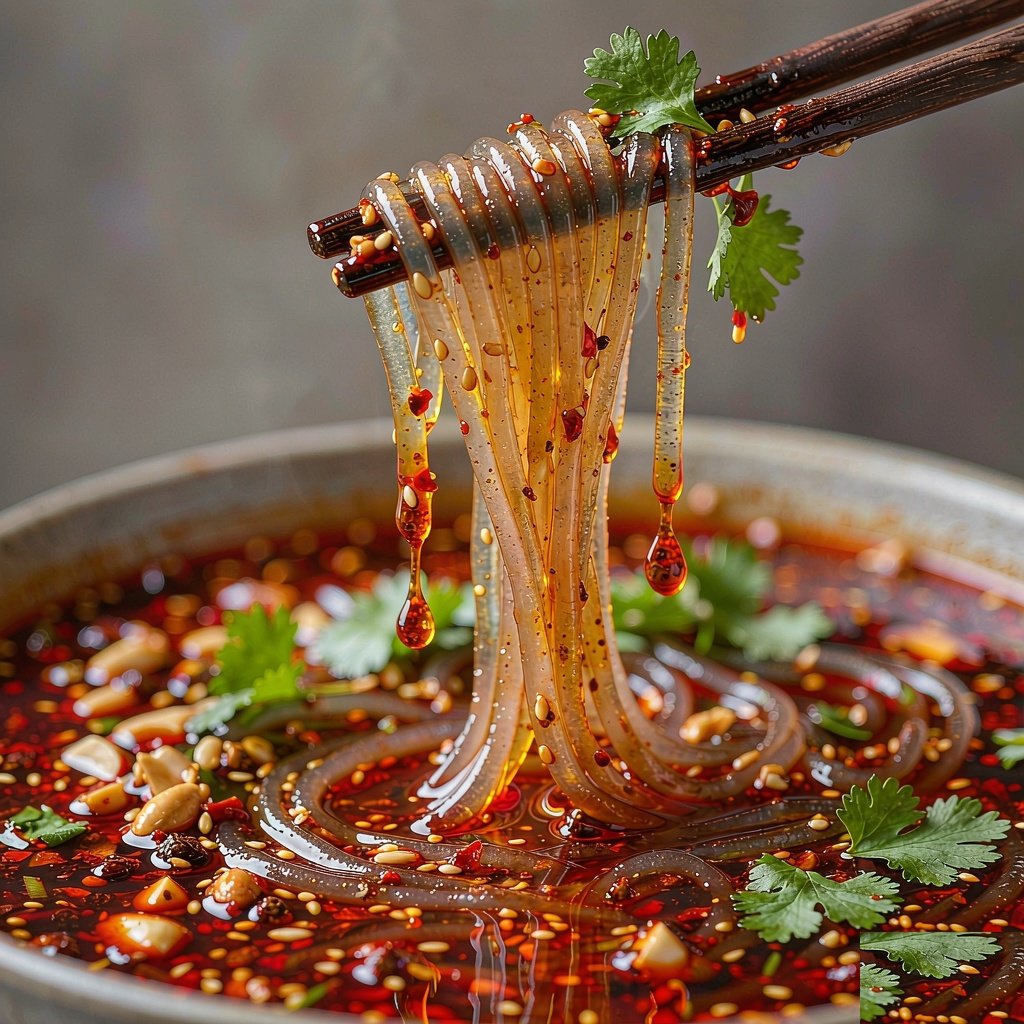
Cover the dried sweet potato noodles with cold water and let them rehydrate for 30 minutes, or follow the package if it differs. They are ready when pliable and uniformly soft, with no hard opaque core when you bend a strand. Skipping this step is the fastest way to end up with noodles brittle in the middle and mushy outside.
2. Build the bowl sauce
In each serving bowl, stir together the chili oil (with sediment), Chinkiang vinegar, soy sauce, sesame paste, Sichuan peppercorn oil, sugar, and minced garlic. Taste now. It should be sharper and more concentrated than you want the finished bowl, because the noodles and broth will flatten it.
3. Cook the noodles
Bring a pot of water to a rolling boil and drop in the soaked noodles. Stir within the first minute so the strands separate. Cook 3–5 minutes, lift a strand, and bite: it should be yielding with a distinct elastic chew. Drain, but reserve a couple of tablespoons of the starchy cooking water.
4. Loosen and combine
Stir a spoon or two of the hot noodle water into each bowl sauce to thin it into a cohesive, glossy base. Ladle the hot broth over the top, then lay the drained noodles directly into the sauce. For the dry-tossed style, skip the broth here and just use the noodle water.
5. Top and finish
Shower the bowl with fried peanuts, fried soybeans, ya cai, scallions, and cilantro. Finish with an extra thread of chili oil so the surface shows distinct pools of red against the dark broth. Eat immediately — the noodles drink the sauce and soften if they wait.
Practical Tips That Separate Good From Great
The first rule is the bowl-seasoning-first rule above; repeat it to yourself. The second is about the suan la fen ingredients quality: buy real Chinkiang black vinegar, not “black vinegar” substitutes, and buy chili oil that contains sediment, because the sediment is where the toasted chili flavor lives. The third is texture management — rinse cooked noodles briefly in cold water only if you are making the dry version and need to halt cooking; for soup, go straight from pot to bowl so they stay hot.
If your first bowl tastes flat, it is almost always a vinegar problem: add another half teaspoon of Chinkiang and a pinch of sugar, not more chili. More heat hides imbalance; acidity and sweetness fix it.
Regional Twists and the Instant-Packet Shortcut
Travel a little and the dish shifts. Chongqing suan la fen tends soupy and bracingly sour; Chengdu leans into chili and numbing; northern cities like Tianjin have their own lighter, broth-forward takes that barely resemble the Sichuan original. Beyond the stall, brands like Haorenjia (好人家) and Baijia (白家) sell dried-noodle-and-seasoning packets that are a genuinely decent weeknight shortcut — just upgrade the toppings with your own peanuts and herbs and it stops tasting like a dorm-room meal.
Where to Eat the Real Thing
You will find the best bowls in the old lanes of Chongqing and Chengdu, where a bowl still costs pocket change and the vendor has been stirring the same pot for a decade. It pairs naturally with other Sichuan regional dishes on a crawl through the city, and it is a near-perfect late-night anchor after a day of Chengdu street food. Order it standing, eat it fast, and ask for “less numbing” (少麻) or “less spicy” (少辣) if your tolerance is still building — nobody will judge you for it.
Frequently Asked Questions
Is suan la fen the same as dan dan noodles?
No, though they are cousins. Dan dan noodles are typically served with a thick, savory minced-pork-and-chili sauce and often less broth, while suan la fen is built around the sour-and-numbing broth and uses chewy sweet potato starch noodles. The suan la fen vs dan dan noodles difference comes down to sourness versus savory richness, and noodles versus wheat.
Can I make authentic suan la fen without Sichuan peppercorn?
You can, but you lose the signature numbing tingle that defines the dish. If you cannot source it, a pinch of ground black pepper is a weak stand-in; the sour-spicy base will still taste good, just not authentically Sichuan. Most large Asian grocery stores stock both the peppercorns and ready-made chili oil with sediment.
How many calories are in a bowl of suan la fen?
A street-sized bowl runs about 400–500 calories before extra toppings like egg or pork, with most of that coming from the starch noodles and the chili oil. The suan la fen calories count climbs quickly once you add crispy pork or a second drizzle of oil, so treat it as a satisfying snack rather than a light salad.
What is the best type of noodle to use?
Traditionally, thick dried sweet potato starch noodles (红薯粉). They are translucent, chewy, and hold the broth better than thin mung-bean threads or rice vermicelli, which go soft too fast. If you only find thin glass noodles, shorten the cook time and expect a more delicate, less springy bite.
How do you eat suan la fen properly?
Stir hard before the first bite so the sauce at the bottom mixes through, then slurp quickly while it is hot — the noodles soften as they sit. A plain drink like weak tea or a cold soy milk beside it rests the palate between the sour and the numb. That is the whole ritual of how to eat suan la fen: mix, slurp, pause, repeat.
What is the history of suan la fen?
The suan la fen history is a street-food story rather than a courtly one. It grew out of the snack shops of Chongqing and Sichuan, prized for being cheap, fast, and bold in a region that built an entire cuisine on balancing sour, spicy, numbing, and savory in a single bowl. Its “world’s number-one vermicelli” nickname is vendor poetry, not a documented title — but it tells you how people feel about it.