

There is a line etched into the memory of tens of millions of overseas Chinese: “Ask where you come from, and the answer is the Great Locust Tree at Hongtong.” For travelers, Hongtong (洪洞) is an unassuming county in Shanxi’s Linfen basin that punches far above its weight — part ancestral pilgrimage site, part living museum of Ming-dynasty China, and a convenient, low-stress stop between the province’s headline destinations. This Hongtong travel guide explains what’s actually here, when to come, and how to fit it into a Shanxi loop without wasting a day.
Why the Great Locust Tree matters
The Great Locust Tree Hongtong (大槐树) is not really about a tree. During the early Ming dynasty, after the wars that ended the Yuan period had emptied large parts of the north, the new government organized one of history’s largest internal migrations, moving hundreds of thousands of people from densely populated Shanxi — assembled and registered under a locust tree in Hongtong — out to depopulated Henan, Hebei, Shandong, and beyond. Families were torn apart at the registration point, and the locust tree became the singleshared memory of descent.
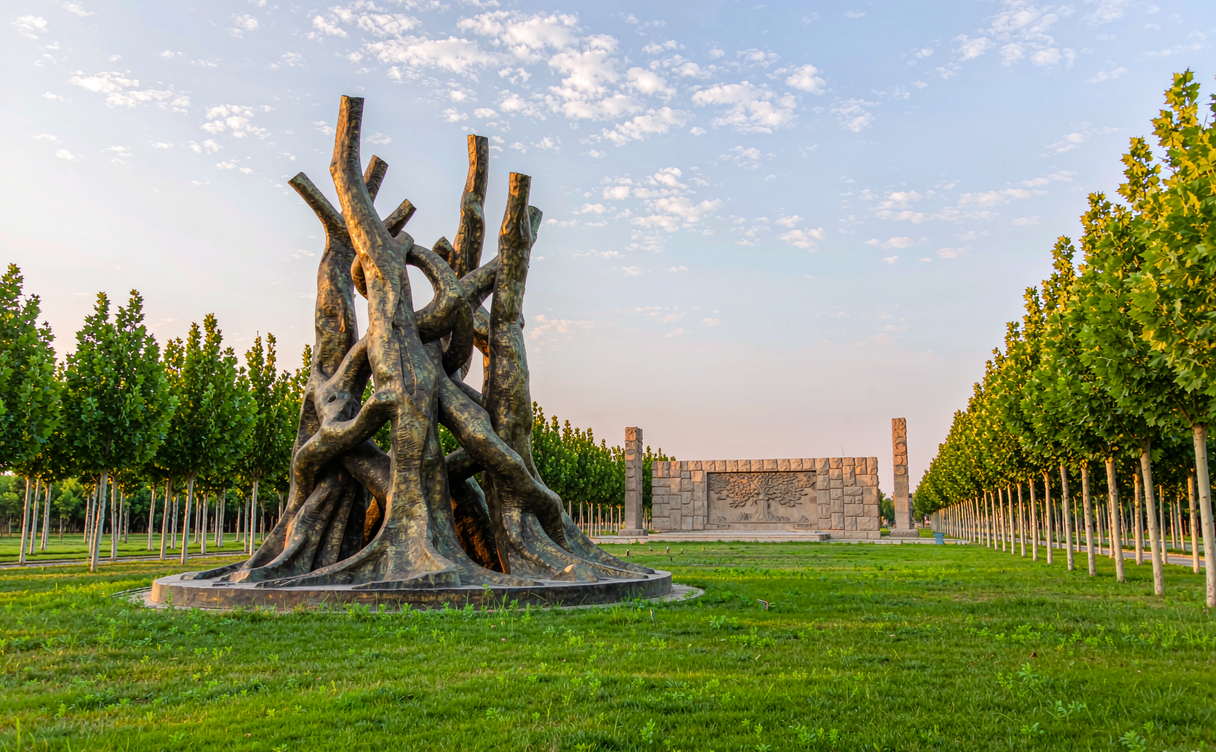
Today the site is the Dahuaishu (Great Locust Tree) Root-Seeking Ancestral Hall (大槐树寻根祭祖园), a park-sized complex on the edge of the county seat. In our experience it works on two levels: the outward spectacle — a towering stylized locust, performance squares, and a names database where visitors look up their surname’s recorded migration — and the quieter one, where elderly overseas Chinese weep at the ancestral altar. You don’t need the emotional link to appreciate it; the scale of the human story is enough.
Other things to do in Hongtong
Beyond the locust tree, things to do in Hongtong cluster around two remarkable sites that most tour buses skip:
- Guangsheng Temple (广胜寺). Set on a hillside about 15 km from the county seat, this is the real treasure. The temple’s Feihong Pagoda (飞虹塔, “Flying Rainbow Pagoda”) is an eight-sided glazed-brick tower from the Ming era, covered in colored琉璃 (liuli) tiles that glow in the afternoon sun — widely considered the most beautiful glazed pagoda in China. The upper temple also preserves one of the only surviving complete printed editions of the Buddhist canon from the Yuan period. Give it two to three hours.
- Su San Prison (苏三监狱). Inside the old county town, this is claimed to be the only surviving Ming-dynasty prison in China, small and atmospheric, tied to a famous opera tale of a wronged woman named Su San. It’s a 30-minute visit, best as a counterpoint to the temple’s grandeur.
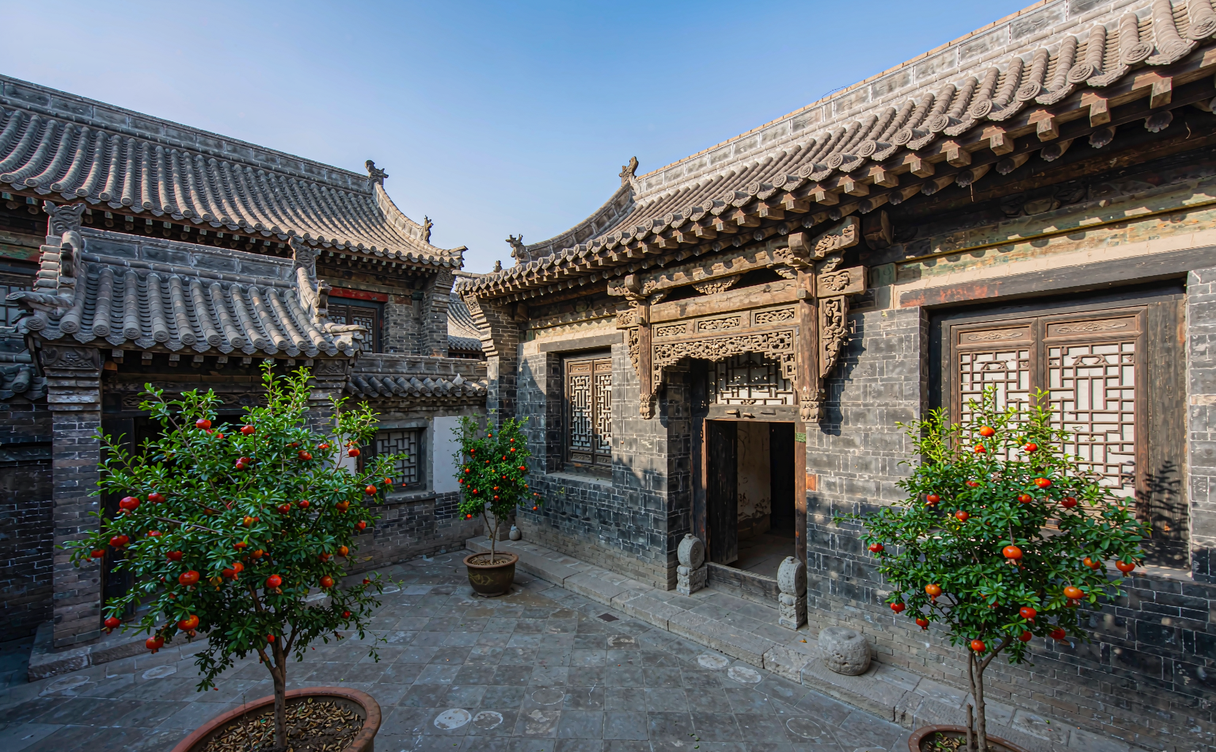
- Hongdong Guangsheng lower temple and the surrounding villages. If you have a car, the farmland between sites shows you real Shanxi rural life — cave dwellings (窑洞) cut into loess hills, wheat fields, and squat, grey-brick villages that haven’t changed their silhouette in centuries.
Best time to visit Hongtong
The best time to visit Hongtong is April to May and September to October. Spring is mild (15–25°C) and the locust park’s grounds are green; autumn is crisp and clear, the best light for photographing the pagoda’s tiles. The root-seeking festivals peak around the Qingming festival (early April) and again in autumn, when you’ll see the largest, most moving ceremonies — but also the biggest crowds, so arrive at opening.
Summer (June–August) is hot, often 30–35°C, with the Loess Plateau’s dry glare; do outdoor sites early. Winter is cold and grey, sometimes below freezing, but the sites are nearly empty and the temple against a pale sky has its own stark beauty. Hongtong Shanxi ancestral roots draw the largest crowds during the October holiday, so avoid those dates if you can.
How to get to Hongtong
How to get to Hongtong is straightforward thanks to the high-speed line. Hongtong West Railway Station (洪洞西站) sits on the Datong–Xi’an high-speed railway. From Taiyuan, trains take roughly 1.5–2 hours (¥60–90 second class); from Xi’an, about 1.5–2.5 hours (¥80–120); from Pingyao, you can hop a northbound train in well under an hour. From the station, a taxi to the locust park or the old town is ¥15–30.
If you’re driving a Shanxi loop, Hongtong sits neatly between Linfen and Pingyao on the main corridor, so it’s an easy detour rather than a detour-with-a-cost. Our China high-speed train guide for foreigners covers ticketing and station navigation. For a first visit to the country, our China travel guide for first-timers handles the basics so you’re not learning them on a platform.
Where to eat and stay
Hongtong’s food is solid northern Shanxi fare. Expect daoxiaomian (刀削面, knife-shaved noodles) in a vinegar-rich broth with braised pork, kaolaoliu (烤姥姥, grilled millet noodles), and the region’s famous laochencu (老陈醋, aged vinegar) used liberally on everything. A filling noodle bowl runs ¥12–25; a proper restaurant dinner with several shared dishes is ¥40–70 per person.
Stay options are modest. The county seat has functional business hotels at ¥180–350 a night; for character, base yourself in Pingyao ancient town 40 minutes north and day-trip to Hongtong, which is what we usually recommend to travelers who want a walled-town evening after a day of temples. Either way, Hongtong itself is a half-day to full-day stop, not an overnighter by necessity.
A practical half-day and full-day plan
With only half a day, do the Great Locust Tree park (2 hours) and the Su San Prison (30 minutes) and move on. With a full day, add Guangsheng Temple in the morning — go early for the light on the Feihong Pagoda — then the locust park in the late afternoon when the tour groups thin out. The pagoda alone justifies the trip; we’ve had travelers call it the highlight of their entire Shanxi month.
Hongtong belongs on any serious list of best ancient towns in China not for its nightlife but for its depth, and it connects smoothly to the wider sights in our best things to do in China roundup.
Practical notes before you go
Signage at the major sites has basic English, but the deeper history is almost entirely in Chinese; a guide or a good audio app makes Guangsheng Temple far richer. Wear sun protection and decent shoes — the temple is a hillside climb. Carry cash for small stalls and the village stops. The county is safe and easy to walk, though the area between the railway station and the sites is best covered by taxi.
For the broader regional context and more of Shanxi’s walled towns, the Hongtong County page on Wikipedia is a useful, neutral primer before you arrive.