

Handan, in southern Hebei, is one of China’s oldest continuously named cities, with a recorded history stretching back more than three thousand years. This Handan travel guide is for foreign visitors who love deep history and Buddhist art away from the main tourist trail. It was a capital of the Warring States period, a cradle of early Chinese philosophy, and later a center of cave-temples carved into the Taihang foothills. The Xiangtangshan Grottoes are the headline sight, but the city also offers ancient walls, scholar gardens, and a gateway to the mountains. Handan is about two to three hours by high-speed train from Beijing, making it a rewarding deeper dive into Hebei.
How to Get to Handan
Handan sits on the Beijing-Guangzhou high-speed line. Trains from Beijing take roughly two and a half hours, from Shijiazhuang about one and a half, and from Zhengzhou under an hour. Our China high-speed train guide for foreigners explains booking and station navigation. The Beijing first-time travel guide is the best starting point for international arrivals, with onward rail to Handan simple to arrange. The nearest major airport is Shijiazhuang, with flights from several Chinese hubs, and a fast train connection from there.
The city center is flat and walkable, but the grottoes and mountain sites require a car, driver, or bus, so budget transit time for those excursions. Ride-hailing to the outlying sites is possible but pricey; a hired driver for the day is the smoothest option.
Best Time to Visit Handan
The best time to visit China guide recommends spring and autumn, and Handan follows suit. April to May and September to October bring mild, dry weather ideal for walking the old town and the outdoor grottoes. Summers are hot; winters are cold and sometimes grey, though the grottoes still photograph well in low light. The October holiday crowds are manageable here compared with Beijing or Xi’an. The spring apricot blossoms in the foothills are a lesser-known treat.
Things to Do in Handan
The Xiangtangshan Grottoes
A visit to the Xiangtangshan Grottoes guide is the centerpiece of any Handan trip. Carved in the sixth century under Northern Qi rule, these cave-temples hold serene Buddha figures, flying apsaras, and inscriptions cut into the cliff face of the Taihang foothills. The site has been carefully studied and partially restored, with a museum explaining the art and its looted history. Arrive in the morning for soft light on the stone and fewer visitors. This is one of North China’s most important yet least crowded Buddhist sites. The nearby subsidiary caves at Watery Town (Shuiyu Si) add a quieter, half-forgotten stop.
The Ancient City Wall and Old Town
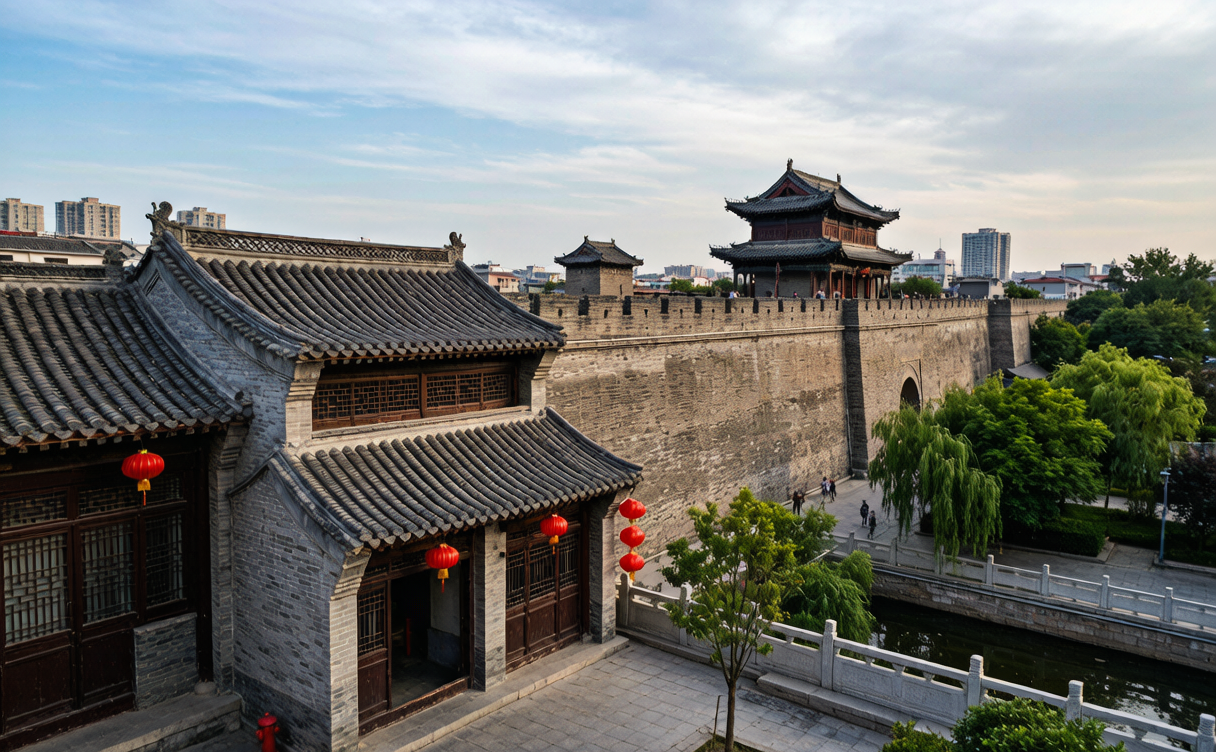
Handan preserves sections of its old city wall and a cluster of traditional courtyards in the historic core. The famous “learned from Handan” idiom (a saying about imitation) comes from this city’s reputation for refined culture. Wander the lanes, visit small temples, and watch locals practice tai chi at dawn. The pace is gentle and the atmosphere authentically local. The Wahuang Palace, a short drive out, clings to a cliff and holds early Tang dynasty stone scripture.
Congtai Park and the Zhao Legacy
Congtai, an elevated terrace from the Zhao kingdom period, overlooks a pleasant park and lake in the city center. It marks Handan’s time as capital of the Zhao state during the Warring States era. The surrounding park is free, green, and popular with families, a good place to absorb daily life. Evening light on the terrace makes for an easy, atmospheric photograph.
Taihang Foothills
West of the city, the Taihang Mountains rise in layered ridges, with hiking, villages, and cooler air. Day trips into the foothills reward travelers who want nature alongside history. The views change with the season, from green in summer to gold and red in autumn. Remote villages here keep old stone houses and slow routines worth a slow afternoon.
Where to Eat: A Handan Food Guide
Handan cooking blends Hebei heartiness with neighboring Shanxi and Henan influences. Local specialties include thick wheat noodles, savory stuffed buns, and a distinctive “Guandong” braised dishes tradition born from the old railway culture. Street food is cheap and varied; the night markets near the old town are the best hunting ground. Vegetarian options are available but less prominent than in the south, so ask for vegetable dishes clearly. For travelers compiling a must-see list, our China bucket list attractions guide places the grottoes among the country’s quieter wonders. A bowl of hand-pulled noodles with braised vegetables is the everyday meal to try.
A Sample Handan Itinerary
Day 1: Arrive from Beijing, walk Congtai Park and the old town wall at dusk.
Day 2: Full morning at the Xiangtangshan Grottoes with the on-site museum, afternoon back in the city for temples and markets.
Day 3: Foothill village day trip or onward train to Zhengzhou or Shijiazhuang.
A focused one-day version covers the grottoes plus the old town if time is tight.
Where to Stay
The city center near Congtai has the most international-standard hotels and easy access to food and transport. Budget chain hotels cluster around the train station. Because Handan is less touristy, prices stay low and rooms are plentiful except during the October holiday. Book a hotel that can help with a grottoes-day driver, as that simplifies the excursion. Lakeside resorts on the city’s fringe offer a quieter alternative.
Practical Tips
English is minimal, so a translation app and Chinese screenshots of your hotel and the grottoes are essential. Mobile payment dominates; carry cash for small vendors. The grottoes involve some walking on uneven paths, so wear sturdy shoes. For deeper background on the region’s heritage, the Wikipedia entry on Handan is a useful primer on its long history.
Money and Visitor Logistics
Handan is one of the better-value heritage stops in Hebei. Entry to the grottoes is modest, and the city’s parks and old walls are free, so a full day of sightseeing can cost less than a single museum ticket in a major capital. Hiring a driver for the grottoes day is the main expense, but splitting it between two or three travelers makes it reasonable. Free Wi-Fi is rare, so a local SIM or eSIM helps with maps on the mountain roads. Keep some small bills for temple donations and market snacks, and confirm your driver’s waiting time at the grottoes, since the site spreads across several dispersed cave groups that take time to reach on foot.

Why Handan Matters for History Lovers
Few Chinese cities let you stand in a place whose name has been in continuous use for three millennia. The layers of Zhao capital, Buddhist cave art, and railway-era culture make Handan a compact museum of northern history. It rewards curiosity far more than its modest tourist profile suggests.
The grottoes alone justify the trip, but the old town will win you over.
Planning a Wider Route
Handan sits neatly between Beijing and the Central Plains, so it can anchor a rail journey south or a loop back to the capital. Its quiet charm is a relief after busier heritage cities. Pair it with Anyang or Zhengzhou for a serious history-focused itinerary.
Whether your passion is Buddhist art, Warring States history, or simply authentic small-city life, Handan delivers.