

When travelers ask us for the most photogenic corner of Qinghai that is not the lake itself, we point them to Haibei Tibetan Autonomous Prefecture, Qinghai, China. This prefecture wraps the north and east shore of Qinghai Lake and holds two sights that stop people mid-sentence: the snow-striped Qilian Mountains and the endless yellow carpet of Menyuan’s rapeseed fields in July. On our last scouting trip we drove the loop from Xining and pulled over maybe twenty times — every bend revealed a new shade of green, gold, or white.
This Haibei, Qinghai travel guide covers the mountains, the flower sea, the Tibetan towns, the transport, and a practical itinerary. It is written for travelers who want Qinghai’s highland drama without the crowds of the lake’s south shore, and who enjoy a slow road trip through pasture and peak.
Why Visit Haibei
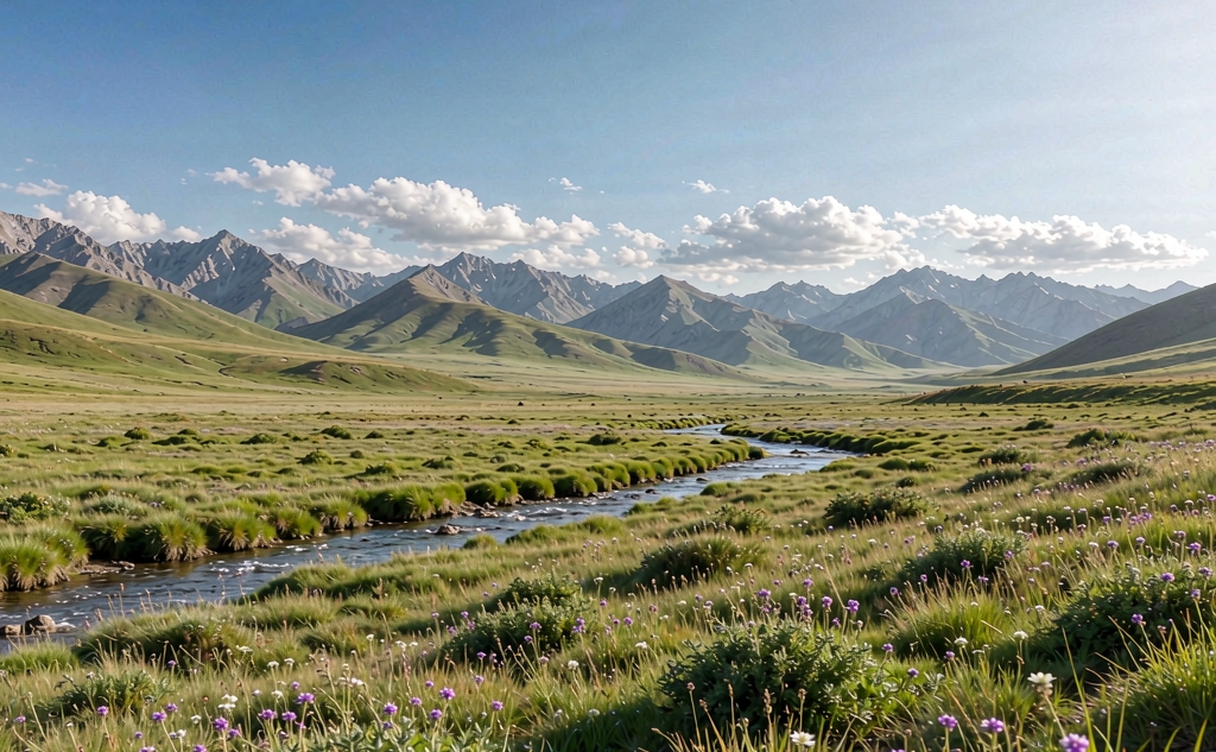
Haibei Tibetan Autonomous Prefecture, Qinghai, China is where the Tibetan Plateau meets the Qilian range, and the mix is the whole point. To the south, the prefecture fronts Qinghai Lake; to the north, the Qilian Mountains rise in layered ridges of grassland and permanent snow. In between lie Tibetan herding towns, monasteries, and some of the best road scenery in the northwest. We’ve sent photographers, cyclists, and families here — all of them left happy.
The two headline reasons to come are seasonal and complementary. July brings the Menyuan rapeseed bloom, a sea of yellow against blue peaks that is briefly, intensely crowded and entirely worth it. The rest of the year, the Qilian Mountains and the quiet lakeshore offer solitude and crisp air.
The Qilian Mountains
The Qilian range forms Haibei’s northern wall, a 200 km ribbon of alpine meadow, glacier-fed streams, and 4,000 m+ peaks. The Zhuo’er Mountain (Zhuo’ershan) viewing area near Qilian county is the classic overlook: a wooden boardwalk ridge with red-rock formations and a 360° panorama of snow and pasture. Entry is about RMB 60. The nearby “Qilian Hill Cattle” valleys are good for gentle hikes and yak-spotting.
Background on the range is on Wikipedia’s Qilian Mountains page. For the lake next door, our Qinghai Lake guide explains the south-shore sights and the cycling route that many travelers combine with Haibei.
Things to Do in Haibei
Haibei rewards a slow drive more than any single ticketed sight. Top stops:
- Menyuan rapeseed fields: around the town of Menyuan in July, endless yellow fields with the snow peaks behind — best at sunrise.
- Zhuo’er Mountain: the premier Qilian viewpoint, boardwalk ridge with red cliffs and snow panoramas, RMB 60.
- Xihai town and the Atomic City site: the former nuclear research base, now a museum on China’s early science, free or low-cost.
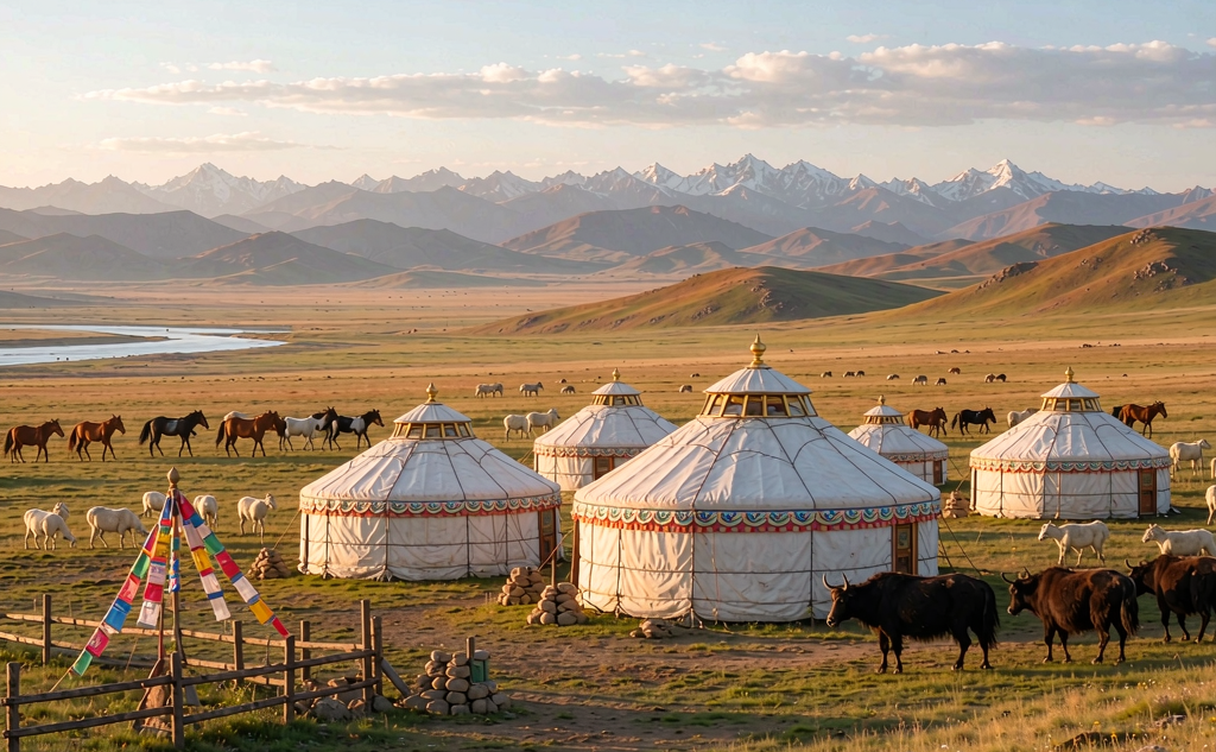
- Tibetan monasteries and herding camps: small gompas and family yurts welcome visitors; a yak-butter tea stop costs RMB 10–20.
- Qinghai Lake north shore: quieter than the busy south; some stretches have no entry fee at all.
For the provincial capital as a base, our Xining travel guide covers where to sleep and how to start the loop.
Best Time to Visit Haibei
The best time to visit Haibei is July for the rapeseed bloom, and June or August for cooler, greener pastures with fewer people. Summer days sit at a pleasant 15–22°C, but nights drop near 5°C, so pack a warm layer even in July. Autumn, September, turns the grassland gold and thins the crowds, though some passes see early snow. Winter is severe and many guesthouses close.
We tell clients that if the flower sea is the goal, lock in the first three weeks of July and book lodgings a month ahead — the bloom lasts only about 25 days. For a calmer trip, early June or late August is the sweet spot. Our best time to visit China guide lays out Qinghai’s narrow warm window in detail.
How to Get to Haibei
Haibei is reached from Xining, the Qinghai provincial capital, about 2.5 to 3 hours northwest by road. The cleanest plan is to hire a car and driver in Xining (RMB 500–800 per day including fuel), because public buses to the smaller towns are infrequent and the scenery demands stops. A high-speed train also runs from Xining to Haomen or Qilian in roughly 1.5 to 2.5 hours, second class RMB 60–100, useful if you only want the Qilian Mountains.
From Xining Caojiabao Airport, the simplest route is a private transfer straight to the prefecture. Foreign visitors should read our China high-speed train guide for foreigners before booking the Xining leg, since passport-based ticketing applies. Carry your passport for the periodic police checkpoints on plateau roads.
Haibei Food
Haibei’s table is Tibetan-northern with Qinghai twists. Dishes to seek:
- Yak meat hotpot: a plateau staple, RMB 80–150 per person, rich and warming.
- Highland barley (qingke) noodles and pancakes: the local grain, nutty and filling, RMB 15–25 a bowl.
- Yogurt with sugar: thick, tart, sold roadside for RMB 8–12.
- Grilled mutton skewers: Gansu-style, RMB 3–6 per stick, found in every town square.
- Butter tea and milk tea: the fuel of the highlands, RMB 10 a bowl.
For the neighboring cuisine, the Gansu noodle and lamb traditions spill across the provincial line into Haibei’s kitchens. Meals are cheap: a Tibetan canteen lunch is RMB 25–45, a hotpot dinner for two around RMB 180–260.
A Sample Haibei Itinerary
A realistic Haibei itinerary is two to three days out of Xining. Day one: drive north, stop at the Qinghai Lake north shore, overnight in Xihai town. Day two: Menyuan flower fields (July) or Zhuo’er Mountain (any summer), overnight in Qilian county. Day three: morning ridge walk, then return to Xining. Photographers add a sunrise at Menyuan and a sunset at Zhuo’er.
We’ve found the two-night version best — it lets the flower sea and the mountains each have their own calm light instead of being rushed into one long day.
Practical Tips
- Acclimate in Xining (2,200 m) before climbing to Qilian (over 3,000 m).
- Book July lodging early; the bloom window is short and prices spike.
- Carry cash for yurts and roadside stalls; card and apps work in towns.
- Pack a windproof layer — plateau gusts are cold even in summer.
Beyond the Postcard
Most visitors tick Menyuan and Zhuo’er and leave, but the quiet reward is the in-between. The road from Xihai to Qilian passes herding camps where no tour bus stops, and a morning spent with a Tibetan family’s yaks is worth more than any overlook. On our scouting trip a grandmother pressed warm barley cakes into our hands and laughed at our poor Mandarin — no ticket, no crowd, just the plateau being generous.
Final Thoughts
Haibei Tibetan Autonomous Prefecture, Qinghai, China is the gentler, golden-edged side of Qinghai — flower seas, snow ridges, and Tibetan warmth within a short drive of Xining. Pair it with Qinghai Lake and you get the highlands at their most generous.
Haibei proves that the best of Qinghai often lies just off the famous shore — in a yellow field beneath white peaks.