

When people talk about Gansu, they usually mean the Hexi Corridor — the desert road to Dunhuang. But the far south of the province, in Longnan, holds a different landscape entirely: green gorges, tiered waterfalls, and forests that feel closer to Sichuan than to the Gobi. Guan’e Valley (官鹅沟) is the best of it, a national geopark where a river has cut a series of narrow gorges and dropped over countless falls. This Guan’e Valley guide covers how to reach this remote corner, when to go, and what the visit actually involves.
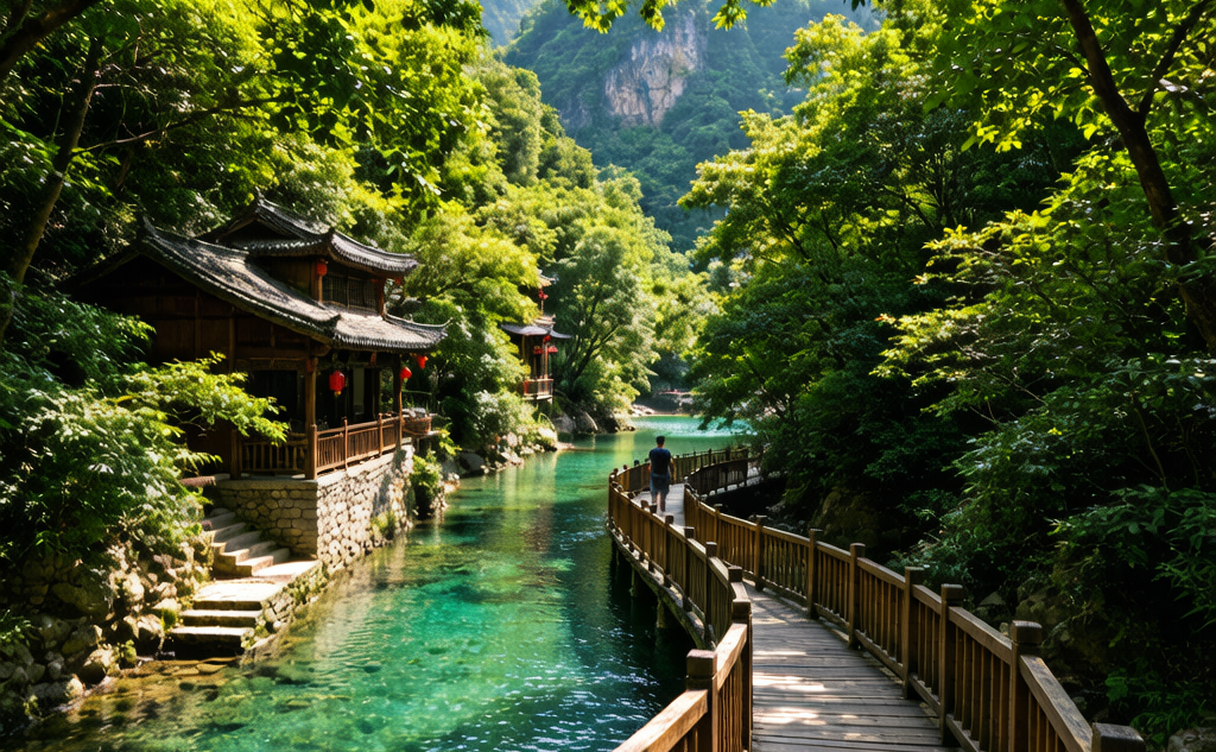
Guan’e Valley sits in Diebu (also written Tewo) County in Gansu’s southern tip, near the border with Sichuan. The name pairs “Guan” and “e,” two of the valley’s characteristic gorges, and the park stretches more than thirty kilometers from the county town into the Min Mountains. It is sometimes called “the little Jiuzhaigou,” and while that comparison oversells the scale, the watercolor lakes and falling water do invite the thought.
Why it is worth the effort
Guan’e Valley is not on any standard foreign-tourist route, and that is exactly its appeal. The park combines several things travelers come to this region for: a walkable gorge with bridges and viewing platforms, a series of waterfalls from roadside trickles to serious drops, and higher up, alpine meadows and a Tibetan village or two. The lower section is gentle and family-friendly; the upper section climbs toward grassland and snow peaks, and rewards those who push on.
The biodiversity is real, not marketing. This is part of the Qinba–Min Mountain ecoregion, home to giant pandas and golden snub-nosed monkeys, though you are unlikely to see them. What you will see is dense forest, clear water, and the kind of quiet that China’s headline parks have lost.
How to get to Guan’e Valley
Reaching Guan’e Valley is the main challenge, and the answer depends on your tolerance for remote travel. The nearest city with decent connections is Longnan, which has a high-speed rail station (Longnan Station) on the line linking Lanzhou to Chengdu and points south. From Longnan, Guan’e Valley is roughly a two-to-three-hour drive south into the mountains. There is also a smaller station at Hadapu nearer the valley, served by some trains, which shortens the road transfer.
Most visitors either self-drive (not for the faint-hearted on these mountain roads), hire a car and driver from Longnan, or join a tour. Public buses run from Longnan to Diebu County, but connections up to the park gate are sparse and slow. Plan to spend a night in or near the valley rather than attempting it as a day trip from Lanzhou. Our Longnan travel guide details the regional transport and where to base yourself, and the Lanzhou travel guide covers the gateway city and its rail links.
If you are piecing together train travel across western China, our China high-speed train guide for foreigners explains station names and ticketing, which matter a lot when rural Gansu is involved.
Best time to visit
The best time to visit Guan’e Valley is late spring through autumn — roughly May to October. June and July bring the fullest water flow and the greenest forests, while September and early October add autumn color without the summer crowds. August is warm and lush but also peak domestic holiday season regionally, so expect more Chinese tourists than the location might suggest.
Winter closes much of the upper valley and the roads can be snowbound, so it is not a cold-season destination. Because the park sits at altitude, even summer evenings are cool; bring a layer. Rain is common in July and August, which makes the waterfalls spectacular but the stone paths slippery — proper shoes matter.
Guan’e Valley hiking and what to expect
Guan’e Valley hiking is mostly along constructed boardwalks and stone paths that follow the river, so it is accessible without mountaineering gear. The lower gorge is an easy walk with frequent bridges and viewing spots; the upper section involves more climbing and leads to grassland and a Tibetan settlement at the head of the valley. A shuttle bus runs the length of the park, so you can ride past the parts you do not want to walk and focus your energy on the best stretches.
Allow a full day. A common mistake is treating it as a quick photo stop and missing the upper meadows, which are the least crowded and most rewarding part. Carry water and snacks; food options inside the park are limited and basic. The altitude — somewhere around 1,700 to 2,500 meters across the valley — is modest, but if you have come from sea level, pace yourself on the climbs.
Culture and the Tibetan edge
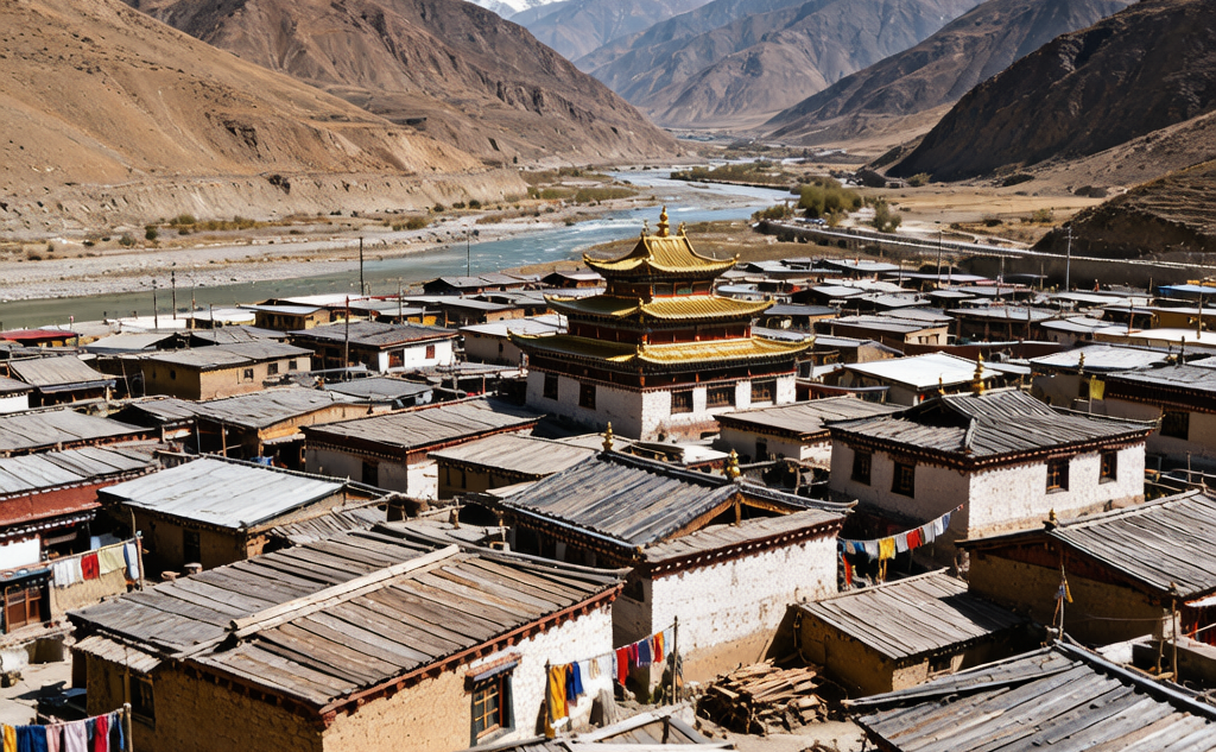
What sets Guan’e apart from a purely scenic park is its cultural fringe. The upper valley brushes against Tibetan areas, and you will see prayer flags, distinctive timber houses, and a different rhythm of life than the Han Chinese county town below. This borderland where Gansu, Sichuan, and Tibetan culture meet is one of the most interesting parts of the region, and it rewards travelers who read it as more than a postcard.
For those who like to stray from the main drag, our China off-the-beaten-path guide lists other places like this where the effort to arrive is part of the reward.
Food, lodging, and a realistic day plan
Do not expect a food scene in the valley itself. The county town of Diebu has the better options: hand-pulled noodles, beef with green peppers, and the hearty noodles-and-mutton cooking typical of Gansu’s south. In the park, bring your own water and a packed lunch, or eat at the basic canteens near the gate. Lodging ranges from simple county hotels to a few guesthouses at the park entrance; none are luxury, but the better ones are clean and warm, and staying inside or beside the gate saves the long morning drive.
A realistic day runs like this: arrive the evening before and sleep near the gate, enter at opening, take the shuttle to the upper meadows first while the light is soft and the tour groups have not arrived, then walk the lower gorge leisurely in the afternoon as you descend. That order reverses the usual crowd flow and gives you the quiet stretches alone. If you only have a half day, skip the upper section and do the lower gorge well — it holds the best waterfalls anyway.
Timing your wider trip
Because Guan’e Valley is seasonal and remote, it works best as part of a broader western China loop rather than a standalone visit. Pair it with Longnan’s other sights, or use it as a scenic break between Lanzhou and Sichuan. The best time to visit China overview helps you line up regional weather so you are not caught by closed mountain roads.
Practical tips
- Base yourself in Diebu County or at a guesthouse near the park gate; booking ahead is wise in July and August.
- Download offline maps; signal is weak in the gorges.
- Bring cash — smaller vendors and some ticket points may not take foreign cards or even all mobile payments.
- Combine with a visit to nearby Tibetan villages respectfully; ask before photographing people.
Final thought
Guan’e Valley is the kind of place that makes you reconsider what Gansu is. It is green, wet, and quiet, a world away from the silk-road clichés, and it asks for a little effort to reach. If you are already in the southwest of the province, or building a route through Longnan, it is one of the better-kept secrets in China’s northwest — a gorge walk that delivers waterfalls, forest, and a hint of the Tibetan edge, all in a single day.