

A Ganden Monastery day trip is, in our experience, the single best half-day you can pull out of Lhasa, Tibet, China without another permit or another hotel change. Sitting on a wind-scoured ridge 45 km northeast of the city at about 4,300 metres, Ganden (Ganden Namgyeling) was founded in 1409 by Je Tsongkhapa, the reformer who launched the Gelug school of Tibetan Buddhism, and it remains the school’s mother monastery. We’ve sent dozens of clients there as a calm counterpoint to the crowds of the Potala and Jokhang, and almost all of them rank the ridge walk and the valley views above anything inside the halls. This guide covers exactly how to get to Ganden Monastery, what the ticket buys, the hiking loop that makes the trip worth it, and the timing that gives you the best light.
Why Ganden Earns a Place on Your Lhasa List
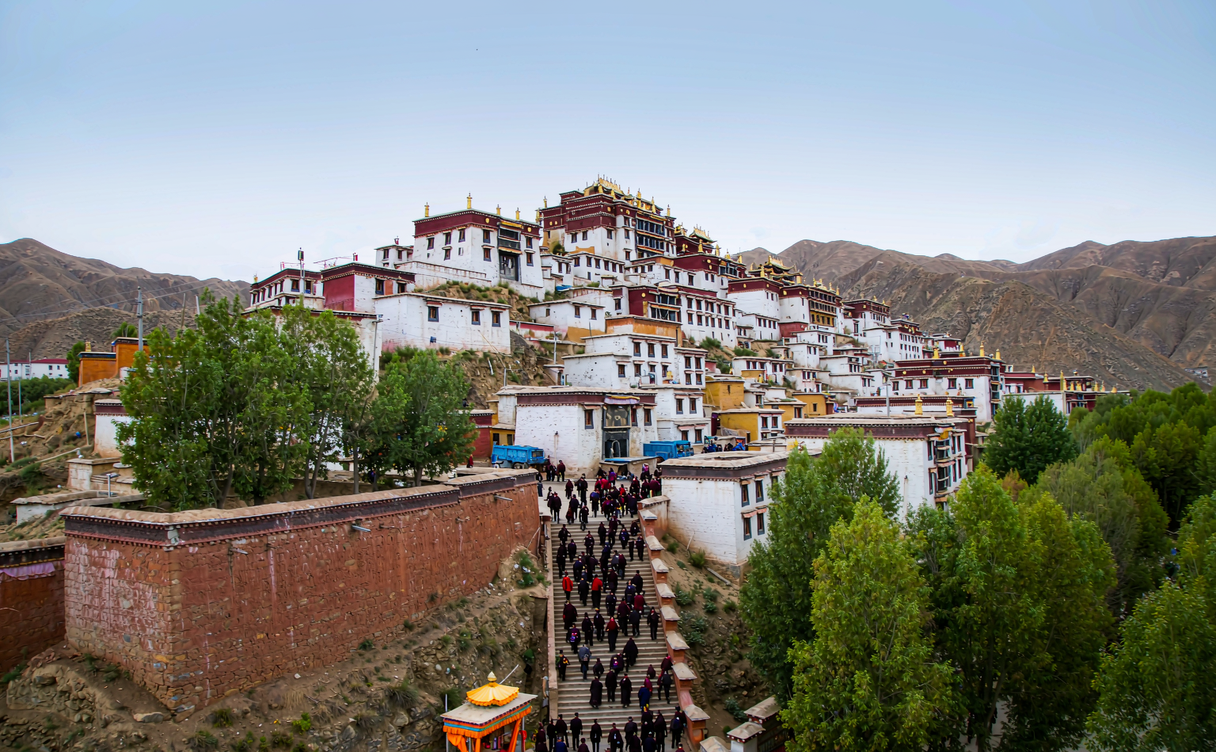
Most travellers spend their Lhasa days on the Potala Palace and the Jokhang Temple, which is right — but those are ceremonies of crowds and timetables. Ganden is where you actually feel the mountains. The monastery clings to the southern flank of Wangbori Mountain, and the architecture steps down the slope in pale-walled, gold-roofed blocks until it drops off into a canyon of scree and prayer flags. The setting alone justifies the drive, and the Ganden Monastery views across the Kyi-chu valley at sunrise or late afternoon are the kind of wide, silent panoramas that the in-town temples simply cannot offer.
In our experience the best way to use Ganden is as a Lhasa day trip on your third or fourth day, once you’ve acclimatised. Going straight from the airport to 4,300 m is a mistake we’ve seen clients regret; spend two nights in Lhasa first, hydrate, and let the altitude soften.
How to Get to Ganden Monastery
The monastery is about 45 km from central Lhasa, a drive of roughly one hour to one hour fifteen depending on the new road segments and morning traffic. You have three realistic options:
- Chartered car with driver. This is what we book for nearly every client. A private car from Lhasa runs about ¥400–600 round trip (US$55–85) including waiting time of two to three hours. It’s the only option that lets you linger for the kora and the light.
- Taxi / Didi. A Didi from Lhasa to Ganden is possible but return cars are scarce at the monastery, so you’ll usually negotiate a wait or a round-trip fare. Budget ¥500–700 all in.
- Public bus. A local bus (roughly the “Lhasa–Ganden” service) leaves from near the east side of the city and costs about ¥15–20 each way, but departures are infrequent — often only morning out and early afternoon back — and the ride is slower. We only recommend this for confident, flexible independent travellers.
Whichever you choose, tell the driver you want the Ganden Monastery hiking ridge kora included in your stop; some drivers drop you at the car park and assume you’ll just see the main halls, which misses the point.
Tickets and What’s Bookable Now
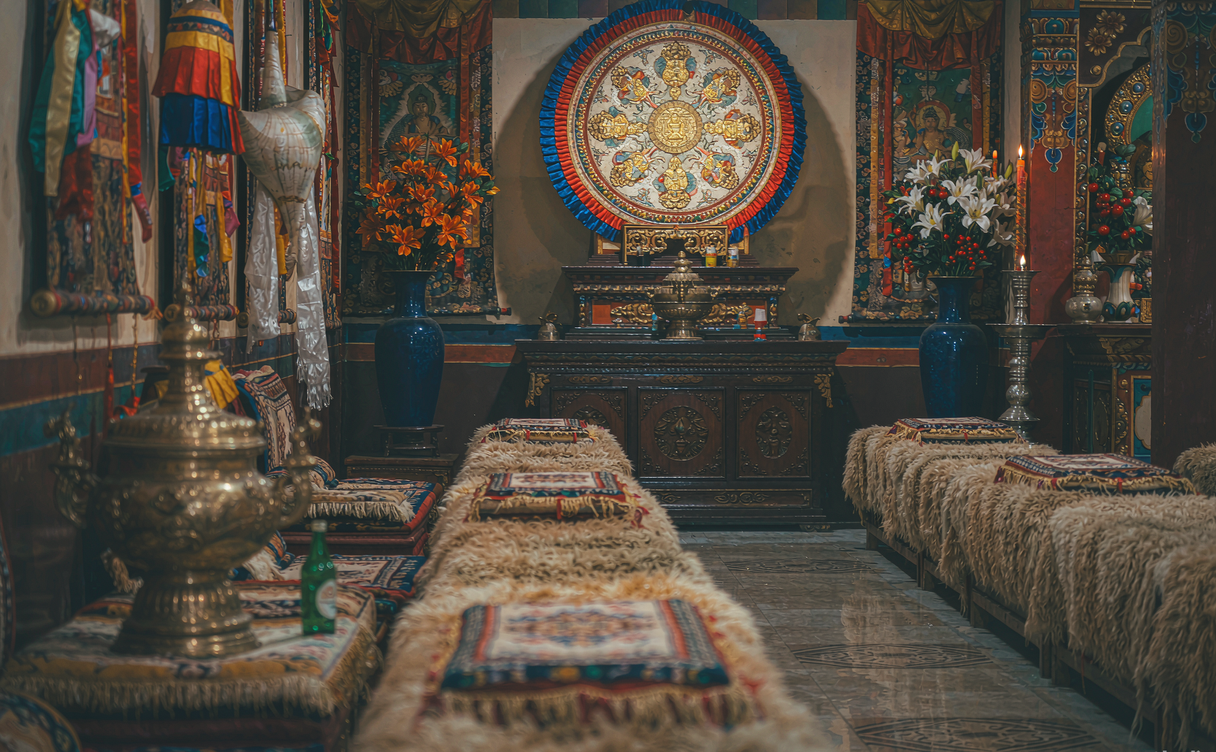
The standard entrance is ¥50 per person (about US$7), paid at the gate; there’s no meaningful online pre-book for foreign visitors, so carry cash or a Chinese payment app as backup. Inside, the key spaces are the Tsokchen (Great Assembly Hall), the tomb stupa of Tsongkhapa, and the sertham (golden roof) chapels. Photography rules vary by hall — ask before lifting your camera, and never photograph a monk without a smile and a nod. Remember that a Tibet Travel Permit is still required to be in the region at all; that’s arranged through your tour operator before you fly in, and it’s separate from this monastery ticket.
The Hike That Makes the Trip
The reason Ganden beats every other monastery near Lhasa for us is the kora — the pilgrim circumambulation path that rings the ridge above the buildings. The full loop is about 5–7 km and takes two to three hours at a gentle, altitude-aware pace, but you don’t have to commit to all of it. The first 20 minutes climb from the main complex to a saddle with a 360-degree view that is, frankly, worth the whole visit. Continue and the path traverses the back of the mountain past hermit caves, mani walls and a forest of prayer flags, then descends to the far side before looping back.
For a shorter version, walk up to the ridge saddle, soak in the Ganden Monastery views, and return the same way — about 45 minutes round trip. Wear proper shoes; the trail is loose rock and can be icy even in May. If you’re building a broader Tibet monastery itinerary, Ganden pairs naturally with the lower, warmer monasteries of the south, and with Shigatse’s great seat to the west.
Best Time to Visit Ganden
The best time to visit Ganden is late May through early October, when the road is clear, the valley is green rather than grey, and daytime temperatures on the ridge sit around 10–18°C. Even then, bring a windproof layer — at 4,300 m the wind cuts and the mornings start near freezing. November to April is harsh: snow on the pass, biting cold, and thin light, though the clear winter skies do produce spectacular photos for the well-prepared. We steer most clients toward June, September or early October for the balance of weather and manageable crowds.
Time of day matters as much as season. Arrive by 9 am for soft morning light on the gold roofs, or after 3 pm for warm raking light on the canyon. Midday is flat and busy with tour groups.
A Note on Respect and Altitude
Ganden is an active monastery, not a museum. Walk the kora clockwise, keep your voice down inside the halls, and step off the path if a procession comes through. Altitude is the real constraint: at 4,300 m even a short walk leaves unfit visitors breathless, so move slowly, sip water, and don’t be embarrassed to rest. If you felt rough on the Potala’s stairs, take the kora at half speed.
For travellers who want to go deeper than a day trip, our China temple stay guide covers monastic guesthouses and etiquette across the country, while the Lhasa, Tibet travel guide lays out permits, hotels and the full city plan. If your widen trip reaches the west, the Tashilhunpo Monastery guide in Shigatse is the natural next stop, and the Shangri-La Songzanlin Monastery guide shows a similar Gelug seat over in Yunnan.
Food, Facilities and Timing on the Ground
There is a basic café and a few noodle stalls near the car park, but the selection is thin and the standards are variable — we tell clients to eat a solid breakfast in Lhasa and carry water, snacks and sunscreen. Toilets are Chinese-style and basic; there are no ATMs, so bring enough cash for the ticket and a tip to a helpful monk-guide. Plan on two to three hours total: 40 minutes of driving each way plus 90 minutes to two hours on site. That fits comfortably into a Lhasa day trip alongside a relaxed afternoon back in the old town.
Linking Ganden Into a Wider Tibet Plan
Ganden works best as one pillar of a Tibet monastery itinerary rather than a standalone outing. We typically slot it on a free morning between the Potala and a flight or drive west. If you’re coming from the Potala Palace Lhasa guide and the Jokhang Temple guide, Ganden is the exclamation point — the place where the city falls away and the plateau takes over. It’s also a gentle introduction to high-altitude walking before you attempt longer treks.
Practical FAQ
Do I need a separate permit for Ganden? No separate monastery permit, but you must already hold a Tibet Travel Permit to be in the region, arranged by your operator before arrival.
Can I visit independently? Yes, but a chartered car is far easier given the return-taxi problem. Independent bus travel is possible but slow.
How fit do I need to be? Moderate. The short ridge walk is fine for most; the full kora needs decent lungs at altitude.
For background on the monastery’s history and the Gelug school, the Wikipedia entry on Ganden Monastery is a solid, citable starting point.