

The first time I walked through the whitewashed gate of Tashilhunpo Monastery, I had been on the road in Tibet, China for almost two weeks. I was tired, a little short of breath at 3,800 meters, and completely unprepared for how alive the place would feel. This is not a museum. It is the seat of the Panchen Lama, the largest monastery in Shigatse, and one of the most important religious sites in Tibet, China. Monks in maroon robes hurry past you, butter lamps flicker in the dim chapels, and the whole hillside is layered with golden roofs.
If your Tibet trip starts in Lhasa, Shigatse is the natural next stop, and Tashilhunpo is the reason most travelers make the four-hour drive west. I have now visited three times, and I still find something new each time. Here is the practical, first-person guide I wish I had before my first visit.
Getting There in Shigatse
Shigatse (also spelled Xigazê) is the second-largest city in Tibet, China, sitting where the Yarlung Tsangpo and Nyang Chu rivers meet. Most people arrive by road from Lhasa, either on the well-paved Friendship Highway or as part of a longer loop toward Everest. The train from Lhasa to Shigatse also runs daily and is a comfortable, scenic option if you want to save your energy for altitude.
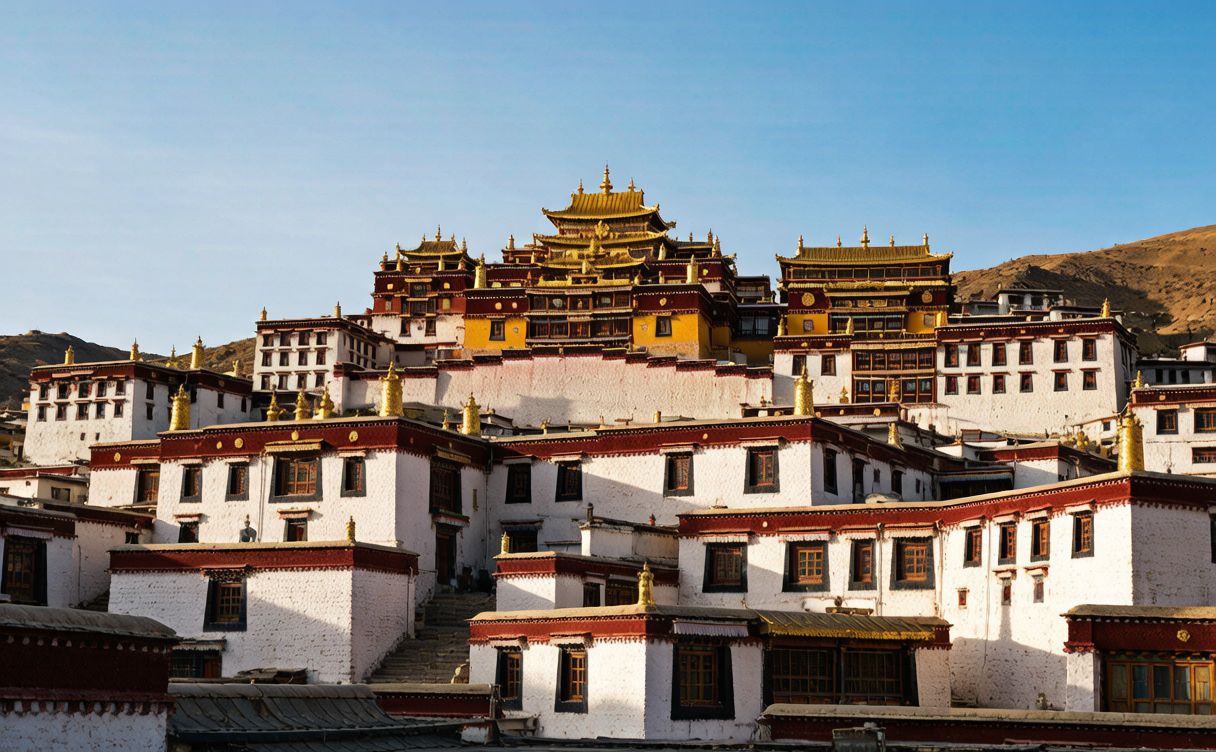
The monastery itself sits on the west side of the city, about 20 minutes by car from the train station and 10 minutes from the center. Taxis in Shigatse are cheap and easy to flag down, but many hotels will arrange a driver for the day. I paid around 60 yuan for a round-trip drop-off and waited nearby. If you are on a guided Tibet tour, transport is almost always included.
A quick but important note for foreign travelers: you still need a Tibet Travel Permit to visit Shigatse, and certain areas farther west (toward Everest) require additional border-region paperwork. Your tour agency handles this, but build in time. I booked mine three weeks ahead and was glad I did.
What to See
Tashilhunpo was founded in 1447 by the first Dalai Lama, Gendun Drub, and later became the traditional seat of the Panchen Lama. The layout sprawls up the hillside in a series of courtyards, chapels, and residential quarters for the hundreds of monks who live here. Plan at least three hours, and more if you like to linger.
Start at the main assembly hall (the Coqen Hall). Inside, thick pillars wrapped in yak-hair rope hold up a cavernous space where monks gather for prayer. The statues here are huge, serene, and covered in offerings of cash, scarves, and dried barley. Photography is not allowed inside the chapels, so put the camera away and just look.
Then climb the lanes between the white buildings toward the kora, the pilgrim circuit. You will pass elderly Tibetans spinning prayer wheels, prostrating full-length on the stone, and murmuring mantras. I found this loop more moving than any single statue. Take it slowly. The altitude makes even a gentle uphill walk surprisingly hard.
Do not miss the monastery’s two largest courtyards, used for the debates and the giant thangka unfurling during festivals. If you happen to visit during the Shigatse Horse Racing Festival or the Buddha Thangka display in summer, the energy is unforgettable. I timed one trip for late August and watched a five-story silk thangka unveiled on the hillside while thousands of pilgrims cheered.
The Maitreya Buddha
The highlight, without question, is the Maitreya Buddha (Jampa) chapel. Inside a towering hall stands a 26-meter statue of the Future Buddha, built in 1914 under the Ninth Panchen Lama. It is plated with gold and inlaid with pearls, turquoise, and amber. The statue’s face alone is several meters tall, and standing at its base, with butter-lamp light bouncing off the gold, is genuinely humbling.
What I appreciated most is the craft behind it. The statue contains around 300 kilograms of gold and was assembled from thousands of individual pieces. You can walk a short spiral path that climbs past the statue’s knees, waist, and chest, so you see it from different heights. Pilgrims press their foreheads to the wood and leave offerings at each level. I followed their lead, and it made the scale of the place real in a way photos never could.
Near the Maitreya chapel are the golden stupa tombs of several Panchen Lamas, including the Tenth and the ornate tomb of the Fifth through Ninth. These reliquary stupas are sheathed in solid gold and decorated with precious stones. They are quiet, reverent rooms, and they show you exactly why Tashilhunpo is the spiritual heart of Shigatse.
Tips
A few things I learned the hard way that will make your visit smoother.
Dress modestly. Cover your shoulders and knees. You will be entering active chapels, and respect goes a long way. I carried a light scarf that doubled as a layer against the wind.
Bring small cash. There is no entry fee confusion, but you may want offerings, snacks, or a donation. Most stalls near the gate take only cash, and ATMs in Shigatse can run dry on weekends.
Walk slowly and hydrate. At 3,800 meters, the hill climb inside the monastery is no joke. I drank two liters of water and still felt the thin air. If you feel dizzy, sit on a wall, breathe, and rest. Do not push it on day one of being in Shigatse.
Hire a guide at the gate. For roughly 100 to 150 yuan, a local guide explains the meaning of each chapel, the Panchen Lama lineage, and the festival calendar. I skipped the guide my first time and missed half the story. The second time, with a guide, the place opened up completely.
Respect the rules on photography. Inside chapels, no photos. Outside, ask before photographing monks or pilgrims. A smile and a gesture worked every time for me.
Best Time
The best months to visit Tashilhunpo Monastery are May through October, when Shigatse is mild and the roads are clear. Days are sunny and dry, with daytime highs around 15 to 20°C, though nights still drop near freezing even in summer. July and August are the rainy peak but also the greenest, with the best chance of festival events.
I would avoid deep winter (December to February) unless you love solitude and can handle sub-zero cold. The light is beautiful and the crowds vanish, but some access roads and services thin out. Spring (April to early May) is a sweet spot: fewer tourists, clear skies, and comfortable walking.
Whichever season you pick, try to arrive in the morning. The chapels open around 9 am, the light is soft on the golden roofs, and you beat the midday tour buses that roll in from Lhasa.
Good to know
Tashilhunpo sits at about 3,800 meters, so treat it as a real altitude stop, not a quick photo opportunity. Spend a night in Shigatse before exploring, eat light, and skip alcohol the first evening. The monastery is generally open daily, with a small entry ticket for the main halls; hours can shift during major religious festivals, so confirm locally.
For official, up-to-date travel and permit information about Tibet, China, I recommend checking the regional tourism authority: the Tibet Tourism Bureau publishes seasonal notices in English. Pair that with a licensed local operator, and your visit to the Panchen Lama’s seat will be smooth and memorable.