

Buddha Jumps Over the Wall is Fujian’s most famous banquet dish, a clay-pot soup that simmers abalone, sea cucumber, fish maw, and a dozen other luxuries for hours until the aroma alone is said to lure a monk over the wall, and in our experience it is the one Fujian plate worth planning a whole dinner around. We have sent travelers to Fuzhou who tried it once and rearranged their itinerary to eat it again, and this guide covers what it is, where to eat Buddha jumps wall, and what to pay so the experience lives up to the legend. It is also the dish most worth sharing, because the pot is built for a table rather than a single plate, and the ritual of opening it together is half the fun.
What the dish actually is
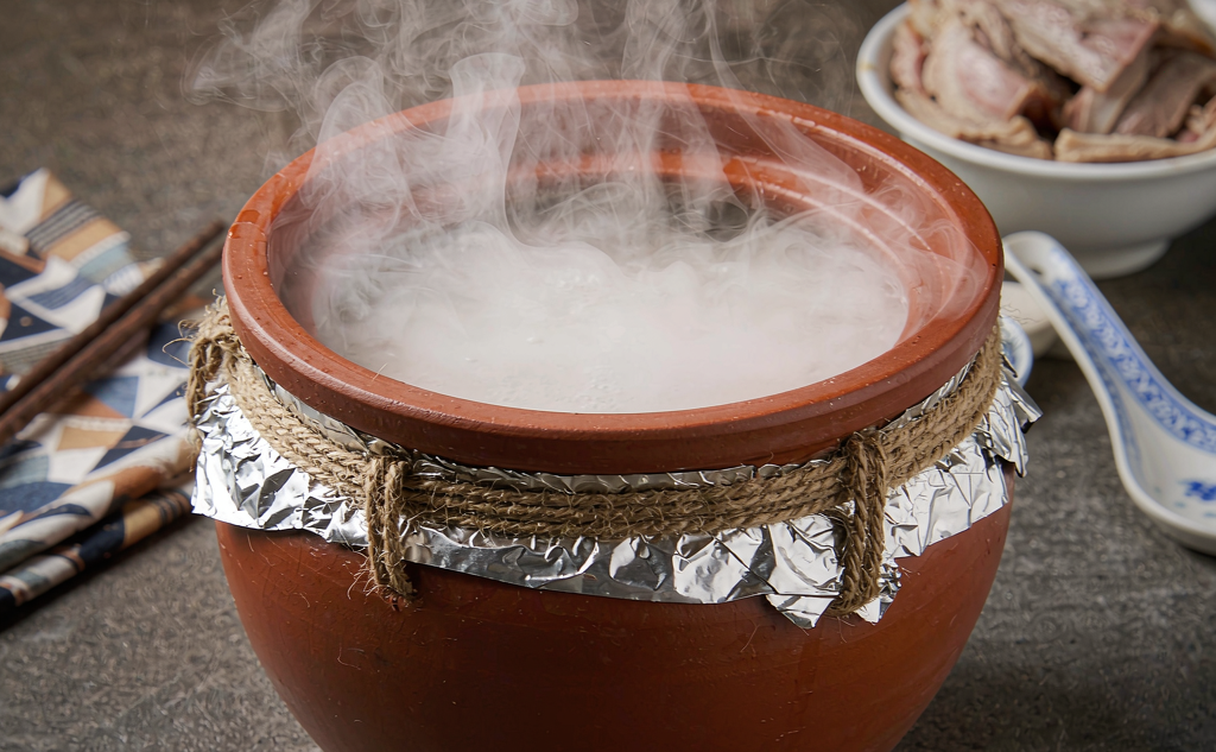
Despite the name, there is no Buddha and no wall, just a story. The dish was born in Fuzhou during the Qing dynasty, when a poet reportedly wrote that even a vegetarian monk would jump a wall to reach the smell. The real content is a slow-braised broth built from chicken, pork, and ham, then layered with premium seafood and sold by the pot. The Buddha Jumps Over the Wall entry on Wikipedia traces the recipe’s history for the curious, and we point guests there before they order so they know what they’re paying for, because the ingredient list is long enough that shortcuts show.
The ingredients and the wait
A proper Fujian Buddha jumping wall is not quick food. The broth alone takes 4 to 8 hours, and the full pot can include more than twenty components: abalone, sea cucumber, fish maw, shark’s fin (increasingly swapped for alternatives), scallops, chicken, duck, ham, mushrooms, and bamboo shoots. Each is cooked separately, then combined and simmered together so the flavors marry. This is why it is a banquet dish rather than a casual order, and why the price reflects labor as much as ingredients.
- A small individual pot for one to two people runs RMB 300 to 600.
- A shared table pot for four to six runs RMB 800 to 2,000 depending on the seafood grade.
- Many restaurants require advance order (sometimes a day ahead) because of the cooking time, and a no-show loses the kitchen a full day.
We always tell travelers to order it when they book the table, not when they sit down, or they’ll wait half the evening and still miss the best grade.
Where to eat it
The dish’s home is Fuzhou, and the historic name is Juchunyuan (聚春园), the century-old restaurant credited with standardizing the recipe; a meal there is a proper occasion, with set banquet menus from RMB 1,000 per person upward for the full experience. In Xiamen and Quanzhou you’ll find it at high-end Fujian restaurants, usually as the centerpiece of a banquet set, priced similarly. For travelers building a regional eating plan, our Fujian Min cuisine guide explains the broader kitchen this dish sits at the top of, from the light broths to the sweet-and-sour counterpoints that frame it.
How to experience it without a huge bill
If a full banquet is more than your trip needs, look for restaurants offering a smaller “tasting” pot or a lunch set that includes a reduced version. Some cooking schools in Fuzhou and Xiamen run demonstrations where you help assemble a simplified pot and then eat it; these run RMB 150 to 300 per person and are a good crash course in Chinese banquet dishes. Our China cooking class guide lists hands-on options across the country, including Fujian, so you can learn the layering technique rather than only tasting the result.
How the dish is served
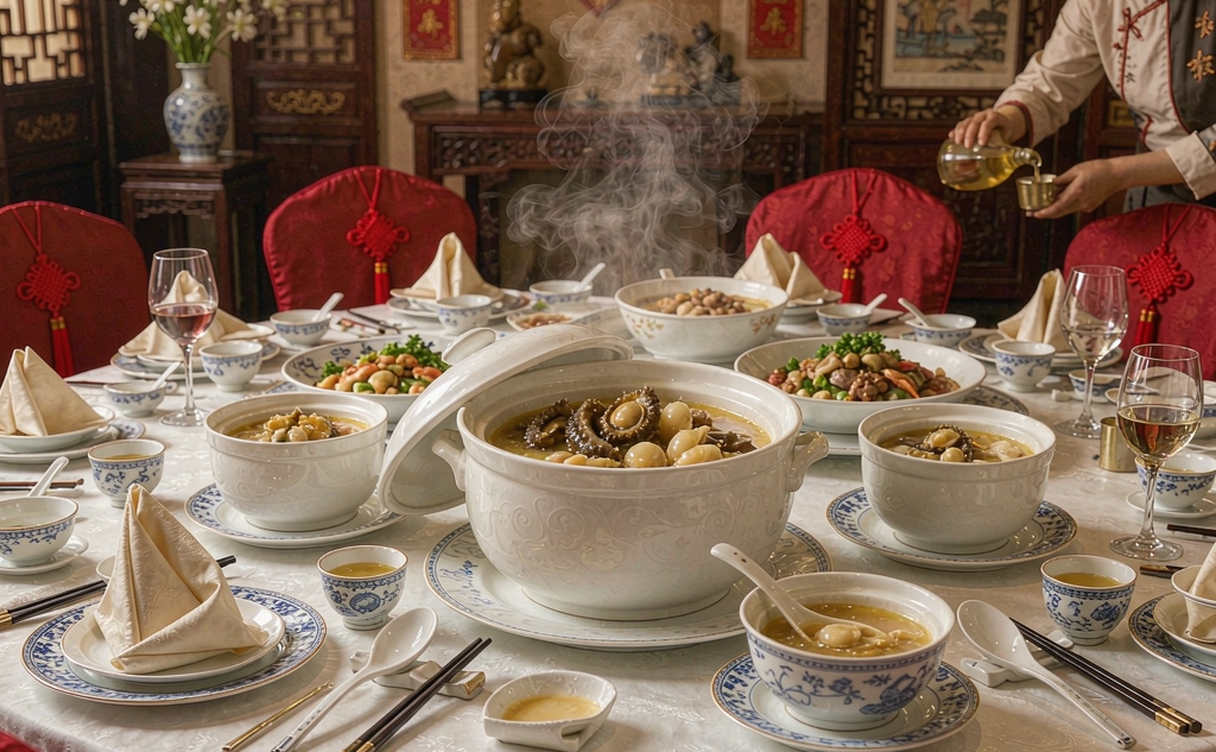
When the pot arrives it is sealed with a lotus leaf and a clay cap, and the server cracks it open at your table so the steam hits all at once; this theatrics is part of the price. Eat it in layers: the broth first in small cups, then the solid pieces with a spoon, and finish by adding plain rice or noodles to the remaining liquor so nothing is wasted. In a full banquet the pot is the last savory course, followed only by a sweet soup or fruit. We have noticed that travelers who pace themselves through the earlier dishes enjoy the wall far more than those who arrive full, so treat the preceding plates as a warm-up rather than a meal. Some restaurants will also let you take the empty pot home as a souvenir if you ask, which makes an unusual gift.
Vegetarian and lighter versions
Not every table wants twenty luxury ingredients, and modern Fuzhou kitchens offer a “vegetarian wall” built from mushrooms, bamboo, and bean products that keeps the long-braised character without the seafood price, usually RMB 120 to 250 per pot. There are also clear-broth versions that drop the ham and duck for a cleaner taste suited to summer. These are a good entry point if you are unsure about sea cucumber or fish maw, which some first-timers find texturally strange. Ask the restaurant which version they recommend for your group size, because the cooking time and the pot size scale differently than you might expect, and the kitchen would rather tell you than waste a seat.
Reading the menu and reserving
Menus at the famous houses come in two forms: a fixed banquet ladder priced per person, and an a la carte pot you order by grade. The grade drives the price more than the portion, so a “premium” pot might look similar to a “standard” one but carry abalone and scallop of a higher tier. Reserve by phone or through your hotel concierge a day ahead, name the pot size and the time, and confirm the price range so there are no surprises. We always tell travelers to book the earliest seating, because the first pots out of the kitchen in the evening are the freshest and the dining room is calmer before the banquet crowds arrive.
Pairing and timing
Buddha Jumps Over the Wall is winter and festive fare in Fujian, served at New Year and business dinners rather than hot summer nights. Order it as the climax of a multi-course meal: start with lighter Fujian plates like sweet-and-sour pork ribs or a fish ball soup, then let the pot arrive last so the rich broth lands when appetites are deepest. A Fujian food guide would pair it with a glass of yellow rice wine (huangjiu) if you drink, and with plain steamed buns to mop the broth.
For a wider route that puts Fuzhou’s banquet beside other regional showpieces, a dedicated China food tour guide can link the soup with coastal and inland food cities into one trip, balancing the heavy pot against lighter stops.
The dish is richest in its home province, so plan at least one proper Fuzhou or Xiamen dinner where the pot is the point, not the sides.
Whenever we send guests to Fujian, we remind them that the best meals are the ones with a story, and the booking apps make reserving that banquet table straightforward.