

At 10:40 on a Tuesday night in Chengdu, the best bowl of noodles I ate all week cost eleven yuan and took ninety seconds to make. The stall was a folding table under a bare bulb, and the woman running it never sat down. She slapped a spoonful of red chili oil into a chipped bowl, followed it with sesame paste, soy, a pinch of ground Sichuan pepper, then dropped in a fist of thin noodles and a spoon of dark, crisp pork. I mixed it standing up, on the pavement, and it was gone in four minutes.
That is the entire idea of dan dan mian. Not a soup, not a feast — a small, concentrated hit of ma and la and nutty sesame, built to be eaten fast by someone on their way somewhere else.
The bowl was designed to be eaten standing up
担担面 — dan dan mian — takes its name from the carrying pole, the dan dan, that hawkers used to sling over one shoulder. One basket held the stove and the noodles; the other held the bowls, the sauces and the toppings. The vendor walked, stopped where the customers were, and assembled a bowl on the spot. The dish is usually traced to the mid-nineteenth century, to a hawker in Zigong known as Chen Baobao, and it spread through Chengdu and the rest of Sichuan from there.
Because it came off a pole, it had to be portable and it had to be cheap. Both constraints shaped the recipe. The sauce is concentrated, so a little goes a long way. The portion is deliberately small — a traditional serving is described as yi liang, roughly fifty grams of noodles, not the mountain most foreigners picture when they hear “noodle bowl”. And it is a dry noodle: the sauce sits in the bottom of the bowl, the noodles go on top, and you toss it yourself. Any liquid is there to loosen the sauce, not to make a broth.
The flavour is the point. Dan dan mian is numbing before it is hot, and nutty underneath both. Good chili oil gives a low, round burn; freshly ground Sichuan pepper gives the electric tingle that fades in the back of your throat; toasted sesame paste and crushed peanuts give body and a savoury sweetness that stops the heat from becoming one-dimensional. The crisp minced pork and the preserved mustard greens add salt and depth. It should taste busy, in a good way.
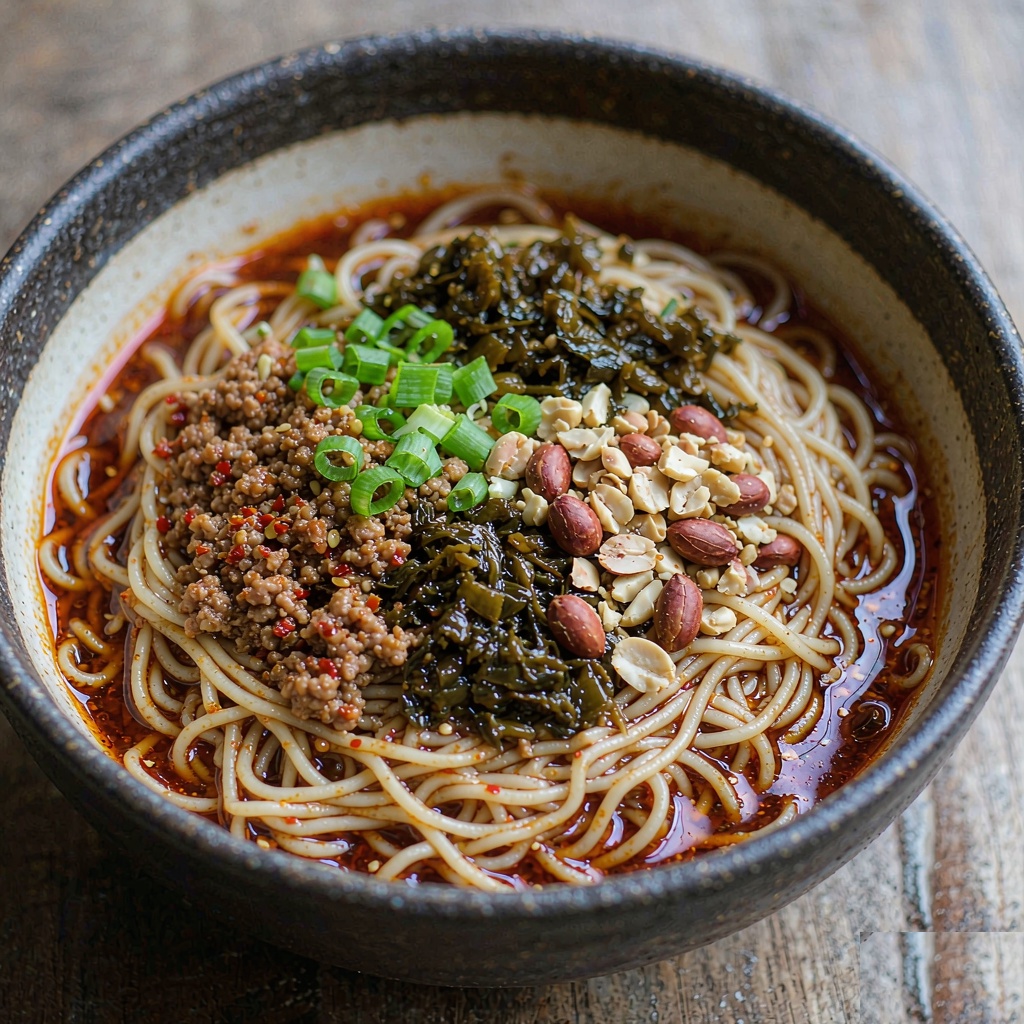
What actually goes into a proper bowl, and how much
None of these ingredients are hard to find outside China, though two of them make a real difference: the chili oil and the preserved greens. The amounts below make two proper small bowls, or one greedy one.
- 200 g fresh thin alkaline wheat noodles (碱水面) — or about 120 g dried. The alkaline bite matters.
- 150 g minced pork, ideally not lean; a 70/30 lean-to-fat ratio crisps properly.
- 3 tbsp Yibin yacai (宜宾芽菜), the sweet-savoury preserved mustard green, rinsed and finely chopped. Preserved radish is an acceptable stand-in.
- 3 tbsp chili oil with its sediment — the dark toasted flakes at the bottom of the jar carry most of the flavour.
- 1½ tbsp Chinese toasted sesame paste, or a smooth natural peanut butter if you cannot find it.
- 1 tbsp light soy sauce, plus 1 tsp dark soy for the pork.
- 1 tsp Chinkiang black vinegar and 1 tsp caster sugar.
- ½ tsp freshly ground Sichuan peppercorn, toasted whole first.
- 2 garlic cloves, minced; 1 tbsp Shaoxing wine.
- 3 tbsp roasted peanuts, crushed; 2 spring onions, sliced.
- 100 g leafy greens — bok choy, spinach or pea shoots — blanched in the noodle water.
That is the whole list. There is no stock, no cornflour slurry, no long braise. The dish is assembled, not stewed, which is why it works as a weeknight meal and why it fails so badly when someone tries to turn it into a soup.
Cooking it: sauce in the bowl first, noodles last
Serves two. Total time about thirty minutes, most of it spent crisping pork you could also make a day ahead.
1. Toast and grind the peppercorns. Put half a teaspoon of whole Sichuan peppercorns in a dry pan over medium heat for about forty seconds, until they smell floral and slightly citrusy — not burnt. Grind to a powder and set aside. Pre-ground pepper from a jar has usually lost the tingle that defines the dish.
2. Crisp the pork. Put a tablespoon of neutral oil and the minced pork into a cold wok or frying pan, then turn the heat to medium. Press the pork into a flat layer and leave it alone for two minutes so it can crust. Break it up, add the Shaoxing wine, dark soy and a pinch of sugar, and keep frying for six to eight minutes until the bits are dark, dry and slightly crunchy. This is cui sao, crisp pork — the texture half the bowl depends on. Push it to one side.
3. Bloom the greens. Add the chopped yacai and garlic to the same pan for a minute, just until fragrant. Stir it through the pork and take the pan off the heat.
4. Build the sauce in the bowls. In each serving bowl, put a tablespoon and a half of sesame paste and loosen it with a spoonful of hot water until it is the consistency of double cream — skip this and you get a claggy, peanut-butter-textured bowl. Add a tablespoon and a half of chili oil with its sediment, half a tablespoon of light soy, half a teaspoon of black vinegar, a pinch of sugar, a little garlic and a quarter teaspoon of the ground pepper. Stir it into a dark, glossy pool.
5. Cook the noodles. Boil plenty of water — more than you think — and cook the fresh noodles for sixty to ninety seconds, or according to the packet for dried. Add the greens for the last thirty seconds. Do not overcook; alkaline noodles go soft fast and the whole dish is about bite.
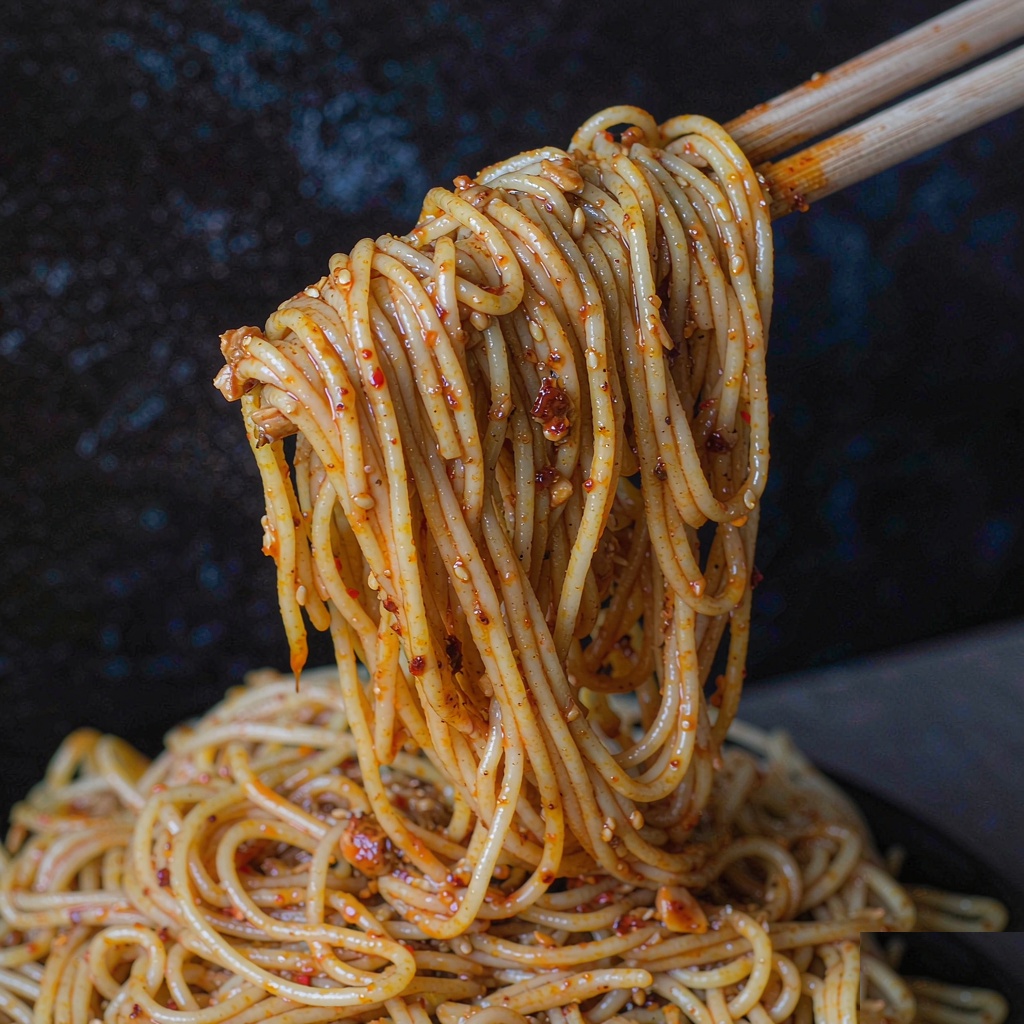
6. Assemble. Lift the noodles straight from the pot into the bowls with tongs, letting a little cooking water cling to them — a tablespoon or two, no more. Top with the crisp pork and yacai, a spoon of crushed peanuts and a scatter of spring onion.
7. Mix before you taste. Dan dan mian is not a dish you eat neatly from the top. Toss everything from the bottom up for a good fifteen seconds, until every strand is stained red-brown, then eat it immediately, while the peanuts are still crunchy and the noodles still have tension.
Three things that decide whether it works
Use the chili oil sediment. The clear oil on top is mostly colour and heat; the toasted chili flakes and spices that settle at the bottom are where the flavour lives. Stir the jar before you spoon.
Keep the pork genuinely crisp. Wet pork steams; dry pork crisps. Starting in a cold pan and resisting the urge to stir for the first couple of minutes does more for this dish than any amount of extra spice. Make a double batch — it keeps for days and improves everything it touches.
Respect the water ratio. Too much noodle water and you have made a thin, sad soup. The sauce should coat the noodles, not swim around them. If you overshoot, drain the noodles properly and add a fresh spoon of sesame paste rather than more soy.
Who it suits, and who should order something else
Dan dan mian is a good fit if you like heat with structure, if you are eating alone and want something fast, and if you are travelling on a budget: it is one of the cheapest filling meals in China, and it turns up on almost every breakfast and late-night menu in Chengdu. If you are working through Chinese regional noodle styles, it is also the clearest introduction to the Sichuan approach: no broth to hide behind, everything in the sauce.
It is a poor choice if you cannot handle numbing heat, since the Sichuan pepper is not optional in any version worth eating. It is also not suitable for anyone with a peanut, sesame or wheat allergy: crushed peanuts and sesame paste are structural, not garnish, and the noodles are wheat. People managing reflux, ulcers or a low-sodium diet should treat it as an occasional dish rather than a staple — the chili oil, soy and preserved greens stack up salt quickly. Young children often find the tingle unpleasant even when they like spicy food. Most shops will make it milder on request, but “milder” in Chengdu still means noticeable heat.
Variations worth knowing
The classic Chengdu bowl is dry and small, but you will meet looser versions elsewhere. Some shops add a ladle of light stock or noodle water so the bowl arrives almost soupy; others serve it as a larger portion with more greens. In Chongqing the same sauce logic turns up in xiao mian, with the toppings and the heat turned up further. If you want the context, it helps to read around the wider landscape of Sichuan cuisine and Chengdu’s all-day eating culture, because dan dan mian only makes full sense as one entry in a very long list.
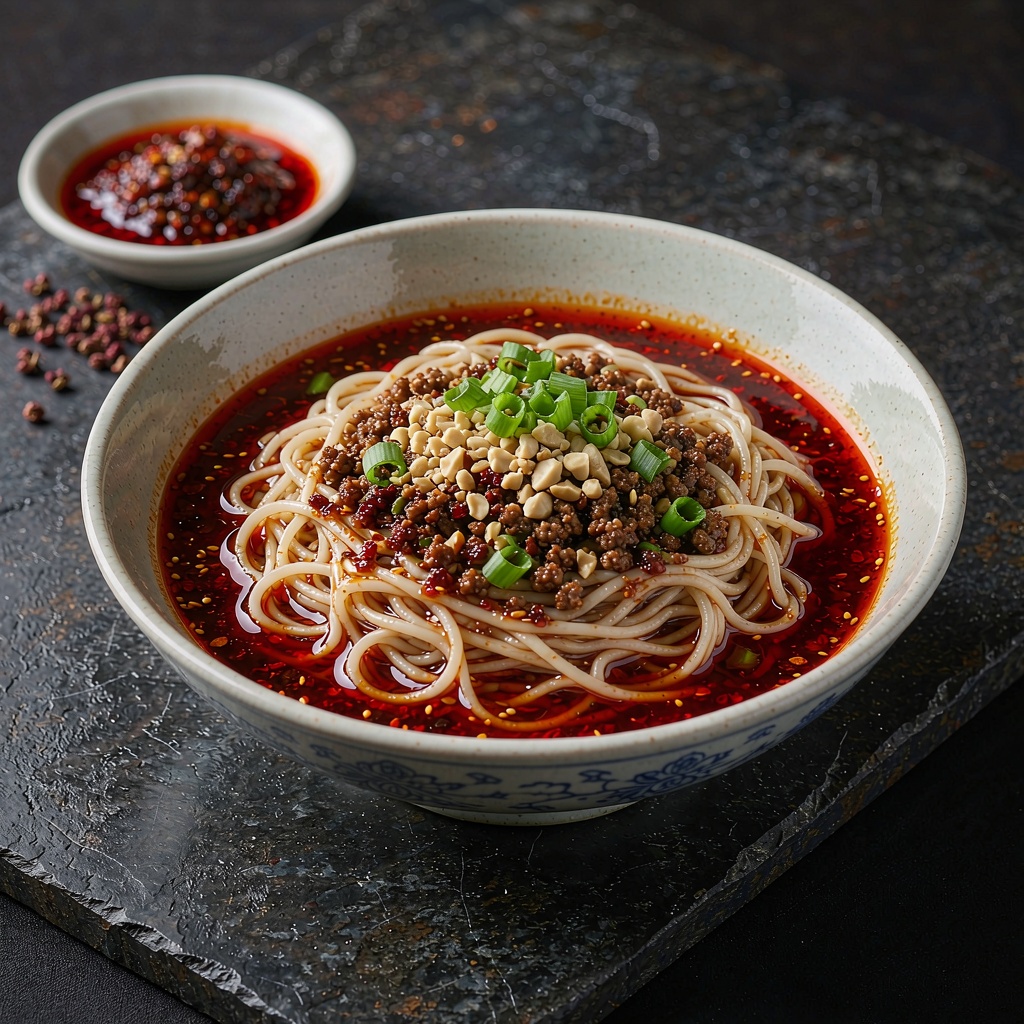
Outside Sichuan, the dish drifts sweeter and nuttier. Restaurant versions in Europe and North America often lean hard on peanut butter and pull back on the pepper, which makes a pleasant noodle dish but a different one. A vegetarian version swaps the pork for finely chopped king oyster mushrooms fried the same way, and it works surprisingly well. If you cannot find Yibin yacai, chopped preserved radish or even a little finely diced suancai will get you close.
One last thing about the portion
The mistake I made the first time I cooked this at home was scaling it up. I made a big bowl, sat down, and ate about a third of it before the richness of sesame and chili oil became too much. Dan dan mian is built as a small, sharp pleasure — two or three small bowls through an evening is closer to how it is actually eaten in Chengdu than one enormous one. Serve it in the smallest bowls you own, keep the toppings in reach, and make more crisp pork than you think you need. You will use it.