

The first time I ate claypot rice properly, I was wedged onto a plastic stool at a stall in Guangzhou’s old town, the kind of place with three burners, a stack of black pots, and a handwritten menu taped to the wall. The cook set the pot down in front of me while it was still audibly ticking — the clay was so hot it kept singing against the metal tray. I lifted the lid and a thin ribbon of smoke carried that nutty, almost burnt-sugar smell that only comes from rice toasted against earthenware. That smell is the whole point of the dish.
What claypot rice is, and why the little pot matters
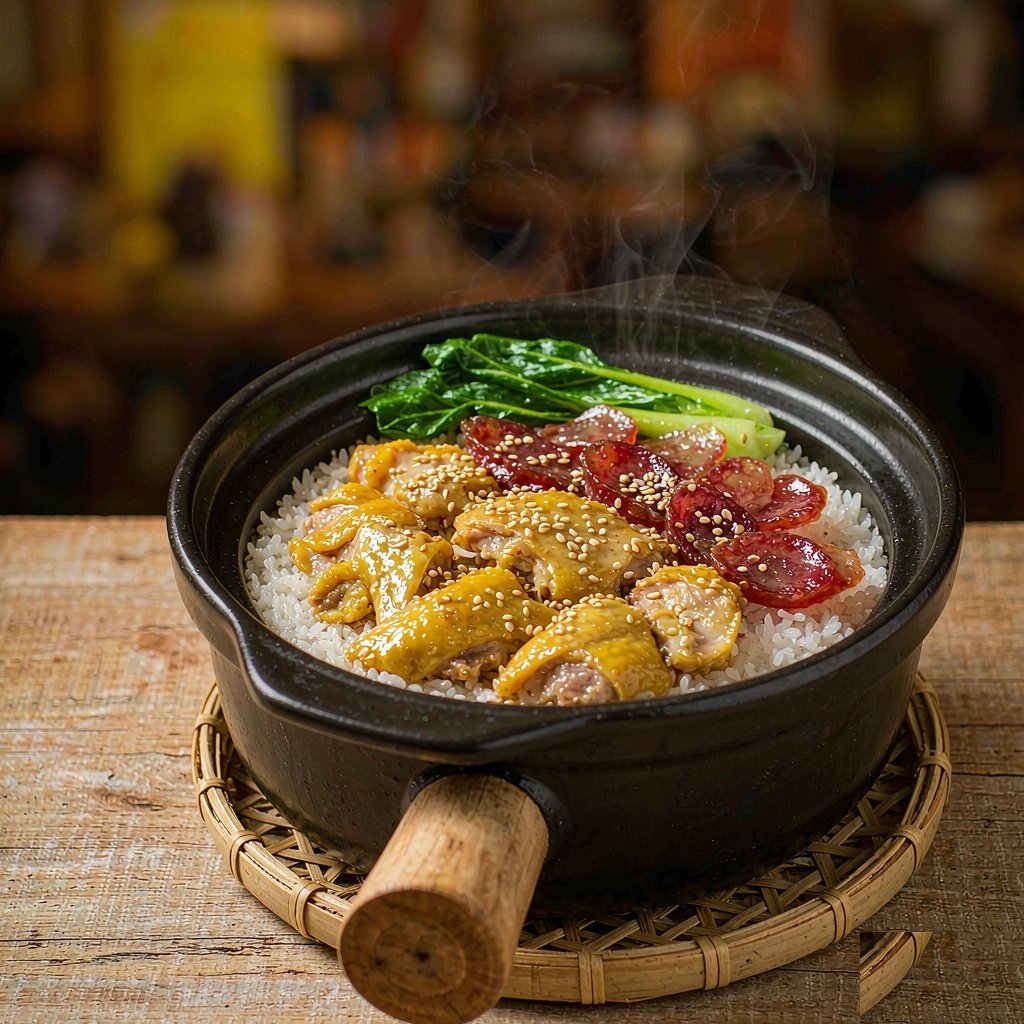
Cantonese claypot rice — known in pinyin as bao zai fan, the “little-pot rice” — is exactly what the name promises: a single serving of rice cooked inside its own small unglazed clay pot, with the toppings steamed on top over an open flame. Unlike a rice cooker, which steams rice from below, the clay pot pulls heat up the sides and across the bottom, and that is what builds the signature layer of toasted grain. The “bao zai” is not a cute nickname; it describes the vessel, and the vessel is the recipe.
An authentic cantonese claypot rice is built in one pot, start to finish. You are not boiling rice and then saucing it afterward. The raw grains go in with water, the pot goes over the fire, and the meat, sausage, and greens go on top partway through so they cook in the rising steam. By the time you lift the lid, everything has married in the same breath of heat.
The part you can’t fake — the crispy rice crust (guo ba)
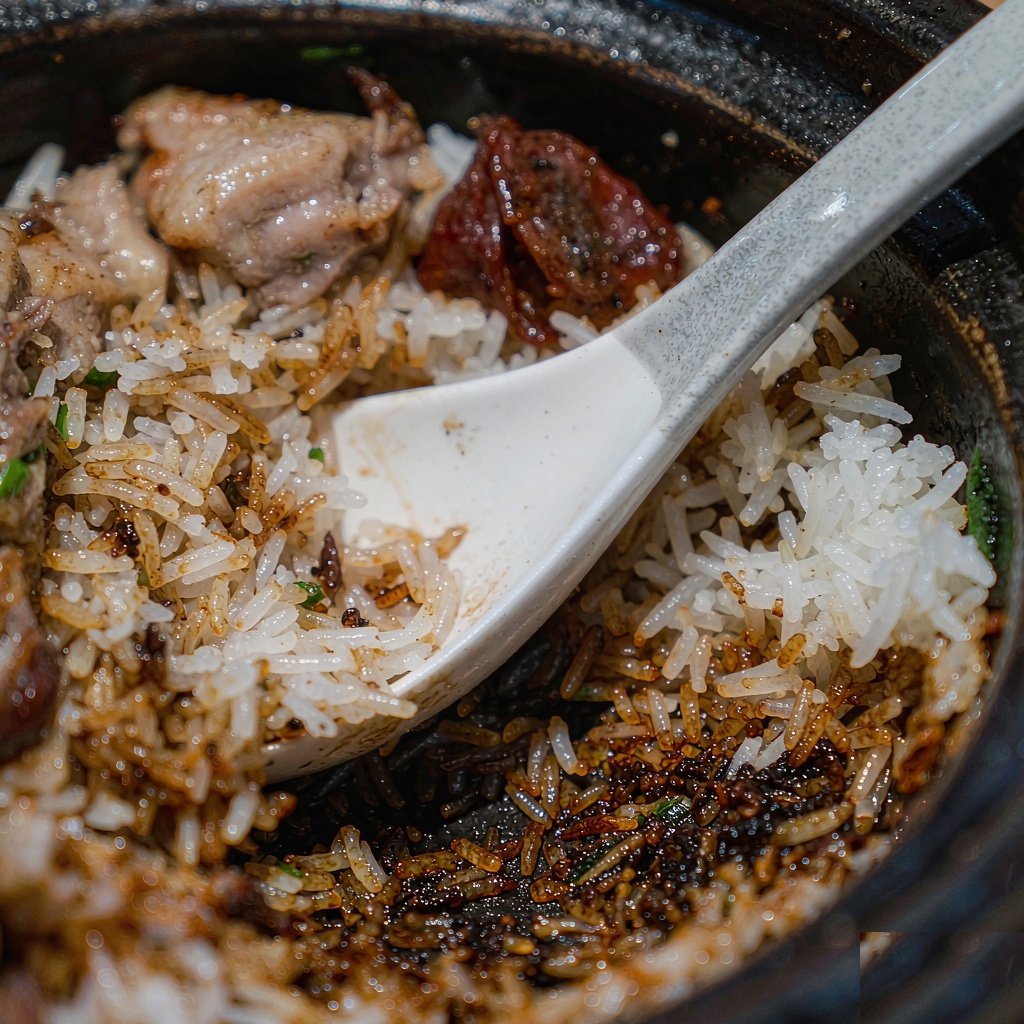
Ask any regular what they came for and they will point at the bottom of the pot. The guo ba, the thin sheet of rice that fries against the hot clay into a glassy, golden crust, is the soul of the dish. A good stall finishes each pot over high heat for a minute or two at the end, just long enough to bronze the base without scorching it.
Claypot rice guo ba crispy crust is different from the burnt layer you get if you forget a pot on the stove. It is deliberate, seasoned by the fat that has dripped down from the sausage and chicken, and it shatters when you dig a spoon through it. Locals treat it as the best bite, not a mistake to scrape off and discard. When I first watched a Guangzhou cook pour a little extra sauce over the bottom and then scrape it clean with a metal spoon, I understood why people guard that layer like a secret.
What does claypot rice taste like
Three things hit at once. First the soft rice, each grain separate and faintly sweet from the jasmine variety. Then the toppings — savory, fatty, a little smoky from the clay and the char. Then the bottom: toasted, almost nutty, with the salty edge of rendered pork fat. The contrast between the fluffy top and the crackly base is what makes people order a second pot before they have finished the first.
The sauce ties it together. A spoon of dark soy, oyster sauce, and a little lard or sesame oil pooled over the top turns plain rice into something you want to scrape the pot clean for. That is the taste people try and fail to describe to friends back home, which is probably why “what does claypot rice taste like” is one of the first questions travelers type into a search bar.
Claypot rice ingredients
A basic chicken-and-sausage version feeds one person with:
- Jasmine rice, about 1 cup (200 g) raw, rinsed until the water runs clear
- Chinese lap cheong sausage, 1 to 2 links, sliced on the diagonal
- Chicken thigh, 120 g, diced and marinated in light soy, ginger, and a pinch of cornstarch
- Dried shiitake mushrooms, 3 to 4, rehydrated and halved
- Gai lan or spinach, a small handful, blanched
- Scallion and ginger, for aroma
For the sauce, mix 1 tablespoon dark soy, 1 tablespoon light soy, 1 teaspoon oyster sauce, 1 teaspoon sesame oil, and a little sugar. That combination is the backbone of most claypot rice toppings across Guangdong. The claypot rice toppings are flexible — preserved duck, spare ribs, salted fish, even a cracked egg — but the sauce ratio barely changes from shop to shop.
Choosing the right clay pot
The pot itself is unglazed earthenware, porous, with a lid that holds steam. Home cooks can buy a single-serving pot at any Asian grocery for a few dollars, but a small cast-iron Dutch oven or even a heavy saucepan will get you close. The non-negotiable is heat that comes from the bottom and the sides, not just a flat heating element underneath. If you only have a thin nonstick pan, you can still make a credible bowl; you just will not get as much crust, and the crust is the point.
Who should order it — and who might skip it
Claypot rice is comfort food for carb lovers, late-night eaters, and anyone on the hunt for budget meals in China. A single pot in Guangzhou rarely costs more than a casual bowl of noodles, and it is filling enough to be a whole dinner. It is also one of the most forgiving dishes for travelers who are wary of offal or heavy spice — the chicken-and-sausage version is mild and familiar, an easy entry point into Cantonese cooking.
The caveats are honest. Claypot rice calories run high for a rice dish, roughly 600 to 800 per pot once you count the sausage and the sauce, and the sodium is significant thanks to the soy and the preserved meats. People watching their blood pressure or cutting refined carbs should treat it as an occasional splurge rather than a daily staple. The toasted bottom also carries a little acrylamide, the compound formed when starchy foods brown — fine in moderation, worth noting if you eat it constantly.
How to make claypot rice at home
An easy claypot rice recipe is mostly about timing, not technique. This is the home version I use on a gas burner, and it answers the question most people actually have: how to make claypot rice at home without a restaurant setup.
- 1. Rinse and soak. Rinse the rice until the water runs clear, then soak 30 minutes so it cooks evenly and shades toward that separate-grain texture.
- 2. Prep the toppings. Marinate the chicken; slice the sausage; rehydrate and halve the mushrooms; blanch the greens.
- 3. Oil and load the pot. Swirl a little oil around the inside, add the rice and water at a 1:1.1 ratio, and bring to a boil uncovered.
- 4. Simmer. Once small craters form on the surface, drop the heat to low, lay the sausage and mushrooms on top, cover, and cook 10 minutes.
- 5. Add the chicken. Tuck the marinated chicken over the rice, cover, and cook another 8 to 10 minutes.
- 6. Sauce and greens. Drizzle the sauce mixture over the top, add the blanched greens, cover for 2 minutes.
- 7. Build the crust. Turn the heat to high for 60 to 90 seconds — you should hear a faint crackle — then kill the flame.
- 8. Rest and serve. Let it sit 2 minutes, then scrape the bottom with a spoon so the crust loosens, and bring it to the table in the pot.
The sauce that ties it together
The sauce is where home cooks either nail it or flatten it. Dark soy gives color and a molasses-like depth, light soy gives salt, oyster sauce gives umami, and a drop of toasted sesame oil rounds the edges. Traditional stalls finish with a little pork lard, which sounds heavy until you taste how it makes the rice glossy and rich. Vegetarians can skip the lard and the oyster sauce, swap in a mushroom-based sauce, and still land close to the real thing.
Common home mistakes
- Too much water — the rice should be only just covered; excess steams it soft and kills the crust.
- Lifting the lid early — every peek dumps the steam you need to cook the toppings.
- A pot that is too thin — you will scorch the center before the edges ever cook through.
- Forgetting to oil the base — without it the crust sticks and tears instead of lifting in one sheet.
- Rushing the final crust — high heat too long burns it; too short and you get paste, not crunch.
Regional twists — Guangzhou, Hong Kong, and beyond
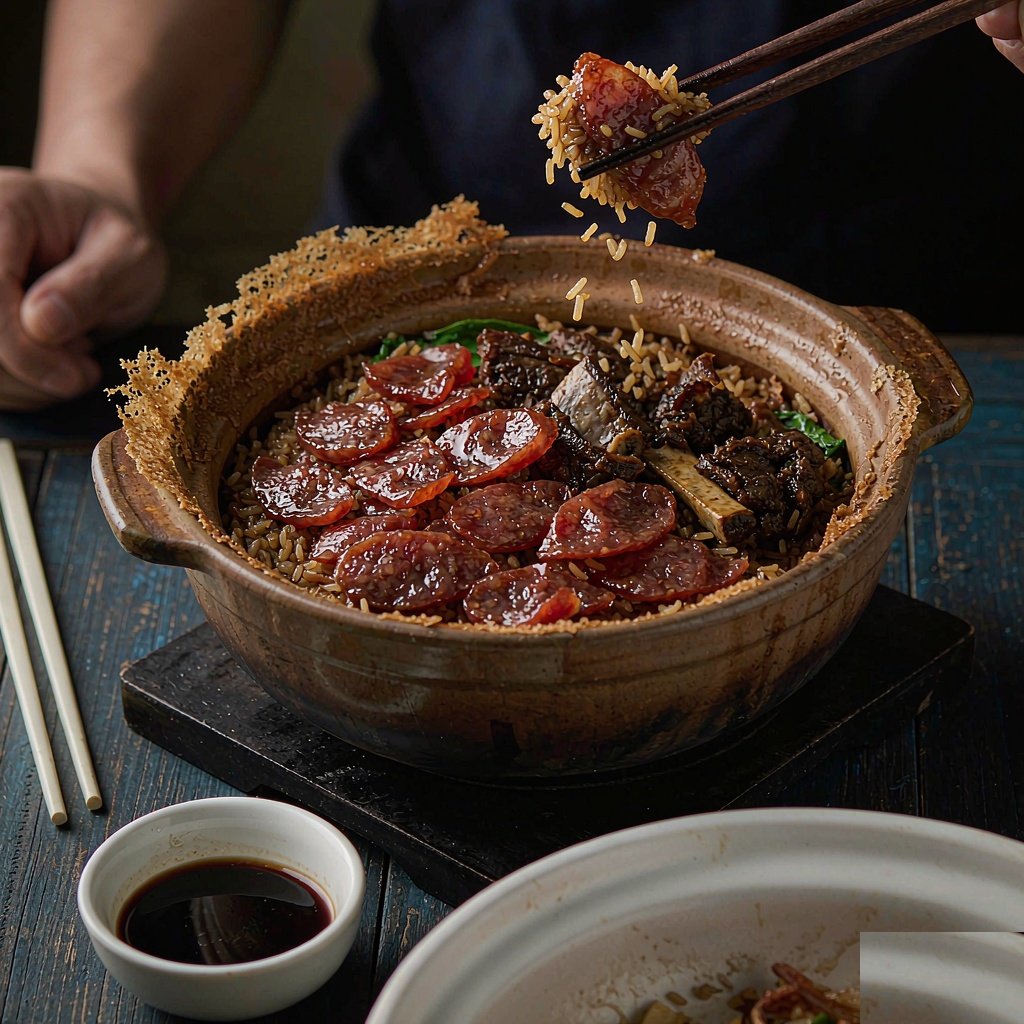
In Guangzhou the classic is the lap mei, or preserved-meat, version: wind-dried duck, liver sausage, and lap cheong stacked over the rice in deep winter. Walk into almost any neighborhood and you will find a stall advertising best claypot rice in Guangzhou from a flickering neon sign. Hong Kong tightened the format — chains standardize the pot, the timing, and the sauce so a bowl in Causeway Bay tastes like one in Mong Kok.
Down in Singapore and Malaysia the dish mutates into claypot rice with salted fish and sometimes curry leaf, cooked over charcoal for extra smoke. If you are searching “claypot rice near me” outside China, that Southeast Asian version is usually what lands on your table.
People often ask about claypot rice vs fried rice, and they are not really cousins. Fried rice starts with already-cooked rice tossed in a hot wok; claypot rice starts with raw grain and builds the texture slowly in a closed pot. One is about the toss and the wok hei, the other about patience and the crust. Both are cheap, both are satisfying, but they taste nothing alike, and pretending otherwise is the fastest way to disappoint someone at the table.
Where to eat it on a China trip
The best time to eat claypot rice is autumn and winter, when a hot pot and the crisp air make the dish feel inevitable. In Guangzhou, the late-night stalls around Enning Road and the side streets of Liwan district are the real thing — order at the counter, watch the row of pots, and claim your stool. It is one of those meals that explains Cantonese cuisine better than any restaurant menu: humble ingredients, perfect timing, no shortcuts allowed.
The dish has a short claypot rice history worth knowing. It grew out of Guangdong’s street-food culture as a way to feed one person a complete meal in a single vessel, and it spread with Cantonese migration across southern China and into Southeast Asia. The format has barely changed in a century, which is the highest compliment a street dish can earn.
Frequently asked questions
What does claypot rice taste like?
Soft jasmine rice, savory toppings, and a toasted, nutty crust at the bottom, all bound by a salty-sweet soy sauce. The texture contrast — fluffy on top, crackly beneath — is the signature that keeps people coming back.
Is claypot rice healthy?
It is filling and protein-rich but high in calories and sodium, mostly from the sausage, the sauce, and the preserved meats. Think of it as an occasional comfort meal rather than an everyday health bowl, and balance it with vegetables across the day.
How do you eat the crispy bottom (guo ba)?
Pour any leftover sauce over it, wait a minute, then scrape with a spoon. The crust loosens and soaks up the flavor. Do not leave it stuck to the pot — it is the best part of the bowl.
Can I make claypot rice without a clay pot?
Yes. A small cast-iron pot or a heavy saucepan works; you lose some of the crust but keep the method. The key is bottom-and-side heat and the discipline not to lift the lid while it cooks.
Claypot rice vs fried rice — what is the difference?
Fried rice uses cooked rice tossed in a wok; claypot rice cooks raw rice slowly in a closed pot to build a toasted base. Different technique, different texture, different payoff, even though both start from humble rice.
Where can I find the best claypot rice in Guangzhou?
Neighborhood late-night stalls in Liwan and around Enning Road are the most authentic. Look for places with a wall of black pots and a steady local crowd rather than a glossy storefront with a tourist menu.