

My first lesson in jiaozi came from a grandmother in Shenyang, not a cookbook
She put a rolling pin in my hand, dumped a mound of soft dough in front of me, and said three words: “thin edge, thick middle.” I rolled maybe forty wrappers that afternoon, each one worse than the last, while she folded them faster than I could mess them up. By dinnertime there were over a hundred dumplings on the floured tray, and when they came out of the pot, the ones I had made leaked and the ones she had made burst with juice. That contrast taught me more about Chinese dumplings than any recipe card since. Jiaozi reward patience, and they punish shortcuts in ways you can taste.
What jiaozi actually are, and how they differ from wontons and gyoza
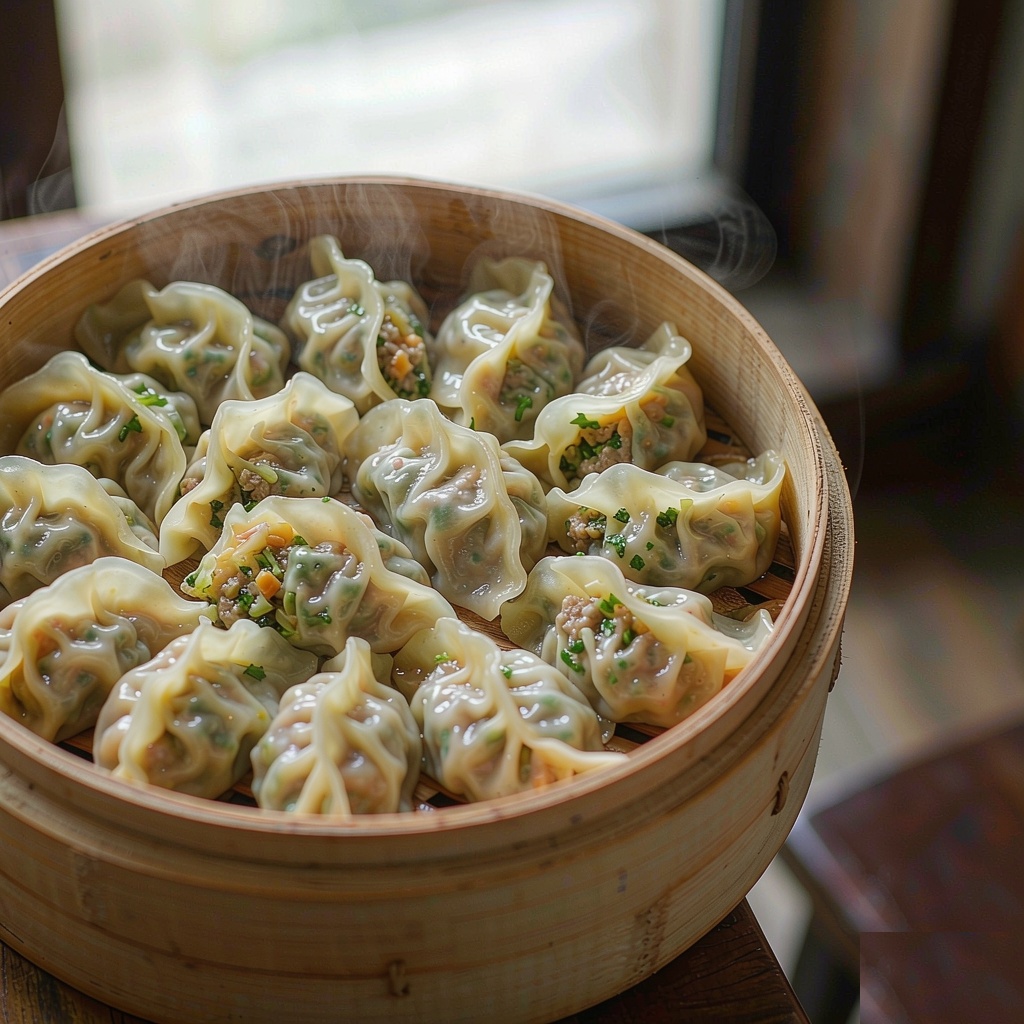
Jiaozi are half-moon dumplings made from a wheat-flour dough wrapped around a seasoned meat or vegetable filling, almost always boiled, steamed, or pan-fried whole. The wrapper is rolled fresh from dough, which gives it a chew that no factory skin quite matches. The classic version across northern China is pork and napa cabbage: the pork brings fat and savoriness, the cabbage brings sweetness and crunch, and together they release a broth you trap inside the pouch. When you bite in and the filling gushes, that is the whole point of the dish.
People often mix them up with their cousins. Wontons use a much thinner egg-rich skin, are usually folded loosely rather than pleated, and most often swim in broth. Japanese gyoza descend from jiaozi but have thinner wrappers and are nearly always pan-fried crisp on one side. And if you travel south to Guangzhou, the shrimp dumplings you find in dim sum houses belong to a different family altogether. For a proper tour of all these shapes, the complete Chinese dumpling guide covers the regional map in detail. Jiaozi, in short, are the hearty, wheat-belt ancestor of them all.
The filling: amounts that actually work
This is the version I make most often at home, scaled for roughly forty dumplings, which feeds four to six people generously:
- 400 g ground pork with about 20% fat. Leaner pork makes a dry filling; fat is not optional here.
- 300 g napa cabbage, leaves finely shredded, then salted lightly and squeezed hard. Skip the squeezing and your filling turns watery.
- 15 g ginger, grated, plus 3 scallions chopped fine.
- 2 tablespoons light soy sauce, 1 tablespoon Shaoxing wine, 1 teaspoon salt, half teaspoon ground white pepper.
- 3 to 4 tablespoons cold stock or water, whipped into the pork a spoonful at a time until the meat turns sticky and pale. Cooks call this “whipping strength,” and it is what makes the filling juicy instead of crumbly.
- 1 tablespoon sesame oil stirred in last, to seal the aroma.
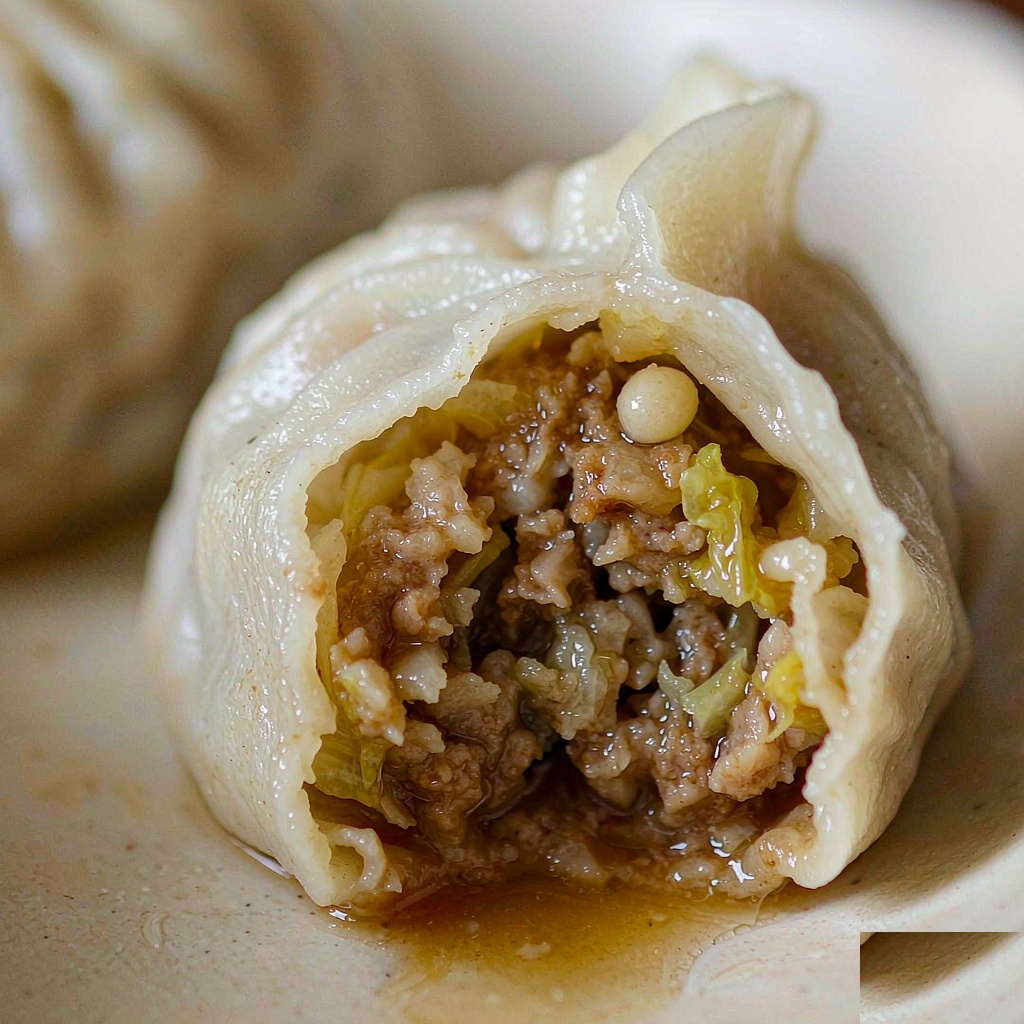
The cabbage deserves one more paragraph. Northern cooks salt it, wait ten minutes, then grab fistfuls and squeeze until their knuckles ache. Whatever liquid remains will fight you during folding and dilute the flavor in the pot. Some families swap in Chinese chives, some add minced shrimp, and in lamb-eating regions the pork becomes mutton with a splash of spice-heavy oil. Once you understand the ratio, roughly 4 parts meat to 3 parts vegetable by weight, you can improvise for years without repeating yourself.
The dough, and why the wrapper matters as much as the filling
Mix 300 g all-purpose flour with 150 to 160 ml warm water and a small pinch of salt. Knead for eight to ten minutes until smooth, then rest the dough, covered, for at least half an hour. Resting relaxes the gluten; an unrested dough snaps back under the rolling pin and drives beginners mad. Roll the log into ropes, cut pieces about the size of a walnut, flatten them, and roll each into a wrapper around 8 or 9 cm across. The technique my Shenyang teacher repeated is worth copying: turn the wrapper as you roll, press harder in the center and lighter at the rim, so the middle stays thick enough to hold juicy filling while the edges stay thin enough to pleat and cook through.
Cooking them properly, step by step
Boiling is the default in the north, and the method has a rhythm to it:
- Step 1. Finish the filling and chill it for twenty minutes; cold filling is firmer and easier to portion.
- Step 2. Roll wrappers from the rested dough, keeping unused dough covered so it does not dry out.
- Step 3. Hold a wrapper in your palm, place about a tablespoon of filling slightly below center, fold the circle in half, and pinch the very middle first. Then pleat from the middle outward, two or three folds per side. The seal must be airtight; one leak and you lose the broth.
- Step 4. Bring a large pot of water to a hard boil. Drop the dumplings in one by one, stir gently once so nothing sticks to the bottom, and cover.
- Step 5. When the water returns to a boil, add half a cup of cold water. Northern cooks repeat this two or three times, a trick that keeps the water from boiling too violently and tearing the skins, and gives the filling time to cook through while the wrapper stays springy.
- Step 6. The dumplings are done a minute or two after they float and puff. Scoop them out, drain briefly, and serve immediately, because they wait for no one.
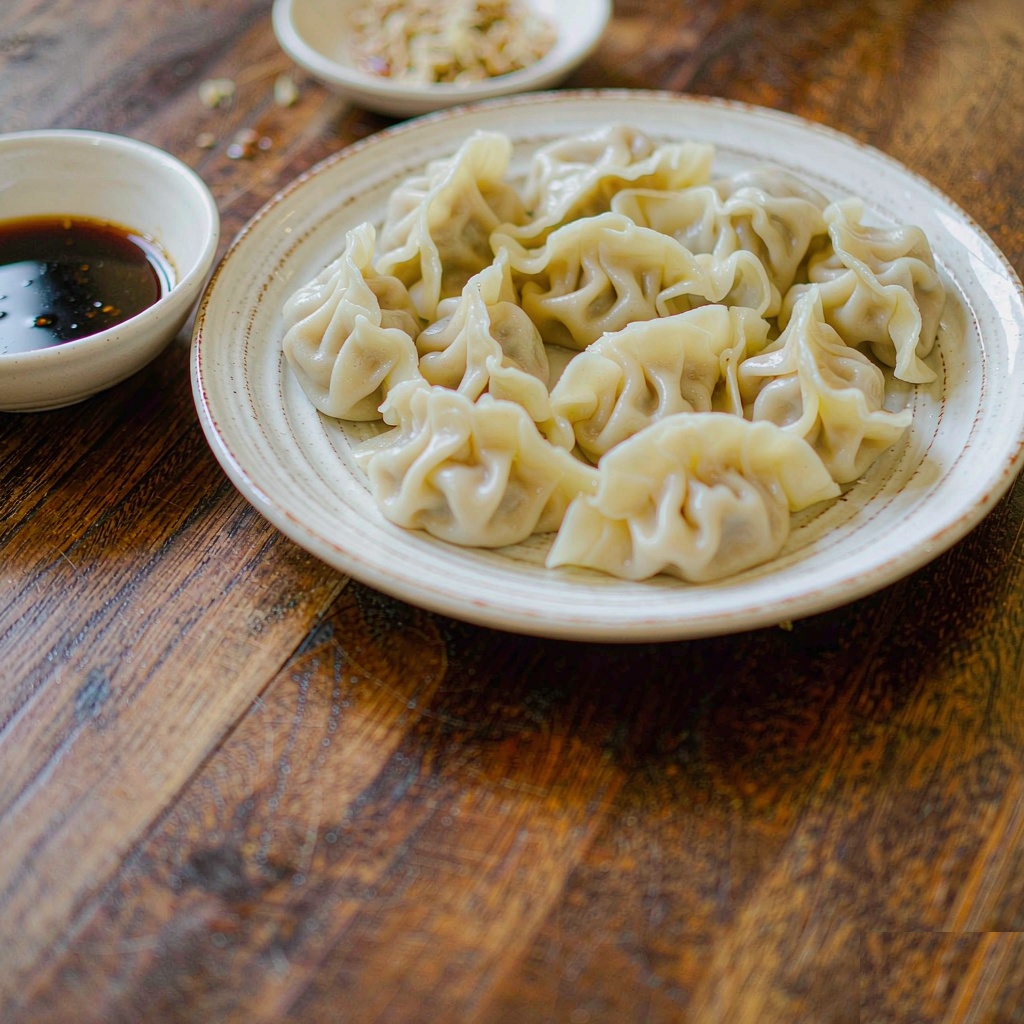
Steaming works too: line the steamer, leave space between dumplings, and give them 10 to 12 minutes over high steam. Pan-frying turns them into pot stickers, guotie, their crisped-bottom sibling. The dip matters as much as people claim. In the northeast it is a crushed raw garlic sauce; elsewhere it is black vinegar with slivers of ginger, and chili oil for anyone who likes heat. At breakfast stalls you will find them next to congee and baozi, and if you want the broader picture of what locals eat in the morning, this guide to breakfast in China puts dumplings in their daily context.
Who jiaozi suit, and who should think twice
Jiaozi are one of the friendliest dishes in the Chinese repertoire. They suit families, because everyone can wrap together and the raw dumplings freeze beautifully on a tray before being bagged for later. They suit travelers on a budget, since a plate of a dozen at a local shop often costs less than a coffee in a hotel lobby. And they suit cold weather, which is exactly why the north eats them all winter and, above all, at Lunar New Year, when whole households wrap them past midnight. Their place in the holiday table is part of a much bigger story told in this guide to Chinese festival foods.
A few people do need to be careful. Anyone with celiac disease or gluten intolerance should skip the wheat wrappers entirely. The filling and the dipping sauces carry a fair amount of sodium, so people managing blood pressure should go easy on the soy and skip the extra salt. Diabetics should remember that a dozen wrappers equal a serious hit of refined carbohydrate. Very young children can choke on the slippery whole dumplings, so cut them up. And while this is a personal note rather than medical advice: a plate straight from the boiling pot is scalding inside, and the broth filling is exactly the part that burns your mouth. Wait a full minute before the first bite.
Regional twists and the tips that save your batch
Travel and the dish changes shape around you. In the northeast, pork gets paired with pickled Chinese cabbage, sour and sharp, a combination born of long winters. Shandong cooks stuff theirs generously, sometimes almost overstuffed, and boil them big. Along the northwest, halal kitchens fold lamb with summer squash or scallion, heavy on the white pepper. Further south people bake or pan-fry them more often, and the Cantonese took the idea toward delicate translucent skins and shrimp. If your interest is the whole morning-market scene, from dumpling stalls to soy milk kettles, this field guide to zao fan and China’s morning markets is worth your time before a trip.
Five tips that have rescued my own batches more than once: squeeze the cabbage until your forearms complain, because watery filling is the number one failure. Never overfill; a tablespoon is plenty until your fingers learn the feel. Keep a small bowl of water nearby and dab the wrapper rim if it will not seal. Freeze spare dumplings on a floured tray first, then bag them, or you will pry apart one fused lump in a month. And taste the filling before folding by microwaving a teaspoon of it for fifteen seconds, then adjusting salt while it is still easy to fix.
I still roll wrappers worse than that grandmother in Shenyang, and probably always will. But every time I hear the pot lid rattle and catch the smell of vinegar and ginger on the table, I am back in her kitchen, and that, more than the recipe, is what jiaozi are for.