

Flinging yourself off a cliff and floating on warm rising air is the closest most of us will get to flying like a bird, and China has quietly become one of Asia’s most exciting places to do it. A China paragliding trip can mean a ten-minute tandem hop over a river valley or a two-week certification course that leaves you licensed to fly solo. In this guide we cover the best sites, where to train, what it costs, and how to stay safe while you chase the thermals.
The site that serious pilots talk about first is Linlu Mountain (Linzhou) in Henan, where the Taihang cliffs generate reliable thermals and the town has hosted national competitions for years. It is a genuine paragliding China best site for both beginners and rated pilots, with a long launch ridge and a wide, grassy landing field. In Hebei, the hills around Zhangjiakou — a few hours from Beijing — double as a training ground in spring and autumn and a snow sports area in winter, which makes it convenient for visitors already in the capital. Sichuan’s western valleys and Yunnan’s high plateaus both offer spectacular ridge soaring, while Guangxi’s karst towers give you a backdrop you will not find anywhere else.
If your goal is a tandem flight rather than a license, almost any of these sites will strap you to an instructor for ¥500–¥900, including an onboard helmet-camera video. A full beginner course (usually seven to ten days, covering ground handling, theory, and your first solo flights) runs roughly ¥8,000–¥15,000 including equipment rental, with the option to buy your own wing afterward for ¥6,000–¥12,000. We’ve sent travelers here and the schools that work best are those affiliated with international rating systems, where the syllabus and sign-off are recognized abroad.
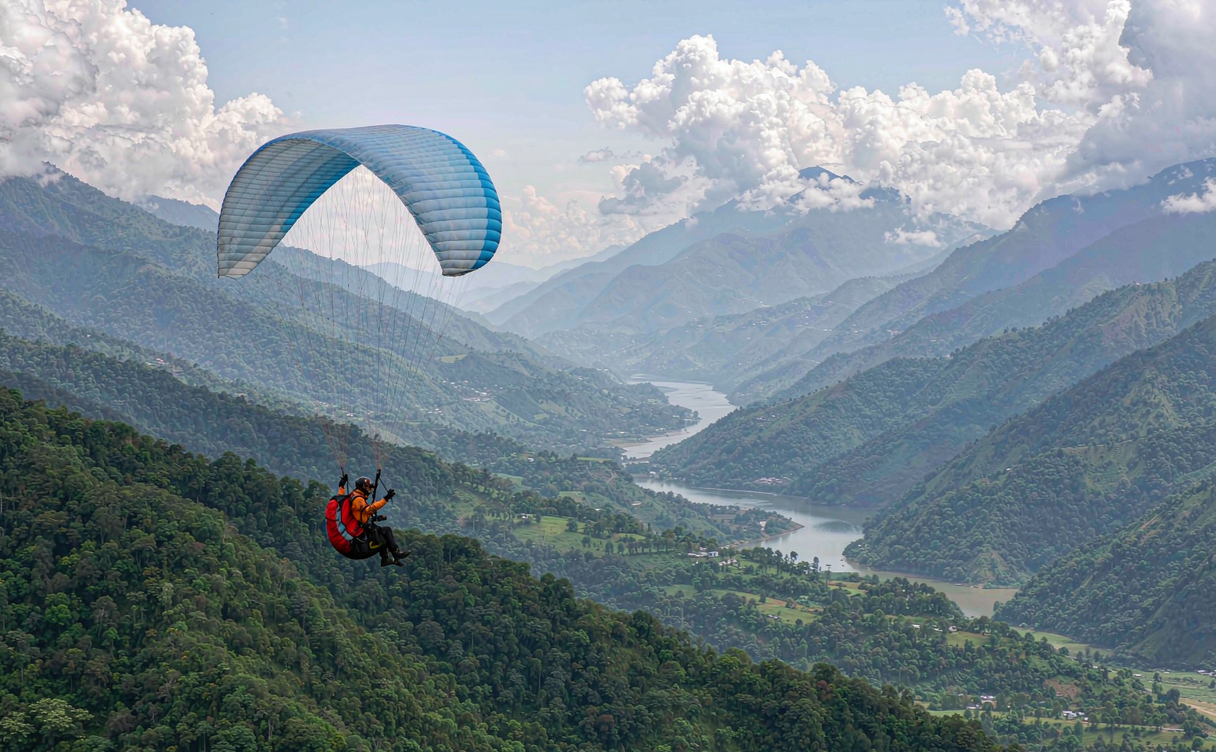
Weather is everything in this sport. The best paragliding mountains China offers sit where late-morning sun heats a slope enough to push air upward, so most launches happen between 9 a.m. and noon. Spring (April–May) and autumn (September–October) bring the stable, buoyant air that pilots love, while the summer monsoon makes afternoons dangerous and winter shuts down the northern sites entirely. Always check the local forecast for wind speed at launch height, not just at the valley floor — a breeze that feels gentle below can be gusting at the top.
For travelers who also enjoy moving under their own power, our China hiking treks guide maps the trails that climb to several of these launch ridges, so you can earn your view on foot before you fly it. Pairing a trek with a flight is a satisfying way to experience the same mountain from two angles in one day.
Getting to the sites is half the adventure. Many launch areas sit an hour or two from the nearest city, so a mix of high-speed rail and a local driver works best. If you prefer two wheels, our China cycling routes guide includes climbs that end near a couple of the better-known paragliding hills, letting you pedal up and fly down. Either way, plan to arrive the day before your flight so you are rested and the weather window is not your only one.
The community around China air sports has grown fast, and most sites now have a clubhouse or guesthouse where pilots swap stories and wind readings over hotpot in the evening. That social side is part of the appeal: you will meet locals who have been flying these ridges for a decade and who know exactly which thermal kicks off after the fog lifts. If you are documenting the trip, our China photography tour guide has tips for shooting fast-moving subjects against bright sky without blowing out the highlights.
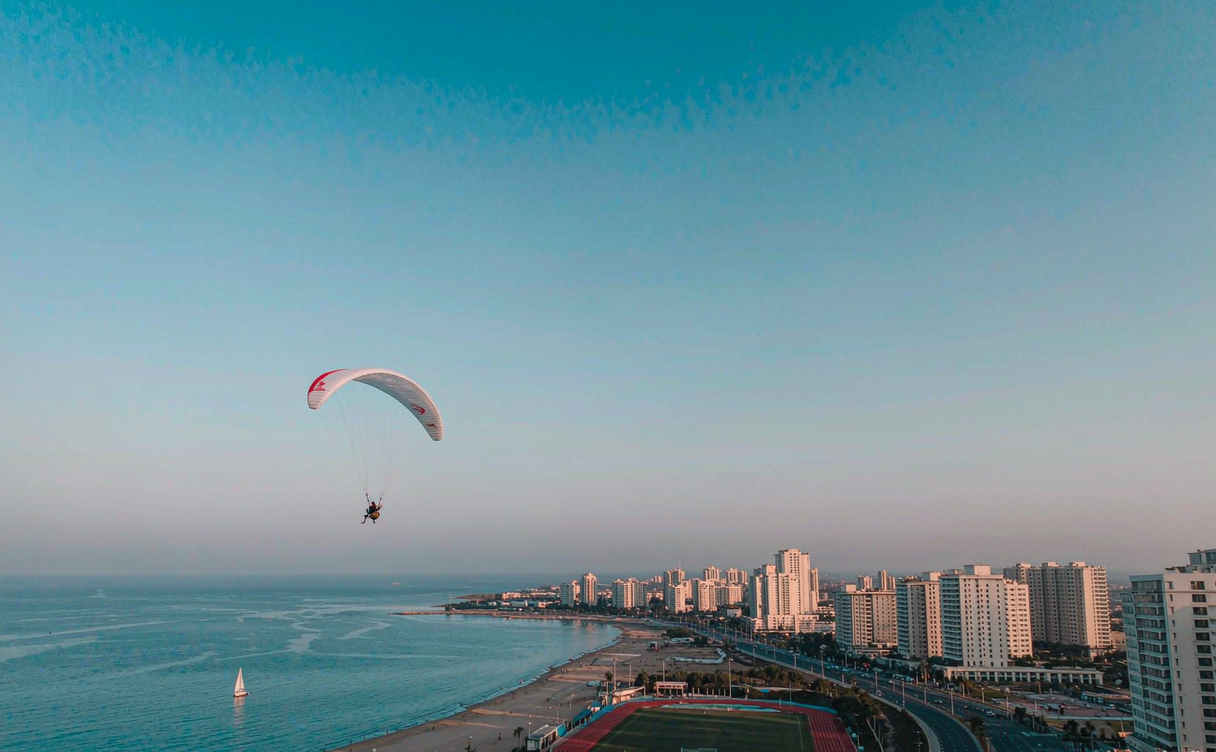
Safety starts with your gear and your ego. Inspect your harness and reserve parachute before every flight, never fly beyond your rating, and walk the landing field at least once so you know where the power lines and fences are. Foreign visitors do not need a Chinese license to fly tandem, but to fly solo you must carry an internationally recognized rating and proof of insurance — and you should keep both on your phone and in paper form. The Wikipedia article on paragliding is a solid place to review the physics of lift and the standard international ratings before you book a course.
One practical note: Chinese airspace is controlled, and some ridges sit near military or commercial routes. Licensed schools handle the paperwork, but if you are traveling with your own wing, declare it at customs and confirm with your school that the site is approved for foreign pilots. Flying without that clearance is the fastest way to have your gear confiscated and your trip ruined.
A sensible China adventure travel plan might combine three or four sites in one region — Henan and Hebei in the north, or Sichuan and Yunnan in the west — rather than crisscrossing the country. Give yourself a rest day every third flying day; paragliding is mentally taxing, and fatigue is when mistakes happen. Local food near the northern sites leans hearty (noodles, dumplings, lamb), while the southwest serves brighter, spicier fare that refuels you after a long walk up the hill.
Learn the rhythm of the day and the mountain will reward you. Sunrise light, a stable breeze, and a pilot who respects both are all you need for a flight you will describe for years.
Understanding the ratings helps you book the right experience. A tandem flight needs no rating at all — you are simply a passenger strapped to an instructor. A beginner course typically ends with an internationally recognized beginner license, which lets you fly supervised at home clubs abroad; intermediate and advanced ratings add cross-country and competition skills. Most Chinese schools teach in Mandarin, so if your Chinese is limited, arrange an English-speaking instructor in advance or travel with a translating friend, because clear communication matters when you are 300 meters up and deciding whether to push forward or scratch the flight.
The gear you will handle is simpler than it looks: a wing (the canopy), a harness with a reserve parachute, a helmet, and a vario that beeps when you hit rising air. Buying your own kit after the course costs roughly ¥6,000–¥12,000 for a beginner wing and another ¥2,000–¥4,000 for harness and reserve, and reputable schools will help you choose a size matched to your weight. Never borrow unknown equipment — a poorly packed reserve is the one failure with no backup, and the pilots who cut this corner are the ones you read about in accident reports rather than meet at the clubhouse.
Northern sites like Linzhou and Zhangjiakou suit spring and autumn, while Sichuan and Yunnan fly well into late autumn thanks to their milder climates and stronger high-altitude thermals. Build your route around two or three sites in one region rather than crisscrossing the country, and leave a rest day every third flying day so fatigue never clouds your judgment. The social side matters too: every major site has a guesthouse where pilots share wind readings over hotpot, and the local knowledge you pick up there is worth more than any printed guide.
Watch the forecast like a local. The useful number is wind speed at launch height, not in the valley, and many pilots use a free wind app plus the club’s morning report before committing. If the report is marginal, the school will cancel — argue and you will simply be refused, so build that flexibility into your itinerary from the start.
Finally, respect the airspace. China’s skies are controlled, and some ridges sit near commercial or restricted routes. Licensed schools handle the clearances, but if you travel with your own wing, declare it at customs and confirm with your school that the site is approved for foreign pilots before you ever clip in. Carry your rating and insurance on your phone and in paper form, because a ranger or official may ask to see both with little notice.
Plan transport before you book the wing. Remote ridges are unreachable by bus, so a rail-plus-driver combination saves time and stress.
Document the trip the right way. Fast wings against bright sky are tricky to shoot, so learn your settings before you leave the ground.