

Our China hot spring resorts guide exists because the country is one of the most geothermally gifted on earth, and most foreign visitors never use it. From volcanic Yunnan to the granite hills outside Nanjing, natural hot spring pools sit in nearly every province, and on our last trip we watched a client who had spent a week in frozen Harbin step into a 42°C outdoor pool ringed by snow and declare it the best hour of his trip. A China hot spring resorts guide has to do more than list names — it has to explain where the water is real, what it costs, and how to book without a Chinese-language app.
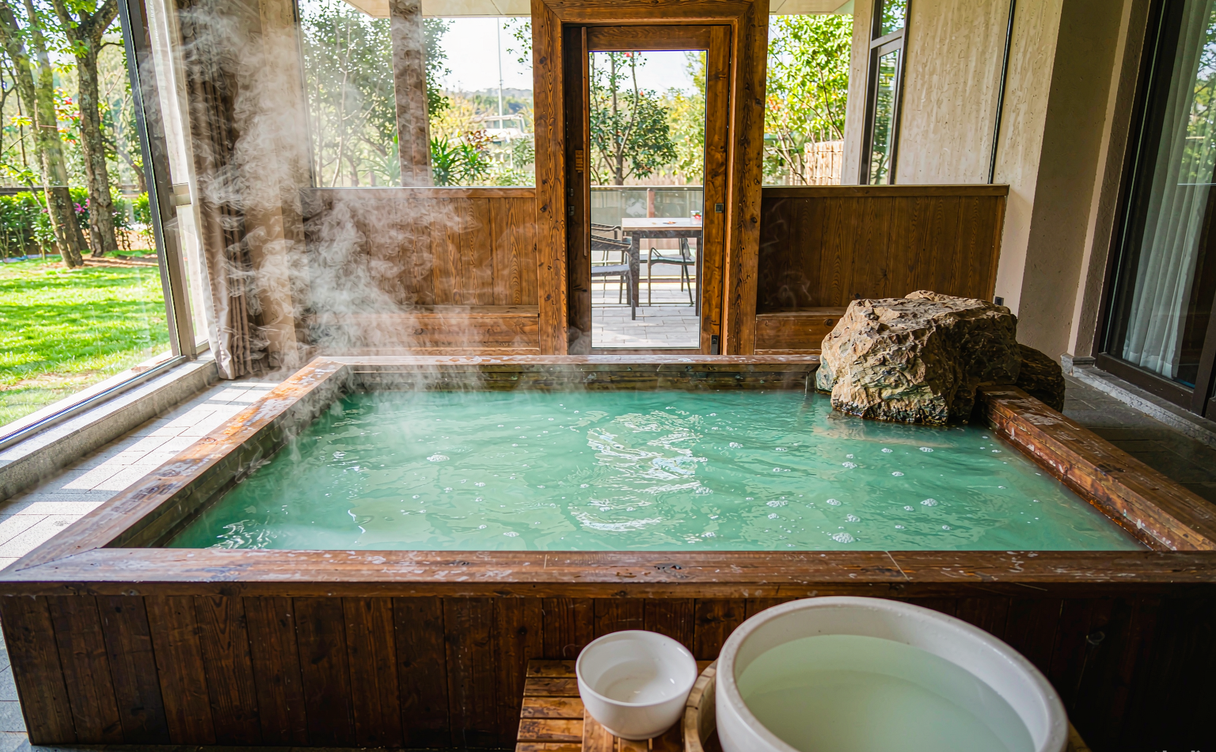
Why soak in China
The Chinese have soaked for two thousand years, and the modern resort model pairs that tradition with clean, filtered, mineral-rich water and good food. The water at most natural springs carries sulfur, lithium, or radon in small, safe amounts, and the resorts pipe it straight from the source. The best hot springs in China are the ones tied to a real geothermal field rather than a heated tap — ask us and we will tell you which is which for any region you plan to visit.
If this is your first visit to the country, start with our China travel guide for first-timers so the booking apps and transport make sense before you add a spa day.
Where to soak in China
Tengchong, in western Yunnan, is our top pick for serious soakers. It sits on a live volcanic field; the Rehai scenic area bubbles with boiling springs and the nearby resorts pump real geothermal water into private and public pools. A day pass to a Tengchong hot spring resort runs RMB 150–280, and a room with a private in-room tub is RMB 600–1,400 a night. The town is covered in our Tengchong travel guide, which explains how to reach it from Dali or Lijiang by train and bus.
Near Nanjing, Tangshan has been a royal soaking spot since the sixth century; the modern resorts there charge RMB 200–400 for a day entry with multiple themed pools, and the high-speed train from Shanghai gets you there in 90 minutes. In Guangdong, the Conghua wells south of Guangzhou feed large family resorts at RMB 120–250 a day. Up in Anhui, the Huangshan foothill springs (RMB 180–350) let you soak with the granite peaks in view after a hike. For a broader shortlist, our best spring destinations in China ranks ten regions by water quality and crowd level.
China hot spring hotels and what’s bookable today
Most China hot spring hotels sell two products: a day pass (come for the afternoon) or an overnight stay (room plus unlimited pool access). We book through Ctrip or the resort’s own WeChat mini-program; availability is live, and in shoulder season you can confirm a room for tomorrow if you are already nearby. Peak demand is the Chinese New Year period and the cold January–February weekends, when the mountain resorts near Beijing and Hebei double their rates to RMB 1,000–2,500 a night.
For an urban option, Jinan’s Baotu Spring area is famous for its constant-flow springs right in the city; our Baotu Spring guide explains how to see the spring parks and pair them with a nearby bathhouse soak. It is not a resort, but it is the easiest hot-spring culture hit for a traveler based in Shandong.
Hot spring trip tips
A few rules we give every client. First, shower before you enter any public pool — it is expected and enforced. Second, most resorts are clothed pools (swimsuit required), unlike the rare nude-tradition baths, so pack one; the resort shops sell overpriced ones if you forget. Third, limit each soak to 15–20 minutes and step out to cool down, especially after a long flight, because the heat drops blood pressure fast. Fourth, bring a dry bag for your phone because the steam ruins electronics quicker than you think.
We also tell families that the big Guangdong and Jiangsu resorts have shallow children’s pools and slides, while the Yunnan and Anhui mountain springs are quieter and better for couples. Our China hot springs resorts guide hub links out to each region’s full write-up so you can match the water to your trip style.
More regions worth a detour
Beyond the headline names, a few spots deserve a mention. The Huangshan foothill springs in Anhui (RMB 180–350 day pass) let you soak with the granite peaks in view after a hike, and the town of Xianning in Hubei markets itself as a “south of the Yangtze hot-spring city” with a dozen resorts from RMB 150. In the northeast, the wells around Tengchong’s sibling fields in Yunnan’s Ruili are quieter and cheaper if you already be in the west. We steer clients toward the smaller, source-fed resorts over the big waterparks when the goal is the mineral water itself rather than slides and buffets.
Health notes and who should skip
Pregnant travelers and anyone with heart trouble should check with a doctor before long soaks, because the heat drops blood pressure and raises pulse. Children under three are better in the shallow pools than the hot ones, and we keep sessions to ten minutes for them. Drink water between soaks, avoid alcohol in the pools (most resorts ban it anyway), and step out the moment you feel dizzy. Done right, a soak is the most restorative hour of a long China trip; done carelessly, it is a headache — literally.
Best season for a soak
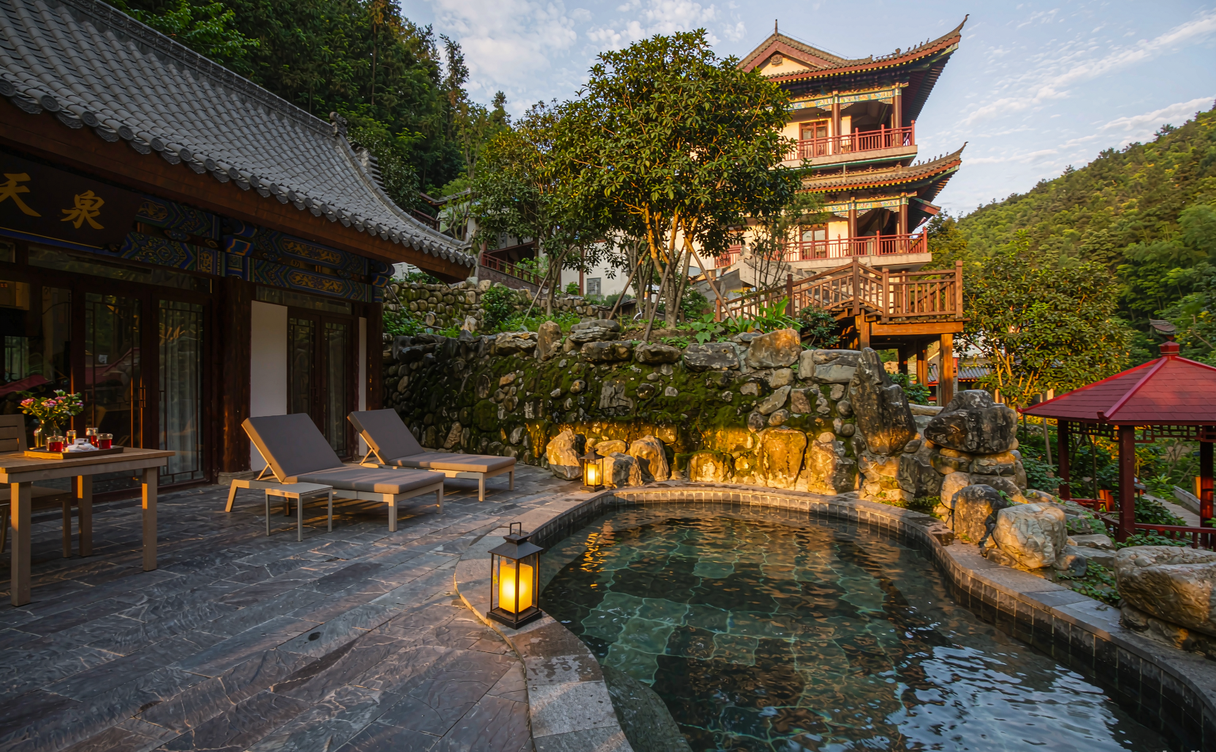
Late autumn through early spring (November to March) is prime time, when the air is cold and the contrast makes the water feel like medicine. The shoulder months of April and October are pleasant and empty. Summer soaking is less common but fine in the highlands of Yunnan and Qinghai, where evenings stay cool. We line up the timing with our best time to visit China overview so a soak slots into the wider weather picture rather than fighting it.
A sample two-stop plan
Day 1 — Fly into Kunming, transfer to Tengchong (flight or long drive), soak at a Rehai-area resort in the evening.
Day 2 — Morning volcano park walk, afternoon second soak, overnight in the same resort.
Day 3 — Move on to Dali or Lijiang, or fly out via Kunming.
For a northern version, base in Beijing, take the high-speed train to Tangshan or a Hebei mountain resort, soak two nights, and return. Either way the cost stays modest compared with a Japanese onsen trip of equal quality — RMB 300–600 per person all-in for a day-plus-soak is normal outside peak.
Before you go
Carry your passport for resort check-in, and bring swimwear and a quick-dry towel; many resorts rent towels but not suits. Most take Alipay or WeChat Pay, so keep some cash or a linked card handy. For the science behind the water, see geothermal hot springs on Wikipedia.