

Tengchong, a sleepy county-level city in the far west of China’s Yunnan Province, sits on the edge of the Himalayan tectonic belt where volcanic heat still rises close to the surface. This Tengchong travel guide walks you through the best time to visit, how to arrive, the top things to do, where to stay, what to eat, and a realistic itinerary built around its geothermal wonders and the famously beautiful Heshun ancient town. Far from the crowds of Lijiang and Dali, Tengchong rewards slow travelers with steaming hot-spring valleys, dormant volcanic cones, and a borderland culture shaped by the old Tea Horse Road and Overseas Chinese families who sent their sons abroad to Myanmar and beyond.
Best Time to Visit Tengchong
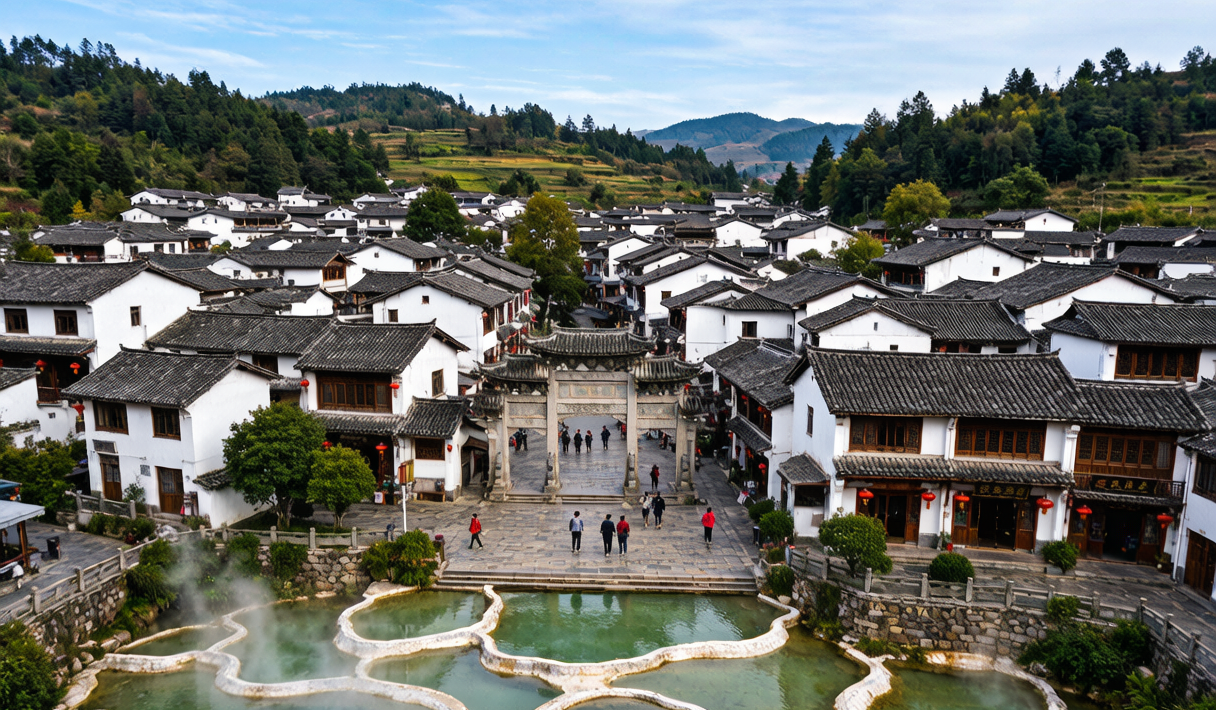
The best time to visit Tengchong is autumn (September–November) and spring (March–May). Autumn brings clear, cool days of 18–24°C, harvest colors across the volcanic fields, and the most reliable hot-spring weather — warm enough outside to make a long soak feel magical. Spring is mild and green, with the ginkgo trees in the village of Jiangdong turning the nearby hillsides luminous yellow by late November. Summers are warm and wet, with afternoon thunderstorms that can wash out a day of sightseeing, while winters are cool (5–15°C) but excellent for soaking, since the geothermal water feels best when the air is crisp.
Because Tengchong sits near 1,600 meters, the UV is strong and nights are cooler than many visitors expect. Pack layers even in peak season, and try to avoid the week-long National Day holiday in early October if you want quiet lanes in Heshun. The town is small enough that a few days of good weather is all you need to see the highlights.
How to Get There
Tengchong has its own airport and a road connection to the rest of Yunnan, though no direct high-speed rail yet. For train connections across the province, check schedules on China Railway (12306).
- By air: Tengchong Tuofeng Airport (TCZ) has direct flights from Kunming, Chengdu, and a few other hubs. From the airport, a taxi or DiDi reaches the town center or Heshun in about 30 minutes.
- By train: There is no station in Tengchong itself; most travelers take the high-speed train to Baoshan or Dali and then a bus or car the rest of the way. Our Dali Yunnan travel guide explains how to use Dali as a rail hub for western Yunnan.
- By road: Long-distance buses and private drivers connect Tengchong with Baoshan, Dali, and Ruili on the Myanmar border. The mountain roads are scenic but winding, so budget extra time and expect fog on early-morning passes.
Top Things to Do in Tengchong
Heshun Ancient Town
The highlight of any list of things to do in Tengchong is Heshun, a 600-year-old town of canals, arched stone bridges, and courtyard homes built by overseas Chinese merchants. Wander the lanes at dawn before the day-trippers arrive, visit the wartime Burma Road museum, and sip tea by the water. It is compact, walkable, and far more atmospheric than its fame suggests.
Tengchong Hot Springs
A Tengchong hot springs soak is the town’s signature pleasure. The Rehai (Hot Sea) geothermal area bubbles with boiling springs, steaming vents, and egg-cooking pools, while nearby resorts pipe the mineral water into private and public baths. Set aside an evening for a long outdoor soak under the stars — the sulfur-rich water is famously good for the skin and a perfect reward after a day of walking.
Volcanic Geopark and Dakongshan
The Tengchong hinterland includes a volcanic geopark with more than 90 dormant cones. Climb Dakongshan for a crater-lake view, or rent a bike to loop the quieter fields. The nearby Beihai wetland is a seasonal birdwatching spot that turns vivid green in summer and draws photographers when the lotus is in bloom.
The Burma Road and War History
Tengchong was a key point on the Burma Road and the site of a major WWII battle to reopen the supply line to Chongqing. The war cemetery and the Heshun wartime museum give a moving account of this chapter, worth a half-day for history-minded visitors who want to understand the town’s global connections.
Where to Stay in Tengchong
Stay inside or next to Heshun ancient town for the most characterful lodgings — restored courtyard guesthouses with wooden beams and quiet gardens. Mid-range stays run about ¥300–600 per night, while hot-spring resorts on the town’s edge cost more but include private pools. If you want chain-hotel reliability, the county seat has standard business hotels a short drive from the sights. Book ahead in autumn, the peak season, and ask whether your room includes hot-spring access so you are not paying twice.
Tengchong Food and Local Specialties
Tengchong’s borderland kitchen blends Yunnan produce with Burmese and Sichuan influence. Don’t miss tupa (a clay-pot rice dish), rolled rice noodles called erkuai, and wild-mushroom hotpots in autumn. The night market near the town center is the easiest place to graze on skewers, sticky rice, and sour teas. For a wider sweep of the province’s flavors, our best things to do in China guide links out to regional food roundups worth bookmarking before you travel.
Tengchong Itinerary
A Tengchong itinerary of three to four days lets you enjoy both the geology and the town:
- Day 1: Arrive, settle into Heshun, and walk the canals at sunset.
- Day 2: Rehai hot springs in the morning, volcanic geopark and Dakongshan in the afternoon.
- Day 3: War-history museums and the Beihai wetland, then an evening soak.
- Day 4 (optional): Day trip toward Baoshan or onward to Ruili.
Many travelers combine Tengchong with a longer Yunnan circuit, using Kunming as the gateway and adding Dali or the Tibetan plateau. The pace here is slow by design, so resist the urge to over-pack the days and let the hot springs do the relaxing.
Tengchong Travel Tips
A few Tengchong travel tips: the geothermal areas are hot enough to scald, so test the water and follow local signage; bring sandals with grip for wet stone paths; and carry cash for small village stalls that don’t take cards. English is limited, so a translation app is essential, and DiDi works well for airport runs. The town is safe and walkable after dark, but restaurants close earlier than in big cities, often by 9 p.m., so eat your main meal before then.
FAQ
Is Tengchong worth visiting for foreign tourists?
Yes — it offers volcanoes, hot springs, and a beautiful ancient town without the heavy crowds of Yunnan’s headline destinations.
Do I need a visa for Tengchong?
Most foreign visitors need a Chinese visa; check current entry rules before you travel.
How many days do I need in Tengchong?
Three to four days covers the hot springs, volcanoes, and Heshun comfortably.
What is Tengchong most famous for?
Its geothermal hot springs and the picturesque Heshun ancient town.
Final Thoughts
This Tengchong travel guide shows why western Yunnan’s quiet corner deserves a place on your map: dormant volcanoes you can climb, steam you can bathe in, and a canal town that still keeps its old rhythm. Time your visit in the best time to visit Tengchong window of autumn or spring, and you’ll share the valleys with locals rather than tour groups. Use our Kunming travel guide as your gateway city, and let Tengchong be the slow, warm finale of a Yunnan journey.