

We get asked the same question again and again by travelers planning their first trip to the mountains here: what do I actually need to carry? A China hiking gear guide has to start with a simple truth. Trails in China are not the wild backcountry you might picture from the Alps or the Rockies. Most famous peaks are heavily developed, with stone steps, railings, snack stalls, and cable cars. That changes what you pack. You rarely need a full mountaineering kit for a day on a well-built path, but you do need the right shoes and rain protection, because the weather and the crowds can both surprise you.
The single most common mistake we see is people bringing gear suited to raw wilderness and then sweating through a paved staircase, or the opposite: arriving in sneakers for a real mountain path and regretting it by noon. So we split the advice by trip type. Think first about which kind of hike you are doing, then build the list around it. That keeps your pack light and your feet happy.
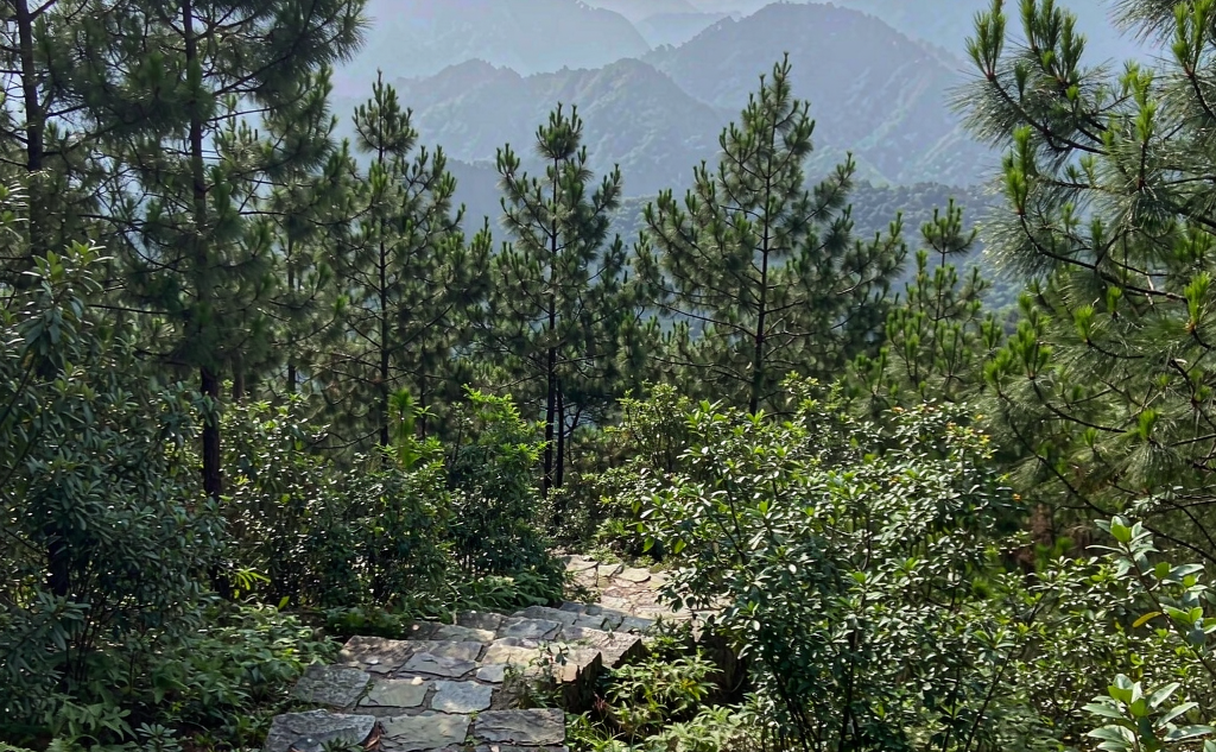
For a one-day hike on a famous mountain with stone steps, comfort and grip matter more than ruggedness. Mount Tai, Mount Huangshan, and Mount Emei all fall into this group. The paths are stone, often steep, and polished smooth by millions of feet. Here the best shoes for China treks are a sturdy trail runner or light hiking shoe with a grippy sole, not a heavy boot. You want ankle freedom for the stairs and enough cushion for the descent, which is where knees take a beating. Save the stiff leather boots for loose dirt and scree. A China trail packing list for this kind of day can be almost minimal: good shoes, a daypack, water, a rain shell, and snacks.
Multi-day treks on the plateau are a different world. Routes like Tiger Leaping Gorge or longer walks in Tibet, China and Xinjiang, China demand real backpacking gear: a framed pack, a sleeping system rated for the cold, and serious layering. When we talk about altitude gear China travelers need, we mean more than a warm jacket. You need sun protection at altitude, a way to purify water, and a basic understanding of how your body reacts above 3,000 meters. Our China altitude sickness guide goes deep on acclimatization and medication, and we recommend reading it before any high route.
Winter hikes along the snow line need yet another setup. Ice and compacted snow on shaded steps turn a pleasant walk into a slip risk, so we carry microspikes that slip over any shoe, plus trekking poles for balance. A down or synthetic midlayer becomes essential even on a short walk, because wind chill at a summit viewpoint in January is no joke. The point of a China hiking gear guide is not to scare you into overpacking, but to match the kit to the season and the terrain.
Layering is the backbone of what to pack for hiking China in any region. We use a three-part system: a wicking base layer, an insulating midlayer like fleece or light down, and a shell that blocks wind and rain. Chinese mountains are famous for sudden weather swings, and you will often start a climb in sweat and finish it in cold wind at a viewpoint. Being able to add and remove layers without stopping for long keeps you safe and comfortable. Cotton has no place on the list; once it is wet it stays wet and cold.
Rain gear deserves special attention in the south. Mountains like Huangshan and the ranges around Guilin can summon a downpour in twenty minutes, and the stone steps get slick fast. We pack a packable rain jacket and a pack cover, and in summer we keep a small foldable poncho as backup. The Huangshan Yellow Mountain guide explains why the cloud sea is worth the weather gamble, but you will enjoy it more dry. Umbrellas are common among local hikers and genuinely useful on paved paths, though they tie up a hand.
Trekking poles and knee braces earn their place on longer or steeper days. Poles take load off the knees on descent and give stability on wet steps; many travelers rent them at the trailhead for a few yuan. A simple neoprene knee sleeve helps if you already have cranky joints, and we have watched it turn a painful descent into a manageable one. None of this is high tech, but it is the difference between finishing smiling and finishing sore.
Headlamps are non-negotiable for the night climbs. To catch sunrise on Tai or Huangshan, you often start at 2 or 3 a.m. in the dark, and the upper sections are unlit. A headlamp with fresh batteries, plus a small backup, is part of our China hiking essentials for any summit sunrise plan. Test it the night before; a dead lamp on a crowded dark stair is miserable. Warm gloves and a hat ride in the pack even in summer, because the pre-dawn wait at a peak can be bitter.
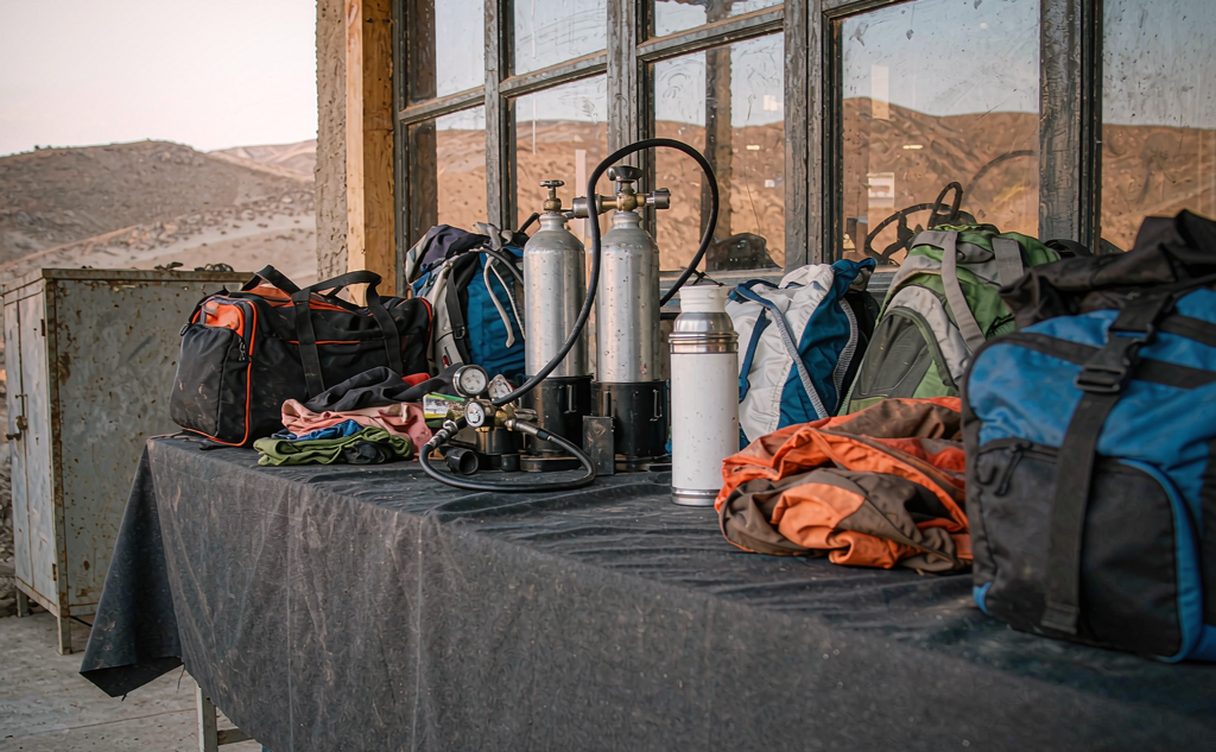
On high routes, water and purification matter more than people expect. You can buy bottled water at stalls on developed mountains, but on remote plateau trails you must carry or filter your own. We bring a lightweight filter or purification tablets and a bottle we can refill from streams after treating. Drink more than feels necessary at altitude, where dehydration sneaks up on you. For hiking safety China travelers should also carry a basic first aid kit: blister plasters, tape, painkillers, and any personal medication. General China travel safety tips cover wider precautions worth reviewing before you go.
Luggage storage and cable cars are part of the gear calculus. Most trailheads and scenic area entrances have attended storage where you can leave the big bag and hike with a daypack; we use it whenever we are passing through a mountain on the way to another city. Cable cars save knees and time but cost money and remove you from the walk; we treat them as a tool, not a failure. Decide before you start, because the upper paths and the car stations are rarely the same route, and backtracking wastes a day.
What to buy here versus bring from home is a real question. Good trail shoes, quality rain shells, and poles are often cheaper and easier to buy at home, where you can try them on. But you can buy perfectly serviceable rain ponchos, snacks, water, and basic first aid at any Chinese convenience store or scenic-area shop. Sunscreen and lip balm sell everywhere. The one thing we tell everyone: do not count on finding your exact size or brand at a remote trail town, so bring the items your comfort depends on.
Lithium battery and power bank rules affect what you pack. Spare lithium batteries must go in carry-on luggage, never checked, on flights into and within China, and most airlines limit the capacity of power banks, commonly to 100 watt hours without approval and 160 with it. Carry your power bank in the cabin and keep it where you can show it if asked. A dead phone in the mountains is more than annoying; it is your map, translator, and ticket, so size the bank for a full day plus reserve.
The reality of hiking in China shapes every choice above. Trails are busy in peak season, especially holidays, and the crowds change your pace and your patience. Supply points mean you can travel lighter than in true wilderness, but they also mean you should still carry the essentials in case you miss the last stall. Developed paths are a gift to less experienced hikers, and with the right kit they are genuinely enjoyable rather than intimidating. For altitude medication and serious high routes, the Wikipedia article on altitude sickness is a solid primer on why acclimatization beats any pill.
We compare the big scenic mountains in our China national parks guide, which is where we lay out what each one demands of your pack. Read it alongside this gear list so the two click into place. A Tiger Leaping Gorge trek is a good example of a route that needs more than a daypack but less than a full expedition, and our dedicated page details the logistics.
We close with the simplest advice: pack for the specific mountain in front of you, not for a generic idea of hiking. A China hiking gear guide is only useful if it changes what is in your bag tomorrow morning. Check the forecast, weigh the cable car trade, lace the right shoes, and head up with a light pack and a clear plan. The trails here are crowded and civilized, but the views at the top are real, and the right gear is what lets you enjoy them instead of enduring them.