

Most foreign travelers have never heard of Dongying, and that is exactly why we like sending curious ones there. This is a city built on two stories: the Yellow River, which reaches the sea here after a journey of thousands of kilometers, and the oil fields that turned a flat river delta into a modern industrial town. A Dongying travel guide has to be honest about what the place is. It is not a postcard old town with lantern streets. It is a working city at the edge of one of the most important wetlands in northern China, where the river finally dissolves into the Bohai Sea. For travelers who want nature, birdwatching, and a slice of real Chinese industrial life away from the tourist trail, it is a quiet reward.
The Yellow River Delta is the headline. Where the river meets the sea, it spreads into a vast mosaic of reed beds, tidal flats, and shallow water that shifts with the seasons. The Yellow River Delta Dongying wetland reserve protects this meeting point, and it is one of the best places in the country to see migratory birds on a massive scale. In autumn and spring the sky fills with cranes, geese, and shorebirds resting on a journey that spans continents. The famous red carpet is the seepweed, a salt-tolerant plant that turns a deep crimson across the mudflats in late summer and autumn, painting the ground in a way that photographs cannot quite capture.
Dongying itself grew up as an oil city. The Shengli Oilfield, one of the largest in China, is headquartered here, and you will see pump jacks and pipeline corridors along the outskirts. We find this side genuinely interesting: a city where the modern economy was quite literally pumped out of the ground, sitting next to a river that has been shaping land for millennia. The contrast is the point. You can spend a morning among reeds and red weed, then watch the working port and refineries in the afternoon, and that mix tells you more about contemporary China than many famous sites.
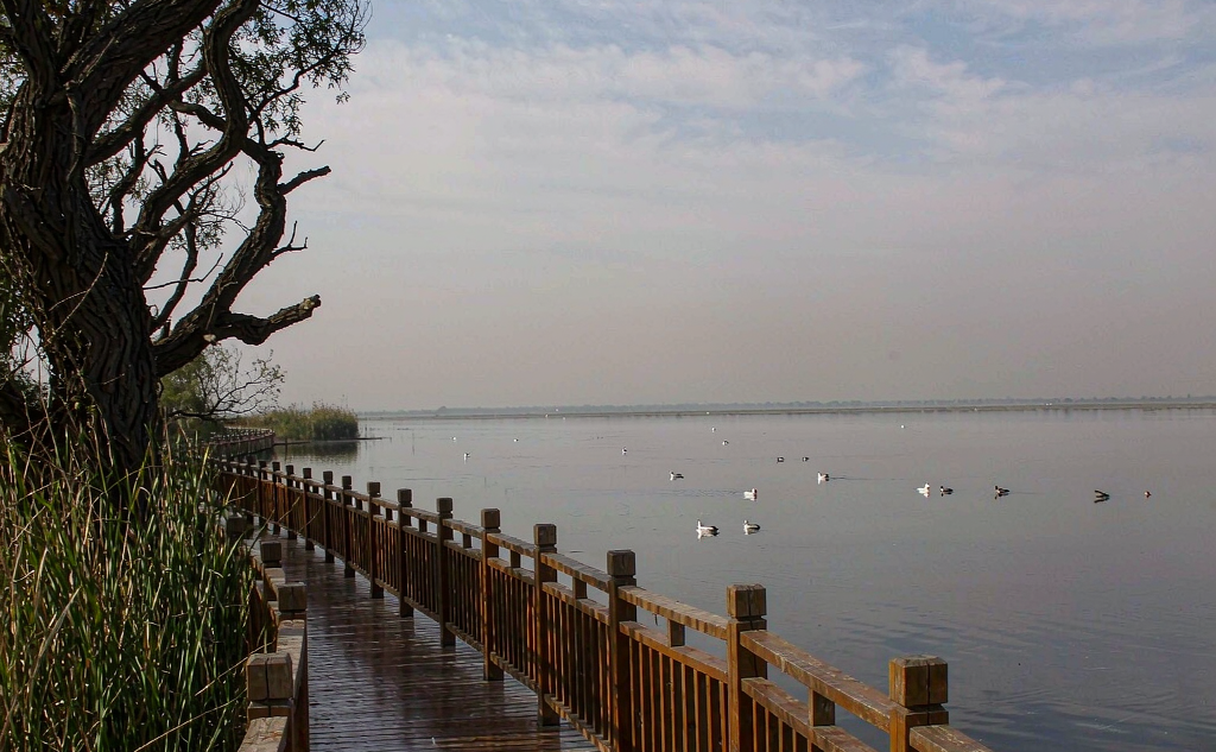
Things to do in Dongying start, for us, at the wetland reserve. A wooden boardwalk and viewing towers let you walk out over the marsh without damaging it, and the bird hides are calm places to sit with binoculars. Bring your own if you can, because rentals are limited and English signage is sparse. The river mouth itself is worth the trip: standing where the muddy Yellow River water pushes into the blue green Bohai is a strange, flat, enormous experience. On clear days the line between fresh and salt water is visible as a curl of silt.
The red carpet that gives the delta one of its famous photographs is worth planning around. The seepweed, a salt loving plant that carpets the tidal flats, begins to blush in late summer and reaches its deepest crimson in September, when whole expanses of mud turn the color of dried wine. We tell photographers to come at low tide in the late afternoon, when the wet flats reflect the sky and the weed glows against the blue. It is a fragile system, though, and the boardwalks exist so visitors do not crush the beds, so stay on the paths and resist the urge to walk out for a closer shot. The reserve rangers are serious about this, and rightly so.
The city also has a small but tidy set of museums. The Yellow River Culture Museum lays out the river’s path and the engineering that has tried to control it, and the local history museum covers the oil era. Neither is large, but both give context that makes the landscape outside make sense. For a slower afternoon, the old streets near the city center have noodle shops and evening food stalls where you can watch ordinary life rather than a curated show. Dongying is not a place for ticking off monuments; it is a place for watching a landscape and a economy work.
Getting to Dongying is easier than the name suggests if you route through Jinan. If you are working out how to get to Dongying, the cleanest path is the high speed rail from Jinan, with a short onward hop by road to the delta. Our Jinan travel guide explains the provincial capital an hour or two southwest by high speed rail, and from there trains run to Dongying in well under two hours. There is also a regular rail link and a small airport with limited flights, mostly domestic connections through bigger hubs. Driving from Jinan takes roughly two hours depending on traffic, and a private car helps if you want to reach the more remote parts of the delta. For most foreign visitors the cleanest plan is to arrive via Jinan or Qingdao and use the train.
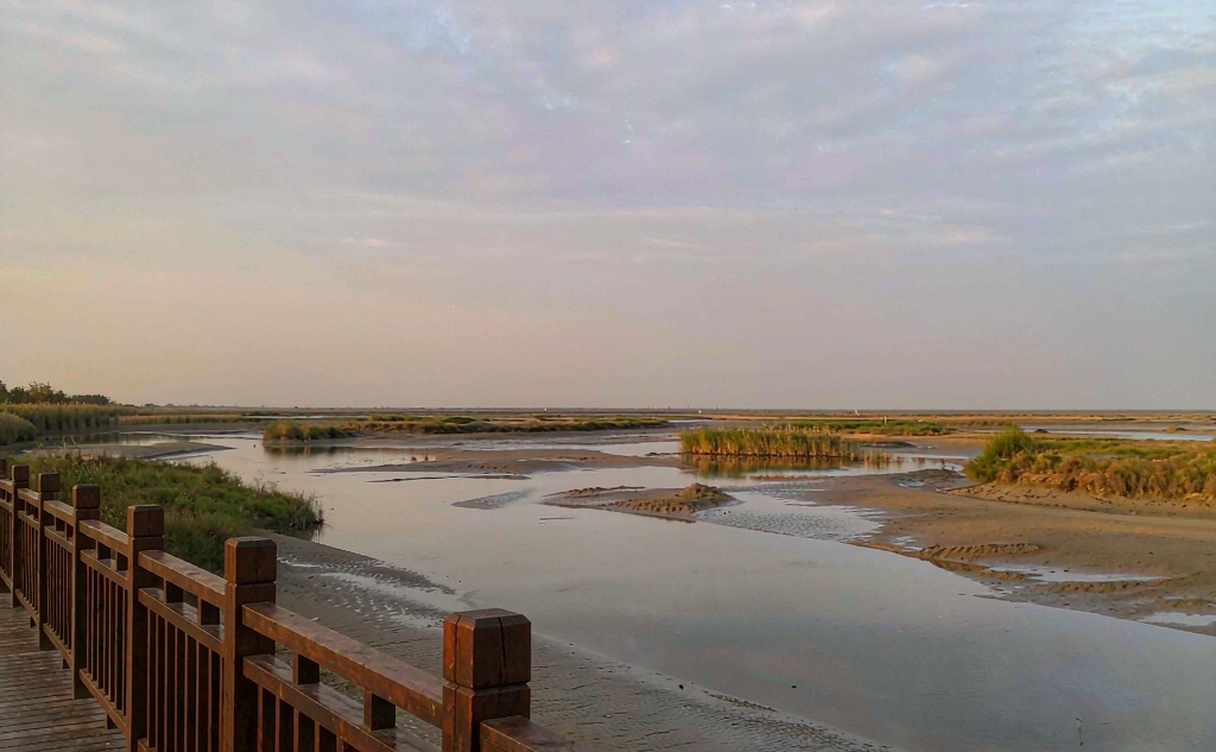
The best time to visit Dongying tracks the birds and the weed. Late summer through autumn, roughly August to October, is when the red seepweed colors the flats and the autumn migration peaks. Spring, around April and May, brings the return migration and milder weather. We would avoid deep winter, when wind off the Bohai is brutal and many wetland facilities run reduced hours, and we would avoid the hottest weeks of July, when the mosquitoes in the reed beds are relentless. Always check the reserve’s opening status before you set out, because tidal and weather conditions sometimes close sections.
A realistic Dongying itinerary is one or two days. Day one: arrive from Jinan, drop bags at the hotel, and spend the late afternoon at the wetland boardwalk when the light is low and the birds are active. Day two: go early to the river mouth for sunrise over the water, visit a museum in the middle of the day, and take an evening train or car back toward a bigger city. If you have a second night, use it for a slow seafood dinner and a walk along the city’s riverfront promenade. You do not need more; the place is compact and the draw is the delta, not the downtown.
Where to stay in Dongying is straightforward. The city has a normal range of Chinese business hotels, from decent mid range chains to plusher options near the administrative center. None will have much English spoken at the front desk, so have your booking confirmation ready on your phone and a translation app open. We suggest staying central so you can reach food and the road to the delta without long drives. Book ahead if you come during a holiday or a bird festival week, when rooms tighten.
What to eat in Dongying is one of the easy joys. Being on the Bohai, the seafood is the star: clams, prawns, crabs, and small fish that taste of the cold northern sea, often simply steamed or boiled and dipped in a little vinegar and garlic. The river system also gives fresh water fish and a local style of river shrimp. Try the flatbread and congee breakfasts at neighborhood shops, and do not miss the cheap skewers and fried snacks that appear at dusk. If you want a wider coastal scene, the famous seaside city of Qingdao a few hours south offers more variety, but Dongying’s seafood is humbler and closer to the source.
Practical tips make or break a Dongying trip. English signage is limited, especially at the reserve, so download offline maps and a translation app before you leave the hotel. Ride hailing apps work, but the drivers rarely speak English, so pin your destination on the map and show it. Tickets for the wetland area are usually modest but can require on site purchase or a local app, so carry cash and your passport, and confirm the process when you book. For train travel logistics across the region, our China high speed train guide for foreigners walks through booking and station routines.
We think Dongying suits a particular kind of traveler: someone who would rather see a working Chinese city and a world class wetland than another crowded scenic gate. It rewards patience and a good pair of binoculars. The Yellow River, whose delta you are standing on, is a fragile, shifting place, and visiting with respect for its rules keeps it intact for the birds that depend on it. For broader trip ideas across the country, our guides to the best things to do in China list the experiences we send travelers to most.
We will close with the simple advice we give everyone headed here. Go for the river meeting the sea, stay for the birds and the honest working city, and lower your expectations of polish in exchange for authenticity. Dongying will not wow you with grand architecture, but it will show you a corner of China that most visitors never see, and that is worth the train ride from Jinan more than we can easily explain.