

Planning your first trip to China can feel overwhelming, but the classic Beijing, Xi’an, Guilin and Shanghai route delivers history, scenery and modern city life in one smooth loop. This China 10 day itinerary first time plan is built around high-speed rail so you spend time exploring rather than waiting in airports. Below is a practical, day-by-day breakdown with pacing, bullet-train hops and realistic costs to help you build the best 10 days in China route without the stress.
Days 1–3: Beijing, the Imperial Capital
Arrive in Beijing and give yourself a half-day to recover from the flight. The city is huge, but most highlights sit along two convenient axes, so you can move efficiently.
Day 1: Settle in around the Wangfujing or Qianmen area. Take a gentle evening walk through Qianmen Street and the nearby hutongs to get a feel for the city. Dinner at a local noodle shop costs about 35–60 yuan.
Day 2: Visit the Forbidden City in the morning. Book tickets online three days ahead, since daily entries are capped. Allow three to four hours. Walk north to Jingshan Park for the classic overlook of the palace roofs. In the afternoon, stroll Tiananmen Square and then the Temple of Heaven. Entrance fees total roughly 120–180 yuan.
Day 3: Take a day trip to the Great Wall at Mutianyu. A round-trip shuttle bus plus cable car runs about 180 yuan, and the wall is far less crowded than Badaling. Return to the city for a Peking duck dinner, budget 150–250 yuan per person.
Beijing pacing is busy but walkable. Build in café breaks so the first leg of your China bullet train 10 day plan does not exhaust you before Xi’an.
Days 4–5: Xi’an, the Ancient Heart
Take the morning high-speed train from Beijing West to Xi’an North. The G-train covers roughly 1,200 km in about 4.5 to 5.5 hours, with second-class seats around 515 yuan. This is the backbone of any Beijing Xi’an Guilin Shanghai 10 days schedule.
Day 4: Spend the afternoon on the Xi’an City Wall. Rent a bicycle and ride the 14 km loop (about 45 yuan including bike). At sunset, head to the Muslim Quarter for street food — roujiamo (meat burger) and biangbiang noodles run 15–30 yuan each.
Day 5: Go early to the Terracotta Army, about one hour from the center by tourist bus or DiDi (80–120 yuan round trip). Plan three hours at the pits and the on-site museum. In the evening, see the Big Wild Goose Pagoda light show, free to view from the square.
Xi’an is compact, so two full days are enough. If you want to learn how to plan 10 days in China on a tighter budget, Xi’an is where local food costs the least on this route.
Days 6–7: Guilin, the Karst Countryside
Fly or take an overnight train south? For this itinerary, fly Xi’an to Guilin (about 2 hours, 600–900 yuan if booked early). Alternatively, a train via Guangzhou is possible but eats a full day, so flying keeps your China itinerary 10 days cost predictable.
Day 6: Arrive in Guilin and transfer to Yangshuo (a 1.5-hour bus, 30–50 yuan). Check into a riverside guesthouse. Walk West Street in the evening for casual bars and local cuisine.
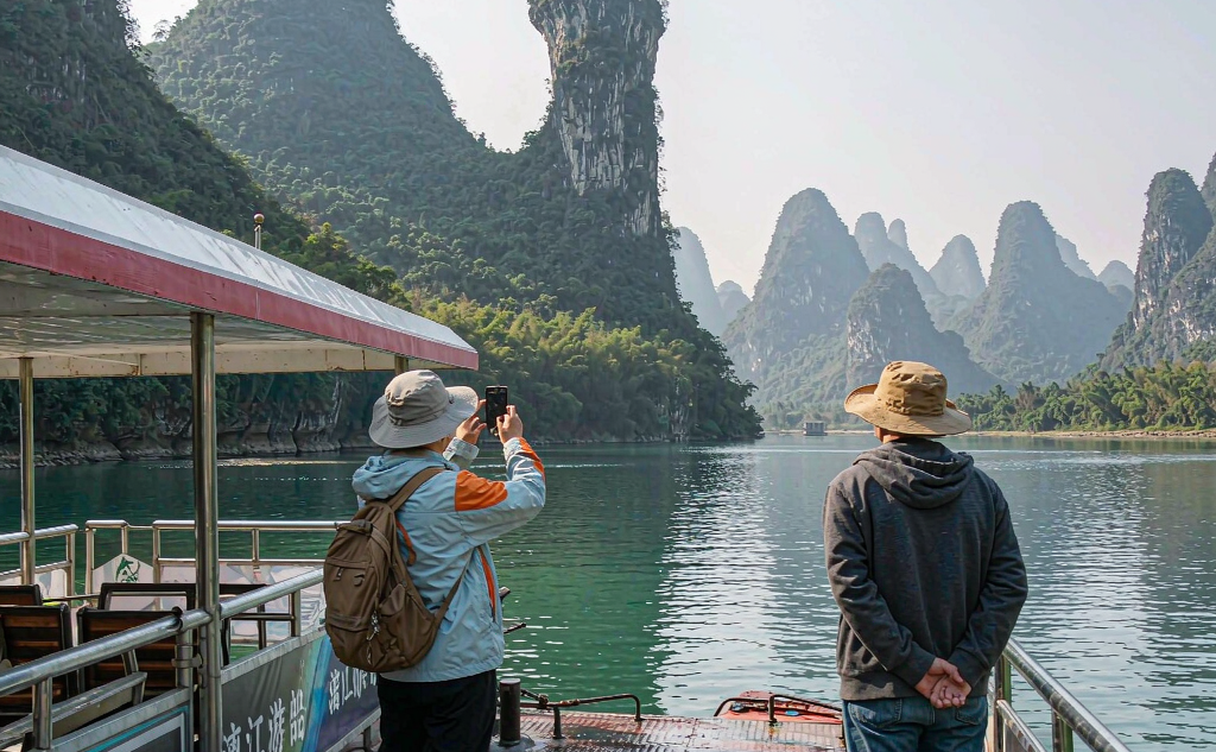
Day 7: This is the highlight. Take the Li River cruise from Guilin to Yangshuo, a four-hour journey through towering limestone peaks and fishing villages. A public cruise seat costs about 210–360 yuan depending on the boat class. Bring a jacket; the river breeze is cool even in spring.
After the cruise, rent an electric scooter and explore the Yulong River countryside. Bamboo rafting on the Yulong costs roughly 100–200 yuan per raft.
Guilin is the slow, scenic middle of the trip. Sleep here two nights so the pace drops before the final city sprint.
Days 8–10: Shanghai, the Modern Metropolis
Take a high-speed train from Guilin North to Shanghai Hongqiao (about 8–9 hours, 700–900 yuan) or fly (2.5 hours, 700–1,100 yuan). Trains let you watch the countryside change; flights save a day. Either way, this leg completes the Beijing Xi’an Guilin Shanghai 10 days arc.
Day 8: Walk the Bund in the early evening to see the colonial facades lit across the river from Lujiazui’s skyscrapers. Then cross to Pudong for the Oriental Pearl or Shanghai Tower observatory (180–220 yuan). For a calmer temple experience, visit Jing’an Temple, Shanghai in the afternoon.
Day 9: Tour the French Concession on foot, then stop by Shanghai Jade Buddha Temple to see the reclining jade Buddha. In the late afternoon, wander Nanjing Road. If you have extra energy, a day trip to nearby water towns is easy to arrange — our Jiangnan 7-Day Itinerary covers the best of them in detail.
Day 10: Final morning at a museum or a coffee on the Bund, then depart. If your route bends south, the Pingxiang, Guangxi Travel Guide and the Xiangtan Travel Guide offer quieter stops worth a look on a longer trip.
Getting Around: The Bullet-Train Backbone
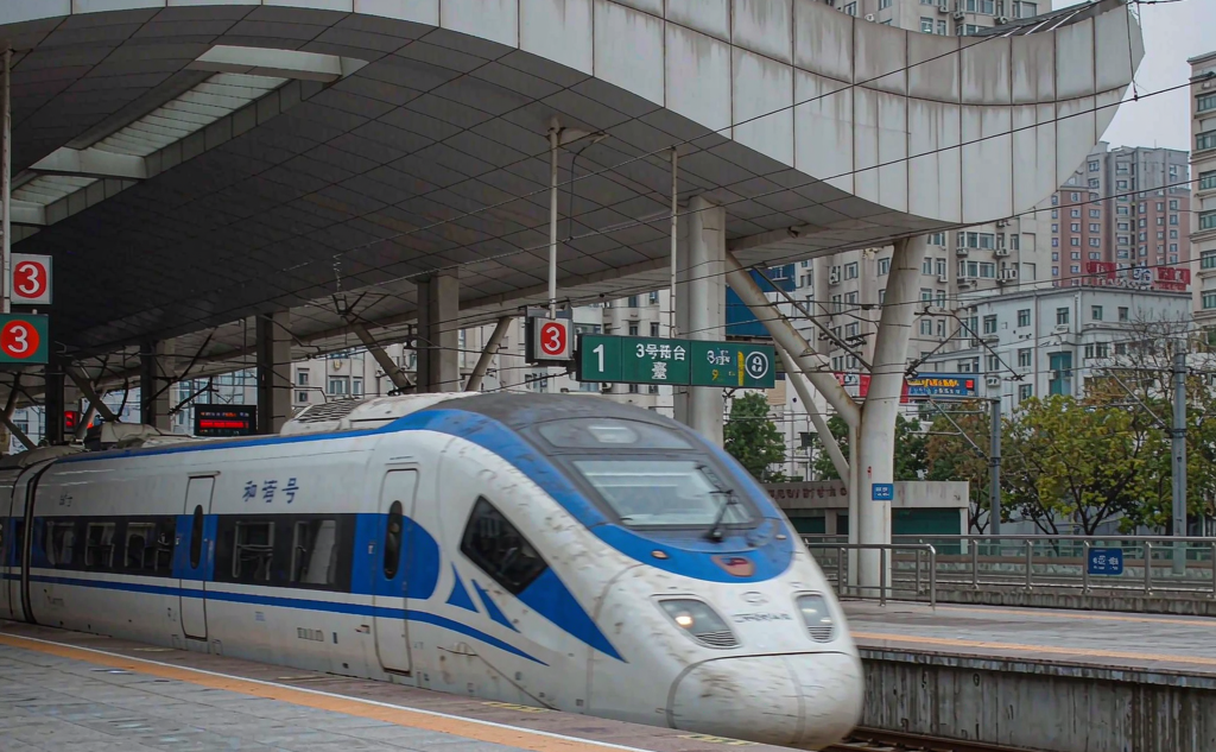
The single best decision for this route is riding China’s high-speed rail. Trains are punctual, comfortable and connect every city on the plan. Book through the official 12306 app or a trusted agency, and carry your passport because seat checks are strict. A China bullet train 10 day plan typically includes one long haul (Beijing–Xi’an) and one long southern leg (Guilin–Shanghai), with the Xi’an–Guilin gap filled by a short flight.
Costs at a Glance
A realistic mid-range budget per person, excluding international flights:
- Accommodation: 250–450 yuan per night, 9 nights = 2,250–4,050 yuan
- Trains and one domestic flight: 1,800–2,800 yuan
- Attractions and local transport: 900–1,400 yuan
- Food: 120–200 yuan per day = 1,200–2,000 yuan
Total China itinerary 10 days cost lands near 6,000–10,000 yuan (about 850–1,400 USD) per person. Luxury hotels and business-class rail push it higher; hostels and second-class seats pull it lower.
Pacing and Practical Tips
This route is linear and logical: north to center to south to coast. You avoid backtracking, which is the secret to the best 10 days in China route. Keep one buffer half-day in case of weather — the Li River cruise in particular needs clear skies for the postcard views.
When to Go
Spring (April to May) and autumn (September to October) are the most comfortable seasons. Summers in Beijing and Xi’an are hot and hazy, while winter brings freezing winds on the Great Wall but far smaller crowds. Guilin stays mild most of the year, though the Li River rises after heavy rain and can turn murky. If you can travel in shoulder season, you will save on hotels and enjoy clearer photos.
Food Notes by City
Each stop has a signature dish worth building a meal around. In Beijing, beyond Peking duck, try zhajiangmian (fried sauce noodles) for a cheap lunch. Xi’an is the home of hand-pulled noodles and the famous cold noodle dish liangpi. Guilin’s rice noodles (guilin mifen) are eaten at breakfast counters for under 15 yuan, and Yangshuo’s riverside restaurants serve fresh river fish. Shanghai adds sweetness to the map with xiaolongbao soup dumplings — hit a Din Tai Fung or a local steamed-bun shop in the old town.
Staying Connected
Buy a Chinese SIM at the airport or use an eSIM before departure so maps and ride apps work on arrival. Translation apps handle most menu and sign situations, and many train stations now show English alongside Chinese on major boards. Keep your passport handy: hotels, trains and some attractions all require it, and the name on every booking must match exactly.
Carry a mix of payment options. Alipay and WeChat Pay dominate, but a foreign card and some cash help at small wall stalls. A VPN is useful before you fly so you can pre-load maps and translation tools.
For official entry and safety information, consult the China National Tourism Administration resources before you travel, and verify current visa rules through UNESCO’s World Heritage list if you plan to visit protected sites such as the Great Wall and the Terracotta Army, which are recognized for their outstanding universal value.
This China 10 day itinerary first time framework is flexible. Shift a day from Beijing to Guilin if scenery matters more than museums, or add a night in Xi’an if the food wins you over. The rail network makes changes easy, so treat the plan as a starting point rather than a rigid schedule.