

If you have heard of Bole at all, it is probably as a name on a map near the Kazakh border — but for travelers who slow down, this small city in the Bortala Mongol Autonomous Prefecture of Xinjiang, China is the front door to one of the most beautiful alpine lakes in Central Asia. A Bole travel guide should start with that lake, then spiral outward into wind-carved stones, border-town energy, and hot springs that locals have used for centuries.
Bole’s claim to fame is Sayram Lake, roughly 20 kilometers southwest of the city and the largest alpine lake in Xinjiang, China. Turkic legend calls it the “last tear of the Atlantic,” because it sits at the far eastern edge of the moisture that drifts across Eurasia, and the result is a body of water so blue it looks filtered. A ring road lets you drive or cycle the shoreline, stopping at flower meadows in summer, migrating swans in spring, and frozen silence in deep winter. We’ve sent travelers here who expected a quick photo stop and ended up spending a full day just watching the light move across the water. For context on the wider region, our Xinjiang, China travel guide is the best companion for building a northern Silk Road route around Bole.
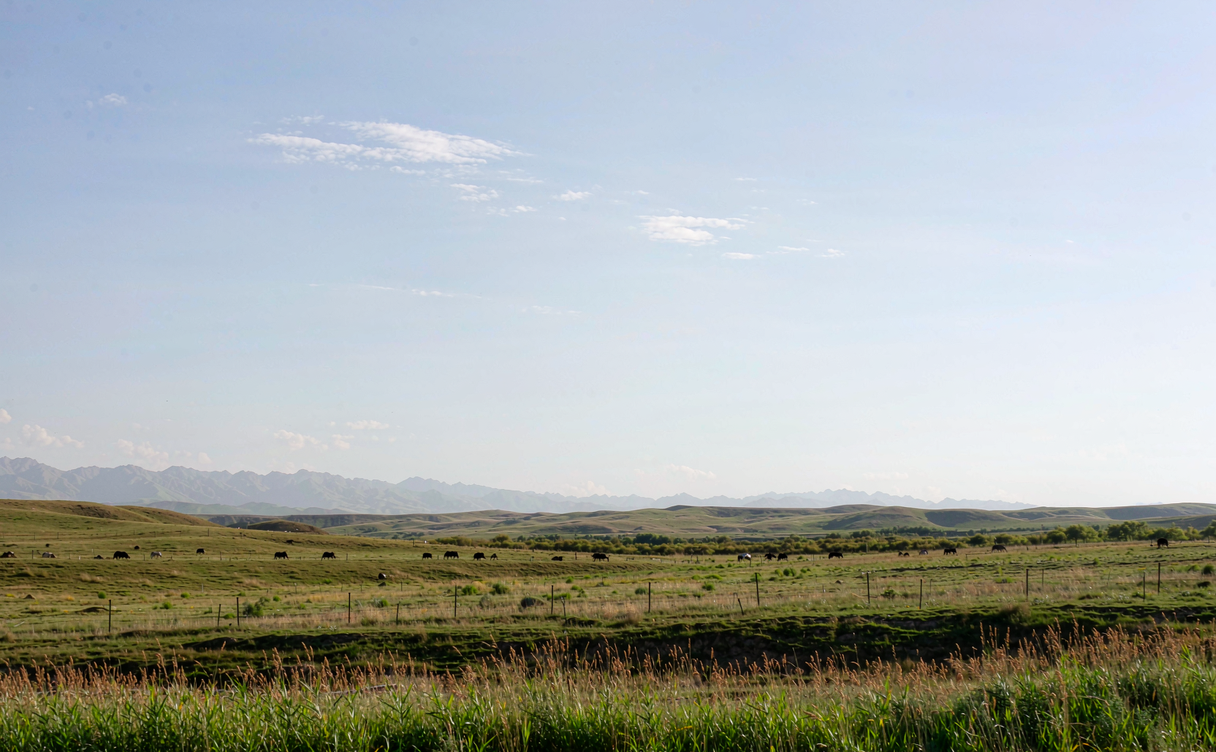
Beyond the lake, Bole has quieter surprises. Guaishiyu — the “Strange Stone Valley” — is a geopark of wind- and water-eroded granite boulders scattered across the hills, an open-air sculpture garden that rewards a slow walk and a good camera. Ebinur Lake, a vast saline lake to the north, draws flamingos and other migratory birds to its wetlands, though it is remote enough that you will want a driver. The nearby Alashankou port, one of China’s major rail gateways to Kazakhstan, has a brisk, borderline energy and a small exhibition on the modern Silk Road trade that still flows through it. And in Wenquan county, the name itself meaning “hot springs,” you can soak in mineral water that has drawn bathers for generations.
Getting to Bole is easier than its remote feel suggests. The city has a rail station on the northern Xinjiang lines and its own airport, Bole Alashankou Airport, with flights from Urumqi and a few other cities; from Urumqi you can also reach Bole by rail in several hours. Our China high-speed train guide for foreigners explains how to book and ride these routes with a passport, which is the calmest way to arrive in a city where little English is spoken.
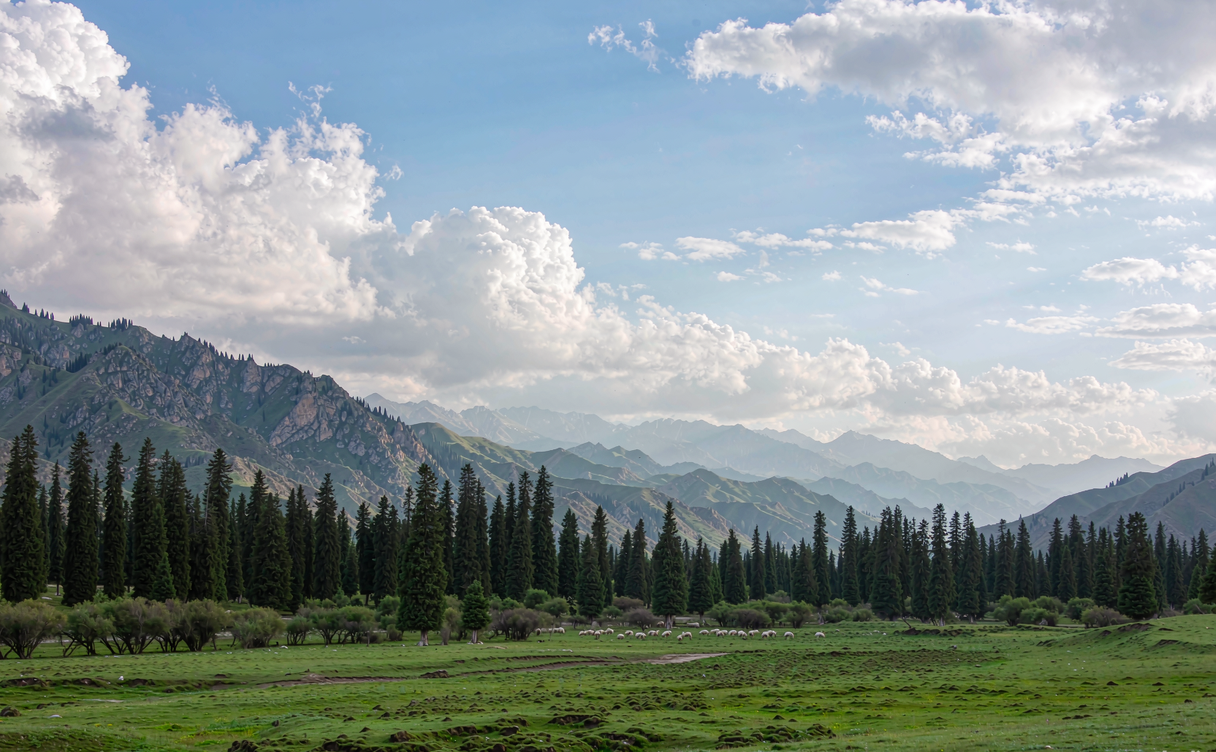
The best time to visit Bole is June through August, when Sayram Lake’s meadows explode with wildflowers and the high-country weather is mild, or September to early October for golden autumn light and fewer crowds. Winter is spectacular but fiercely cold, with the lake frozen solid and roads occasionally closed by snow; only attempt it if you are comfortable with harsh northern conditions. Our best time to visit China guide breaks down the seasons province by province so you can stitch Bole into a longer Xinjiang, China itinerary.
Practicalities are straightforward but worth planning. Bole itself has a handful of mid-range hotels; for the full experience, many travelers stay a night near Sayram Lake in a yurt or lakeside cabin, which must be booked ahead in July and August. Local food leans Kazakh and Mongol as much as Han — think laghman noodles, roasted lamb, and dairy-rich snacks — and the border influence makes the markets livelier than in inland cities. Mobile payment dominates, but carry some cash for small roadside stalls, and arrange any cross-attraction transport through your hotel since public options are thin.
Bole also sits close to the heart of the Silk Road story, and Sayram Lake in particular appears in the travel writings of earlier eras as a landmark for caravans moving between the Tarim and the steppe. If you want the scientific and cultural background before you go, the Wikipedia entry on Sayram Lake is a useful primer on its geography and name.
A good Bole Xinjiang itinerary spends one full day at Sayram Lake (arrive early, stay for sunset), a half day at Guaishiyu, and an optional morning at the Alashankou port or the Wenquan springs depending on your taste. Pair it with Yining and the Ili Valley to the south for a rounded northern Xinjiang, China loop that most foreign visitors miss entirely. The city is small enough that two nights covers it well, with a third if you want a relaxed lakeside morning.
The reward for coming this far west is a China that feels vast and quiet — big skies, cold clear water, and a cultural mix you will not find in the eastern provinces.
At Sayram Lake, give yourself a full loop. The ring road is about 90 kilometers, and while you can drive it in two hours, the joy is in the stops: a flower meadow here, a swan shallows there, a viewpoint where the water turns from teal to deep navy as clouds pass. In July the lakeside camps and yurts fill with domestic tourists, so arrive early or stay overnight to have the sunrise to yourself. Cycling part of the loop is possible if you arrange a rental in Bole, though the altitude and wind make it a real workout rather than a gentle ride.
Guaishiyu deserves a slow morning rather than a rushed photo. Trails weave between boulders the size of houses, and the light at mid-morning brings out the strange shapes; wear sturdy shoes, because the surfaces are uneven and the wind off the steppe is constant. Ebinur Lake is for birdwatchers and solitude seekers — its vast white salt flats and migratory flocks are unforgettable but remote, best done with a driver who knows the tracks. Alashankou, by contrast, is a working port; the small exhibition on the modern rail trade is worth thirty minutes if borders and logistics interest you.
Bole’s food scene reflects its Mongol and Kazakh roots more than almost anywhere else in Xinjiang, China. Look for hand-pulled laghman, grilled lamb skewers, and dairy snacks like dried curd, washed down with milk tea. A filling meal rarely tops ¥60–¥80, and the morning market near the center is the best place to watch the region’s cultures mix over steamed buns and fresh fruit. Evening is the time to walk: the light softens, the mosques and markets quiet, and the scale of the place settles in.
The farther west you go, the more the China you thought you knew falls away. Bole is not a headline destination, and that is precisely its gift — a chance to arrive somewhere most itineraries skip, and to leave understanding a corner of the country that the guidebooks flatten into a single line on a map.
Getting around the prefecture is easiest with a driver for the day; public buses reach Sayram Lake but run on local time, not yours, and the more interesting sites like Ebinur are far outside town. Hotels in Bole are modest but clean, with doubles from ¥200, and the lakeside yurts cost more and book out in July and August, so reserve ahead through your hotel or a travel agent. Mobile coverage is good near the city and patchy at the lake, so download offline maps before you leave Bole.
If you have an extra day, the hot springs at Wenquan county make a soothing counterpoint to a cold alpine morning, and the short hop suits travelers who want one more reason to linger in this quiet corner of the northwest.
Arriving is simpler than the map suggests. Rail and a small airport both reach Bole, and a little planning beats guessing at the station.
Time your visit for the lake, not the crowds. Summer wildflowers and autumn gold are the two windows worth planning around.