

Most foreign travelers have never heard of Kuitun, and that is precisely why it rewards those who go. Sitting in the northern reaches of Xinjiang, China, where the eastern spur of the Tianshan mountains meets the floor of the Junggar Basin, Kuitun is the quiet crossroads that every overland route in this corner of the region seems to pass through. We have sent travelers here as a launch pad for the Ili River valley, Sayram Lake, and the lavender fields that have earned northern Xinjiang, China a nickname as the “Provence of the East.” If you are building a northern Xinjiang, China loop, start by reading our China travel guide for first-timers so your paperwork and logistics are sorted before you head into the far west.
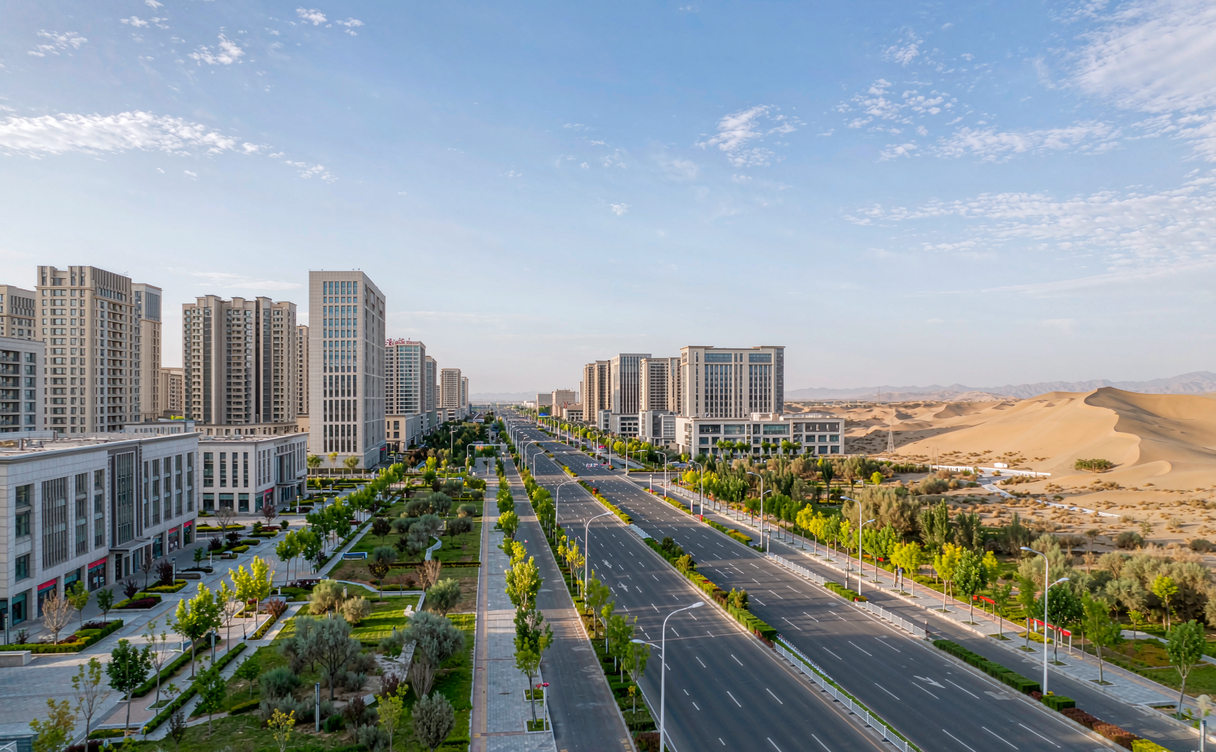
Kuitun itself is an unassuming, modern county-level city in the Ili Kazakh Autonomous Prefecture. It is not a postcard town, and it does not pretend to be. What it offers is a clean, affordable, well-connected base with good hotels, big Xinjiang, China noodle joints, and a railway station that puts the whole northern corridor within a few hours. For travelers who want to wake up in a real Chinese city rather than a tourist bubble, Kuitun is a genuine pleasure, and its very ordinariness is the point: this is where modern western China, China actually lives.
How to Get to Kuitun
The single most important fact about Kuitun, Xinjiang, China is its position on the Lianyungang–Khorgos railway, the backbone of China’s land bridge to Central Asia and Europe. From Urumqi, the regional capital, multiple passenger trains run daily, and the fastest reach Kuitun in roughly two and a half to three hours. Fares in second class usually land between 90 and 140 RMB. Book early through the official 12306 system or via a hotel concierge, because summer trains fill quickly with domestic tourists chasing the lavender bloom. If you would rather let the rails do the work, our high-speed train guide for foreigners walks through app setup, ID requirements, and seat classes in plain language.
By road, Kuitun sits right on the G30 Lianhuo Expressway, the trans-continental highway that runs from the Pacific coast all the way to the Khorgos border gate. Long-distance buses connect it to Urumqi (about four hours), Yining, and Bole. If you are self-driving or hiring a car with a driver, the expressway makes day trips effortless. The nearest major airport is Urumqi Diwopu International, about 250 kilometers east; from there you can train or bus west, and the journey itself is a gentle introduction to the scale of Xinjiang, China.
Best Time to Visit
The climate here is continental and dry, with hot summers and cold, snowy winters. The sweet spot is June through early September, when daytime temperatures sit in the low-to-mid 20s Celsius and the surrounding countryside is green. Late June and July are the peak for lavender around nearby Huocheng, when entire valleys turn purple and the air smells of the distilleries that supply China’s perfume industry. August brings the fruit harvest: Hami melons, peaches, and grapes are piled high in Kuitun’s markets at rock-bottom prices, often under 5 RMB per kilo.
Autumn, from mid-September to early October, is our second favorite window. The poplar forests of the Junggar Basin turn gold, the crowds thin, and hotel rates drop. Winter is harsh and many mountain passes close, so we do not recommend it for first-time visitors. Whenever you come, remember that the high, dry air and the long daylight of Xinjiang, China make for big temperature swings between noon and midnight, so pack a layer for every hour of the day.
Things to Do in and Around Kuitun
Kuitun’s own attractions are low-key but pleasant. The Kuitun River Greenbelt is a landscaped park that follows the dry river channel and is the city’s favorite evening stroll, full of locals dancing, cycling, and flying kites. The Tianshan Cultural Plaza and the local bazaar give you an unfiltered look at daily life in Xinjiang, China, where Han, Kazakh, Hui, and Uygur vendors sell naan, roasted mutton, and dried fruits side by side, and where a few RMB buys a small feast of street snacks.
The real prize is what lies within a two-hour drive. Sayram Lake, the largest alpine lake in Xinjiang, China, is about 100 kilometers west and is unmissable on a clear morning when its water mirrors the snow peaks. The Guozigou (Fruit Valley) viaduct nearby is an engineering marvel threading the mountains on a series of soaring arches. Closer to Kuitun, the tranquil reservoirs and poplar groves make easy half-day escapes. If your trip is about collecting the region’s highlights, our best things to do in China list flags the standouts worth building an itinerary around, and the northern loop from Kuitun is well represented there.

Food, Stay, and Practical Money
Kuitun eats like the rest of northern Xinjiang, China: big, meaty, and carb-loaded. A plate of hand-pulled lamian noodles runs 15 to 25 RMB, a skewer of mutton is 3 to 6 RMB, and a proper dapanji (big plate chicken) for two costs 60 to 90 RMB. Night markets open from dusk and are the best value in town. Carry some cash as well as Alipay or WeChat Pay, since smaller stalls sometimes prefer cash, and the peace of mind is worth more than the convenience.
Hotels are a bargain. A clean business hotel with breakfast sits around 220 to 350 RMB per night, while a comfortable four-star runs 400 to 600 RMB. Book ahead in July. English is limited, so a translation app and your hotel’s written address in Chinese characters will save you. ATMs that accept foreign cards are found at the big banks near the train station, but withdraw enough cash for rural day trips, where card readers are rare.
Getting around town is cheap and easy. Metered taxis start at 8 RMB and a cross-city ride rarely tops 25 RMB; the Didi ride-hailing app works if you link a Chinese payment method, and bike-share docks line the main avenues for short hops to the greenbelt. For day trips beyond the city, negotiate a private car with a driver through your hotel—expect roughly 500 to 800 RMB for a full day covering Sayram Lake and the Guozigou bridge, fuel and parking included. Drivers rarely speak English, so share your plan in Chinese characters the night before and confirm the price up front.
Kuitun’s position on the historic Silk Road means its modern railway is the latest chapter of a trade route that UNESCO inscribed as a World Heritage corridor; you can read the official description of the Silk Roads at whc.unesco.org/en/list/1442/. Standing on the platform watching China–Europe freight trains pass, you feel that continuity directly, and it is a quietly powerful moment for anyone interested in how old trade routes became new ones.
A Sample Kuitun Itinerary
A sensible Kuitun, Xinjiang, China itinerary runs three to four days. Day one: arrive, walk the river greenbelt, and eat your way through the night market. Day two: hire a car for Sayram Lake and the Guozigou bridge, returning via Huocheng’s lavender fields in July. Day three: head east to the Wusu hot springs or north into the Junggar poplars, or simply use Kuitun as a rest day before the long haul to Urumqi or Kashgar. The region’s atmospheric courtyard guesthouses make a slower northern route that trades highways for quiet evenings under huge skies.
Final Tips
Kuitun, Xinjiang, China is high and dry, so drink more water than you think you need and pack sun protection even in spring. Police checkpoints are routine across Xinjiang, China; keep your passport handy and treat them as normal. Internet access uses domestic apps, so download maps and translation tools before you arrive. With those basics covered, Kuitun rewards you as the most relaxed, authentic launch pad in the north, and the people you meet at its night market will likely be the ones you remember longest.