

You hear it before you see it: a low, furious hiss as smoking rapeseed oil hits a mound of chili flakes, minced garlic and ground Sichuan pepper. That hiss is the whole reason shui zhu yu exists. Order it in a proper Sichuan restaurant and the last step is often performed at the table, because those thirty seconds of crackling are what turn a bowl of pale poached fish into something people build whole evenings around.
The most memorable version I have eaten was on a sticky summer night on the riverside in Leshan, a small city south of Chengdu where the dish is said to have begun. The bowl was wider than my forearm and the surface was almost entirely red. For the first two seconds I tasted only fragrance. Then the numbness spread along my lips, and only after that did the heat arrive. That order — aroma, then tingle, then burn — is what separates a good shui zhu yu from a merely spicy one.
Why the Name Is a Little Misleading
In Chinese the dish is literally “water-boiled fish,” which sounds austere, even bland. It is not. The name refers only to the first stage of cooking: thin slices of fish are briefly poached in a gently simmering, lightly salted broth so they set without toughening. The drama comes afterward, when the fish is transferred to a serving vessel, blanketed with aromatics, and finished with a pour of very hot oil. So the fish is never aggressively boiled, and it is never fried. It is poached gently, then dressed theatrically. Once you understand that two-stage logic, the dish stops being intimidating.
The reputation is Sichuan, and rightly so, but it is part of a much larger tradition of oil-dressed and numbing dishes. If you want to place it on the wider Sichuan table, it sits somewhere between a hotpot and a cold dressed dish — all the fragrance of a hotpot broth, none of the standing over a bubbling pot.
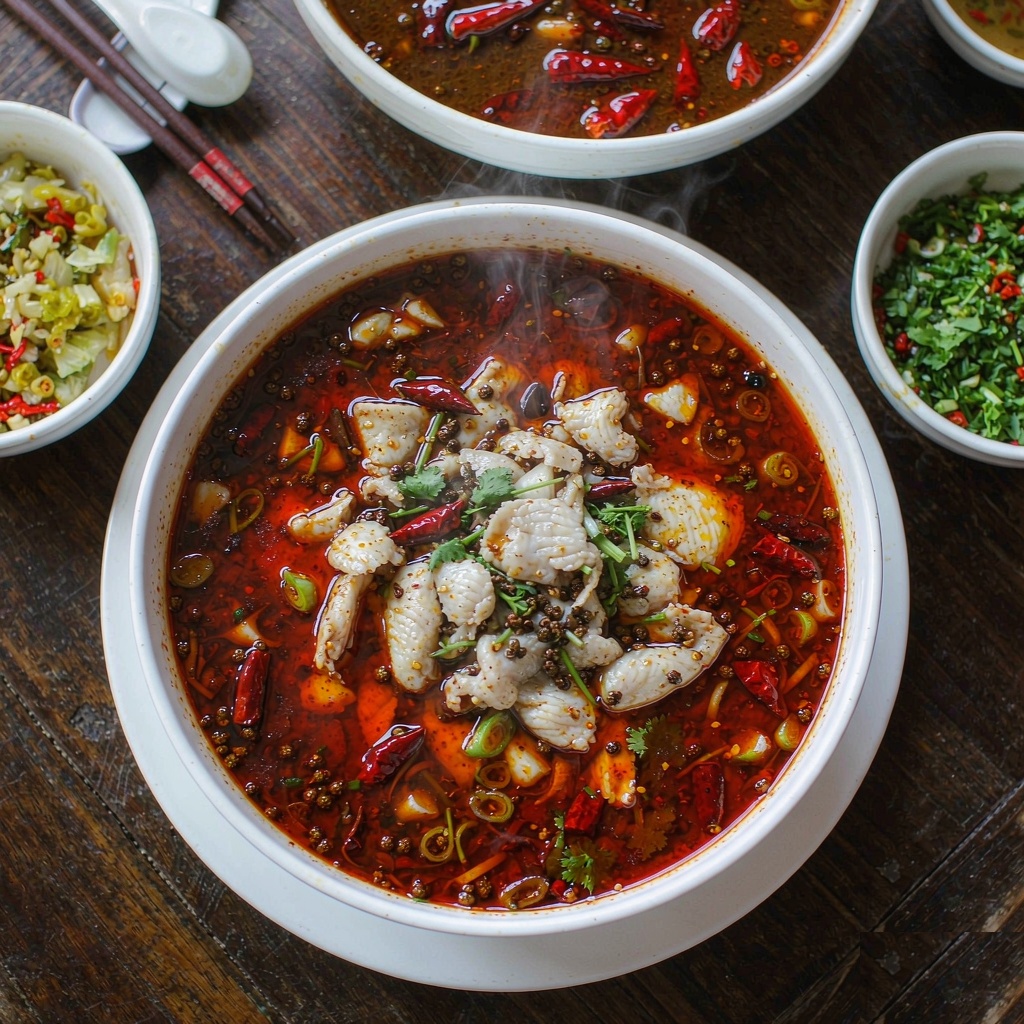
What It Tastes Like: Numbing Comes First
People who have never eaten Sichuan food often assume the defining sensation is heat. It isn’t. The defining flavour is mala — “numbing and hot” — and the numbing half is the harder one to describe. It is a faint electric buzz on the lips and tongue, closer to the tingle of a carbonated drink than to spice. It comes from Sichuan peppercorns, which are not peppers at all but the husks of a citrus relative, and which behave quite differently depending on whether they are toasted and ground, or bloomed in hot oil and left whole.
Behind the mala sits a surprising amount of sweetness. Good shui zhu yu is not thin or one-note. The chili oil carries the roasted depth of dried chilies, the broth underneath is savoury and faintly sweet, and the fish itself should taste clean and slightly sweet, almost like a delicate white chicken. Texture matters as much as taste: the slices should be silky and yielding, sliding apart rather than flaking into dry shreds. When the fish is overcooked, no amount of chili can hide it.
The Ingredients That Actually Matter
An authentic bowl needs fewer things than the restaurant version suggests. What matters is the quality of the fish, the freshness of the Sichuan pepper, and the temperature of the final pour. For a home version serving three to four people:
- 750 g firm white fish fillets (grass carp, tilapia or catfish are the classics; basa works well outside China) — about 3 mm thick
- 1 egg white plus 2 tablespoons cornstarch to velvet the fish
- 1 teaspoon salt for the poaching water, plus a splash of Shaoxing wine
- 3 dried chilies (or 2 tablespoons chili flakes) — Sichuan-facing or a mild dried chili such as erjingtiao
- 1 tablespoon whole Sichuan peppercorns, half left whole, half ground fine
- 5 cloves garlic, minced; 1 thumb of ginger, julienned
- 2 spring onions, whites sliced for the base and greens reserved for garnish
- 1 cup rapeseed or peanut oil for the pour — neutral, high smoke point
- 200 g bean sprouts or sliced napa cabbage to line the bowl
Two notes on sourcing. Sichuan peppercorns lose their tingle quickly once ground, so buy whole and grind just before you cook; the numb factor fades within weeks. And for the oil, do not reach for olive oil — its flavour fights the chilies. Rapeseed oil is traditional and gives you the faintly nutty, faintly bitter edge that Sichuan cooks expect.
The Fish: What to Buy and How to Slice
Freshwater fish is treated with real seriousness in China, and it is worth thinking about fish the way regulars do — with an eye on freshness and how it is handled, the same instincts you would use when ordering seafood in China. If you are unsure how fish and other animal proteins are handled on the road, especially if you have an allergy or an intolerance, it is worth reading up on food allergies and dietary restrictions before you order.
For home cooking, ask your fishmonger to fillet the fish and, if possible, to skin it too. Slice the fillets against the grain into pieces about 3 mm thick — thin enough to cook in seconds, thick enough to hold together. Mix the slices with the egg white, cornstarch, a pinch of salt and a spoonful of Shaoxing wine, and leave them to sit for fifteen minutes. This coating, sometimes called velveting, is what keeps the fish tender when it hits the hot broth.
Step by Step: The Home Method
Step 1 — Build the base. Heat a little oil in a wok and stir-fry the bean sprouts or cabbage with a pinch of salt for two minutes until just wilted. Tip them into the bottom of a wide, deep serving bowl; they will lift the fish off the base and soak up the oil.
Step 2 — Make the poaching broth. In the same wok, briefly fry half the ginger and half the garlic, then add about 1 litre of water or light stock. Bring to a bare simmer, season with salt and a splash of Shaoxing wine, and taste — it should be a touch saltier than you think you want, because the fish will dilute it.
Step 3 — Poach the fish. Slide the coated slices into the barely simmering liquid in batches. Do not stir; wait until the slices turn opaque, roughly 40 to 60 seconds, then lift them out with a slotted spoon and lay them over the vegetables. Keep the poaching liquid — you will spoon some of it back over the fish.
Step 4 — Dress the bowl. Spoon just enough of the broth back over the fish to keep it moist. Scatter the remaining garlic, ginger, the chili flakes, the ground Sichuan pepper and the spring onion whites in a neat mound on top.
Step 5 — The pour. Heat the cup of rapeseed oil in a small pan until it shimmers and a chili flake sizzles instantly on contact — around 190°C. Pour it steadily over the mound of aromatics. Stand back; it will snap and foam. Finish with reserved spring onion greens and a scatter of whole toasted Sichuan peppercorns.
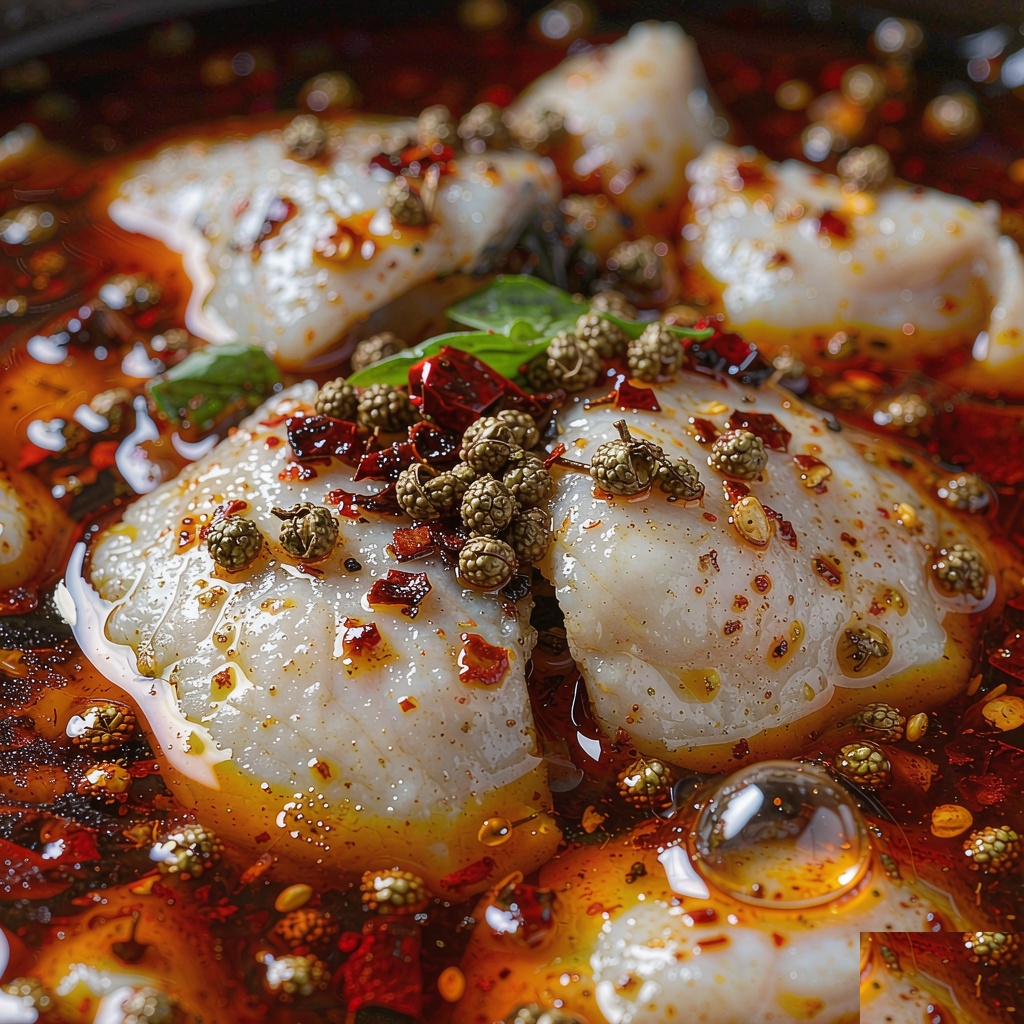
The Oil Pour Is Where Most Cooks Slip Up
Almost every failed home attempt fails at this step. Oil that is not hot enough will leave the chili flakes raw and grassy, and the whole dish tastes flat. Oil that is too hot scorches the chili and turns it bitter. The window is narrow. Watch for the first wisp of smoke, then test with a single flake before you commit. Pour in a slow, even stream rather than all at once, so the heat blooms the aromatics instead of frying them in a burst.
A second, quieter mistake is overcooking the fish to be safe. The slices are thin and cook almost instantly; if you leave them in the simmering broth while you do anything else, they will tighten and turn chalky. Treat the poach as a ten-second job, not a simmer.
Who It Suits — and Who Should Skip It
Shui zhu yu is a wonderful dish for anyone who enjoys bold flavours and does not mind heat, and it is genuinely approachable for people who normally avoid very spicy food, because the numbing quality softens the burn and the fish itself is mild. It works well for a shared table: one bowl alongside plainer dishes feeds a group comfortably.
That said, it is not for everyone. Anyone with a fish or shellfish allergy should obviously avoid it, and because the dish is finished with a generous pour of oil, it is heavy — people watching their fat intake or managing reflux may find it too rich. The chili and Sichuan pepper can also be genuinely uncomfortable for those with sensitive stomachs, and while the numbing sensation is harmless, it can feel alarming the first time. If you are cooking for guests with restrictions, it is easy to serve the poached fish plainly and offer the chili oil on the side.
Regional Twists and How It Is Served
The dish changes as it travels. In and around Chengdu, cooks lean into fragrance: more ground pepper, milder chilies, a broth-forward finish. Chongqing versions are brasher and hotter, sometimes with a darker, heavier oil. Elsewhere you will meet a close cousin made with beef or with sliced pork, and the same technique applied to frog or to freshwater eel. In Leshan itself the traditional version often uses a whole fish rather than fillets, which makes the tabletop moment even more of a spectacle.
Serving matters too. The bowl arrives with steamed rice and little else — the rice is the counterweight to all that oil — and a small dish of black vinegar or a light soy dip is common on the side. Locals will spoon the chili oil over their rice, which sounds excessive until you try it. If you are curious how this fits a broader trip, the same eating logic runs through street stalls and formal rooms alike, and it is worth reading a Chengdu food guide before you sit down, so you know which dishes to pair it with.
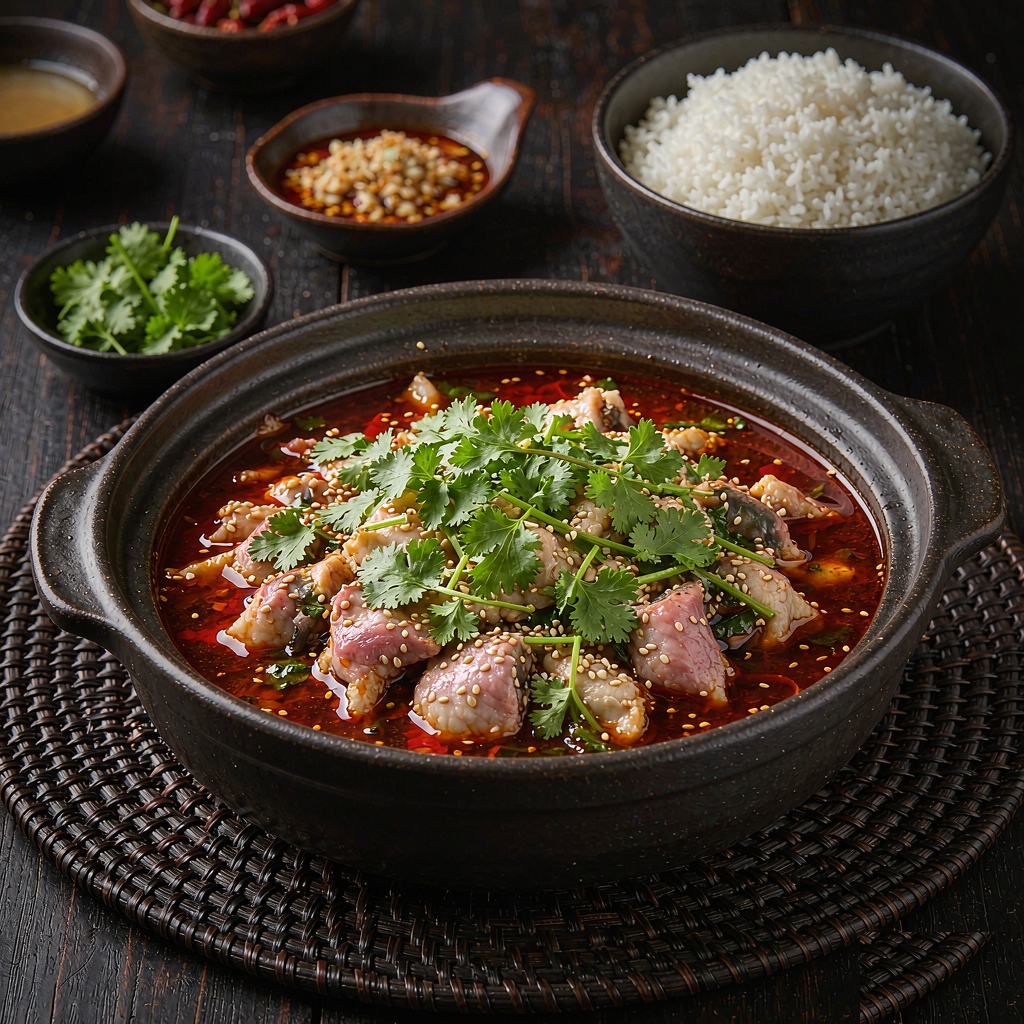
What makes shui zhu yu worth learning at home is that it rewards attention rather than technique. There is no knife skill to master and no long simmer to babysit. Get the fish fresh, velvet it properly, keep the poach brief, and respect the oil. Do those four things and the bowl in front of you will hiss the way it should — and you will understand, in one mouthful, why a dish with such a plain name has such a devoted following.