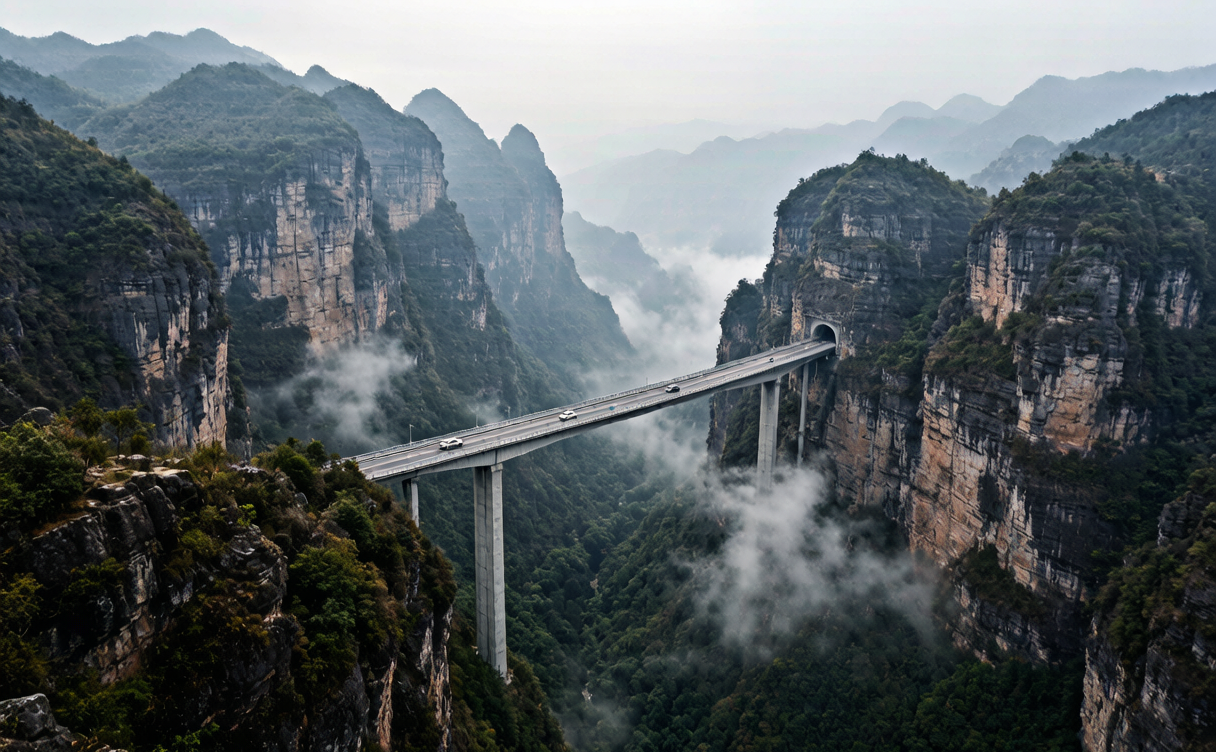
A Bijie travel guide begins in the northwest corner of Guizhou, where the province’s famous karst gives way to higher, cooler plateau country near the borders with Sichuan and Yunnan. Bijie is the gateway to two very different spectacles: Zhijin Cave, one of the largest and most decorated cave systems in China, and the Baili Azalea reserve, where rolling hills turn red, pink, and white with wild rhododendrons each spring. It is a region that rewards travellers willing to go past the usual Guizhou stops, and it pairs naturally with the provincial capital as a quieter, greener loop. The higher elevation also keeps it comfortable when the lowlands are sticky.
Why Bijie is worth the journey
Most visitors to Guizhou head for Huangguoshu and the rice terraces, and never reach the northwest. Bijie asks for more effort — it is farther from the main rail lines — but it pays back with scale. Zhijin Cave is vast enough that the walk through it takes the better part of a morning, and the Baili Azalea area, when in bloom, covers dozens of square kilometres with flowers rather than a single garden. The air is cooler and cleaner than in the lowland cities, which makes summer visits a relief.
For the regional picture, our Guiyang travel guide covers the capital you will likely fly into, while our Anshun travel guide explains the waterfall country to the southeast that most Guizhou trips centre on. Bijie also suits travellers who like their scenery with fewer tour buses — the sites are popular with domestic visitors but almost never appear on foreign itineraries, so the experience here stays unhurried even at busy times.
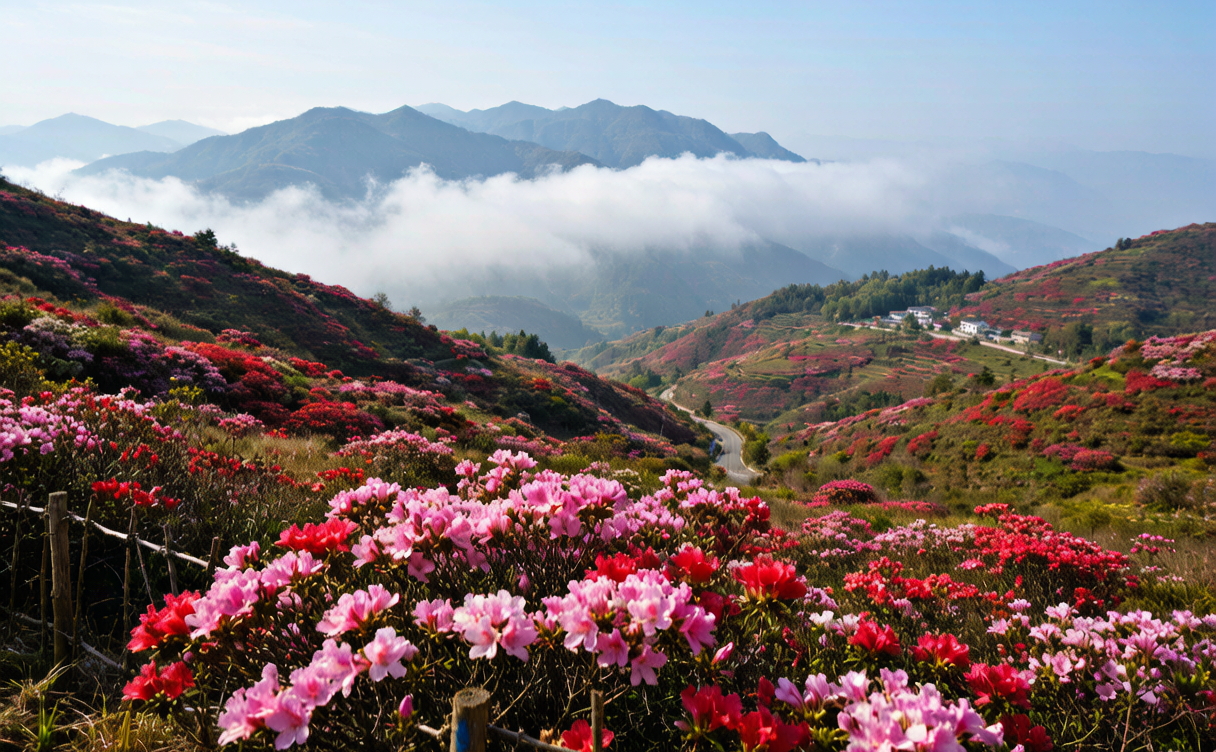
Baili Azalea flower season
The Baili Azalea flower season is the region’s headline spring event, running from roughly late March to early May depending on the altitude and that year’s weather. The reserve protects a rare, centuries-old stand of wild rhododendrons, some of them huge ancient shrubs, spread across hills that you explore by car and short walks. Go too early and the high slopes are still closed; go in mid-April and you catch the widest spread of colour.
This is a seasonal trip, so timing matters more than usual. The lower valleys open first and the high meadows last, which spreads the colour over several weeks and rewards a flexible visit. Photos are best in the soft light of early morning, before the midday haze flattens the hills. For a broader spring plan, our best spring destinations in China guide ranks the Baili blooms among the country’s great flower experiences, and explains how to stack them with other regions.
Things to do in Bijie
The real things to do in Bijie split between underground and on the hills:
- Zhijin Cave — a colossal limestone cave with towers, curtains, and lakes lit in colour; the walk is long but mostly flat on built paths.
- Baili Azalea reserve — the spring flower hills, best by car with stops at the viewpoints.
- Wumeng Grassland (Nishan) — high plateau meadows with wind turbines and big skies, cool even in summer.
- Jiudongtian — a string of nine linked caves and gorges you partly explore by boat.
- Bijie city and minority markets — low-key, but good for Yi and Miao textiles and food on market days.
These are the genuine things to do in Bijie, and three days covers the cave, the flowers (in season), and a taste of the plateau. The region’s size works in your favour: the sights are spread out but each is a half-day, so you move slowly without feeling you are missing something. Travel with a driver or join a tour for the scattered sites, because public transport between them is thin and the distances are real.
Zhijin Cave tour, in practice
A Zhijin Cave tour is straightforward but long. The cave is developed with concrete paths and lighting, and the route is one-way, so you commit to the full loop once you enter — plan two to three hours and wear good shoes, because the floor is damp in places. The formations have names (the “Silver Rain Tree,” the “Bamboo Shoot”) and the guides recite them, but the scale is the real draw: chambers big enough to lose a building in.
The cave stays cool year-round, around 15°C, so a light jacket is wise even in summer. Photography inside is tricky because of the coloured lighting and the distance to the big formations, so a steady hand or a tripod helps; the open chambers near the exit give the best wide shots. For wider context on the province’s underground and overground wonders, our Guizhou Huangguoshu waterfall guide covers the better-known waterfall country to the southeast, and our China off the beaten path guide makes the case for exactly this kind of northwest Guizhou detour.
The plateau and the local food
Beyond the headline sights, Bijie’s highland character shows in its food and its markets. The local table leans on sour and pickled flavours, cured pork, and buckwheat from the cool uplands — hearty stuff after a day in the cave air. Our Guizhou sour soup guide explains the tangy cooking that defines the province and that you will meet in Bijie’s small restaurants.
Market days in the surrounding counties are the place to see Yi and Miao embroidery and silverwork, and to try snacks you won’t find in the cities. They run on a rotating schedule by the lunar calendar, so ask at your hotel which village is open during your stay. The highland buckwheat makes a good noodle and a dry cake worth packing for the road, and the cured pork is the kind of souvenir that survives the trip home if vacuum-sealed.
Bijie itinerary from Guiyang
The Bijie itinerary from Guiyang is the standard way in. High-speed trains now reach Bijie city in well under two hours from the capital, and from there Zhijin is about an hour by road and the azalea reserve a similar drive in the other direction. Most visitors base in Bijie city or Zhijin town and do day trips, which keeps packing simple.
If you are combining caves and waterfalls, the loop works as Guiyang → Anshun (Huangguoshu) → Bijie (Zhijin and the flowers) → back to the capital. Hiring a car with a driver for two or three days is the most relaxed way to link the scattered sites, since it spares you the bus changes between Zhijin and the azalea reserve. The official tourism information is available through the Ministry of Culture and Tourism of China (https://www.mct.gov.cn/), which lists licensed cave tickets and seasonal notes for the northwest of the province. Book the azalea reserve ahead in peak bloom, when buses and rooms fill. One practical note for foreign visitors: English is scarce in Bijie, card acceptance is patchy at small sites, and the plateau sun is deceptively strong, so carry cash, a translation app, and sunscreen. A local SIM makes the scattered sites far easier to navigate.