

Picking the best hotels in Luoyang is less about star ratings than about which of the city’s three centres you want to wake up in — the Tang-flavoured old town, the new district built over the Sui and Tang palace ruins, or the strip near Longmen station that exists purely to catch high-speed passengers. Luoyang was the capital of thirteen dynasties and the modern city sprawls east to west along the Luo River for nearly 30 kilometres, so a hotel that looks central on a booking map can easily be 12 kilometres from the grottoes. We’ve sent travellers here in every season, including the chaos of peony festival, and the single most common mistake is booking a cheap room near the old railway station and then paying for taxis all week.
The Three Bases That Matter
Old City (Laocheng). The restored quarter around Lijing Gate and Luoyi Ancient City — grey brick, courtyards, hanfu rental shops, night snack lanes. Best for atmosphere and evening walking.
New District (Luolong). South of the Luo River near the Sui–Tang City Ruins Park, Yingtianmen, the Mingtang and Tiantang halls, and Luoyang Museum. Wide avenues, newer hotels, closest of the three to Longmen.
Longmen Station belt. Around Luoyang Longmen high-speed station: business hotels, chain towers, nothing charming, maximum convenience.
Luoyang’s metro (Lines 1 and 2, opened 2021) ties these together. Line 2 runs north–south and links Longmen station to the city; Line 1 runs east–west across the old town. Fares are ¥2–5. Taxis start at ¥7 and a cross-city run costs ¥25–40 (US$3.50–5.60), which is why the geography matters.
Old City: Courtyards and Night Lanes
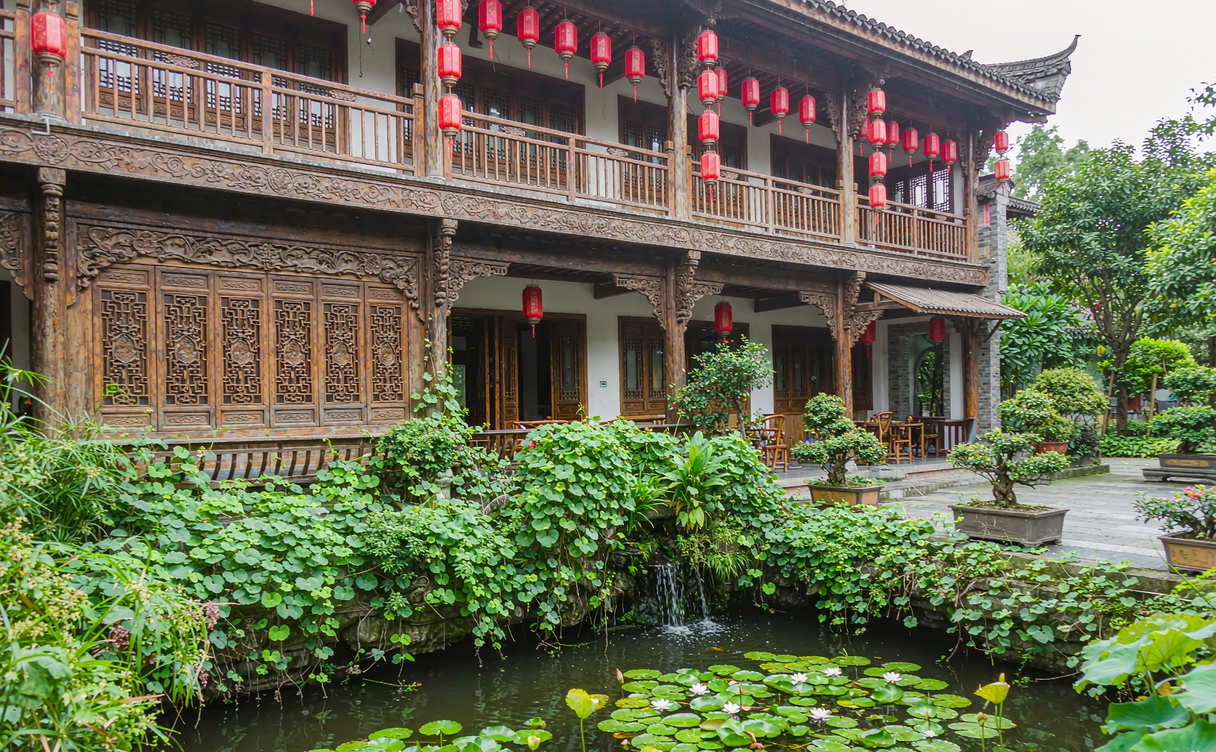
Luoyang old city courtyard hotels are the reason to come here rather than sleep beside a station. Over the past few years a dozen small properties have opened inside restored compounds around Lijing Gate — 8 to 25 rooms, timber and grey brick, inner gardens, some with Tang-style furniture and tea service included.
- Budget: ¥130–230 (US$18–32). Chain hotels (Hanting, Home Inn, Lavande) on the ring roads around the old quarter, plus a few hostels at ¥60–100 per dorm bed.
- Mid-range: ¥300–550 (US$42–77). The courtyard conversions and small design hotels. Ask whether the room faces the lane; Luoyi Ancient City’s music and crowds run until about 22:30.
- Splurge: ¥700–1,200 (US$98–168). A handful of larger Tang-themed properties with pools and full restaurants. Note that Luoyang’s luxury tier is domestic-led — international five-star flags are thin here, and the best rooms in town are often in Chinese-brand hotels rather than familiar names.
Who it suits: photographers, anyone renting hanfu (¥80–300 per set with hair styling), travellers who want dinner within walking distance. Who it does not: early-train departures, and light sleepers in festival season. If restored-architecture stays are your thing generally, our China heritage hotels guide covers what to expect from courtyard conversions across the country — thin walls and no lifts included.
New District (Luolong): Space, Newness and Proximity
South of the river, Kaiyuan Avenue and the streets around the Sui–Tang ruins hold Luoyang’s newest hotel stock: four-star business properties, upper-mid chains such as Atour and Ji Hotel, and the city’s better conference hotels.
- Budget: ¥150–260. Chain rooms, 20–25 m², reliable.
- Mid-range: ¥350–600. Newer four-stars with big breakfasts, gyms and parking. Rooms of 30–35 m² are standard, which is more space per yuan than the old city gives you.
- Splurge: ¥650–1,100. Lakeside and park-facing five-stars near the ruins park.
The practical advantage: you are 6–10 km from Longmen Grottoes and roughly the same from the old city, so nothing is a long trip. The evening advantage: the Yingtianmen gate and the Mingtang are illuminated after dark, and the projection show on the Yingtianmen facade is genuinely good — walkable from several hotels here.
Longmen Station Belt: For Rail-Built Trips
Luoyang hotels near Longmen station make sense in one specific case: you are arriving late from Xi’an or Zhengzhou and leaving early. Luoyang Longmen sits on the Zhengzhou–Xi’an high-speed line, which puts Xi’an 1 hour 30 minutes away, Zhengzhou 35–40 minutes, and Beijing about 4 hours.
Rates run ¥180–420 for chains and business hotels, and the belt is served by Metro Line 2. The grottoes are about 6–7 km from the station — ¥20–25 by taxi, or the local bus. Do not expect food beyond noodle shops and hotpot chains.
For the grottoes themselves, the ticket is around ¥90 (US$12.60) covering the West Hill and East Hill caves, Xiangshan Temple and the Bai Garden, and from roughly late spring to October the site opens for evening visits, with the carvings lit until about 22:00. Staying in the New District or the station belt makes that night visit easy; from the old city it is a 25-minute taxi each way. Our Longmen Grottoes guide explains which caves to prioritise if you only have two hours.
Peony Season: The One Booking Trap
Luoyang’s peony festival runs from roughly the start of April into the first week of May, and it reshapes the entire hotel market. Luoyang peony season hotel booking advice, from having done this badly once:
- Rates rise 80–200%. A ¥300 mid-range room becomes ¥600–900; courtyard boutiques hit ¥1,000 and up.
- Book four to six weeks ahead for the old city, two to three weeks for the New District chains.
- The bloom peaks in mid-April in most years, earlier in a warm spring. Wangcheng Park and the National Peony Garden charge ¥40–60 entry in season, less outside it.
- The 1–5 May holiday is worse than the festival itself — domestic demand, not flowers, sets those prices.
Outside the festival, Luoyang is cheap. Late September to early November is our favourite window: 12–24°C, dry, clear light on the Yi River hills, and mid-range rooms back at ¥280–400. July and August are hot (28–36°C) with sudden downpours, and rooms drop again. December to February is 0–8°C with grey skies; hotels are heated, rates are at the annual floor, and the grottoes are almost empty, which some travellers prefer.

Booking Tips for Foreign Guests
- Confirm foreign-guest registration. Small courtyard properties in the old city sometimes lack the licence, and finding out at 22:00 is miserable. Our China hotel booking guide for foreigners shows how to verify in advance.
- Save the Chinese address. Luoyang has multiple hotels with near-identical English names across districts. Screenshot the Chinese characters for your driver.
- Ask about lifts in courtyard hotels — most are single or two storey, but some conversions put rooms up steep wooden stairs.
- Breakfast is worth taking at New District four-stars (usually ¥40–60 if bought separately) and worth skipping in the old city, where street breakfast — beef soup, tangmian jiaozi, unleavened bread — costs ¥8–15.
- Deposits of ¥200–400 are standard; refunds take 3–10 working days.
- Parking is free or ¥10–20 a night in the New District, difficult in the old city.
Sample Two-Night Plan
- Day 1: arrive Luoyang Longmen from Xi’an mid-morning, drop bags, Longmen Grottoes for three hours, afternoon at Luoyang Museum, evening in the old city for Lijing Gate and street food.
- Day 2: morning White Horse Temple (¥35) and Guanlin (¥40), afternoon Sui–Tang ruins park with the Mingtang and Tiantang, evening the Yingtianmen light show.
- Day 3: early bus or car east to Dengfeng for Shaolin, or high-speed train onward to Zhengzhou.
For the Shaolin option: Luoyang hotels for a Shaolin day trip should be in the New District or near the long-distance bus station. Coaches take about 1 hour 30 minutes and cost ¥25–35; a private car for the day runs ¥400–600. Temple entry is around ¥80.
Practical Tips
- Two hills, one ticket. At Longmen, cross the bridge to East Hill for the classic view back at the Fengxian Temple Buddha — most visitors skip it and regret it.
- World Heritage context: the site’s inscription details are on the UNESCO listing for the Longmen Grottoes, useful for understanding what you are looking at.
- Water and shade in summer; the West Hill stairs are exposed.
- Cash of ¥100 for old-city stalls, though mobile payment works nearly everywhere.
- Luoyang water banquet (shuixi) is the local speciality — 24 soup-based courses, ¥150–400 for a table. Hotel concierges book it better than apps do.
FAQ
Which area should a first-time visitor book?
The New District if you want space, newness and short taxi rides to everything; the old city if you want evenings you will remember. Both work in two nights.
Is it worth staying near Longmen Grottoes itself?
Only for the night opening. There is no real village or dining scene at the gate, so the New District gives you proximity plus somewhere to eat.
How do Luoyang prices compare with Xi’an?
Roughly 20–35% lower at every tier, and easier to book last-minute outside peony season. If you are combining the two old capitals, see our best hotels in Xi’an roundup.
Do hotels here speak English?
Four-stars and up, some. Chains, rarely — translation apps cover it. Written Chinese addresses solve most problems.
Can I visit Shaolin without changing hotels?
Yes. It is a comfortable day trip from any Luoyang base, back by early evening. Details are in our Shaolin Temple guide.
Written by Karl, China Travel Places — updated August 2026.