

Choosing among the best hotels in Changsha comes down to one question we ask every client before we book anything: how late do you want the street noise to go? This is one of the loudest, hungriest, most nocturnal cities in central China — a place where queues for milk tea run 200 people deep at 22:00 and the bar strip on Jiefang West Road is still moving at 03:00. Get the neighbourhood right and Changsha is a brilliant two-night stop, usually slotted before or after Zhangjiajie. Get it wrong and you will spend the night listening to a sound system through the glass. We’ve sent travellers to every zone below, and the differences in sleep quality are much larger than the differences in price.
How the City Splits for Lodging
The Xiang River divides Changsha into two working halves. The east bank holds the commercial core: Wuyi Square, Huangxing Road pedestrian street, Taiping Street, Pozi Street, and the Jiefang West Road bar district. The west bank is Yuelu — Hunan University, Yuelu Mountain, student food lanes and much lower rates. Between them sits Orange Isle (Juzizhou), a long sandbank in midstream that is the reason river-view rooms exist here at all.
Metro Line 1 (north–south) and Line 2 (east–west) cross at Wuyi Square, and that interchange is the single most useful address in the city. Line 2 also runs to Changsha South Railway Station and Line 6 reaches Huanghua International Airport. Fares are ¥2–7; taxis start at ¥8 and most centre trips land at ¥12–25 (US$1.70–3.50).
Wuyi Square and Huangxing Road: The Default Base
If you are asking where to stay in Changsha first time, the answer is within 600 metres of Wuyi Square. Everything is walkable: the pedestrian street, Taiping Street’s old shopfronts, the Hunan cuisine institutions on Pozi Street, the enormous Wenheyou food complex, and the metro interchange that gets you to the high-speed station in 25 minutes.
- Budget: ¥140–250 (US$20–35). Hanting, Home Inn, Lavande and Ji Hotel properties on the side streets off Huangxing Road. Rooms are 15–20 m², spotless, app check-in, kettle and slippers standard.
- Mid-range: ¥320–550 (US$45–77). Atour, Manxin, Orange Crystal and international mid-scale flags. This is the sweet spot in Changsha — you get 25–30 m², proper soundproofing and a breakfast worth eating.
- Splurge: ¥900–1,700 (US$126–238). The luxury tower inside the IFS complex and one or two international five-stars, with rooms 40 floors up, club lounges and direct mall access.
Hotels near Wuyi Square carry one warning: the blocks between Wuyi Square and the river turn into Jiefang West Road, which is a solid wall of clubs. Anything with a window onto Jiefang Xi Lu is a bad idea unless you plan to be out there. Ask for a room facing the interior courtyard, or book two streets back toward Cai’e Road.
Riverside: Kaifu, Beichen and the View Premium
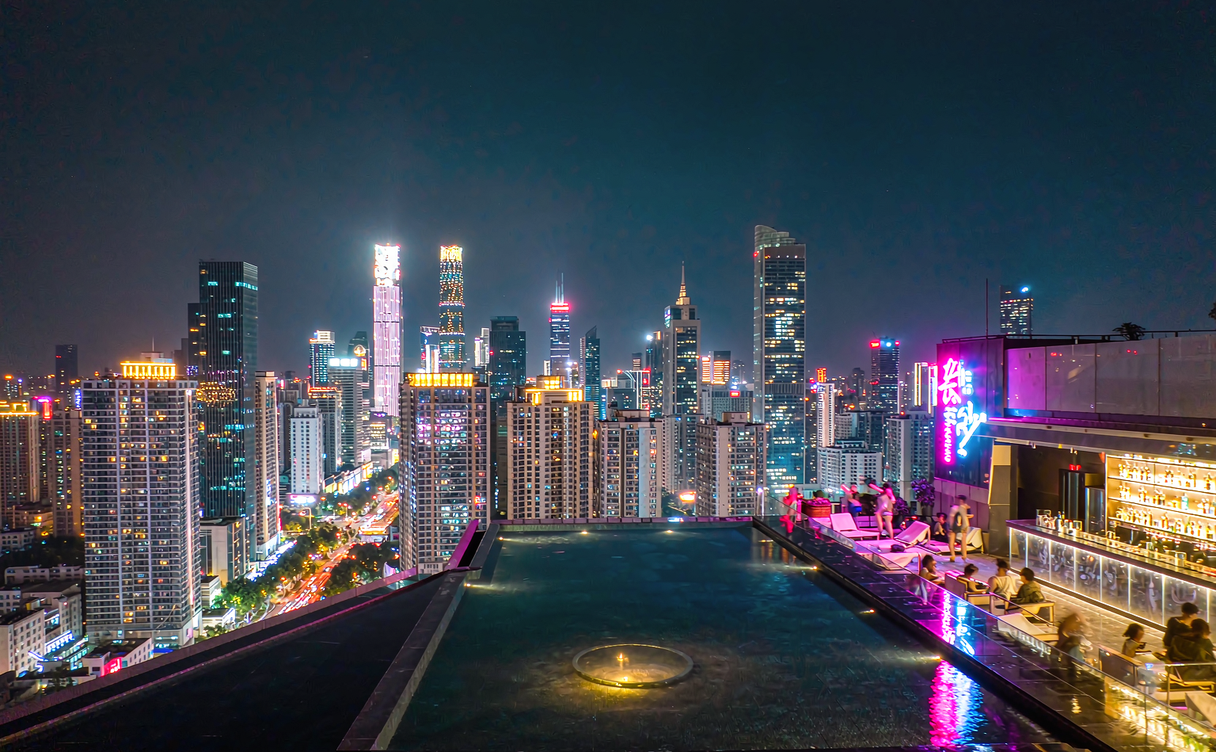
Changsha hotels with Xiang River view cluster on the northeast bank around the Beichen Delta development and along Xiangjiang Middle Road. This is where the international riverfront five-stars sit, and the premium is real but not outrageous: expect ¥800–1,500 (US$112–210) for a high-floor river room, against ¥600–900 for a city-facing room in the same building.
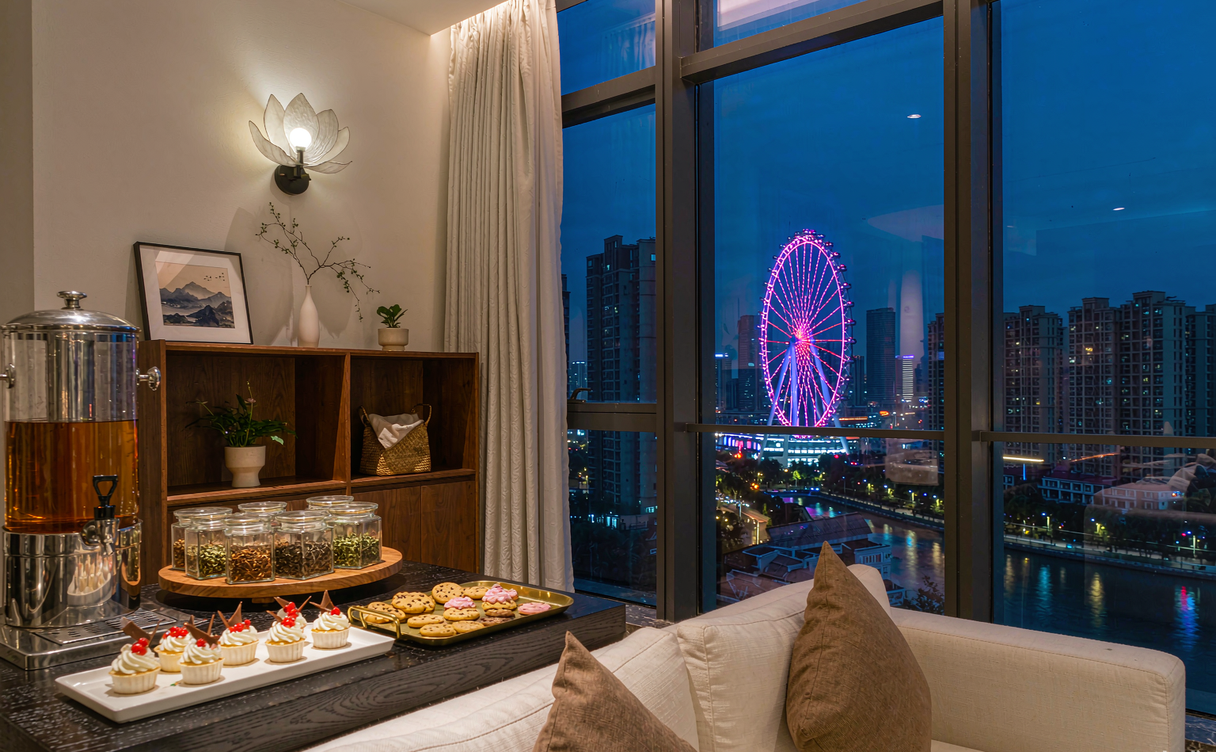
Two things you are paying for. First, Orange Isle and the Ferris-wheel-and-tower skyline reflected in the water at night. Second — and this is the detail most booking sites bury — Changsha runs a fireworks display over Orange Isle on Saturday evenings through much of the warm season, usually starting around 20:30 and lasting roughly 20 minutes. River-view rooms on those Saturdays sell out seven to ten days ahead and cost 40–60% more. If fireworks are the plan, book early and confirm the room faces southwest toward the isle.
The trade-off: the riverfront hotels are a 10–15 minute taxi from the food streets, and taxis are genuinely hard to flag there after 22:30. Use a ride-hailing app.
Yuelu and Hunan University: The Value Side
Cross to the west bank and rates drop by a third. The Yuelu district around Hunan University and Yuelu Mountain is leafy, student-priced and surprisingly good for eating — the lanes behind the campus are full of ¥8–20 noodle and rice-bowl shops.
- Budget: ¥110–200. Student-district chains and guesthouses; some do not accept foreign passports, so verify before paying. Changsha budget hotels for foreigners are easier to find on the east bank.
- Mid-range: ¥260–420. Business hotels near Xihu Park and Wangyue Road, plus a few small design hotels.
Who it suits: travellers here for Yuelu Mountain (free entry to the park; Aiwan Pavilion and the Song-founded Yuelu Academy charge about ¥40–50), Hunan Museum visitors, and anyone who wants quiet. Who it does not: night owls, and anyone with a 07:00 train.
Station and Airport Zones
| Hub | What it serves | Hotel rates | Notes |
|—|—|—|—|
| Changsha South Railway Station | High-speed to Guangzhou (2 hr 20 min), Wuhan (1 hr 20 min), Beijing (5–6 hr) | ¥180–420 | Metro Lines 2 and 4; big, so allow 20 min inside |
| Changsha Station (city) | Conventional and some EMU services | ¥140–320 | Line 2; older hotel stock |
| Huanghua International Airport | Domestic plus regional international | ¥260–480 | Maglev to Changsha South in about 20 min, ¥20; Line 6 also reaches the terminals |
For Changsha hotels for a Zhangjiajie trip, the practical setup is one night near Wuyi Square, then a morning departure from Changsha South. Rail routings to Zhangjiajie run roughly 3–4 hours depending on the service, flights take 50–60 minutes, and coaches take about four and a half. Store luggage at the hotel if you are looping back — most keep bags free for returning guests. Our Zhangjiajie travel guide explains why you want two full days there rather than one.
When to Come, and What It Does to Rates
October and November are the best weeks: 15–25°C, dry, clear evenings on the river. Rates run 15–25% above the annual floor and the 1–7 October holiday is the single most expensive week of the year.
March to May is mild (14–26°C) and increasingly wet toward June, but it opens crayfish season. From roughly May to August the crayfish halls run until 02:00 and hotel demand rises on weekends.
June to August is brutal — 33–38°C with high humidity, and Changsha has a long-standing reputation as one of the Yangtze basin’s “furnace” cities. Rooms are cheaper than in autumn, and you will use the air-conditioning hard. Confirm the hotel has in-room controls, not a central system.
December to February is damp and 2–10°C, feeling colder than the numbers because heating is not standard this far south. Ask directly whether rooms are heated. Rates fall to ¥120–200 for chains, ¥600–900 for river-view five-stars — the best value of the year, apart from Spring Festival week.
Weekends everywhere in Changsha cost 25–45% more than Monday to Thursday. Domestic weekend tourism here is intense.
Booking Tips We Give Every Client
- Filter for foreign-guest registration first. Central three-star-and-up properties are reliable; small west-bank guesthouses often are not. Our China hotel booking guide for foreigners covers how to check before you pay a deposit.
- Know the chain tiers. Hanting and Home Inn are basic and cheap; Ji Hotel and Atour are the reliable mid-scale step up; Orange Crystal and Manxin add design. Our China hotel chains comparison matches brands to budgets so you are not guessing from photos.
- Request a high floor away from the street. In Changsha this is not a nicety. Specify it in the special-requests field in Chinese if you can.
- Book Saturday river views 10 days out, or shift your river night to Sunday and save.
- Deposits of ¥200–500 are normal, released in 3–10 working days.
- Free umbrella loan is common; useful from April to June.
Sample Two-Night Plan
- Day 1: arrive Changsha South, metro Line 2 to Wuyi Square, check in. Afternoon at Taiping Street and the Hunan Museum. Evening: Pozi Street for stinky tofu and clay-pot dishes, then the pedestrian street crowds.
- Day 2: morning ferry or bridge walk to Orange Isle, then Yuelu Mountain and Yuelu Academy on the west bank. Late afternoon back east. Saturday night: river bank for the fireworks; other nights, crayfish in Kaifu.
- Day 3: early departure for Zhangjiajie or Guangzhou.
Practical Tips
- Chilli is not optional in most Hunan restaurants; “bu yao la” (no chilli) gets you a bewildered look and often a still-spicy dish. Ask for “wei la” — mild.
- Milk tea queues near Wuyi Square can be 40 minutes. Order through the shop’s mini-programme instead.
- Cash reserve of ¥100–200 helps at night-market stalls, though mobile payment dominates.
- City background worth five minutes before arrival: the Wikipedia entry for Changsha covers the Mawangdui tombs and the city’s rebuilt-from-nothing 20th century, which explains why the centre looks so new.
- Airport transfer: the maglev to Changsha South plus one metro line beats a taxi in rush hour, and costs about a tenth as much.
FAQ
Which area is best for a first visit?
Within walking distance of Wuyi Square, on a courtyard-facing room. You get the food, the metro interchange and the old streets, at ¥320–550 for a solid mid-range room.
Are river-view rooms worth the extra?
On a Saturday in fireworks season, yes. On other nights, spend the difference on dinner and walk the riverside promenade instead.
How does Changsha compare with Wuhan on price?
Changsha runs slightly cheaper at the mid-range and noticeably cheaper for five-star river views. If you are routing between them, compare with our best hotels in Wuhan list.
Do hotels have heating in winter?
Not universally — Changsha sits south of China’s central-heating line. Confirm “地暖” (floor heating) or a room air-conditioner with a heat function before booking December to February.
Is Changsha safe to walk at night?
Yes, including the busy bar streets, which are heavily policed and crowded until late. Normal city caution applies around closing time.
Written by Karl, China Travel Places — updated August 2026.