

Beijing hot pot is the capital’s communal winter ritual, and it is the meal I recommend to anyone who wants to understand the city’s palate without leaving the table. Unlike the fiery broths of the south, the Beijing hot pot style is built around a clear, gentle mutton broth and a copper pot heated by charcoal — a meal that is as much about the dipping sauce and the company as the cooking. On my first freezing February in Beijing, China, a colleague dragged me into a steamy hutong restaurant, and I have measured every winter since against that first bowl.
Beijing hot pot style
The defining feature of Beijing hot pot style is restraint. The pot itself is the star: a split or central charcoal-heated copper vessel, often with a chimney in the middle, that keeps a light broth — sometimes just scallion, ginger, and dried date — at a gentle simmer. You do not boil the flavor into the soup; you let the ingredients speak. Thin slices of lamb and beef are the core, swished for a few seconds until just opaque, then dipped into a sauce you build yourself. The result is clean, warming, and endlessly repeatable, which is exactly why Beijingers treat it as comfort food rather than spectacle.
Beijing lamb hot pot
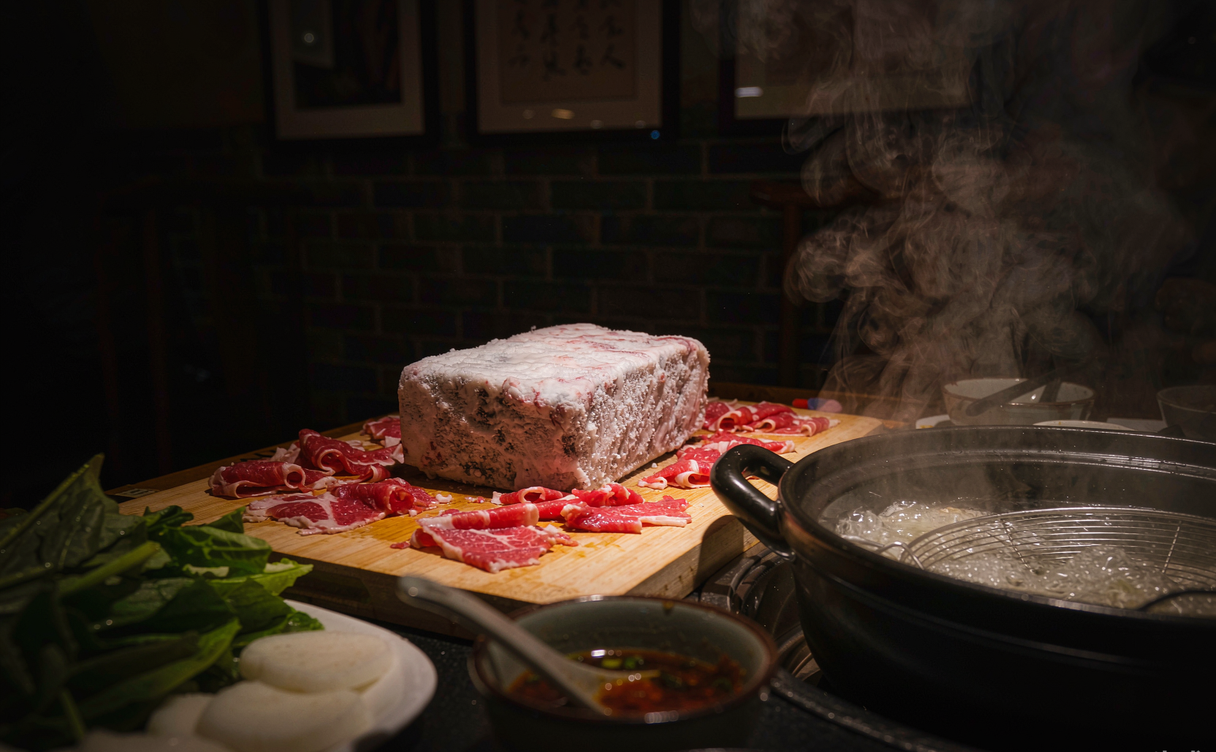
At the heart of the tradition is Beijing lamb hot pot, made with slender slices of northern mutton that have almost no gaminess when sourced well. The classic accompaniments are firm tofu, translucent glass noodles, and winter vegetables like Chinese cabbage and sesame leaves. The magic, though, is the dipping sauce: a base of toasted sesame paste (zhimajiang) loosened with broth, then seasoned with fermented tofu, chive flower paste, soy, and a scatter of cilantro and scallion. Every table mixes its own, and the proportion of chive flower to sesame paste is a quiet point of local pride. Get that sauce right and even a plain slice of lamb becomes something you think about for weeks.
Best Beijing hot pot restaurant types
When people ask for the best Beijing hot pot restaurant, the honest answer is that the city has two poles. The time-honored houses — the century-old names around Qianmen and Wangfujing, and the no-frills hutong spots where the copper pots have been fired for generations — serve the purist version and charge moderate prices, typically RMB 80–150 per person with drinks. Then there are the modern chains, including the service-heavy national brands, which wrap the same ritual in sleek dining rooms and offer everything from Wagyu to vegetable platters, usually RMB 100–180 per head. My advice: do one old-school meal for authenticity, and if you want convenience and English menus, a chain is perfectly respectable. Either way, go with at least three people so you can order widely.
Where to eat hot pot in Beijing
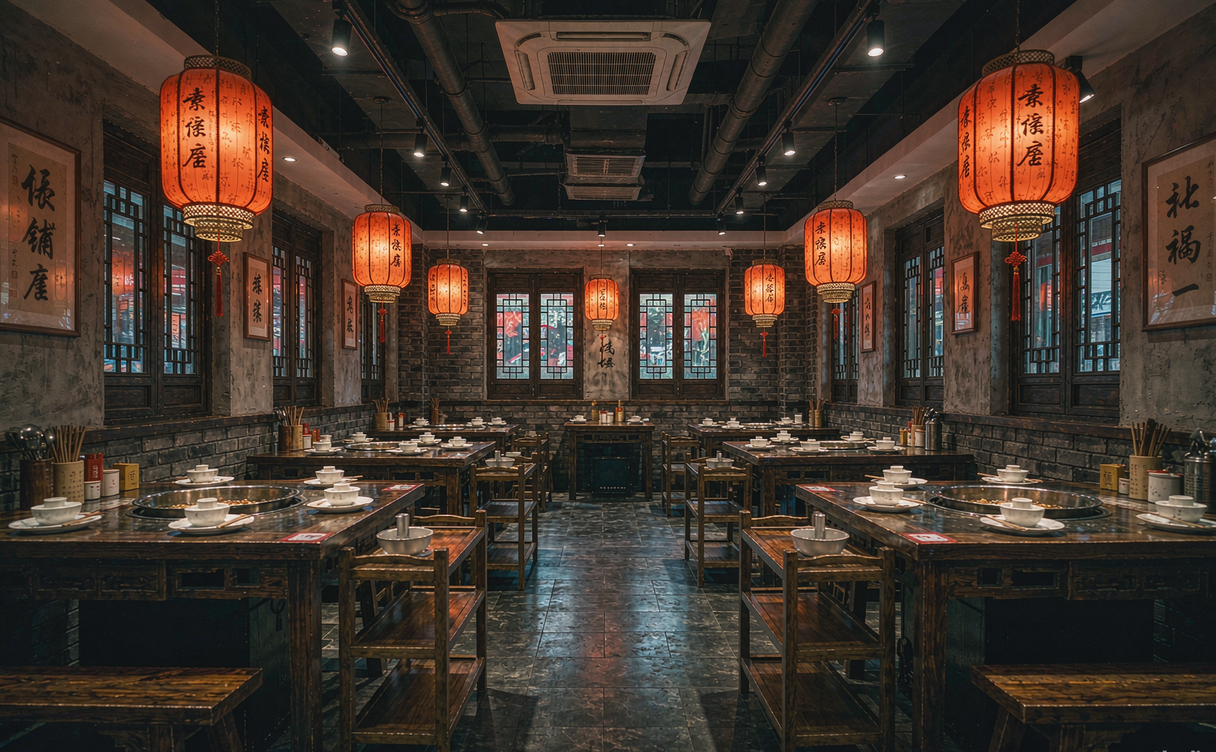
Deciding where to eat hot pot in Beijing comes down to neighborhood. Qianmen and the hutongs south of the Forbidden City concentrate the heritage restaurants and the most atmospheric rooms, often in courtyard houses where the steam fogs the windows in the best way. Wangfujing and the embassy-district areas lean toward the polished chains and are easiest for visitors without Mandarin. The university districts and the southern suburbs hide the best-value neighborhood joints, where locals queue on winter weekends. Wherever you land, look for a place with a high turnover — the mutton should be sliced to order, not pre-packed, and the broth should be replenished from a fresh pot, not a powder mix. One practical note: the heritage houses rarely take online bookings and fill by 7pm on winter weekends, so arriving before 6 or after 8:30 saves a wait, while solo diners can usually slide onto a shared table and meet locals just as focused on the sauce as they are.
Beijing hot pot vs Sichuan
The comparison every newcomer makes is Beijing hot pot vs Sichuan, and the difference is the whole point. Sichuan hot pot assaults the broth with chili and numbing peppercorn, building heat into the soup itself, while Beijing hot pot keeps the broth mild and puts all the personality in the dipping sauce. One is an adrenaline sport; the other is a slow, social simmer. If you want to taste both sides of the country, our Chengdu hot pot guide covers the fiery version, and the China hot pot regional guide maps the whole spectrum from Chongqing to Inner Mongolia. I love both, but on a Beijing winter night the clear-broth version wins.
A Beijing food guide beyond the pot
Fitting hot pot into a broader Beijing food guide is easy because it pairs with the city’s other icons. Do hot pot one night, then make a separate evening of Peking duck, and leave a daytime slot for the night markets where you can graze skewers and pancakes between sights. If you catch the Sichuan bug, the Sichuan snacks are the numb-and-spicy street bites that balance the capital’s mildness, and the whole tradition traces back centuries as part of a broader Chinese table culture. One last tip: the mutton is best in deep winter (December to February), when northern flocks are at their fattest and the clear broth tastes most comforting against the cold.
Practical etiquette and tips
A few habits make the meal smoother. Build your sauce before the food arrives, and keep a small dish of plain broth nearby to thin it as you go. Cook the lamb in small batches so the broth stays clear, and do not overload the pot. Charcoal pots get very hot in the center, so push delicate items to the cooler rim. Tipping is not expected at the old houses but is appreciated at chains. The whole tradition is part of a broader Chinese table culture you can read about in the overview of hot pot — but the fastest way to get it is to sit down, sauce up, and let the steam do the rest.
Final thoughts
Beijing hot pot is not the flashiest meal in China, and that is precisely its strength. It is humble, communal, and deeply tied to the rhythm of a northern winter — a clear broth, a copper pot, a bowl of sesame sauce, and the people you came with. For a traveler wanting to taste Beijing, China at its most unhurried, skip the spectacle for an evening and let the lamb and the steam tell you what the city is really like.