

We send travelers to Mati Temple (马蹄寺) when they have done the Rainbow Mountains and want the other, older Zhangye — the one carved by hand into a cliff face 1,600 years ago. Mati Temple is not a single building but a scattered complex of grottoes and shrines cut into the red cliffs at the northern foot of the Qilian Mountains, about 65 kilometers south of Zhangye city in the Sunan Yugur Autonomous County. The name means “Horse Hoof Temple,” from the legend of a hoof print a heavenly horse left in the rock. This Mati Temple guide is from a September 2025 visit, with the buses, tickets, and cliff walks we used, written for travelers who want cave temples without the Dunhuang crowds.
How to get to Mati Temple
The base city is Zhangye (张掖), on the high-speed line between Lanzhou and Jiayuguan, and from there the temple is a mountain transfer south. In 2025 a tourist bus ran from Zhangye to Mati Temple (about 1.5 to 2 hours, RMB 25 to 35), or you could take a DiDi or hired car for RMB 180 to 260 each way. The road climbs out of the Hexi Corridor oasis into cooler, greener foothills, and the last stretch winds past Yugur herding camps. If you are building the classic loop, the Qinghai–Gansu loop itinerary shows where Mati Temple fits between the lakes and the fortresses, and it is an easy half-day detour from Zhangye. Our Zhangye Danxia rainbow mountains guide is the natural pair, because most people do the two in one trip — Danxia in the colored dawn, Mati Temple in the afternoon.
For the train in, our China high-speed train guide for foreigners covers the booking app and ID steps, and I used it to lock the Zhangye seat. From the west, the Jiayuguan travel guide is the next stop on the corridor, an hour west by train, so Mati Temple slots between the two fort-city stops. In our experience, doing Mati Temple as a day trip from Zhangye is simplest — sleep in the city, bus up, bus back — because the cliff sites close around 17:00 and the mountain guesthouses are basic.
Best time to visit Mati Temple
The best time to visit Mati Temple is summer (June to August) and early autumn (September to early October). Summer brings green Qilian meadows, cool daytime highs of 18 to 24°C, and the Yugur herders out with their flocks — the prettiest setting the cliffs get. Early autumn is dry and clear, with golden grasslands and the cleanest light for the red rock. Spring (April to May) is windy and dusty on the corridor, and winter is brutally cold, with the access road sometimes iced and the upper grottoes shut. We went in September and had blue sky and thin crowds, which is the window I recommend.
Our best time to visit China guide sets the national windows if you are stacking Gansu with Qinghai or Sichuan, and it steered us to September. For more ideas on the wider route, best things to do in China is a useful scan before you commit.
The cliff grottoes: North Temple and the Thousand Buddha Caves
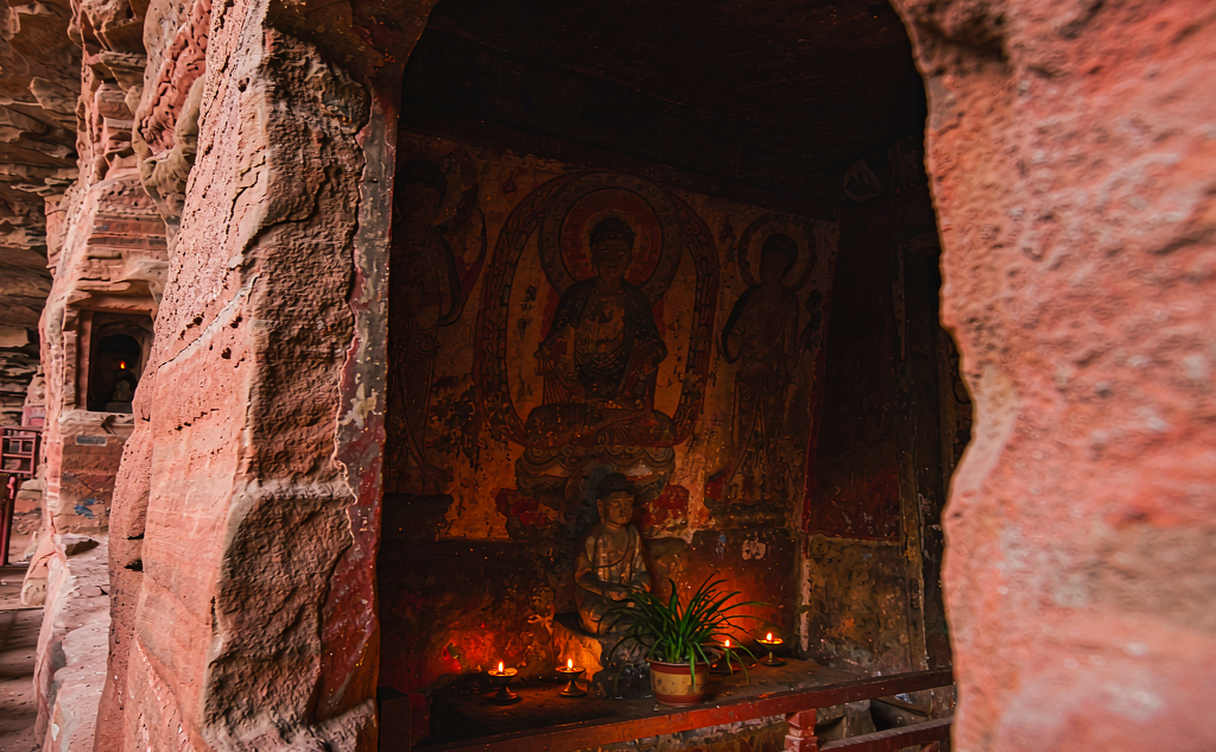
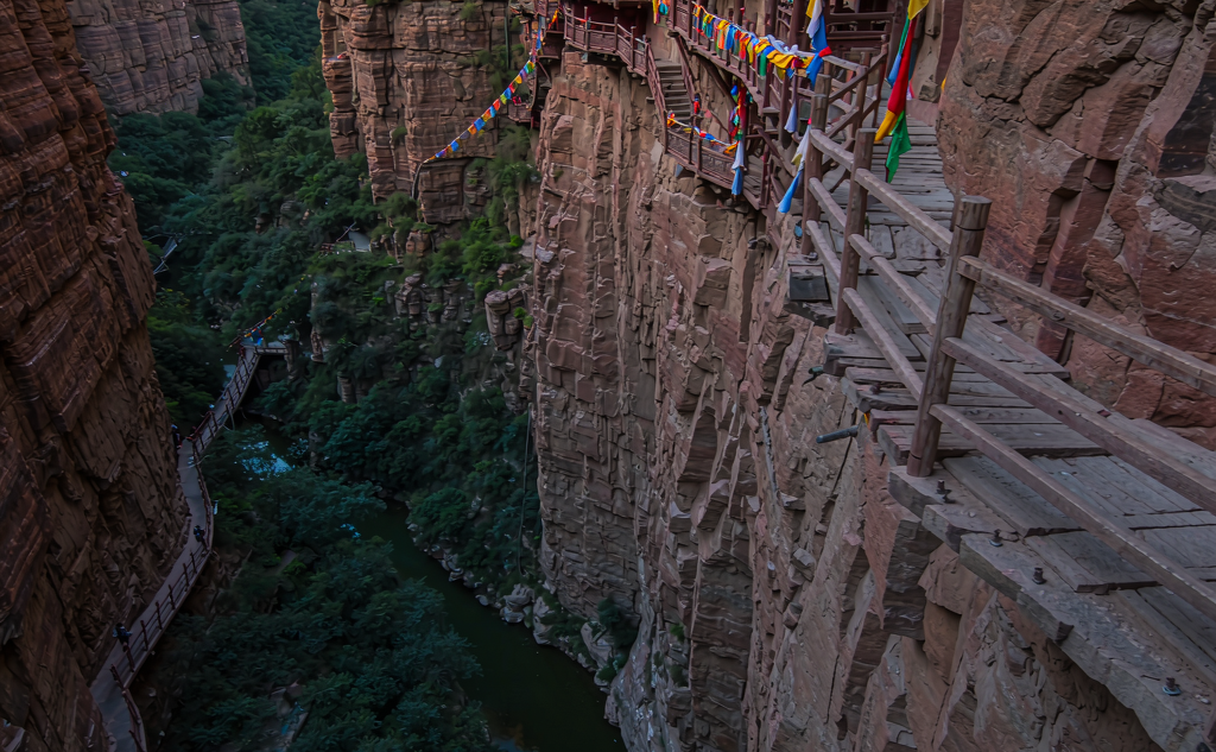
The cliff grottoes Gansu are the point of the trip, and at Mati Temple they come in clusters. The North Temple (北寺, or Puguang Temple) is the dramatic one: a stack of cave shrines and wooden balconies pinned to a near-vertical red cliff, reached by a series of plank walkways and iron staircases that tip you out over the valley. I climbed the full set and it was more exhilarating than reverent — the wood decks sway, the view drops away, and the caves themselves hold small Ming and Qing statues and fading murals. The ticket for the main Mati Temple area (North Temple plus the Thousand Buddha Caves) was about RMB 35 to 60 in 2025 depending on season.
The Thousand Buddha Caves (千佛洞) are a short shuttle or walk away: a row of niches with carved and painted Buddhas cut into the rock, quieter and easier on the knees than the North Temple climb. We have sent travelers here who skipped the high climb and still called it a full visit, because the lower caves are the better-preserved art. The central legend — the horse hoof print — is shown in a small shrine, a real indentation in the stone that the site is named for. Bring a head for heights; the North Temple decks are not for anyone who freezes on open stairs, and there is no elevator shortcut.
Things to do at Mati Temple and the Jinta Temple caveat
Things to do at Mati Temple spread beyond the two main clusters. The upper Guanyin caves (上、中观音洞) are smaller hermit shrines higher on the cliff, good if you want the climb and the quiet. The real treasure, though, is Jinta Temple (金塔寺), about 15 kilometers away, which holds rare high-relief flying apsara carvings from the Northern Liang period (4th–5th century) — among the finest early cave art in China. The catch: Jinta Temple is strictly limited, often open only by special permit and a guided small-group visit (extra RMB 100-plus and advance arrangement), and it was closed on our trip. If cave art is your reason for coming, ask the Zhangye ticket office about Jinta access before you travel, because showing up and expecting in is a mistake we have watched visitors make.
The setting is half the experience. Mati Temple sits where the corridor meets the mountains, so between the cliffs you get Yugur grassland, yak herds, and the white tents of the herders. A short walk from the grottoes puts you on the meadow with the red wall behind you and the Qilian snow line ahead — a photo no other Zhangye stop gives you. We booked the shuttle and paid on site with Alipay; the herder stalls take WeChat, so keep both apps live. Our China travel guide for first-timers has the payment and SIM notes that make a corridor day smooth, because you will be scanning codes more than handling cash.
Where to eat and stay
Food at Mati Temple is Hexi Corridor and Yugur cooking, heavier and meatier than the south. The dish to order is hand-grabbed mutton (手抓羊肉), boiled and eaten with salt — a plate for two was RMB 68 to 98 at the small restaurants by the gate in 2025 — plus yak (牦牛) dishes and the Yugur dairy, thick yogurt and cheese that tastes like the steppe. A noodle bowl was RMB 15 to 22, and the local flatbread filled the gaps. The herder tents sometimes sell warm milk tea (RMB 8 to 12), which is the move on a cold afternoon at 2,500 meters.
Stay is best done in Zhangye. The city has clean hotels from RMB 150 to 350 a night and the famous Danxia guesthouses if you want the dawn at the rocks; at Mati Temple itself the lodgings are basic guesthouses (RMB 120 to 220) for people who want a sunrise on the cliffs. We slept in Zhangye and bused up, which kept the cost down and the comfort up. Spend for the half-day was about RMB 200 to 350 a person including the bus and lunch, cheap for a cave-complex visit.
A practical Mati Temple itinerary
Here is the one-day plan we used. Morning: high-speed train or arrival in Zhangye, bus south to Mati Temple (aim to arrive by 10:00). Late morning: North Temple climb and the plank walks. Midday: Thousand Buddha Caves and the hoof-print shrine, lunch at the gate. Afternoon: meadow walk and, if open, the Jinta Temple permit visit; bus back to Zhangye for the Danxia dawn the next day. If you pair with Danxia, do Danxia first (sunrise) and Mati Temple the same afternoon, because the two are only about 2 hours apart by road and the contrast — colored earth then red cliff caves — is the best one-two in Zhangye.
The site and its history are summarized at Wikipedia’s Mati Temple page if you want the Northern Liang background before you climb, because knowing the carvings predate the Tang makes the small caves mean a lot more when you stand in them.
Pairing with the Danxia? Do the Rainbow Mountains at sunrise, then bus south to Mati Temple the same afternoon — the two are close and the contrast is the best one-two in Zhangye.
Getting around and final tips
Inside the area the shuttle covers the spread-out clusters, so ride it rather than walking the gorge road. Carry cash for the herder stalls, download offline maps because signal drops at the cliffs, and pack a layer even in summer — the Qilian foot was 10 degrees colder than Zhangye city when we were there. Mati Temple rewards a head for heights and an early bus: the plank walks are exposed, the Jinta permit is limited, and the light on the red rock goes soft by late afternoon.
Want the cave art, not just the climb? Call Zhangye about Jinta Temple access before you travel, because the best carvings need a permit and a guided group, not a walk-up ticket.
If you are building a Gansu route, Mati Temple sits neatly between the fort cities and the lakes, and our China travel guide for first-timers ties the train hops together so the whole loop reads as one trip.
Planning a longer Gansu and Qinghai trip? Explore our other China guides to link Mati Temple with the corridor and the plateau into one smooth route before you book.