

The first time our guide pulled the car off the dusty road south of Shigatse, Tibet, China, and pointed at a walled grey fortress on the plain, I thought we had taken a wrong turn toward a medieval castle. That fortress is Sakya Monastery, and this Sakya Monastery guide exists because almost nobody puts it on a first Tibet, China itinerary — which is exactly why it rewards the travelers who make the detour. Sakya is the seat of the Sakya school of Tibetan Buddhism, and its grey-and-red walls hold what scholars call the “second Dunhuang”: a library of manuscripts and art that survived centuries of upheaval on the high plateau.
We have sent travelers there every season for the last five years, and the reaction is always the same — a slow exhale at the scale of the place. Unlike the gold-and-white glamour of the Potala, Sakya feels monastic in the oldest sense: austere, scholarly, and quietly immense. If you are building a broader trip, our China first-timer travel guide shows how to thread the plateau into a national route without burning out on altitude.
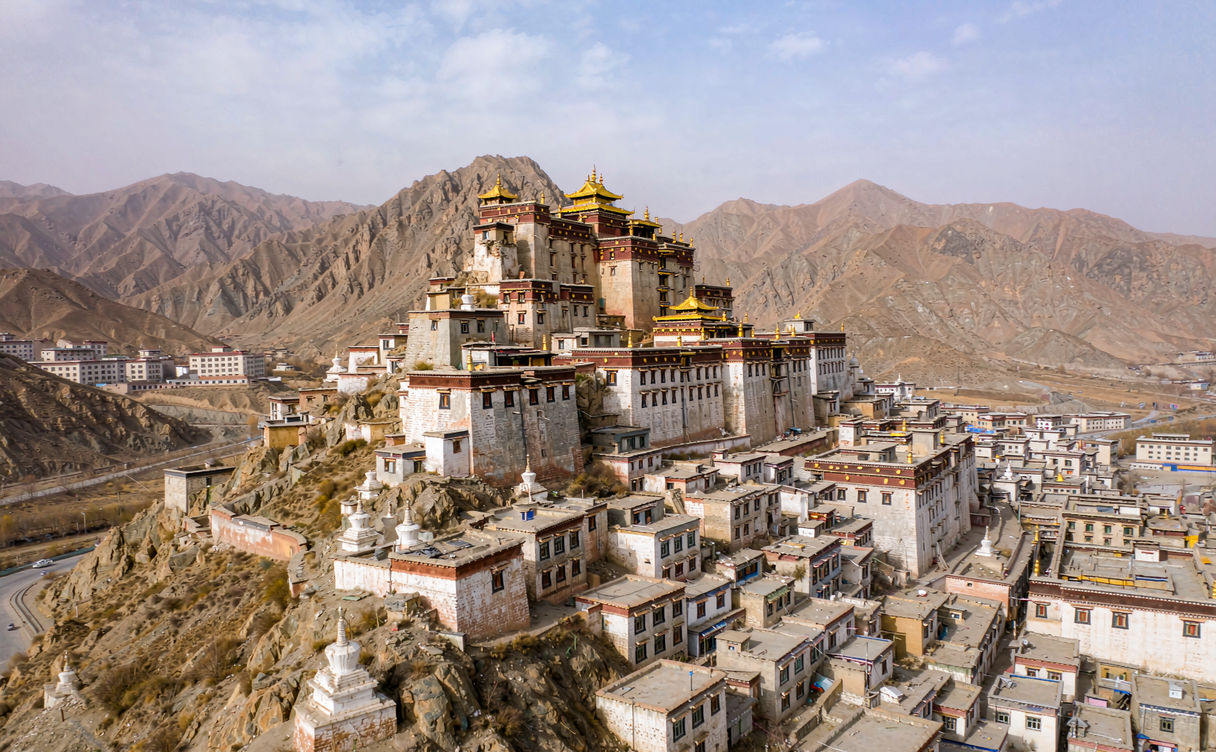
Things to do at Sakya Monastery
The main things to do at Sakya Monastery fall into three layers. First, walk the north monastery (the older, surviving section) and trace the 4-meter-thick earthen ramparts that give Sakya its castle silhouette. Second, step inside the great assembly hall, where the towering pillars and pinned butterfly-origin thangkas are unlike anything in Lhasa, Tibet, China. Third, ask your guide to open the manuscript library — the famous Sakya monastery archives hold an estimated 40,000 to 60,000 volumes and scrolls, including rare Sanskrit grammars, medical texts, and historical records of the Sakya dynasty that once ruled much of Tibet, China. Photography inside the archive is strictly forbidden, and that restriction is part of the reverence.
A practical note from our own scouting trips: the south monastery was largely destroyed in the last century and what stands today is a reconstruction, while the north monastery preserves the authentic core. Budget two to three hours for a meaningful visit, and hire the on-site English-speaking monk guide (around RMB 50–100) rather than relying on signage, which is minimal. Travelers who enjoy this kind of deep, low-crowd heritage will also love the slower pace described in our best things to do in China overview, which pairs headline sites with hidden ones like Sakya.
Best time to visit Sakya
The best time to visit Sakya is the same window that suits the rest of the plateau: late April to June and September to October. In these months the road from Shigatse, Tibet, China is dry, the passes are snow-free, and daytime temperatures at Sakya’s 4,280-meter elevation hover around 10–18°C. July and August bring the domestic travel rush plus afternoon rain, while winter (November–March) is brutally cold, with nights well below -10°C, though the skies are impossibly clear and you may have the monastery nearly to yourself.
Because timing on the plateau is a logistics question as much as a weather one, our best time to visit China guide maps Tibet, China against the rest of the country so you can stack regions into one trip. I personally favor late September: the barley fields around Sakya turn gold, the light is cinematic, and the tourist buses that clog Lhasa, Tibet, China thin out completely out here.
How to get to Sakya
Understanding how to get to Sakya starts in Shigatse, the usual base. From Shigatse, Tibet, China, it is roughly 150 kilometers southwest to Sakya county on a paved but slow road — plan 3 to 4 hours by private car because the route climbs and dips through several river valleys. Most of our travelers arrive as a day trip or an overnight stop on the overland route between Shigatse and the Everest region. There is no train to Sakya; the nearest railhead is the Qinghai–Tibet line into Lhasa, Tibet, China. If you are coming from the east, our foreigner high-speed train guide explains how to reach the plateau gateway cities by rail before you switch to a vehicle.
Two rules every foreign visitor must respect. First, you need the Tibet Travel Permit, issued only through a registered Tibetan operator after you book a guided trip — independent travel is not permitted in Tibet, China. Second, Sakya sits within the Shigatse border zone, so confirm with your operator whether an extra border permit is required on top of the standard one. We handle both as part of every Sakya booking, and the paperwork usually adds RMB 200–400 in administrative fees folded into the tour.
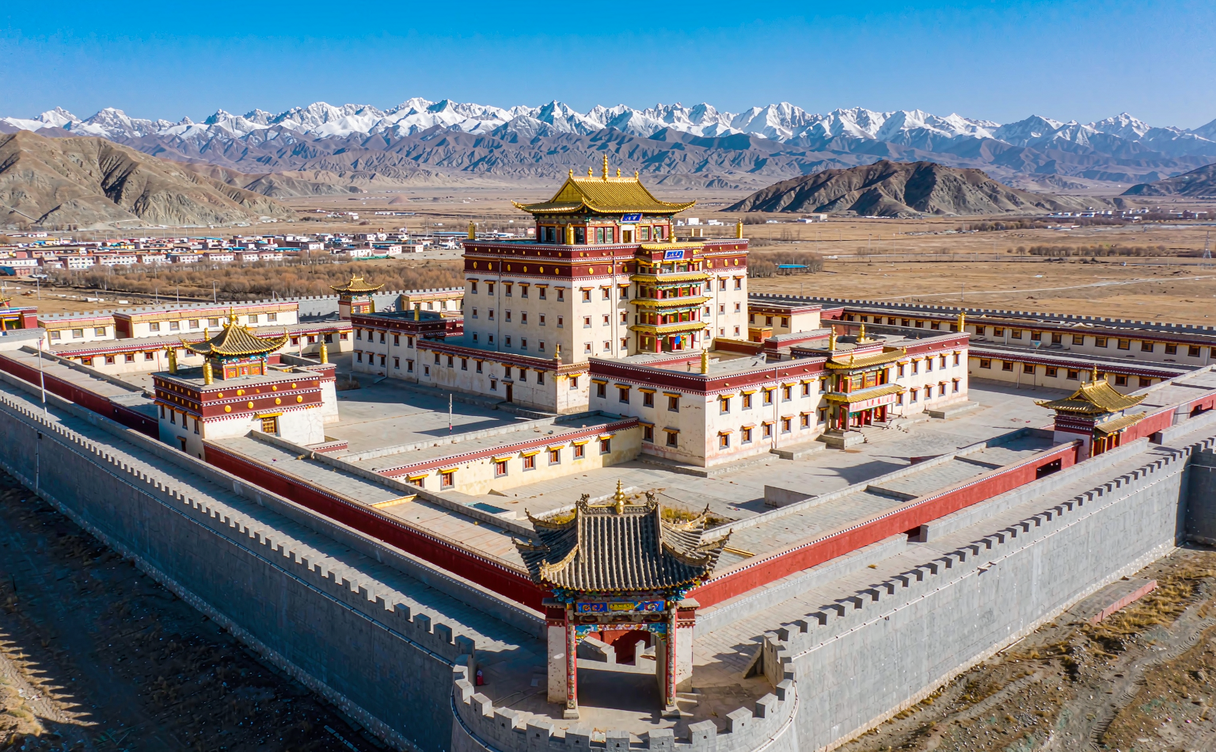
Sakya Monastery Tibet: why it matters
Placing Sakya Monastery Tibet in context helps explain its pull. The Sakya order rose to political power in the 13th century under the Yuan court, and the monastery became both a spiritual center and an administrative capital — which is why its archives are so politically and historically rich. The founder, Sakya Pandita, was a scholar of the kind the plateau rarely produces, and you can feel that bookish gravity in the halls. For the scholarly background, the Sakya Monastery entry on Wikipedia is a solid, citation-heavy starting point before you go.
We have watched travelers who expected a quick photo stop end up sitting on the rampart wall for an hour, just watching the wind move across the plain. That is the Sakya effect. It is also a fine contrast to the bustling ancient towns of the interior; our best ancient towns in China guide collects those lower-altitude experiences if you want to balance the solemnity of the plateau with the street life of places like Fenghuang or Lijiang, China.
Where to stay and what it costs
Sakya town has modest guesthouses and a couple of small hotels, typically RMB 150–350 per night for a clean, heated room — heating matters, because the nights are cold year-round. Most foreign visitors overnight in Shigatse, Tibet, China instead (RMB 300–700 for comfortable international-standard hotels) and drive down for the day. Meals are simple: barley porridge, yak-meat noodles, and butter tea run RMB 25–60 per person. There are no ATMs that reliably take foreign cards in Sakya, so carry enough RMB cash for the entry ticket (around RMB 50 for the north monastery) and meals.
Our honest take
If you only have a week in Tibet, China, Sakya may feel like a stretch. But for travelers on a 10-day-plus circuit, it is the single most “undiscovered” major monastery we send people to, and the Sakya monastery archives alone justify the drive for anyone curious about Himalayan history. Build in the permit lead time, go in the shoulder season, and let your guide unlock the library. This Sakya Monastery guide is really an argument for slowing down: the plateau’s best sights are rarely the loudest ones.
When you stand inside the north monastery and look up at the pinned thangkas — some said to be centuries old — the silence has weight. I remember a retired librarian from our group who simply whispered, “this is a library that outlived empires.” She was not wrong. The manuscripts here predate most of what survives in the great collections of the interior, and the fact that they sit behind a mud wall at 4,280 meters is its own kind of miracle.
For travelers chasing similar off-the-beaten-path energy, our Xinjiang, China travel guide covers another vast, history-soaked region where the Silk Road archives and fortresses tell a parallel story to Sakya’s. The two areas reward the same temperament: patience, curiosity, and a tolerance for long drives between wonders.
One practical closing thought: altitude at Sakya is no joke, so treat the visit as part of a gradual climb rather than a dash from Lhasa, Tibet, China. Spend the night in Shigatse first, hydrate, and walk slowly on the ramparts. The monastery is not going anywhere, and a calm, acclimatized visit beats a rushed one every time. For deeper reading on the region’s seasons and festival calendar, our best time to visit China guide is the resource we hand to every Sakya-bound traveler before they book.