

Gansu is the thin, windswept province that stitches China to the Silk Road, and its food tells that story better than any museum. We have sent travelers here who expected arid, forgettable fuel and instead fell for hand-pulled Lanzhou noodles at 7 a.m., cumin-heavy lamb skewers at midnight, and the Halal, Hui, Dongxiang, and Tibetan influences that meet nowhere else in China quite like this. This Gansu cuisine guide covers the dishes to seek out, the cities that do them best, and the practical details — prices, seasons, and how to order — that turn a transit stop into a genuine food trip. Compared with the flavors just west, our food guide to Xinjiang, China shares the same lamb-and-noodle DNA but pushes it hotter and richer.
Lanzhou beef noodles: the dish that defines the province
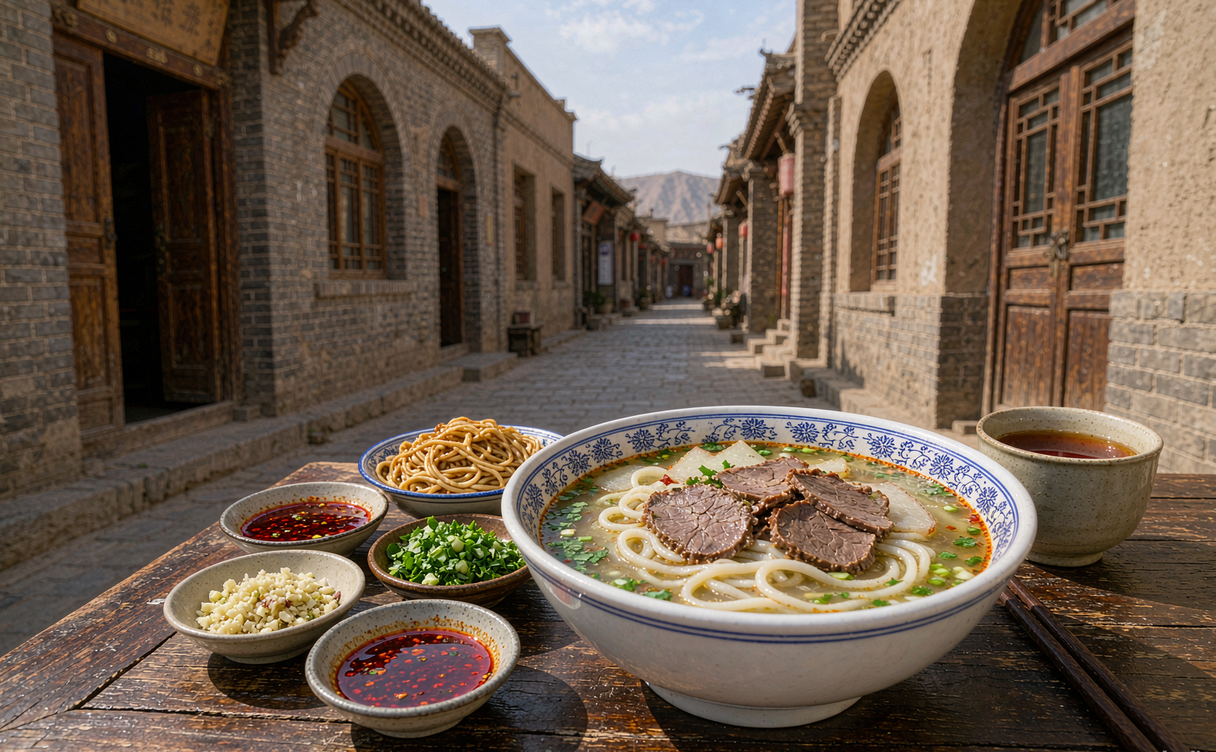
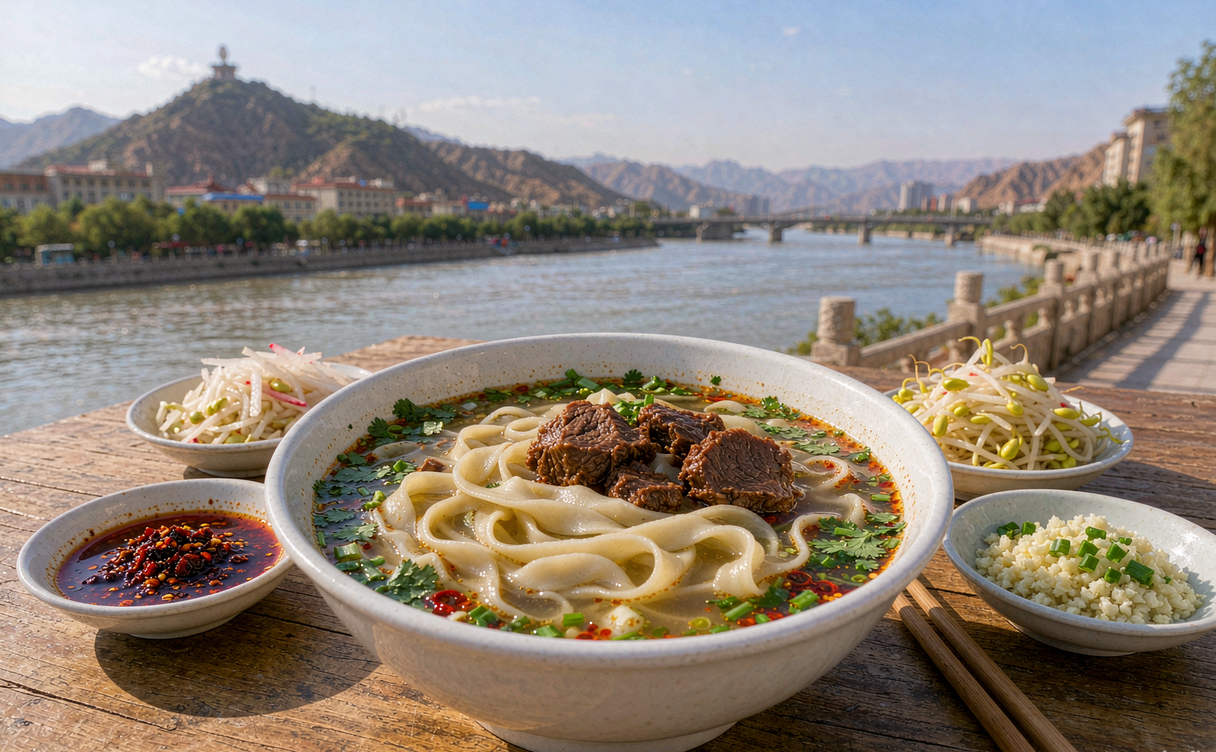
If you eat one thing in Gansu, make it a bowl of Lanzhou niu rou mian — beef lamian. A cook pulls a single strand of dough into thin, wide, or ribbon noodles to your order, drops them into a clear beef broth, and finishes the bowl with a slice of radish, a spoon of crimson chili oil, and a scatter of scallion and cilantro. The local saying runs “one bowl of noodles, one clear, one white, one red, one green, one yellow,” describing the broth, radish, oil, herbs, and noodles. A standard bowl is ¥8 to ¥15, and the ritual is to eat it standing at the counter within minutes of serving, before the noodles swell. We have watched travelers queue at 6:30 a.m. outside famous shops near Lanzhou’s Yellow River bridge — go early, because the best broth sells out by mid-morning, and a late bowl is a pale imitation.
Liangpi, ga lan, and the cold-noodle shelf
Not every Gansu noodle is hot. Liangpi (cold skin noodles) are chewy wheat or rice sheets dressed in vinegar, garlic, and chili, sold for ¥10 to ¥18 as a summer staple. Ga lan (hand-rolled “cat’s ear” noodles) and nimazi (noodles tossed with garlic-vinegar sauce) round out the regional shelf, and in Linxia you will find Hui versions perfumed with Sichuan pepper. The contrast between the hot lamian and the cold, sour liangpi is the easiest way to understand how Gansu eats across the day: hot broth to start, cold noodles to refresh, grilled meat to finish, and a sweet milky tea to close.
Lamb, cumin, and the Silk Road grill
Gansu eats a lot of lamb, and the Silk Road grill is the heart of its street food. Yang rou chuan — mutton skewers dusted with cumin, chili, and salt — cost about ¥3 to ¥6 a stick and are best eaten by the half-dozen outside night markets in Lanzhou, Zhangye, and Jiayuguan. Dongxiang hand-grabbed lamb (shou zhua yang rou) is a feast dish: boiled lamb served with raw garlic and salt, eaten with the hands, running ¥60 to ¥120 per person at a proper restaurant. The cumin-and-chili profile is the province’s signature, a reminder that the spice road ran straight through here and that the best skewers are cooked over real charcoal, not a flat-top griddle.
Dunhuang and the western frontier table
Out in Dunhuang, the menu shifts toward the desert frontier. Look for “wind-dried” lamb, braised Yellow River carp, and stuffed flatbreads, plus the famous local twist on noodles with braised pork. A casual dinner for two runs ¥80 to ¥150, and the night market behind the main drag is where we send travelers for skewers and melon after a day in the sands. The oasis town rewards a slow evening more than a rushed lunch stop, and the apricots and grapes grown in its fields are a sweet, cheap reward in late summer.
Bread, dairy, and the Hui pantry
The Hui and Dongxiang communities give Gansu a bakery culture that coastal China lacks. Look for xuan bing (layered flatbread), you xiang (fried twisted dough), and milky, slightly salty su you cha (butter tea) that warms you against the plateau wind. In Linxia, the pastry stalls near the mosques are the best we have found, and a breakfast of bread, tea, and a boiled egg costs under ¥15. These are the quiet foods that locals eat daily and visitors overlook, and they tell you more about Gansu than any single famous dish.
Tibetan and Hui corners: Gannan and Linxia
Two regions deserve a detour for their minority cuisines. Gannan, in southern Gansu, is Tibetan — think butter tea, tsampa (roasted barley flour), and hearty yak-meat stews that sustain high-altitude travel. Linxia, the “little Mecca” of Gansu, is Hui and Dongxiang, famous for its polished Halal banquets and sweet, milky teas. We recommend treating these as day trips from Lanzhou with a local guide, since the best kitchens are unmarked and language can be a barrier without translation help, and because a guide helps you navigate the Halal customs respectfully.
A noodle-tasting day plan
If you want to eat across Gansu in a single day, we suggest a simple arc. Start at 7 a.m. with a hot lamian counter in Lanzhou, then mid-morning liangpi from a cold-noodle stall to reset the palate. Lunch is a Hui banquet in Linxia or a hand-grabbed lamb plate, followed by an afternoon of sweet milky tea and pastry. Dinner belongs to the night-market skewers, finished with a bowl of congee or a youtiao if you still have room. This rhythm keeps the food varied without overloading one meal, and it matches how locals actually eat — nibbling through the day rather than sitting down to one giant feast.
Drinks, fruit, and small comforts
Gansu’s drinks deserve attention too. The Hui and Dongxiang sweet milky tea is the everyday comfort, served in bowls at breakfast and again at stalls through the day for ¥3 to ¥6. In autumn, the melons and apricots of the Hexi Corridor — especially around Dunhuang — are juicy, cheap, and a perfect counter to cumin-heavy grilled meat. Ask for “suan mei tang” (sour plum drink) in summer to cut the heat. These small things are where the province’s Silk Road position shows most clearly: the teas lean Central Asian, the fruits lean oasis, and together they round out a meal better than any dessert menu.
One more practical note for visitors: because so much of Gansu’s best food is Halal, alcohol is not served at the Hui and Dongxiang restaurants where you will eat the best lamb. If you want a beer with your skewers, choose a Han-run grill in the city center rather than the mosque-district stalls, and always ask before bringing outside drinks inside. Respecting the custom keeps the welcome warm and the meal relaxed, which is the whole point of eating along the Silk Road.
When to go and how to order
The most comfortable food-travel window is May to June and September to October, when the heat and winter cold both ease. Our best time to visit China guide lays out the national calendar. Ordering is simple: point at the noodle width you want, confirm “bu la” (not spicy) or “la” (spicy), and scan-to-pay at almost every stall — though carry some cash for the smallest rural shops. Most Gansu food is Halal, so expect no pork and separate meat prep, which is useful to know when traveling with dietary preferences or when dining with Muslim friends.
The province’s place on the historic trade route is recognized by UNESCO through the Silk Roads World Heritage, and that same corridor is why Gansu’s kitchen feels more Central Asian than coastal Chinese.