

Few bodies of water carry the weight that Lake Manasarovar does. Tucked into the far southwest of Tibet, China, at nearly 4,600 meters, this vast freshwater lake lies in the shadow of Mount Kailash and has been a pilgrimage goal for Hindus, Buddhists, Jains, and followers of Bon for more than a thousand years. We have watched travelers arrive skeptical and leave transformed, and we think the lake earns every superlative. Because reaching it means crossing controlled parts of Tibet, China, begin with our China travel guide for first-timers to understand the permit path you will follow.
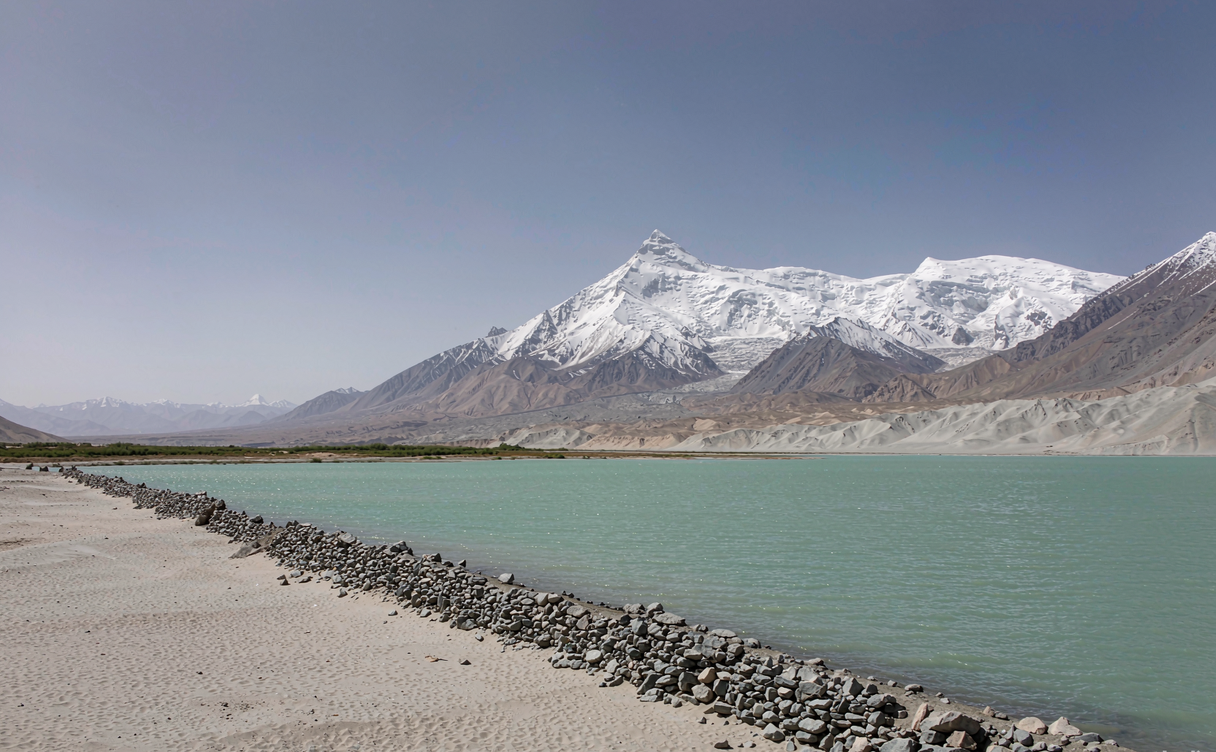
Manasarovar is not a pretty resort lake—it is raw, enormous, and exposed, ringed by barren hills and often whipped by wind. That is exactly the point. Stand on its shore and you feel the scale of the plateau and the depth of the devotion that pulls people here from across the Himalayas, and the silence at the water’s edge is the kind you remember for years.
How to Get to Manasarovar
The lake sits in Ngari Prefecture, roughly a four-to-five-hour drive south of Ngari Gunsa Airport. Most foreign visitors fly Lhasa to Gunsa (two hours, 1,500 to 2,500 RMB) and then hire a 4×4 with a guide for the run down to the lakeshore near Chiu Gompa. The alternative is the epic overland route: the highway west from Lhasa, a journey of more than 1,500 kilometers that takes the better part of a week with stops. Either way you cannot do this independently—Tibet, China requires a licensed guide and a Tibet, China travel permit, plus the additional Ali-region permits that the Manasarovar area demands. Budget 200 to 400 RMB in processing fees and book at least two to three weeks ahead.
The final stretch is unpaved in places and weather-dependent, so a sturdy vehicle and a patient driver matter more than any luxury. Our high-speed train guide for foreigners helps with the Lhasa approach by rail, but the last leg to Manasarovar is firmly off-rail and best done with a local who knows the river crossings and the weather windows. The five-hour run south from Gunsa is itself a highlight, climbing past nomad camps and a string of smaller sacred lakes that few guidebooks mention.
Best Time to Visit
Like all of Ngari, Manasarovar’s season is brief. The dependable window is late May through early October, with July and August the mildest—daytime highs near 15 Celsius, though nights still freeze. June and September are our picks: fewer pilgrims crowd the shore and the roads are in better shape, and the light on the water is steadier for photography. The same window is also when the surrounding grasslands are greenest and the kiang are easiest to spot from the road. Outside this band, snow can close the passes and guesthouses close with them.
Altitude is the constant caveat. At 4,590 meters you will feel every step, so acclimatize with at least two nights in Lhasa or Shigatse before descending to the lake. Travel with a guide who carries oxygen and knows the early signs of sickness. Time your trip using the seasonal planner in our resources, but treat Manasarovar’s narrow summer window as non-negotiable, because there is no comfortable way to visit in the deep cold.
Things to Do at Lake Manasarovar
The signature act is the parikrama, the circumambulation of the lake. The full ring road is about 90 kilometers and most travelers complete it by vehicle in one to two days, stopping at auspicious points and smaller monasteries along the shore. Devout pilgrims walk it over several days; a handful run the circuit, and meeting them reframes the whole idea of a “trip.” Even in a vehicle, the drive is meditative—empty horizons, drifting herds of kiang (wild ass), and the slow reveal of Kailash on the western skyline as you round the northern shore.
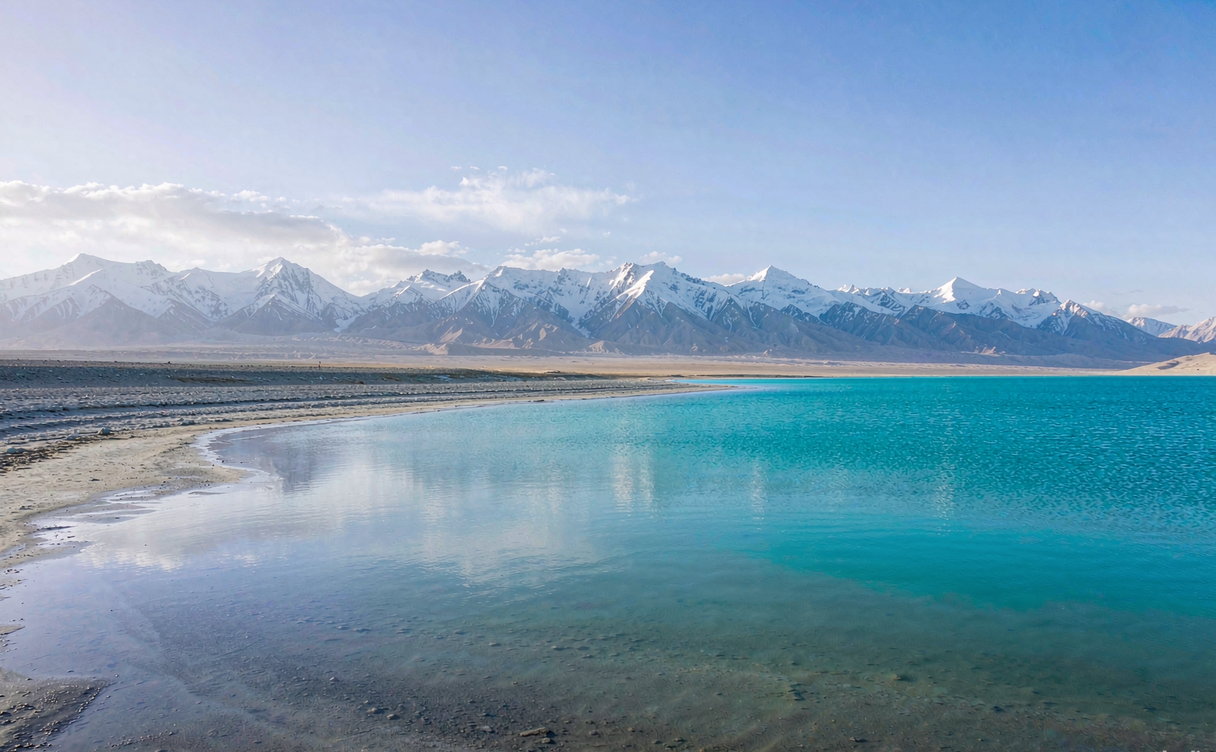
Chiu Gompa, a small monastery perched on a hill at the lake’s northeastern corner, is the main hub and the best place to watch sunset paint the water. Many visitors take the ritual morning dip at a designated point, bracing for water that never rises above single digits Celsius; locals say a single plunge cleans a lifetime of dust, and even the skeptics come out grinning. Photographers should plan for the blue hour after dusk, when the lake mirrors a sky thick with stars—this is some of the darkest, clearest air in Tibet, China. Just west of Manasarovar lies Rakshastal, a saltwater lake that locals pair with its freshwater twin as shadow and light; the two together make the plateau’s most photographed pairing of still water and barren shore. Migratory birds gather at the marshy inlets in late summer, and a pair of binoculars turns a roadside stop into a half-hour of quiet watching.
For the wider holy-land context, our best things to do in China roundup pairs Manasarovar with the Kailash kora as a single, unforgettable pilgrimage.
Food, Stay, and Money
Facilities are minimal. Around Chiu Gompa you will find tented camps and simple guesthouses from 200 to 400 RMB a night, mostly with shared toilets and no heating beyond heavy quilts. Meals are basic—instant noodles, fried rice, and the occasional thukpa soup—so carry energy bars, fruit, and a refillable bottle. There is no ATM, so withdraw all the cash you need in Lhasa before you fly; foreign cards will not help you here, and the nearest bank is a long drive away. Stock up on nuts, chocolate, and electrolyte powder in Lhasa, because the lake’s tuck shops sell little beyond instant noodles and the altitude appetite is unpredictable.
The lake’s cultural stature is well documented; Wikipedia’s Lake Manasarovar page lays out the religious geography and the legends that have drawn pilgrims for millennia. Reading it beforehand turns a pretty lake into a place you actually understand, and the stories of the demons and gods who shaped its shores make the wind feel like company rather than threat.
A Sample Manasarovar Itinerary
A realistic Manasarovar, Tibet, China plan is about twelve days including acclimatization. Fly to Gunsa, rest in Shiquanhe, then drive south to the lake for two nights at Chiu Gompa with a vehicle parikrama. Most travelers combine this with the Kailash kora immediately after, then ease back east. If you want gentler rest stops on the return, lower-altitude nights before Lhasa, where a hot shower and a real bed feel like luxury, fit the bill perfectly.
Practical Notes
Pack for cold and glare: a down jacket, high-SPF sunscreen, lip balm, and a headlamp are essential even in August, when the wind can still cut to the bone after dark. Signal is patchy, so download offline maps in Lhasa and tell someone your route each morning. A padded camera bag is worth its weight, because the dust and the bouncing 4×4 are hard on gear, and the reflection shots of Kailash on the lake are the ones you will most want to keep. Respect the pilgrimage—walk the parikrama clockwise, ask before photographing monks or rites, and never leave litter on the shore. Manasarovar gives back what you bring to it: patience, reverence, and a willingness to be small beneath a very big sky, and the people you meet at Chiu Gompa will likely be the kindest hosts of your journey through Tibet, China.